How to raise money in 2023?
Thread 🧵
Fundraising is a vital part of a company’s development and also can be a trap that will take a lot of time and effort without result.
This thread🧵 will cover the techniques that you need for fundraising.
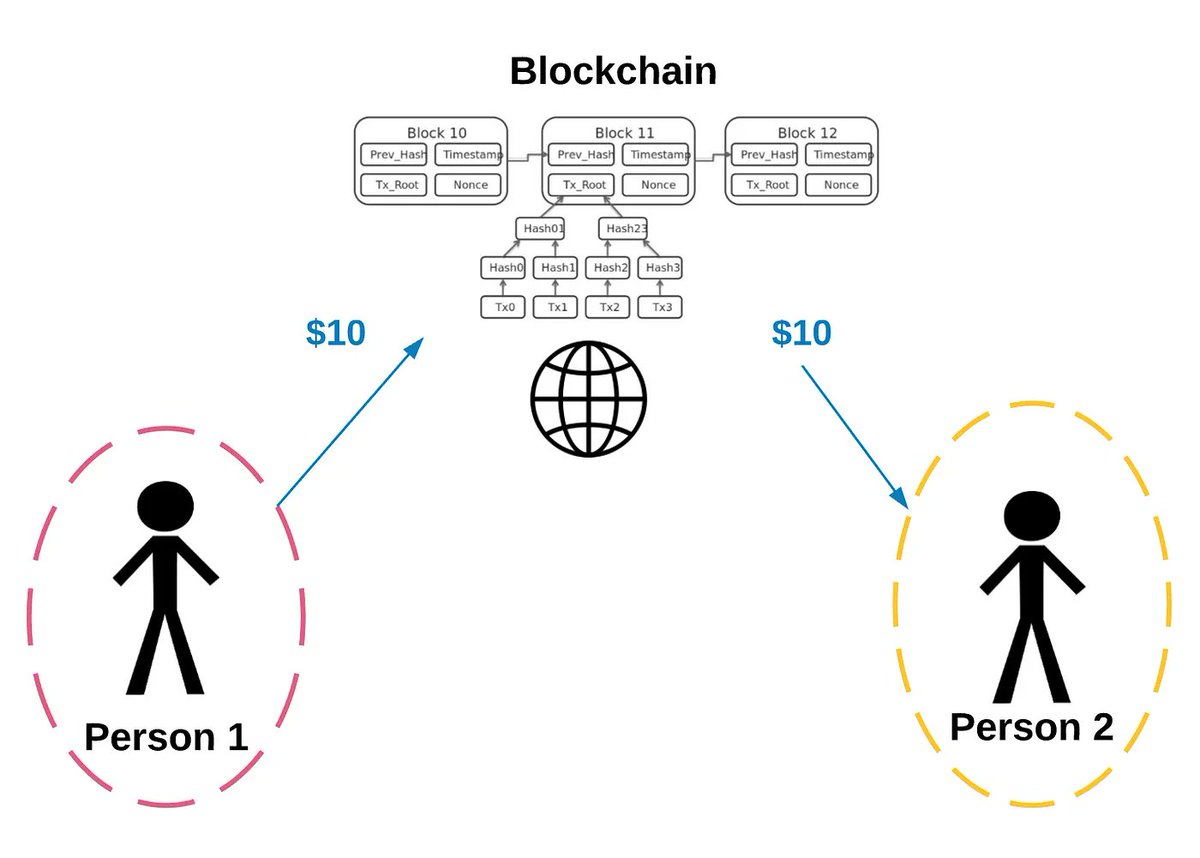
Understanding the "Trustless" Nature of Blockchains
When we say blockchains are "trustless," it doesn't mean they're not trustworthy. Instead, it means you don't need to trust any central authority or intermediary to transact or interact with the system.
In traditional systems, we rely on trusted entities (like banks) to validate and process transactions. With blockchains, cryptographic algorithms and consensus mechanisms replace this need for trust.
The decentralized nature of blockchains ensures that no single entity has control. Every participant (node) has a copy of the entire ledger, making tampering extremely difficult.
Cryptography plays a crucial role. Transactions are signed with a private key, and anyone can verify its authenticity using the corresponding public key, ensuring security without needing trust.
Consensus mechanisms (like Proof of Work or Proof of Stake) ensure that all nodes agree on the state of the blockchain. This agreement is reached without having to trust any single participant.
The trustless nature also brings transparency. Every transaction is recorded on the blockchain and is publicly verifiable. This open ledger system reduces the chances of fraud.
In conclusion, "trustless" in blockchains means we're shifting our trust from centralized entities to cryptographic algorithms and decentralized protocols. It's a revolutionary way of thinking about trust in the digital age.
Crypto Enthusiasts Alert!
Ever thought your digital gold could vanish in a click?
From real-life horror stories to pro-tips, dive into this
CryptoSecurity post. Don't let your treasure be
another's loot!
Due to the current hacks, it is essential to learn the basics .
Hardware Wallets: A real-life saver.
Case: In 2017, a crypto user lost 7,000 BTC from an exchange hack but saved his remaining assets using a Ledger Nano S .
Offline Storage: Your private keys are stored offline, ensuring they're out of reach from online hackers.
Pin Protection: Even if someone gets your device, they can't access it without the PIN.
Recovery Phrases: Lose your device? Use your 24-word recovery phrase to restore your assets on a new device.
Tip: Always buy from official sites to avoid fakes.
Phishing Scams: Not all that glitters is gold.
Case: A user lost 1,200 ETH to a fake MyEtherWallet site
Fake URLs: Scammers replicate popular crypto sites. Always check the URL before entering details.
Email Scams: Never click on suspicious email links, especially those asking for private keys or personal info.
Fake Apps: Only download apps from official app stores and trusted sources.
Tip: Bookmark essential sites & double-check URLs. Here's a list of common crypto phishing sites to avoid
Password Best Practices: More than just a word.
Case: Bitfinex hack in 2016 was partly due to reused passwords.
Complexity: Use a mix of uppercase, lowercase, numbers, and symbols.
Length: Aim for 12-16 characters. Consider using a passphrase.
Unpredictability: Avoid birthdays, names, or common words.
Change Regularly: Update your passwords every 3-6 months.
Tip: Use unique passwords for each platform and password managers. Test your password strength https://t.co/IpTG90itNe
2FA: A user lost $8k on Binance without 2FA therefore using 2FA is essential
Public Wi-Fi: Avoid crypto transactions on public networks.
Software: Keep your device software & crypto apps updated. Patches often fix security vulnerabilities.
The crypto realm is as vast as it is exciting. But with
great power comes great responsibility. Equip yourself,
stay updated, and always prioritize security. Share to
spread awareness and let's fortify our crypto
community!