En el partido de esta noche entre Congo y Colombia en el Mundial, un hombre congoleño se quedó inmóvil durante los 90 minutos imitando el saludo del líder anticolonial congoleño, Patrice Lumumba.
Lumumba fue descuartizado y disuelto en ácido por EEUU y Bélgica en 1961 por conseguir la independencia del Congo ante el colonialismo y negarse a que los imperialistas siguieran saqueando los recursos de su pais.
Aunque los imperialistas disolvieron su cuerpo, no pudieron borrarlo de la historia, 65 años después, Lumumba sigue presente para millones de personas.
In May of 1965, a 28-year-old teacher walked into a fourth-grade classroom in the Roxbury neighborhood of Boston and did something that would change the course of his life — and eventually, the lives of millions.
His name was Jonathan Kozol. He had graduated from Harvard with highest honors. He had studied at Oxford on a Rhodes Scholarship. He could have chosen almost any path. Instead, he chose a crumbling public school in one of Boston's poorest neighborhoods, where the textbooks were two decades old, the heating system didn't work through winter, and a new student walked out the door — or simply disappeared — almost every single week.
That morning, he read his class of African-American nine-year-olds a poem by Langston Hughes. It was called The Ballad of the Landlord — a poem about a Black tenant standing up to a white landlord over an apartment falling apart at the seams, and what happened to him when he dared to speak up. It was not on the Boston Public Schools' approved reading list.
The next morning, Kozol was handed a dismissal letter.
The official reason: he had read material that wasn't in the approved curriculum, without permission from a superior. There had also been complaints from parents who had heard about the poem.
He had been teaching for seven months.
Another man might have accepted the verdict and walked away. Kozol did the opposite. He sat down and wrote. He documented everything — the broken heaters, the outdated books, the overcrowded rooms, the letter that ended his career over a poem about justice. He called the book Death at an Early Age.
Houghton Mifflin published it in October of 1967. Five months later, it won the National Book Award. Over the following decades, it sold more than two million copies.
But Kozol didn't stop there. He spent the next sixty years going back — back to the classrooms, back to the neighborhoods, back to the families that the system kept failing. He wrote about homeless children sleeping in welfare hotels. He wrote about the staggering gap between what wealthy school districts spent on each child and what poor ones could afford. He wrote about the Bronx, about segregation, about the America that existed just a few miles from the America most people saw.
He turned 89 in September of 2025. He is still writing.
All of it began on a May morning in 1965, when a young teacher decided that nine-year-olds in a cold, underfunded classroom deserved to hear a poem about what it felt like when the world wasn't fair.
He read it to them. And they fired him for it.
He made sure the whole world heard it anyway.
A German psychologist proved in 1885 that cramming erases what you learned within 48 hours. He published the fix in the same book. Almost no school on Earth has adopted it in 140 years.
His name was Hermann Ebbinghaus.
He had no lab. No funding. No colleagues.
He worked alone in a room in Berlin and ran every experiment on himself. He spent years memorizing thousands of nonsense syllables — made-up combinations like DAX and BUP, strings with no meaning — so that prior knowledge could not contaminate the results.
Then he tested his own recall at intervals. Twenty minutes. One hour. Nine hours. One day. Six days. Thirty-one days.
What he found became one of the most replicated findings in the history of psychology.
Two-thirds of everything you learn is gone within 24 hours if you do not return to it. Within a week, the curve flattens near zero. The brain does not store what it does not revisit. It treats unused information the way it treats everything else it does not need. It discards it.
He drew this curve in 1885 and called it the forgetting curve.
Then he found something else in the same data.
Students who spread their study sessions over multiple days retained far more than students who spent the same total hours studying in one block. Not slightly more. Dramatically more. The brain needed time between exposures to consolidate the material into something durable.
He called this the spacing effect.
Same information. Same total hours. Completely different outcome depending on when you spread the hours out.
The finding has been replicated over 250 times. A 2006 meta-analysis in Psychological Bulletin covered 254 studies across every age group and every subject. The effect held every time.
A German journalist named Sebastian Leitner built a physical flashcard system around it in 1972. An open source app called Anki turned that system into software in 2006. Medical students who use Anki to pass board exams are not working harder than everyone else. They are working in the only pattern the brain actually responds to.
The most uncomfortable part of all of this is what happened after Ebbinghaus published.
Educators read the research. They understood what it showed. They kept the cramming.
The school calendar was already built around it. Semester exams. Finals week. One concentrated block of review before the test and then nothing. The entire architecture of how most schools schedule learning is optimized for the forgetting curve, not against it.
The lesson is not that you need more time to study.
It is that the same time, distributed differently, produces a completely different brain.
Ebbinghaus proved this in 1885 with no budget and no institution. He ran the experiment on himself because no one would run it for him.
The fix has been available for 140 years.
Almost nobody who designs schools has used it.
Keir Starmer was not merely a disappointment. He is a mendacious figure of ethical decrepitude, a man who won the Labour Party leadership based on promises that he jettisoned five seconds after winning - a Labour leader who dared banish from the Labour Party not only his predecessor but also remarkable human beings like director Ken Loach - the gentleman who has taken the historic Labour Party and transformed it into a vessel for the very oligarchy it was elected to restrain.
Consider the litany of Starmer’s moral and logical failures. He promised a 'different Britain', yet his actions were a masterclass in Tory-lite politics—using the same maxed-out credit card analogies that once served the austerity brigades to justify his own failure of vision. He promised a human rights lawyer’s approach but he embraced a racist-lite version of Farage.
On Europe, Starmer promised Brexiteers that Brexit is Brexit yet stood before those who yearn to rejoin the European Union, winked at them to make them feel that Britain would gradually reconnect, even rejoin, with the EU while offering nothing of substance. This is not leadership; it is a fraud.
And then there's the manner in which Starmer and his government rushed to offer Israel unequivocal support in pursuing its genocide in Gaza, sacrificing precious political and civil liberties in the UK by imprisoning grandmothers, priests and peaceful activists who dared support Palestine Action, an organisation that Starmer and his minions proscribed as terrorists for practising the usual activist tactics of trespassing to spray paint military planes that had demonstrably aided in the genocide. To add insult to injury, Starmer performed the diplomatic pantomime of recognising a Palestinian state, in a manner that ensured it would never happen.
But above all else, this is a government that has learned nothing from the post-2008 era. Starmer and his Chancellor are playing the same tired austerity game while enabling and empowering the Finance Curse perpetrated by the City of London, throwing in forgood measure cuts in international aid to fund a military spending trickle under the guise of a "Strategic Defence Review" . It is the same old doctrine: austerity for the masses, socialism for the financiers and the arms dealers.
History will remember Mr Starmer as a man without conviction, a Prime Minister who offers not a shred of honesty, but merely the cruel illusion of change. He is ethically decrepit because he had chosen, consciously, to abandon principle for power. And for that, history will indict him. Good riddance, I say.
https://t.co/sGfebPkDXR
Ο Άλαν Γκρίνσπαν μας αποχαιρέτησε σήμερα. Ο άνθρωπος που το σύστημα είχε αναδείξει ως τον «κεντρικό τραπεζίτη των κεντρικών τραπεζιτών» και ο οποίος λάμβανε ως αλήθεια την πλάνη ότι οι αγορές είναι θεότητες και η ασταθεία αρετή.
Ο επιτάφιός του; Μια μοναδική, λαμπρή ομολογία: «Βρήκα ένα ελάττωμα στο μοντέλο μου για τον κόσμο». ¨Ένα ελάττωμα", ομολόγησε, λες κι επρόκειτο για σωλήνα που στάζει αντί για την ολοκληρωτική και με αναστρέψιμη κατάρρευση του νεοφιλελεύθερου ιδεολογήματος που τον ανέδειξε σε «Μάντη των Αγορών». Ποιον; Έναν κύριο που, για δεκαετίες, κήρυττε ότι το προσωπικό συμφέρον του αρπακτικού ήταν το αόρατο χέρι του κοινού καλού.
Τότε, το 2008, όταν το θεριό καταβρόχθησε τις αγαπημένες αγορές του, προς τιμήν του, ο Γκίνσπαν αμφιταλαντεύτηκε, παραδεχόμενος ότι ολόκληρη η κοσμοθεωρία του —αυτή που οι κεντρικοί τραπεζίτες είχαν αναγάγει σε δόγμα και η "καλή κοινωνία" είχε καταπιεί αμάσητη— ήταν ένα παραμύθι επικερδές για τους εισοδηματίες.
Φυσικά, ο Γκρίνσπαν δεν παραδέχτηκε την ευθύνη του. Αυτό θα απαιτούσε ηθική πυξίδα, ένα εργαλείο που απουσιάζει εμφανώς από την εμπνευσμένη από την Άιν Ραντ εργαλειοθήκη του. Όχι, απλώς ομολόγησε την αστοχία του και κατόπιν επέστρεψε στην σιωπή του.
Αντίο, λοιπόν, Μαέστρο. Βοήθησες να χτιστεί μια χυδαία παγκόσμια οικονομία-καζίνο, αλλά τουλάχιστον είχες την ευπρέπεια να διαβάσεις δυνατά την έκθεση της αυτοψίας της. Δυστυχώς, αμέτρητα εκατομμύρια εξακολουθούν να πληρώνουν το σφάλμα στο μοντέλο σου.
https://t.co/ftWXeIeAQr
Pauline Hanson went full Trump rather than answer one simple question about her daughter's tax-payer funded job.
This 6 point chronological timeline shows exactly what Hanson was dodging:
1. Sean Bell lived in Queensland and, was Pauline Hanson's adviser for 9 years.
2. NSW One Nation Senator Warwick Stacey resigns after just 6 weeks.
3. Sean Bell is then parachuted into the vacant NSW seat by Hanson.
4. Pauline's daughter Lee Hanson is then hired as Bell's adviser, having never performed that role ever before, and on a salary up to $180k - all taxpayer-funded.
5. MPs can't employ their own family - so Lee, who lives in Tasmania is assumed to be technically employed by Sean Bell - a NSW Senator. Very convenient.
6. Despite being employed as an Advisor to a NSW senator, Lee still lives in Tasmania and spends much of her time campaigning for One Nation.
Now you see why Hanson went 'full Trump' rather than answer.
Hey @ABCTV and Radio
#insiders#TheDrum#QandA#rnbreakfast et al
Request please. Can we give News Ltd journos and commentators a break from your programming and bring in some independent or or other voices please?
That is all. Cheers
Just absorb this for a moment.
The social media post of Israel's National Security Minister is so genocidal that it violates the rules of X.
Yes, that's right, even in the cesspit of Elon Musk's X.
Yet this remains a state armed by and allied to the West!
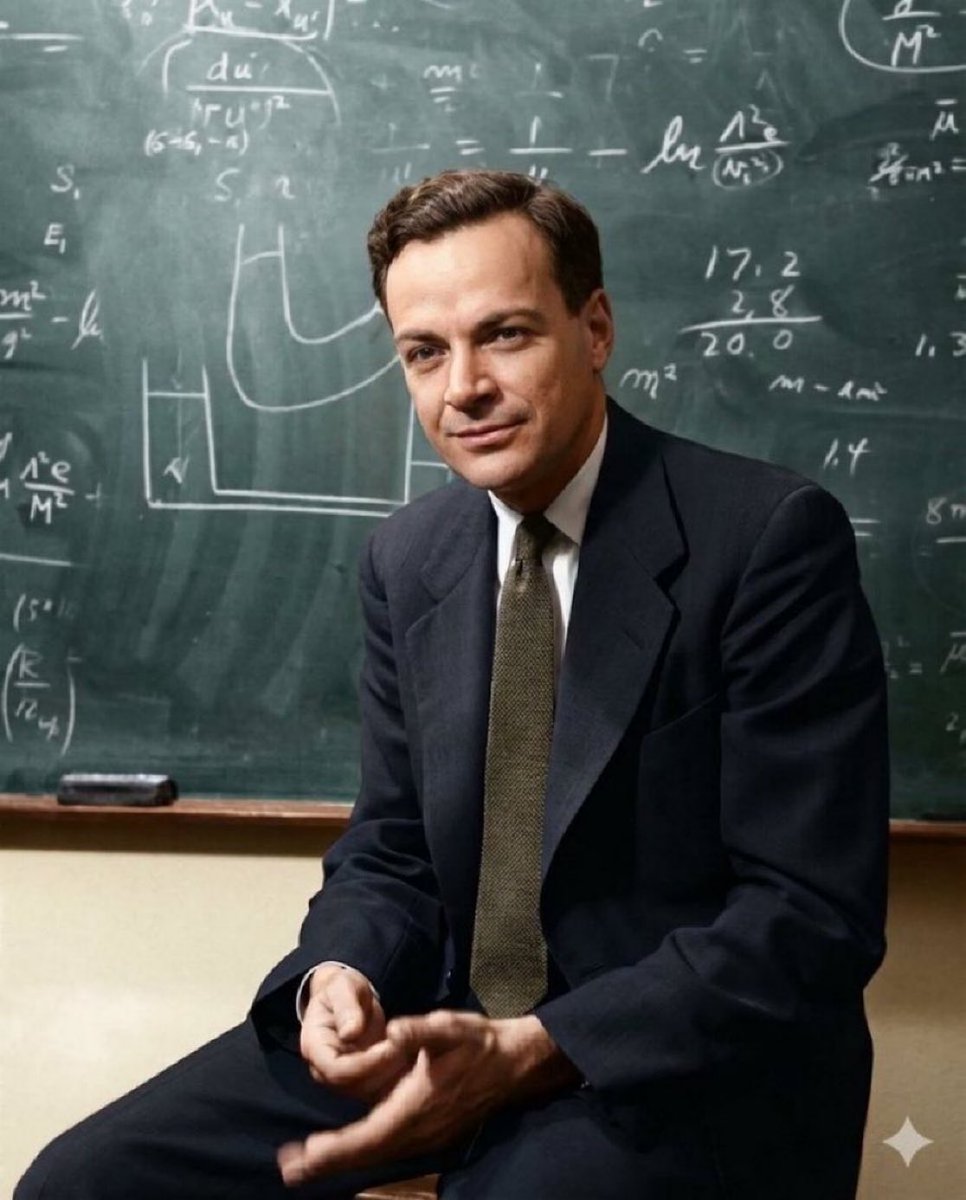
The problem is not people being uneducated.
The problem is that people are educated just enough to believe what they have been taught, and not educated enough to question anything from what they have been taught.
—Professor Richard Feynman
A woman who flunked her way through every math and science course in high school enlisted in the United States Army the day after graduation because she had no other options.
She learned Russian. She translated on Soviet trawlers in the Bering Sea. She worked at the South Pole Station in Antarctica. Then in her mid-twenties she decided to go back and learn the exact subject that had defeated her. She earned a degree in electrical engineering, then a master's, then a PhD in systems engineering. She became a professor of engineering. Then she built the most enrolled online course in the history of the internet.
It is a course about how to learn.
Her name is Barbara Oakley.
Here is the story, because the person who taught more humans how to learn than anyone alive is someone who spent the first half of her life believing she could not.
Barbara was born on November 24, 1955 in Lodi, California. Her father Alfred was a bomber pilot in the US Army Air Corps during World War II. She grew up convinced she was not wired for math. She did not just struggle with it. She flunked it. She flunked her way through high school math and science courses and saw no path forward that required either.
She enlisted in the Army immediately after graduation. She rose from the rank of Private to Captain. She was recognized as a Distinguished Military Scholar. She leaned into the one thing she was good at, languages, and became fluent in Russian.
The Army sent her to places most people never see. She worked as a Russian translator on board Soviet trawlers on the Bering Sea during the final years of the Cold War. She worked as a communications expert at the South Pole Station in Antarctica. She thrived in extreme environments. But a thought kept following her. The world seemed to reward people who could do things she could not. Calculations. Technical reasoning. Systems design.
She began to wonder whether her problem with math was permanent or whether it was a problem with how she had tried to learn it.
In her mid-twenties she did something most people would never attempt. She went back to school to study the subjects she had failed at. She enrolled in mathematics and engineering courses and committed to learning them from the ground up. She was starting over at an age when most engineers were finishing their degrees.
She earned a bachelor's degree in electrical engineering. Then a master's degree. Then a PhD in systems engineering. She became a Professor of Engineering at Oakland University in Rochester, Michigan. The woman who had flunked high school math was now standing at a whiteboard teaching engineering to hundreds of students.
Then she asked a question nobody else in her position was asking. Why had she failed the first time, and what had changed the second time?
She spent years studying neuroscience and learning science. She collaborated with Terrence Sejnowski, the Francis Crick Professor at the Salk Institute, one of the most respected neuroscientists in the world. Together they built a free online course on Coursera called Learning How to Learn.
The course exploded. It became the most popular massive open online course ever created. Over two million students registered in the early years. The number has continued to grow. It teaches the mental tools experts use to master difficult subjects, chunking, spaced repetition, focused and diffuse thinking, and it is grounded in neuroscience rather than productivity hacks.
She wrote A Mind for Numbers, subtitled How to Excel at Math and Science Even If You Flunked Algebra. She wrote Mindshift. She wrote Uncommon Sense Teaching. She won the McGraw Prize, often called the Nobel Prize for Education. She won the Chester F. Carlson Award from the American Society of Engineering Education. She became a Fellow of IEEE. Her research was described as revolutionary by the Wall Street Journal. She published in the Proceedings of the National Academy of Sciences.
A woman who flunked high school math built the most enrolled course in the history of the internet about the thing she was worst at.
She did not overcome a limitation.
She studied the limitation itself, and turned it into a curriculum the entire world now learns from.
A Japanese immunologist spent 20 years proving that the chemicals trees release into the air walk into your bloodstream, hunt down your stress hormones, and arm your immune system in ways no therapist or pharmaceutical has ever matched, and most of the data has been sitting in Japanese medical journals for two decades waiting to be translated.
His name is Qing Li.
He is a clinical professor at Nippon Medical School in Tokyo and the president of the Japanese Society of Forest Medicine. The Japanese government has been funding his research since 2004, and the body of work he has produced is the reason forest bathing is now an officially prescribed clinical therapy in Japan and Korea.
The story actually starts in 1982, when the Japanese Ministry of Agriculture, Forestry and Fisheries coined the term shinrin-yoku to describe the practice of slow, mindful walking in a forest. They did it for a practical reason.
Japan was urbanizing fast, stress-related illness was climbing, and the country had thousands of square kilometers of forest sitting unused. The idea was to give people a reason to walk into the trees... They had no idea what was actually happening to the human body during those walks until Qing Li ran the first proper experiment in 2005.
He took twelve healthy adult men on a three-day, two-night trip to a forest park. They walked for a few hours each day. Nothing strenuous. No prescribed routes or breathing exercises. They simply walked slowly through the trees, breathing the air, looking at the forest.
Li drew blood and urine samples before the trip, on the second day, on the third day, on day seven after returning home, and again on day thirty.
The numbers that came back from the lab were not what anyone expected.
The activity of a specific type of immune cell called the natural killer cell, which is the cell your body uses to hunt down cancer cells and virus-infected cells before they can spread, had jumped by roughly 50 percent during the forest trip. The actual number of natural killer cells circulating in the bloodstream had increased significantly.
Three different anti-cancer proteins that those cells produce, called perforin, granzymes, and granulysin, had all risen sharply. And the effect did not disappear when the men went home. The immune boost was still measurable on day seven and was still partially present on day thirty.
Two hours a day in a forest had upgraded the immune system for a full month.
Li ran the same experiment with women a year later and found nearly identical results. Then he ran it with a control group who took a three-day trip through an urban area with the same amount of walking, the same hotel quality, and the same diet.
The urban group showed no measurable change in natural killer cell activity at all. The forest was doing the work, not the vacation.
The mechanism turned out to be a class of airborne molecules called phytoncides. Trees produce these compounds to defend themselves against insects, bacteria, and fungi. Pine, cedar, oak, and cypress trees release them in particularly large amounts, especially in warmer weather and after rainfall.
When you walk through a forest, you are inhaling those molecules into your lungs and absorbing them through your skin, and once inside your body they appear to directly stimulate the production and activity of the very immune cells Li was measuring in his lab.
Roughly 50 percent of the health benefit of a forest walk, according to Li's data, comes from the chemistry of the air itself. The other half comes from what the forest is doing to your nervous system.
This is where it stops being only about the immune system and starts being about stress.
A separate Japanese research team measured cortisol, the body's main stress hormone, in 84 participants across 35 different forest sites. They drew samples before and after a 30-minute walk in each forest and compared them to control walks in matched urban environments. The cortisol levels of the people who walked in the forest were lower than the cortisol levels of the people who walked in the city by a significant margin. Their heart rates were lower. Their blood pressure was lower.
The activity of their parasympathetic nervous system, which is the part responsible for rest and recovery, had gone up. The activity of their sympathetic nervous system, which is the part that drives fight or flight, had gone down.
Then a researcher at the University of Michigan named MaryCarol Hunter ran the cleanest version of this experiment ever done. She recruited participants from a city and told them to take a nature pill three times a week for eight weeks.
They were free to choose the time, the place, and the duration of the nature experience, as long as it was outside, in daylight, and free of phones, conversations, and aerobic exercise. They sent her saliva samples before and after each session so she could measure cortisol changes accurately and rule out the normal daily drop in stress hormones that happens to everyone.
The result was that participants experienced a 21.3 percent drop in cortisol per hour spent in nature, with the biggest payoff happening between minutes 20 and 30 of the walk.
After that, the cortisol kept dropping, but more slowly. The threshold dose for measurable stress relief was just 20 minutes outside in something that looked and felt like nature.
What none of this means is that nature is a substitute for therapy or for medication when someone genuinely needs them. Therapy treats different things than a walk does, and Li himself has been careful in interviews to call forest bathing a complementary intervention rather than a replacement for clinical care.
But what the research has settled is that the human body has a physiological response to being among trees that operates on the same biological systems modern medicine is trying to reach with drugs and clinical protocols, and that response is fast, measurable, and free.
The strangest part of Li's work is the implication he keeps repeating in interviews. The average person now spends more than 90 percent of their life indoors. Their cortisol stays elevated. Their natural killer cells stay sluggish.
Their parasympathetic nervous system rarely gets a chance to take over. The system that was tuned by millions of years of life under a canopy of trees is being asked to run permanently inside a box made of drywall and screens.
Your body has not forgotten what it is supposed to do in a forest. It is waiting for you to walk into one.
Ta-Nehisi Coates: “I don’t know how you remain consistent by claiming an anti-apartheid legacy here in the United States of America while enforcing it abroad.”
Coates told Chris Hayes that the Democratic Party cannot continue avoiding the issue of Gaza and Palestine, saying the party is already facing a political and moral reckoning ahead of 2028.
From “One Nation Decoded” on Facebook. Give them a follow. 👇🏻
“I went through Pauline Hanson’s full National Press Club speech.
Not a clip.
Not a headline.
The whole thing.
And the numbers are wild.
Out of around 86 checkable claims, I counted:
12 outright false claims.
43 misleading, cherry-picked or unsupported claims.
58 slogans, attack lines or loaded catchphrases.
17 things that just didn’t logically make sense.
That means the speech was not some brave truth-telling moment.
It was a misinformation machine with a microphone.
The scariest part is how polished it all sounds when it’s delivered confidently.
Big numbers.
Big claims.
Big outrage.
But when you actually stop and check it, so much of it falls apart.
The 130,000 “sleeping rough” claim was wrong.
The $200 billion Clean Energy Finance Corporation claim was wrong.
The overseas-born comparison with America was apples-to-oranges.
The climate change “hoax” line was straight-up nonsense.
The capital gains tax section was dressed up like young renters should be crying for young property flippers.
This is the trick.
Say enough things quickly.
Sound angry enough.
Blame enough groups.
Wrap it all in flags, slogans and “common sense”.
Then hope nobody checks the details.
Well, I checked.
And what I found was not leadership.
It was grievance politics running on dodgy numbers, culture war panic and emotional shortcuts.
Australians deserve better than a speech where the slogans do more work than the facts”
Trump came to power partly by a spineless, toe licking media that sane-washed his every utterance and treated him like a normal person - now look at him
Australia - we're in deep trouble
This is Australia's legacy media today, right down to the ABC
Sane washing a maniac
.
Australian World Cup fans were caught chanting:
“Aussie boys are on a bender, Donald Trump is a sex offender.”
The tournament is barely underway and the chants are already in midseason form. 💀