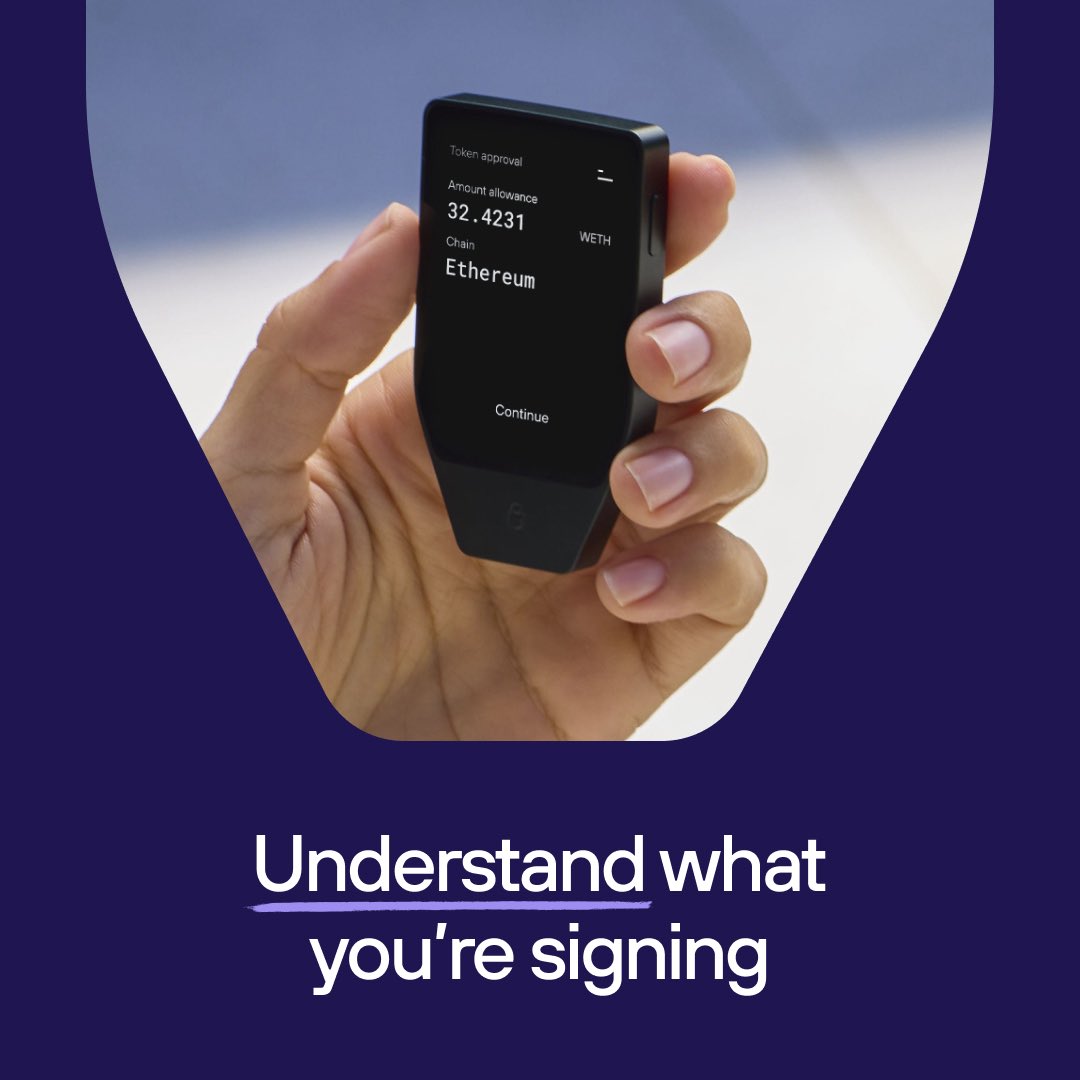
Smart contract transactions can be complex.
Clear Signing makes them easier to understand. Your Trezor decodes supported EVM transactions and shows the action, tokens, amounts, and destination on its trusted screen.
See it. Verify it. Sign with confidence
@shahzzannn I understand how stressful this situation must be. As a crypto technician, I can help you investigate why your USDT TRC-20 transaction history isn’t displaying correctly. First, we need to verify the transactions on the TRON blockchain explorer to confirm your funds’
@LoganLHTrieu Hey, Don’t panic just yet. The reseller disappearing doesn’t automatically mean your Ledger is compromised. What matters is whether the device was genuine and whether your recovery phrase has ever been exposed. ⚠️
@Abelink321 Buying directly from Ledger doesn’t automatically mean you’re at risk. The real concern is whether your seed phrase or device security has been compromised. ⚠️ I can help you assess your exposure and identify the right steps to protect your assets.
@themerchandise Send me a clear picture of the letter with your personal details covered, and I’ll help you verify whether it’s legitimate before you take any action.
@themerchandise Hey, You’re right to be suspicious. This could be a targeted phishing attempt designed to drain your Ledger wallet. Never scan the QR code or enter your recovery phrase. Even genuine Ledger owners can be targeted.
@oil_forex Buying directly from Ledger is a good sign, but the real risk depends on your device, firmware, and how you’ve stored your recovery phrase. Don’t panic. Tell me which Ledger model you have and whether you’ve received any security warnings recently
@CarolAn64246005 Hey, I understand your concern, but honestly, Ledger and Coinbase serve different purposes. The key is knowing how to secure your assets properly. There are a few security details most people overlook that could make all the difference.
@MalachiRevolts Trezor has its own security model, but the real question is whether your entire setup is secure. I can help you understand the risks before you trust it with your funds.
@MalachiRevolts Hey, That’s the right question to ask. 🔐 No hardware wallet is immune to supply-chain attacks, so security comes down to firmware verification, device authenticity, and how your keys are protected
@caincurrency Hey, That’s a valid security concern. Even entering seed words out of order can introduce risks depending on how the process was implemented. I’d recommend reviewing the exact firmware update method before assuming your funds were safe
@domegabri Hey, It depends on how your wallets are configured. Reusing the same xpub or descriptor can affect privacy and wallet synchronization. I’d need to check your setup to determine what’s happening and recommend the safest solution
@Gen6G Hey, You might be right, but address reuse can’t be confirmed just by looking at the app’s display. We’d need to verify the actual on-chain transactions and UTXOs to be sure. I can help you trace it properly and determine whether it’s a Blockstream display issue
@TheGhostSatoshi Hey, That’s actually part of the Safe 7’s security design. 🔐 There’s a smarter way to handle setup without compromising your seed phrase. Most people overlook the details, happy to point you in the right direction.
@ConradHart12 Hey, that sounds like a verification compatibility issue, not necessarily a problem with your BTC. I’ve seen similar cases with hardware wallets and exchange verification. There are a few things worth checking before trying anything else