One thng @Muse does that no other agent I've tried does: Pulls YouTube transcripts.Gemini won't even do that (dumb): "The full, raw verbatim transcripts exceed single-prompt text generation and file payload limits (each 2+ hour video produces tens of thousands of lines of raw speech text)."
I'm sure Google will clamp that off soon... don't tell anyone shhhh....
cc @Musecases
Basically where I am at.
I haven’t hand-written any code in 2026, but I still review anything I release that is going to be used by customers.
Probably unnecessary in the future. Still required for now though.
A lot of construction work is still done by hand simply because the machines to automate it don’t exist. That’s become a bottleneck for building things like solar farms, data centers, and other critical infrastructure.
@cosmic_robotics is building those machines. Their robots have already installed 11,000 solar panels, and they just signed a major contract with the largest construction company in the country.
They’re building the construction robots we’ll need on Earth today, and eventually on the Moon and Mars.
@JamesAEmerick
Jev feels like a programmable web moment for AI.
AI that plugs into application logic. Route a request. Rank candidates. Evaluate an action. Small decisions developers can combine into much bigger systems.
Intelligence as a software building block.
TLA+ is also (one of the) method that we at Intent Lab used to build mission critical infra software like Agent FS. Key is to make it verifiable and scalable - going through millions of states and also ensure the TLA+ to Rust/C conversion doesn’t weaken the end to end correctness. https://t.co/nzOjmXy9Ir
The “Creator Economy” is going to look a lot more about things maturing to the production capabilities of an MTS Live and a lot less like people going and doing one thing on Twitch or Instagram and expecting brand deals to come.
You have to become The Corporation
The company that invented “portable computing” then talked itself into a grave.
Today this type of virus infects Antropic and this is to doom itself and industry to a grave.
In 1981, Adam Osborne wheeled out a 24-pound sewing-machine-sized box with a five-inch CRT, two floppy drives, and a pile of bundled software. He called it the Osborne 1 and priced it at $1,795. People laughed at the screen. Then they bought it.
Dealers couldn’t keep it in stock. For a brief, dizzy moment, Osborne Computer Corporation was one of the fastest-growing companies in Silicon Valley. Revenue climbed toward the $70–100 million range. Adam Osborne was mentioned in the same breath as Jobs and Gates.
Then he couldn’t shut up.
In early 1983, before the next machine was even close to ready, Osborne started giving journalists sneak peeks of the Osborne Executive: bigger screen, nicer case, better specs. He thought he was building anticipation. What he actually built was a nationwide pause button.
Why buy yesterday’s portable when next month’s is already being shown off?
Orders for the Osborne 1 evaporated. Dealers canceled. Warehouses filled with machines nobody wanted. Cash flow went from roaring to a trickle. The Executive, the machine that was supposed to save them, kept slipping. Management slashed the Osborne 1 from $1,795 to $999 in a fire sale. It wasn’t enough.
By September 1983 the company that had just taught the world you could carry a computer filed for bankruptcy. Assets around $40 million. Debts higher.
The “Osborne Effect” entered the business dictionary: announce the future too early and you murder the present.
There were other knives in the back — IBM’s PC was eating the market, the books were a mess, they burned cash trying to turn leftover motherboards into finished units — but the self-inflicted wound is the one that got a name.
Moral, carved on a 24-pound tombstone:
Never show the customer the better thing until you can actually sell it.
It’s embarrassing to see engineers+designers at UberEats no longer looking at what they ship.
Uber introduced a new UI to select toppings… except when there’s no limit on how many toppings to select, the placeholder is “choose up to 999”. Showing everywhere.
QA nonexistent
exciting news!!
we’re partnering with @PayPal to enable customers to seamlessly shop and checkout online with @Muse across all PayPal merchants worldwide.
we will not rest until your muse can ship till he drops!!!
Vlad Tenev made a provocative prediction on Moonshots: AI could lead to more lawyers and more software engineers.
His reasoning is worth considering. Make it easier to start a business, and you can create more businesses that need help.
More thoughts on Jev.
1. It cannot be faster to decision than an LLM and be as good. The time an LLM takes until it prints the first token of the answer is equivalent to the compute spent on making a decision. So, if Jev takes less time to output its full output than it takes for an LLM of equivalent size to print the first token, Jev automatically loses in quality.
2. You can get the same classification speed from an LLM if you do the following:
Let's say you have 3 options you want to evaluate.
1) Prepare 3 separate requests to an LLM, where each request has the same question and only a single option of the three. For example:
- "What color is this dress? Output a single number between 0 and 9 to tell how likely it is that it's RED."
- "What color is this dress? Output a single number between 0 and 9 to tell how likely it is that it's GREEN."
- "What color is this dress? Output a single number between 0 and 9 to tell how likely it is that it's BLUE."
The part right before the COLOR ("What color is this dress? Output a single number between 0 and 9 to tell how likely it is that it's") is the same and is in the KV cache. Then, in parallel, you send only the COLOR word to the LLM and only get from it the very first output token, which will be a number between 0 and 9.
2) Now, you have three numbers, say [2, 3, 9]. You use softmax to convert them to probabilities:
[0.09%, 0.25%, 99.66%]
If you call the LLM with thinking disabled, you get your prediction time as the time of the embedding of the common part of the payload (very fast) + the addition of a single answer option to the KV cache (very fast) + generation of a single-digit output (very fast).
If you enable the thinking, it will take more time to generate the thinking tokens, but the quality will be way better than Jev.
@venkyganesan Can Nvidia fund the Frontier models with cash? You can't spend market cap.
"Cash rule everything around me"
Is the cost of training Frontier models growing geometrically? Can the doubling co time?
"OpenAI expects to burn through $278 billion in cash between 2026 and 2030"
📅 Agenda for the #Copilot, #Microsoft365 & #PowerPlatform product updates call 22nd of Sep
• Latest updates ⚡
• Flexible sections, Teams & Agents SDK, and UX in Copilot
• Katelyn Seemakurti, Sarah Critchley, Ricky Castaneda & @vesajuvonen
👋 Join → https://t.co/vyMezx1ktk
@martin_casado We have to pick an OS design that, if the project succeeds, is actually hugely exciting
Direction I’m thinking is something that benefits much more from the ridiculous 128+ cores we have these days
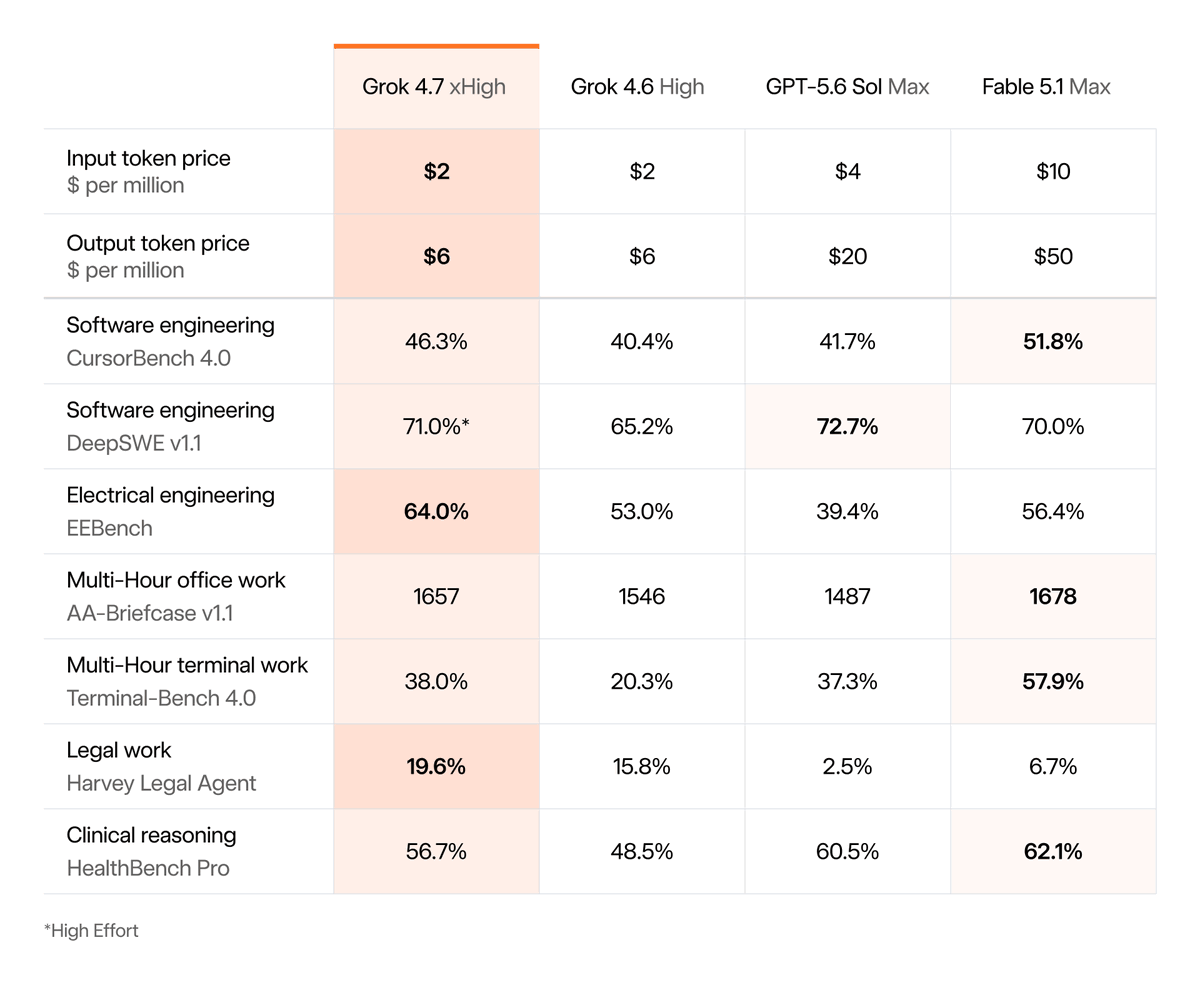
Grok 4.7 is here. @SpaceXAI’s latest release brings stronger coding, longer-running agents and better knowledge work, at the same price and speed as Grok 4.6.
The biggest improvements:
• A larger base model, trained with longer reinforcement learning on harder tasks that can take hours to complete.
• Better self-checking and handling of long context.
• Improved document and presentation creation.
• Native understanding of the Grok Bot harness for better conversations and general knowledge work.
• A rebuilt safeguard system with stronger jailbreak resistance and fewer unnecessary refusals for legitimate cybersecurity work.
The published benchmarks show meaningful gains over 4.6:
• CursorBench 4.0: 40.4% → 46.3%
• Terminal-Bench 4.0: 20.3% → 38.0%
• EEBench: 53.0% → 64.0%
• Harvey Legal Agent Benchmark: 15.8% → 19.6%
• GDPval: 1,605 → 1,695 Elo
Against competitors, Grok 4.7 beats GPT-5.6 Sol on CursorBench and Terminal-Bench, and leads both Sol and Fable 5.1 on EEBench and Harvey. Fable still leads on CursorBench, Terminal-Bench and GDPval. Strong progress, with a particularly compelling price-performance story.
Pricing starts at $2 per million input tokens and $6 per million output tokens. A fast variant offers twice the output speed at twice the price.
Available now in Cursor, Grok Build and the API.
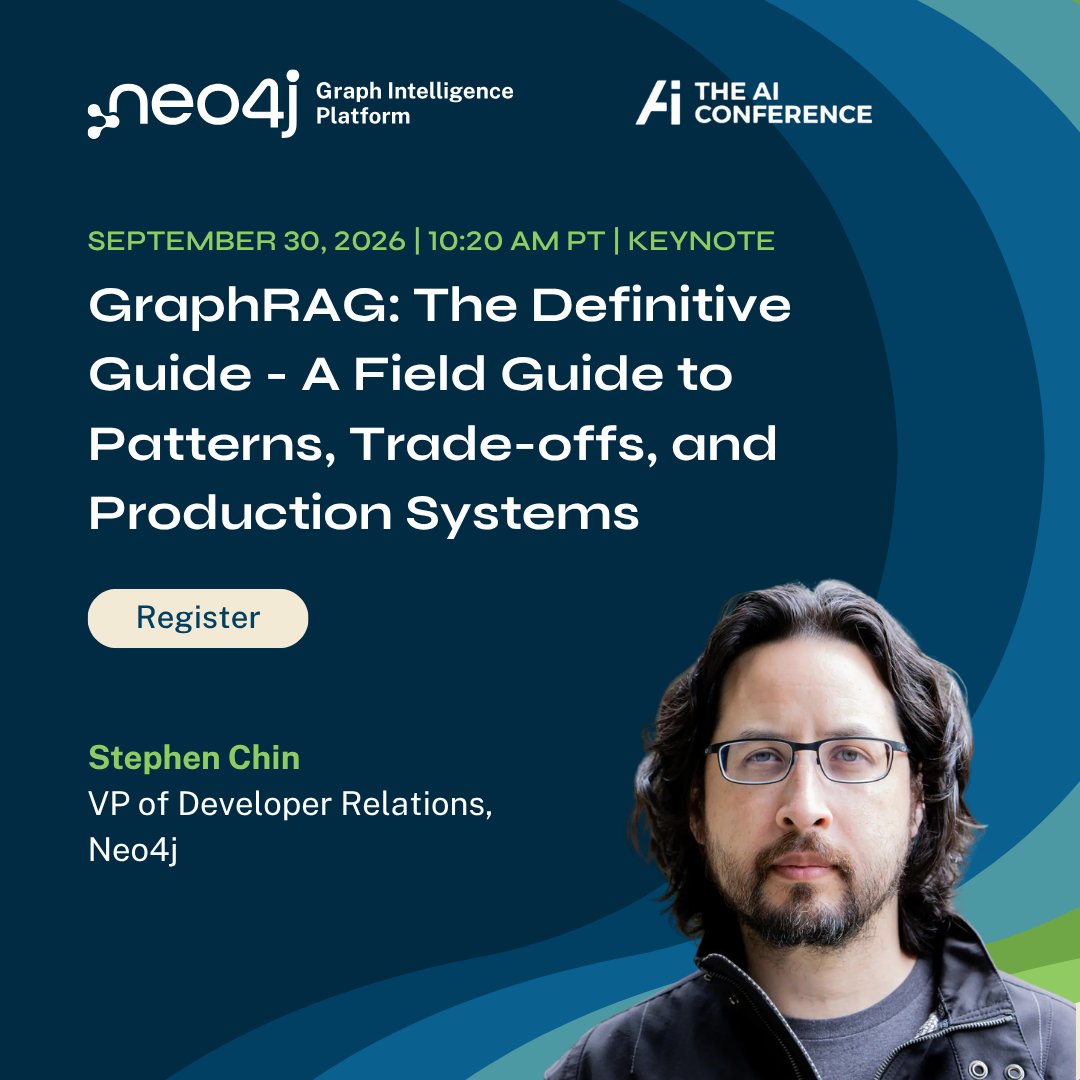
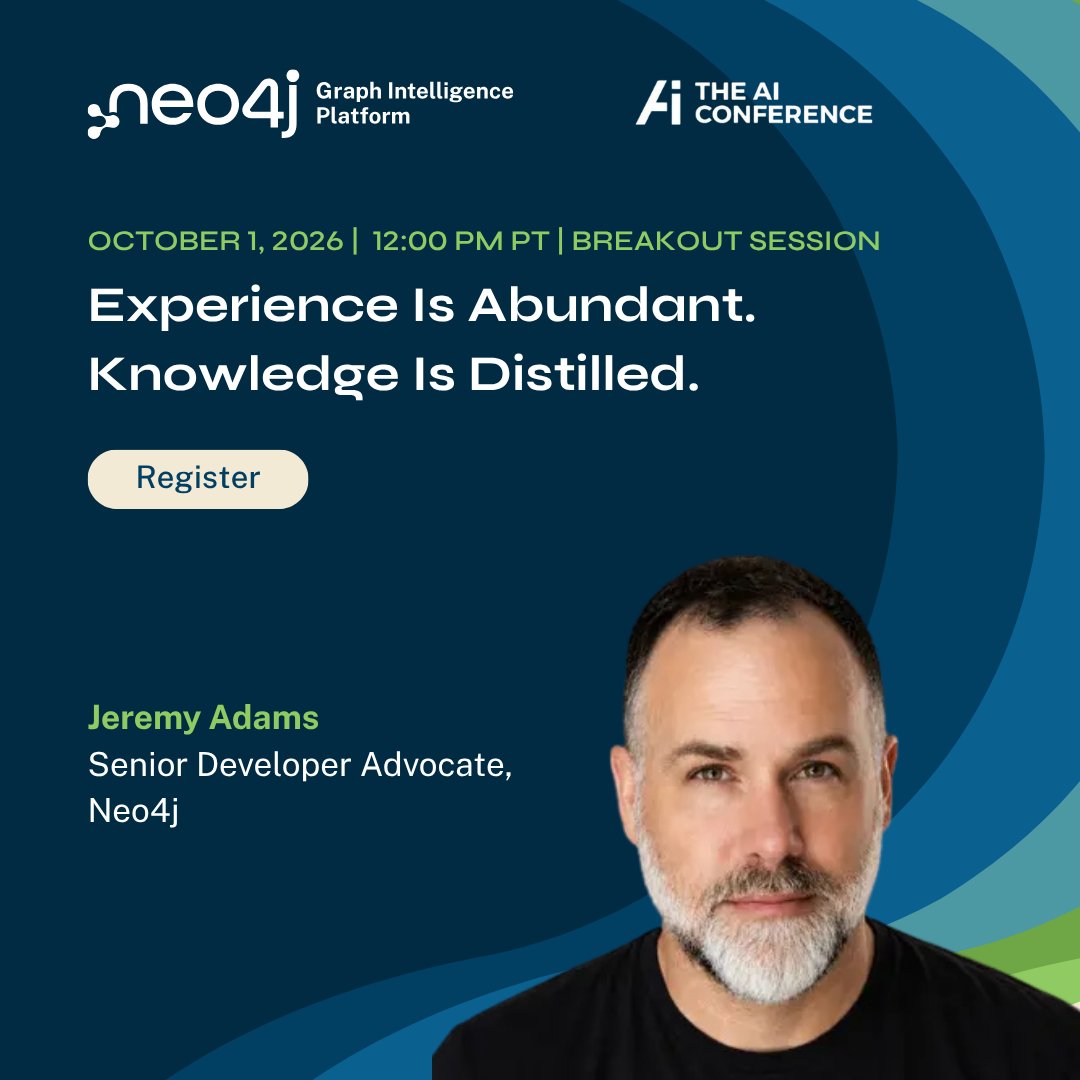
Attention SAN FRANCISCO! See you at the AI Conference 2026??
We will be at Booth #247!
Jeremy and @steveonjava will be presenting too!
https://t.co/h5I4uZ5jbQ
See you! Sept 29- Oct 1!