🚨🇫🇷 FLASH | La Ville de Paris annonce avoir SUSPENDU 132 animateurs périscolaires depuis le 1er janvier. Parmi eux, 52 l'ont été pour des « suspicions de violences sexuelles ou sexistes ». (AFP)
Anticoagulation stories:
Friendly reminder that transitioning from apixaban (Eliquis) 5 mg twice daily to warfarin 5 mg twice daily is not the way to do it...
True story...
#foamed
[ 🇳🇱 PAYS-BAS ]
🔸 Douze membres du personnel d’un hôpital néerlandais vont être placés en quarantaine pendant six semaines après des erreurs de procédure lors de la prise en charge d’un patient positif à l’hantavirus évacué du navire MV Hondius.
Un immense bravo à moi-même pour avoir osé me lancer dans la maternité et un grand merci à mon partenaire pour son accompagnement
Jai réalisé une perte de 10ans d'espérance de vie avec un investissement de seulemnt 2 ovocytes en seulement 4ans Incroyable Contactez moi pour +dinfo
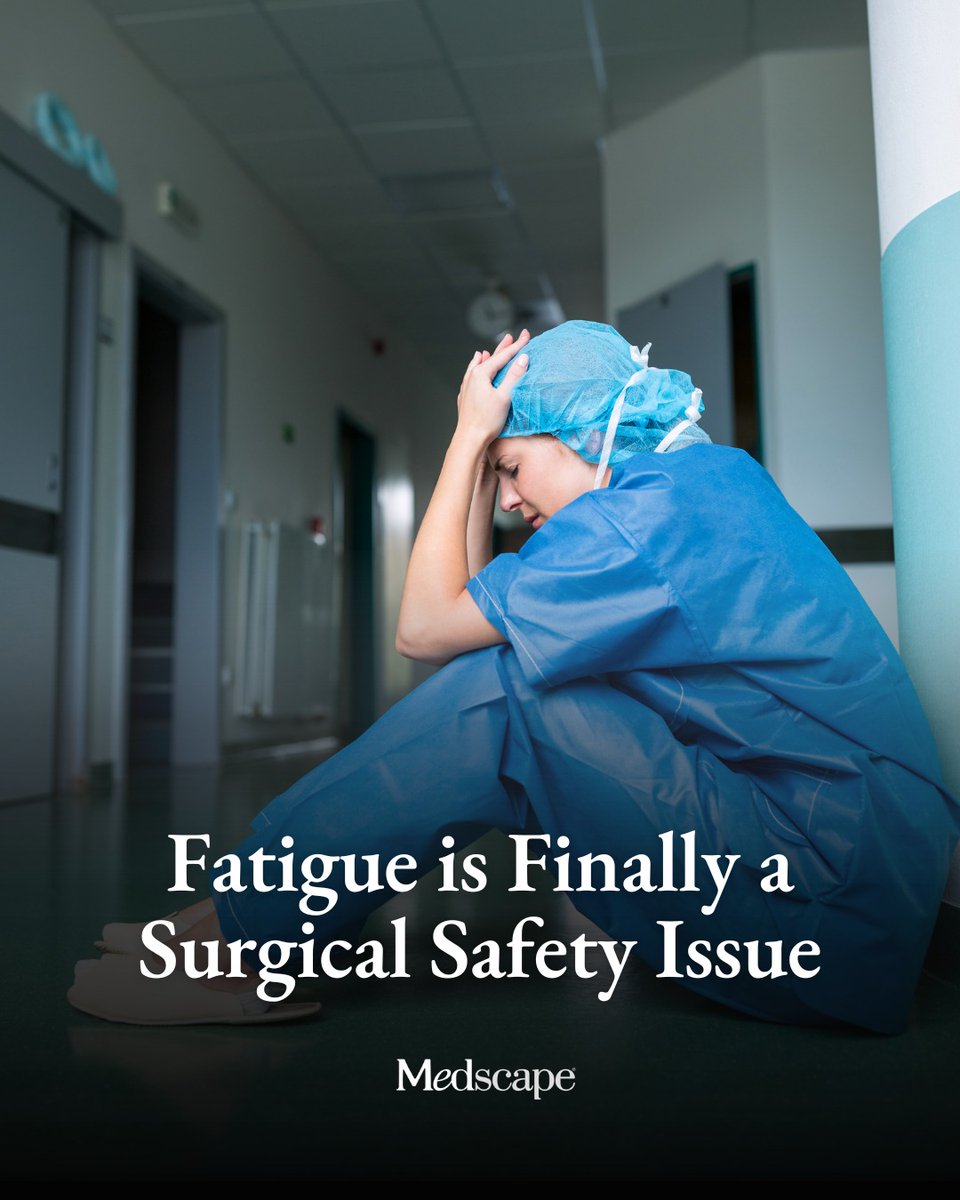
While surgeons have long been expected to perform at their peak on little sleep, new workplace standards and research trends are signaling a change in a workhorse culture that historically has made it difficult, if not impossible, for surgeons to admit when they’re too tired to operate.
Recently, the American College of Surgeons issued its first-ever proposed workplace standards for surgeons. They include a section on fatigue mitigation and recommend hospitals put formal policies in place for rescheduling or redistributing elective procedures following intense or extended duty.
Research shows fatigue can impair clinical decision-making, but whether it leads to surgical errors is less clear. “Looking at all of our available evidence, our patients do not have worse outcomes by being operated on by surgeons who were up the night before," said Jamie Coleman, MD, FACS, surgeon at UofL Health in Louisville, Kentucky. "However, that surgeon is more likely to wreck their car on the way home.”
Tap the link to learn more about the new lines of research that are exploring ways to help cognitively overloaded surgeons. https://t.co/Plq4jmRgbl
You make a cancer-fighting chemical in your brain every night. It kills tumor cells and fixes broken DNA while you sleep. Only works in the dark. The hormone is called melatonin, and when you flip on the lights at 2 AM, your brain stops making it.
Melatonin is the sleep hormone. But it moonlights as your body’s overnight cancer patrol. It chokes off the blood supply to tumors and wakes up your natural killer cells (the white blood cells that hunt down cancer). Melatonin also flips on genes that order damaged cells to stop dividing. Researchers at Tulane ran an experiment where they exposed rats to dim light at night. Not bright light. Dim. The tumors lost their natural growth rhythms and grew nonstop.
The WHO classified night shift work as “probably carcinogenic” in 2007. Reviewed everything again in 2019. Kept the classification. Same risk category as UV radiation.
Your body’s internal clock controls more than when you sleep. It schedules DNA repair. There’s a repair protein called XPA that rises and falls on a 24-hour cycle, timed by your clock genes. When scientists knocked those genes out in mice, DNA repair went haywire and tumors grew faster. The same clock decides when damaged cells kill themselves off before they turn cancerous. Wreck the clock, you lose all of that.
Denmark started paying workers’ comp for this. In 2008, the Danish government said: if you worked night shifts at least once a week for 20+ years and got breast cancer, that’s an occupational disease. Between 2007 and 2011, 110 women got compensated. One was a flight attendant who did 30 years of overnight flights for SAS airlines. No other country has followed.
1 in 5 workers worldwide works night shifts. In the US, that’s around 15 million people, mostly in healthcare, factories, and trucking. The exposure tilts hard toward people who can least afford it: 20% of workers without a high school diploma pull non-daytime shifts vs. under 2% of college grads.
I’ll be straight with you, the science isn’t totally settled. A big 2020 analysis pooling 57 studies and 8.5 million people found no clear overall link between night shifts and cancer. But a 2024 study tracking how risk changes with time on the job told a different story: 9% higher breast cancer risk after 20 years of night work. 13% higher after 30. The lab evidence in animals is clear cut. The human data is messier, the way it always is when you’re studying something millions of people do in a thousand different ways.








![L_ThinkTank's tweet photo. [ 🇳🇱 PAYS-BAS ]
🔸 Douze membres du personnel d’un hôpital néerlandais vont être placés en quarantaine pendant six semaines après des erreurs de procédure lors de la prise en charge d’un patient positif à l’hantavirus évacué du navire MV Hondius. https://t.co/qKFcRMpypX](https://pbs.twimg.com/media/HIEJNocXoAAfyx7.jpg)