One of the fastest ways to grow in your career is surprisingly simple:
Learn how to make your boss's job easier.
Not by overworking.
Not by people-pleasing.
And not by trying to become someone you're not.
Instead by communicating clearly, building trust, and reducing friction.
The people who do this well stand out quickly.
Because strong working relationships require deliberate practice.
They're built through small, consistent behaviors:
➡️ Bringing solutions with context, not just problems
➡️ Communicating proactively
➡️ Understanding their priorities, not just yours
➡️ Adapting without losing yourself
This applies everywhere: inside companies, leading teams, or running your own business.
The best professionals aren't just good at their work.
They're good at working with people.
Swipe for the specific tactics I'd use if I had a boss again.
One of the clearest signs of leadership maturity is how someone manages their calendar.
Many executives spend every hour reacting: meetings, Slack messages, urgent requests, constant context switching.
But the strongest leaders understand something important:
If you never create time to think, you eventually lose the ability to lead strategically.
Thinking time shouldn’t happen in your “free time.”
It’s part of the work.
That means protecting space for:
🔷 long-term planning
🔷 decision-making
🔷 reflection
🔷 prioritization
🔷 deep work
Which means it has to be scheduled before the week gets busy.
Otherwise, the calendar fills itself.
Look at your schedule for next week:
Did you leave any room to think?
If not, start there.
When a company goes bad, it's not because they hired bad people.
They go bad because good people make small compromises that compound over time.
That's one of the key insights that stuck with me from my friend Eric Ries' @ericries new book "Incorruptible: Why Good Companies Go Bad... and How Great Companies Stay Great."
Another thing that will stick with me is the beautiful commemorative copy he sent along with something (frankly) even better: a matching bar of Tommy's Chocolate.
The chocolate came with a message: "This is a sweet reminder that we all have the power to make change."
Endorsed by my friends Kim Scott @kimballscott and Bob Sutton @work_matters along with Reid Hoffman @reidhoffman, Mark Cuban @mcuban , the book is out today.
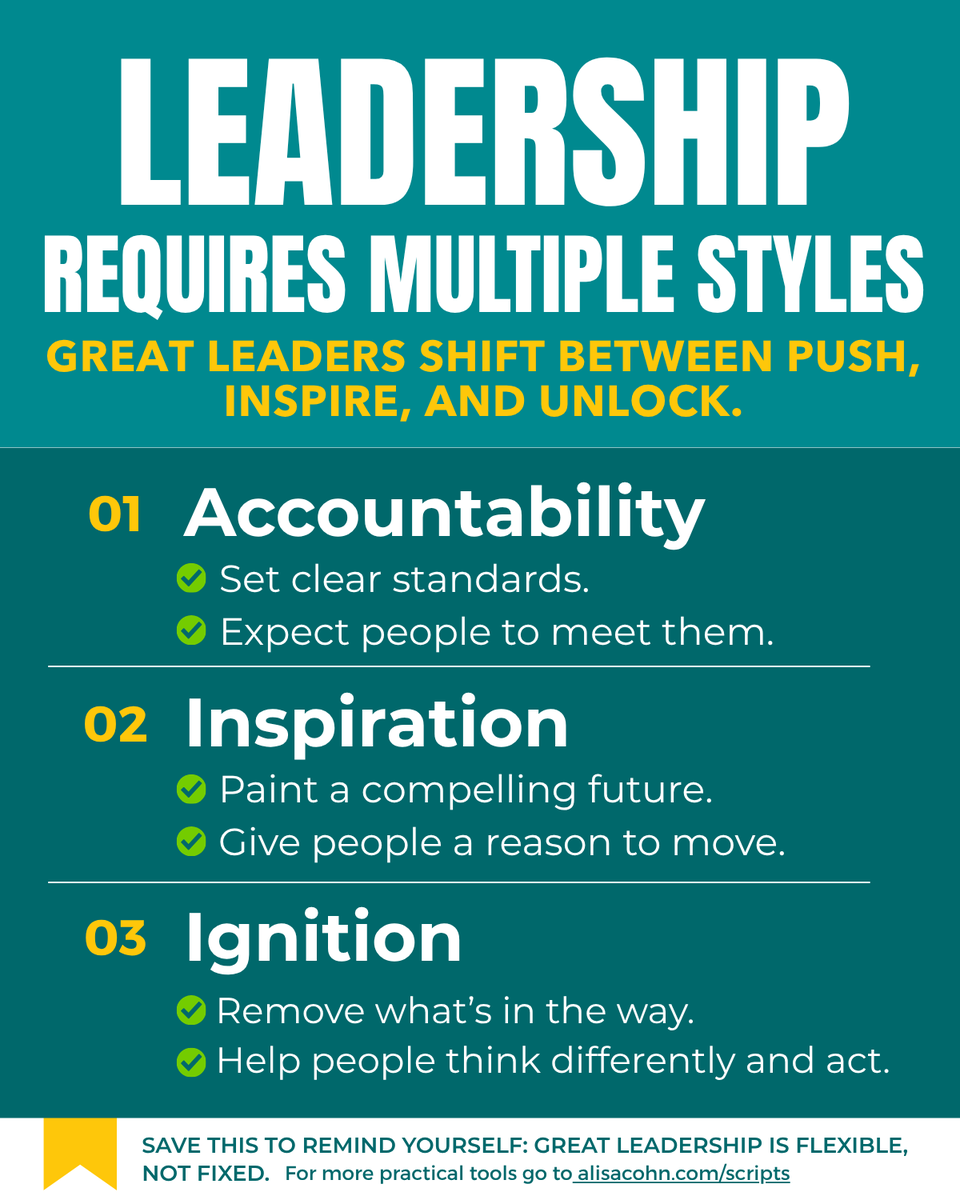
Stop trying to be a consistent leader.
The best leaders are flexible, not fixed, in their styles.
After 25 years of coaching executives, I've watched too many leaders try to be consistent when they should be adapting their style.
The VP who deeply understands his people...and lets them off the hook when they fall short.
The CEO who doubles down on "priorities" when her team has lost momentum. They go through the motions.
The founder who micromanages through roadblocks. Everything slows down as they wait for her to solve the problems.
They all made the same mistake.
They thought leadership was about having one style and sticking to it.
But effective leadership is about reading the moment and shifting between modes:
✅ Hold the line when accountability matters.
✅ Inspire vision when people need direction.
✅ Unblock thinking when momentum is stuck.
The best leaders don't pick one approach. They flow between all three based on what the situation demands.
Your consistency should be in your judgment, not your method.
Which leadership mode do you find hardest to shift into?
Most CEOs think they're being strategic. They're just reacting faster.
Real strategy doesn't happen in the gaps between meetings.
It needs protected time with hard edges.
One of my CEO clients starts his day with his global team at 6am. He just added two meetings to his calendar and feels calmer than he has in months.
He created the "CEO Time" framework:
𝗧𝘂𝗲𝘀𝗱𝗮𝘆 𝗖𝗘𝗢 𝗧𝗶𝗺𝗲: 𝗚𝗿𝗼𝘄𝘁𝗵 & 𝗘𝘅𝘁𝗲𝗿𝗻𝗮𝗹
➡️ M&A targets and growth pipeline review
➡️ Strategic positioning check
➡️ Key questions include: What would make our top customers switch to a competitor?
𝗧𝗵𝘂𝗿𝘀𝗱𝗮𝘆 𝗖𝗘𝗢 𝗧𝗶𝗺𝗲: 𝗢𝗽𝗲𝗿𝗮𝘁𝗶𝗻𝗴 𝗠𝗼𝗱𝗲𝗹 & 𝗣𝗲𝗼𝗽𝗹𝗲
➡️ Organizational effectiveness and talent decisions
➡️ Operational improvements
➡️ Key questions include: If I built this org from scratch, what would I do differently?
𝗧𝗵𝗲 𝗿𝘂𝗹𝗲 𝗳𝗼𝗿 𝗯𝗼𝘁𝗵:
Each session ends with one concrete action. Move a decision forward. Communicate new thinking or a challenge to the leadership team. Build an agenda for a strategic meeting.
When you're always reacting, you're never really leading.
Pick two sessions this week. Block them on your calendar. Protect them like your most important meeting.
Stop pretending strategy happens in the gaps.
Most founders use OKRs and performance reviews. Tanay Kothari @tankots uses "love languages."
That may sound soft. But his company Wispr Flow @WisprFlow, loved by Reid Hoffman @reidhoffman, Steven Bartlett @StevenBartlett among many others, is now worth $2B. Not bad for having only 50 employees.
At 27, he manages employees decades older than him.
Two things really stood out to me:
He customizes his approach to each leader to help them operate at their best.
He does 30-minute daily coaching sessions with new hires instead of 90-day onboarding plans.
Check out the Inc. article I wrote for more insights. (Link is in the threads.)
How do you customize your approach for your employees and colleagues?
Want better ideas? Start by asking for terrible ones.
I watched two CEOs run strategy sessions recently.
Same size companies.
Same market pressure.
Completely different energy in the room.
The first CEO said:
“Let’s hear the best ideas for growth.”
Silence.
A few careful suggestions.
Safe answers.
Everyone is trying not to sound stupid.
The second CEO said:
“Give me your worst ideas. I’ll go first.”
She grabbed the whiteboard and wrote:
“Teach our pets to do tricks and sell tickets to a circus.” ”
Then she drew a puppy.
The room exploded.
People started throwing out ridiculous ideas:
🔷 “Wear pajamas on Wednesdays. ”
🔷 “Shoot a TV spot in the parking lot of our biggest competitor”
🔷 “Go door-to-door instead of running ads.”
Most of the ideas were absurd.
But buried inside them were real insights.
The pajama idea sparked a conversation about “showing up to win.”.
The “circus” idea led to an a idea about marketing.
The competitor comment opened up a completely new partnership strategy.
That’s the thing about brainstorming:
People usually don’t lack ideas.
They lack permission.
Ask for “great ideas” and people edit themselves before they speak.
Ask for terrible ones and suddenly creativity has room to breathe.
Pressure shuts people down.
Permission opens them up.
Try this in your next brainstorm:
Start with the worst ideas first. Come up with some bad ones yourself.
Watch what happens when people stop filtering.
Listen to the full episode here:
Spotify- https://t.co/y0EVSW3JbT
Apple Podcast- https://t.co/57URl6vNx2
Youtube- https://t.co/YaeIZG0Qxj
Buzzsprout- https://t.co/m43ckGJo6x
What feels like chaos to one person feels like momentum to another.
That’s one of the most important truths about startup hiring.
On my podcast, Josh Reeves @joshuareeves , cofounder and CEO of Gusto @GustoHQ , talked about startup life.
Gusto just crossed 500,000 customers and $1B in revenue this year, so they’re cruising well out of startup mode.
Josh said: described startup life this way:
“You have to be running the train while building the train, while laying the tracks, while trying to make the train go faster.”
That’s exactly what many early-stage companies feel like.
Some people hear that and light up.
Others immediately think, “Absolutely not.”
Neither is wrong.
The mistake founders make is assuming there’s one universally “great” hire.
But the best hires aren’t just talented people.
They’re people who are energized by the environment they’re stepping into.
The right person sees opportunity.
The wrong person sees instability.
That alignment matters more than most founders realize.
We talked a lot more about startup leadership, hiring, scaling, and building in uncertain environments in this episode.
▶️ Listen to the full conversation through the link in the thread below.
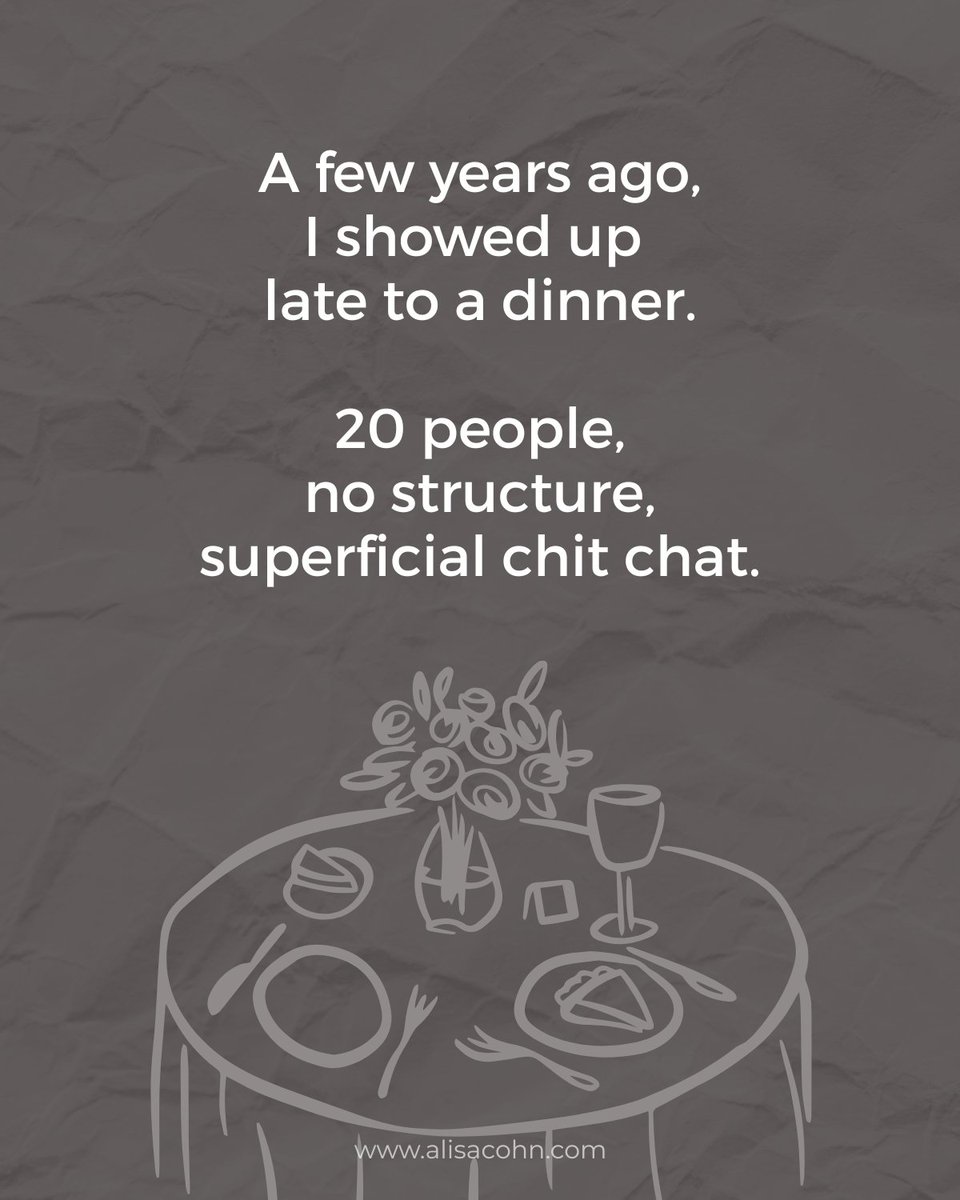
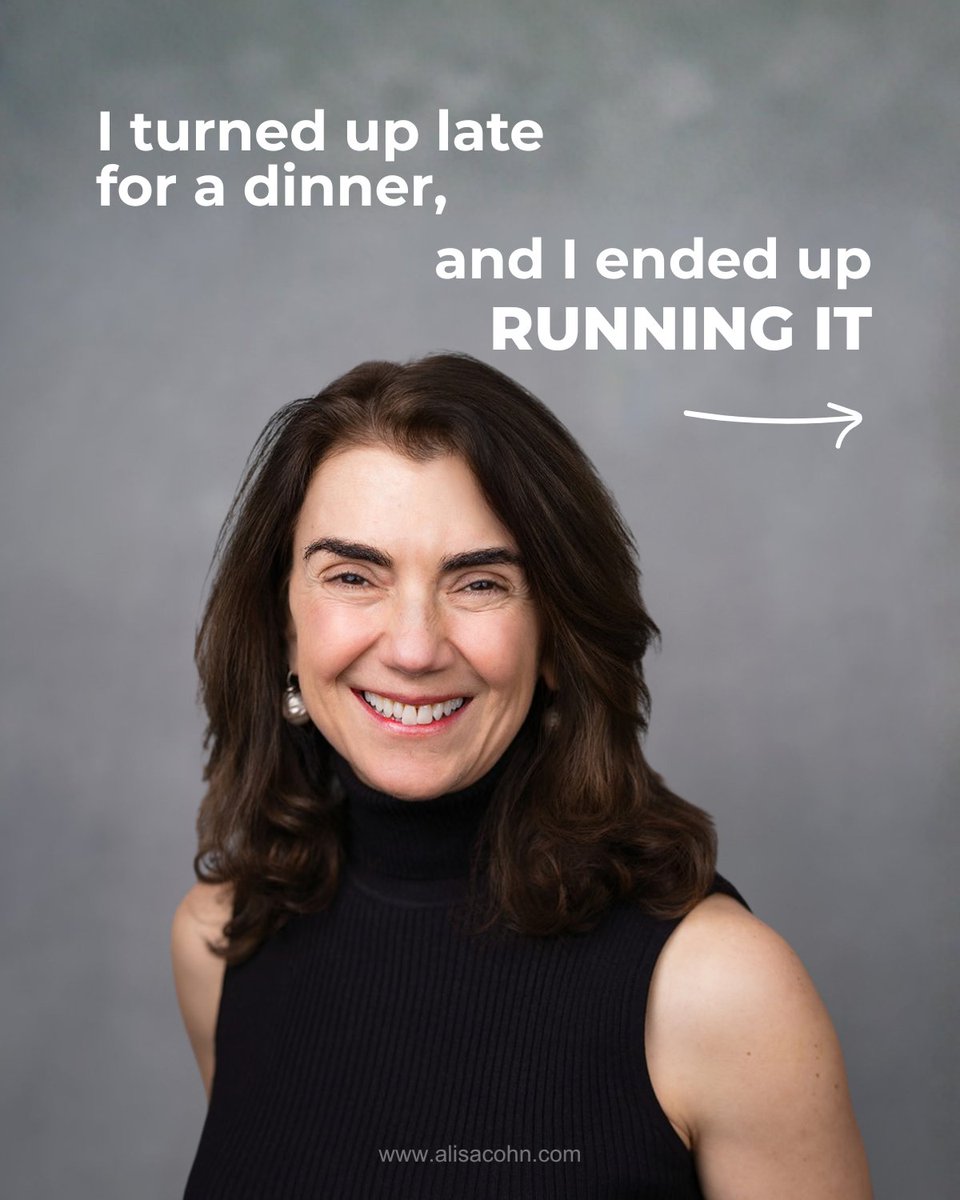
I showed up late to a dinner.
(Not ideal I know.)
20 people were already there.
There was small talk inside conversations.
No real connection.
So I asked a simple question:
“Does everyone actually know who’s in the room?”
They didn’t.
So we fixed it.
And within minutes, the entire energy changed.
Here’s what most people ignore:
Leadership doesn’t start with a title.
It starts with noticing what’s missing and stepping in.
Most rooms are waiting for someone to take the lead.
They’re just hoping it’s not them.
If you want to stand out in meetings, events, or your career, check out this carousel.
Be the person who makes the room better.
👉 Save this as a reminder: opportunity doesn’t always look like an invitation.
A lot of coaches assume the path to becoming a better coach is more training, more certifications, more frameworks.
And of course, those things matter.
But over the years, I’ve noticed something else:
The right clients change you.
They ask harder questions.
They challenge your assumptions.
They force you to think more strategically, listen more carefully, and grow beyond your default playbook.
In many ways, the clients you attract determine the coach you become.
That’s one reason I’m looking forward to my conversation with Dorie Clark for the https://t.co/XtiDC3tQib Summit 2026.
We’ll be talking about what actually attracts higher-level coaching clients beyond credentials or expertise alone.
Including:
🔷 Why some coaches stay stuck when they focus on credentials
🔷 How positioning influences the kinds of clients who seek you out
🔷 The subtle signals that build trust before a first conversation
🔷 What clients are actually evaluating when choosing a coach
The summit runs June 1–11 and includes an incredible group of speakers, Nir Eyal, Lynda Gratton, Michael Bungay Stanier, Marcia Reynolds, and Lisa Orbé-Austin, and many others.
It’s free to attend.
If you’re thinking about how to elevate not just your business, but the level of conversations you’re having every day, I hope you’ll join us.
Register here: https://t.co/JkyvcuQt5r
Your network is worthless when you actually need it.
Unless you’ve cultivated it over the years.
Everyone's talking about layoffs, job anxiety and career security. Your network is your lifeline. But not if you only think about it when you're in trouble.
After 25 years of coaching executives through multiple economic downturns, I've seen the same pattern. The people who land on their feet aren't scrambling to build relationships when the writing's on the wall. They spent years building authentic connections when they didn't need anything.
Most networking advice is superficial. Here's what actually works:
1️⃣ Proactively share others’ wins
When something goes well, highlight the people who helped make it happen. Send their boss a note. Tag them in your success post. This single habit builds massive goodwill.
2️⃣ Make introductions that surprise people
Don't just connect people in your industry. The VP of sales who loves hiking needs to meet the operations manager who leads wilderness trips. Unexpected connections create value.
3️⃣ Remember what they actually care about
Someone mentioned their daughter's career search six months ago. When you see a relevant article, send it. Stand out by remembering the human details.
4️⃣ Ask for their opinion on your challenges
"I'm thinking through this issue and could use your perspective" is a form of sincere flattery. People love sharing expertise.
5️⃣ Amplify their voice, not just their achievements
Don't just comment on promotion posts. Share their insights. Quote their smart takes in your own content. Make them a thought leader in your network.
6️⃣ Follow up on the hard stuff
When someone mentions a difficult project or family situation remember to check in about it. "How did that restructuring announcement land with your team?" “How’s your mom?”
Real relationships aren't built when you need something. They're built over time with sincere interest in others’ success.
It’s a good moment to check in with someone to see how they’re doing.
The best leaders I coach have something in common: they refuse to stay flexible.
Not about strategy or vision.
About their habits and ways of working.
Everyone tells executives to flex their styles, but I say dig in.
When you create decision rules about the way you work, you reduce fatigue.
Here are some that my most successful clients use:
Meeting rules:
➡️ No meetings before 10am to protect deep work time
➡️ All meetings default to 25 or 50 minutes, never 30 or 60 builds in buffer time
People rules:
➡️ If it's not a hell yes after the second interview, it's a no
➡️ Anyone who misses two deadlines without communication gets a direct conversation
Project rules:
➡️ If it doesn't align with the 3-year vision, it's an automatic no
➡️ Before we do a launch, we do a smaller test
Communication rules:
➡️ Email responses happen in two batches: 11am and 4pm
➡️ Anything requiring more than three back-and-forths gets escalated to a call
The breakthrough happens when they fully embrace these rules and train others.
Your calendar is not a democracy. Your priorities are not up for debate.
Pick one area where you make the same decision repeatedly. Write the rule. Stick to it for two weeks.
Stop evaluating what you've already decided.
The worst advice after a layoff: "Update your resume." Here's what actually works.
Do these three things first.
After coaching hundreds of people through career transitions, I've learned that the people who bounce back fastest aren't the ones with perfect resumes.
They're the ones who focus on relationships and momentum while everyone else is polishing bullet points.
Here's what actually works:
🔹 Reach out to people who helped you.
Thank them. Offer to help them. That signals that you want to stay in touch. And that you give before you ask.
🔹 Build something.
Anything. A newsletter. A tool. A side project. Show you're proactive and have a learning mindset.
🔹 Join a local organization and take a leadership role.
You'll learn some skills, meet new people, and gain fresh perspectives.
Connection and action create opportunities faster than perfect formatting ever will.
🔖 What's one thing you could build or one person you could reconnect with this week?
Leaders: if you want to build connection listen up!
Here’s a simple exercise that your team can do to warm up any meeting.
It’s called Rose. Thorn. Bud.
Everyone shares three things:
🔹A win.
🔹A challenge.
🔹Something they’re looking forward to..
That’s it.
When you do that:
People open up.
They understand each other better.
They feel more connected
That’s how trust actually gets built consistently, in small moments like this.
⚡Try it in your next team meeting or one-on-one.
Then watch what happens to the energy in the room.
Many leaders think they’re delegating.
But they’re actually sabotaging their teams.
After 25 years of coaching leaders, I’ve seen this pattern play out with leaders who mean well and want to scale.
They hand something off, move on to the next fire and assume it’s handled.
They neglect to explain the full context and set the person and the situation up for success.
Weeks later they’re frustrated the work isn’t right.
And their team is confused because they thought they were doing exactly what was asked.
None of this is a performance issue.
It’s a leadership issue.
Real delegation isn’t about getting something off your plate.
It’s about setting someone else up to succeed.
When you delegate you need:
✅Clear outcomes.
✅Context.
✅The right person.
✅Ongoing engagement.
That’s what allows work to scale beyond you.
When you set others up for success, you scale yourself and you invest in someone else. That makes them more capable over time.
Delegation is a skill, not a shortcut.