@CaldasLab always made of amazingly talented and nice people whether @Cambridge_Uni or now @HebrewU! Met with @y_lubling and together went to an amazing @Israel_Phil concert. Yaniv is now the senior comp bio at a new start-up. Another way of walking the walk! #Caldasians rock!
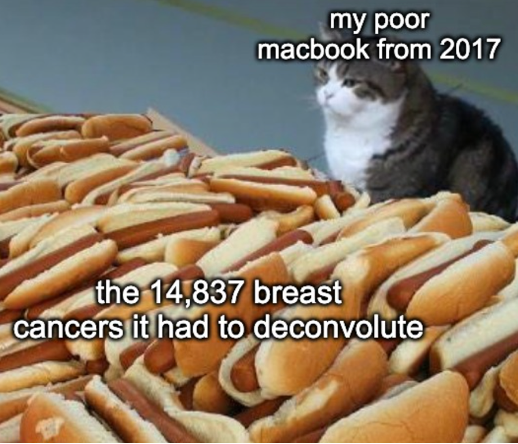
🧵My poor laptop wishes I learned how to use the cluster earlier, but it’s sacrifice was not in vain! We learned some important things about the breast cancer tumor microenvironment in our paper published today:
https://t.co/KvoTJSvbol
Our RAEFISH spatial transcriptomics technology is now published in Cell @CellCellPress! RAEFISH enables sequencing-free whole genome spatial transcriptomics at single molecule resolution. This work represents the first time that transcripts from more than 23,000 genes were directly probed and imaged in situ with any technology, and the first time numerous different gRNAs were directly probed and distinguished by imaging in a high-content CRISPR screen.
The challenge:
Recent breakthroughs in spatial transcriptomic technologies, from us and others, have greatly improved our ability to profile cell types, states, cellular interactions, and the underlying gene programs within the native tissue contexts. However, these technologies have limitations. Methods based on 2D-array-capture/tagging and ex situ sequencing offer genome-scale coverage, but lack the resolution needed to accurately study fine spatial organization. In contrast, image-based methods that rely on highly multiplexed fluorescence in situ hybridization or in situ sequencing provide single-molecule resolution and resolve fine spatial organization, but require pre-selecting a limited set of target genes (typically hundreds to a few thousand genes), which limits discovery and sometimes leads to only validations of prior knowledge due to the pre-selected targets being well studied in the context.
The solution:
RAEFISH, our lab's new flagship image-based spatial transcriptomics technology, simultaneously enables single-molecule spatial resolution and whole-genome level coverage of long and short, endogenous and engineered RNA species in cell cultures and intact tissues.
The results:
🔥 We performed RAEFISH targeting 23,312 human genes in cell cultures, and demonstrated hypothesis-free discovery of cell cycle associated genes and subcellular localization patterns of transcripts, including nearly the entire protein coding transcriptome and additional long noncoding RNAs.
🔥 We performed RAEFISH targeting 21,955 mouse genes in mouse liver, placenta, and lymph node tissues. Our analyses on immediately neighboring cells uncovered intriguing cell-cell interactions and previously unknown gene expression programs underlying the interactions, such as those between cholangiocytes and immune cells.
🔥 Finally, we further developed RAEFISH to directly read out guide RNAs (gRNAs), demonstrating Perturb-RAEFISH in an image-based high-content CRISPR screen. The capacity of Perturb-RAEFISH to directly read out gRNAs addresses a crucial limitation of previous techniques that read out a barcode/identifier sequence paired with each gRNA species, as the pairing can be shuffled due to RNA recombination intrinsic to lentivirus used in such screens, which limits screen sensitivity and accuracy.
In summary, RAEFISH provides the biomedical research community with a generalizable research tool, which will bring more spatial and mechanistic insights across health and disease.
This work was co-led by my postdocs Drs. @ChengYubao, Shengyuan Dang, and Yuan Zhang, and was supported by the @NIH, @genome_gov, @sennetresearch, and @psscra. I would like to thank our co-authors, funding agencies, editor, reviewers, and my whole lab @YaleGenetics@YaleCellBio@YaleCancer@YaleMed@Yale.
Link to paper:
https://t.co/6HtwylwjdN
@immunonoah 100% agree! This echoes another interesting article from Cambridge PhDs: https://t.co/2zZ1rcVj9e
The aging population is going to make the world a lot less dynamic or disruptive
So, to make this work, less gatekeeping in funding and publication pathways are needed!
📣We're seeking a postdoc to join us @MRC-LMB to investigate neuroimmune interactomes in tumour & viral immunity.
If you find fascinating & want to learn about #neuroscience & #immunology, tracing neurons, molecular biology & #flowcytometry, apply!
🧠🫁🔬
https://t.co/gvv5IjjS1Z
Are you looking for a statistics/ML postdoc? Come to work with @antonis02 and me in the NEMO study, an international collaboration aiming to detect ovarian cancer earlier through cutting-edge multi-omics, funded by the Alliance for Cancer Early Detection.
https://t.co/demmIr1nGM
I'll soon be recruiting a postdoc fellow to join us @ MRC LMB to continue developing our programme to understand neuroimmune modulation 🧠🔬🧬🩸🫁
If you're interested in joining us check also @MSCActions, @wellcometrust &
https://t.co/TkP61a8iPd & DM'me
https://t.co/RxDcklWOsX
Thrilled to join the brilliant @PersistSeq Consortium and dive into these exciting datasets for my Postdoc!
Looking forward to the impactful discoveries ahead bridging academia and industry! Check out our new video outlining the key goals of our project!
https://t.co/4iegRnFF4u
🚀 Xaira Therapeutics has just dropped a game-changer for AI-driven biology.
Today, we unveiled X-Atlas/Orion, the largest publicly available genome-wide Perturb-seq dataset to date—spanning 8.4 million single cells with perturbations across all ~20,000 human protein-coding genes.
This release is not just about scale—it’s about enabling a new era of causal, mechanistic foundation models for biology.
📝 Preprint on bioRxiv: https://t.co/y3i0AYzVOS
📂 Dataset on Figshare:
https://t.co/WboHM8T9Uo
🔍 What makes X-Atlas/Orion special:
📈 Unprecedented scale & quality: Each cell profiled with deep (~16k UMIs) transcriptomics and rich metadata
🧪 Quantitative dose-response modeling: Thanks to high-fidelity sgRNA detection and ~4 guides per gene, allowing continuous modeling of genetic effects
🧬 FiCS platform: A fully industrialized single-cell perturbation system enabling rapid, reproducible experiments at massive throughput
🧠 This isn’t just “data.” It’s the biological substrate for building virtual cell models that can generalize, predict, and ultimately power AI-native drug discovery.
💬 My final take:
This is a foundational moment for the field. The ability to model how genes affect cell state—quantitatively, causally, and at scale—is what we need to unlock predictive biology.
Kudos to the incredible team at Xaira for open-sourcing this resource so the entire community can build on it.
#PerturbSeq #SingleCell #Genomics #VirtualCell #FoundationModels #AIForBiology #Xaira #DrugDiscovery #SyntheticBiology #CausalAI
More press release: Press release :
🔗 GEN article : https://t.co/UI45lDkGB3
🔗 BusinessWire: https://t.co/qRFb9JUkI1
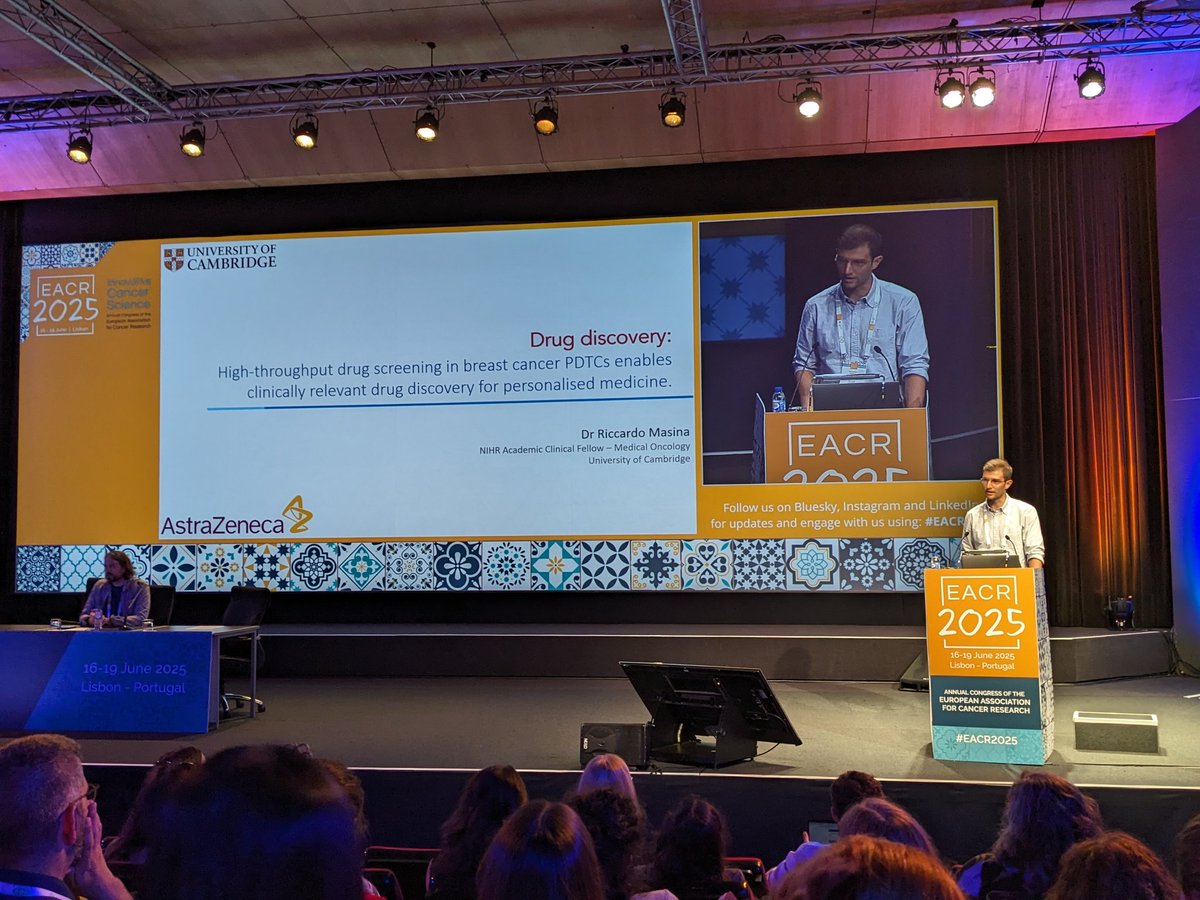
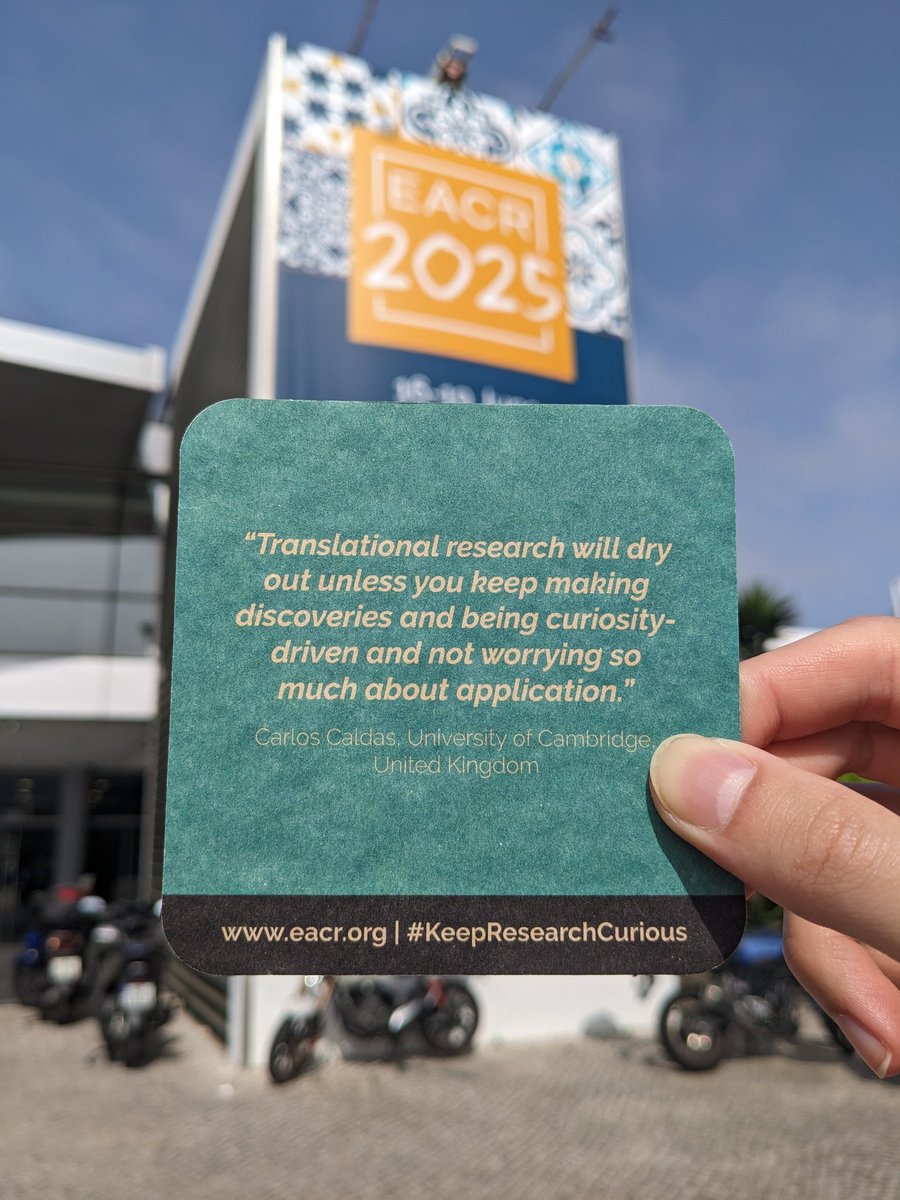
Terrific talk from our superstar clinical fellow Riccardo Masina at #EACR2025!
A masterclass into how #ML can be used to extract useful insights for drug discovery from high throughput drug screens in clinically relevant, patient-derived models!