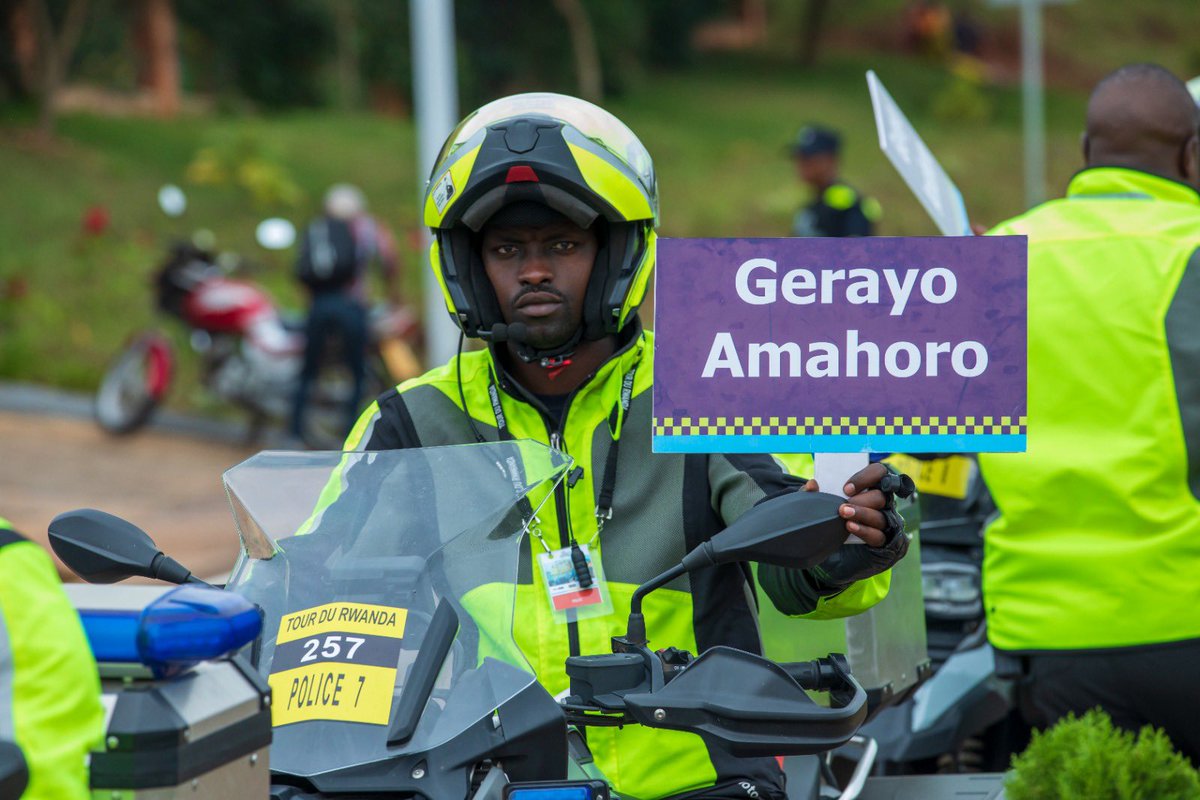
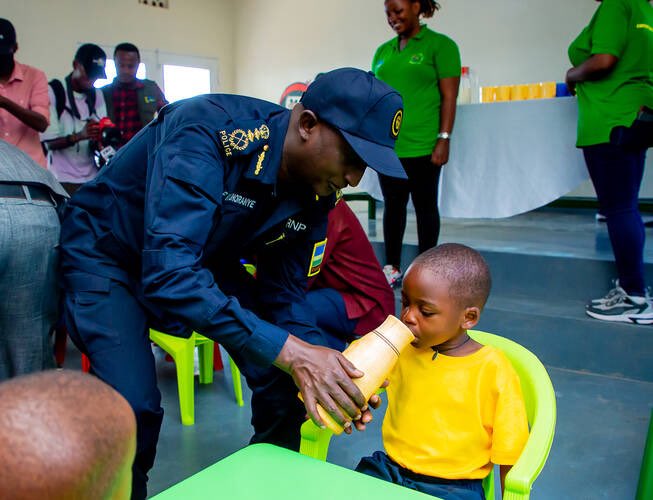
25 years of Rwanda National Police one of the most effective police forces in the world.
Celebrated as a community-based force, Rwanda National Police is credited with restoring law and order, strengthening justice, and reducing crime, making Rwanda one of the safest countries in the world.
How did we get here?
A few months after the resignation of President Bizimungu, President Kagame assumed office as interim President. One of the key challenges he identified even during his time as Minister of Defence was the urgent need to restore security and stability in a country devastated by war and the 1994 genocide against Tutsi.
In 2000, @Rwandapolice was established, marking a major shift towards a unified and professional police force.
President Kagame ordered the merger of three institutions that previously operated under different ministries:
1) The Gendarmerie Nationale
(Ministry of Defence)
2) The Police Communale
(Ministry of Local Government)
3) The Police Judiciaire
(Ministry of Justice)
The merger eliminated duplication, reduced bureaucracy, and laid the foundation for a force dedicated to keeping Rwandans safe and secure.
25 years later…
RNP has grown from 3,000 personnel in 2000 to over 18000 today, including specialists in security, health, engineering, law, and technology.
Today, RNP is responsible for:
• Public safety and social order
• Traffic management and road safety
• Counter-terrorism
• Infrastructure security
• Firefighting and disaster response etc…
Community partnership remains at the heart of RNP’s policing philosophy.
Through community policing programmes, RNP works with local leaders, schools, businesses, and residents to:
• Prevent crime
• Identify threats early
• Resolve concerns through dialogue, not just enforcement alone.
Since 2005, Rwanda National Police has also played a growing role in regional and international peacekeeping missions.
RNP has served in Haiti, Sudan, Mali, and currently serves in CAR, South Sudan, and Mozambique.
Rwanda remains one of the world’s leading contributors to UN peacekeeping missions.
RNP deploys two categories of Police in different regional and International missions
• Formed Police Units (FPUs) these are well trained units for high-risk environments
• Individual Police Officers (IPOs) these are specialists serving as advisors and capacity-building experts.
Happy 25 years of service, and congratulations to the men and women working day and night to keep Rwanda safe, secure, and peaceful.
Congratulations as well to the current CG, @fnamuh.
IGICIRO CY'IBIKOMOKA KURI PÉTROLE bikomeje gutumbagira, mubufaransa Litiro iri kuri 2.399Euro Angana na 4126frw muri AMERIKA ni 3.35$ per L. Angana na 4897frw, i Kigali turakibereye muri 1900frw
Mujye mureka dushime LETA yacu ifite aba Planificateur bari efficace ntako baba batagize peee.
Today on the 18th of March, a hearing of the case involving #Rwanda v. UK at the Permanent Court of Arbitration in the Hague has commenced. It is Rwanda’s position that the case is not about monetary compensation or any other form of financial gain. 1/14
The fighting between M-23 and Kinshasa is stopped by the Doha Agreement.
The tensions between Rwanda and Kinshasa are stopped by the Washington Agreement.
The advancement of M-23 does not violate the Washington Agreement. It urges Kinshasa to treat the Doha Agreement with the requisite urgency needed to prevent further loss of territory.
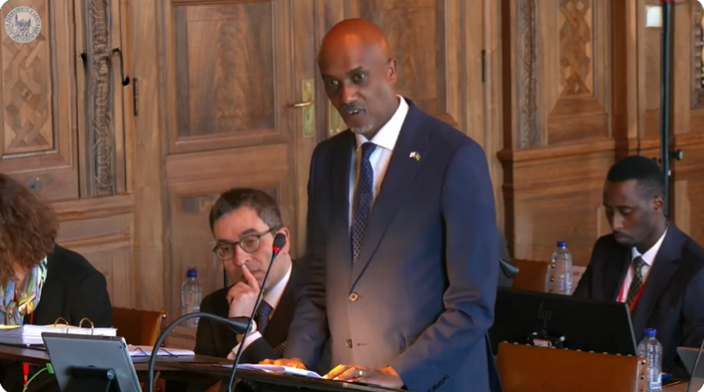
[WATCH] Full Rwanda's Statement, delivered by PR, Amb. @martin_ngoga, at the 22nd Oct- General Assembly 20th plenary meeting on the International Residual Mechanism for Criminal Tribunals. @RwandaUN#MamaUrwagasaboTV
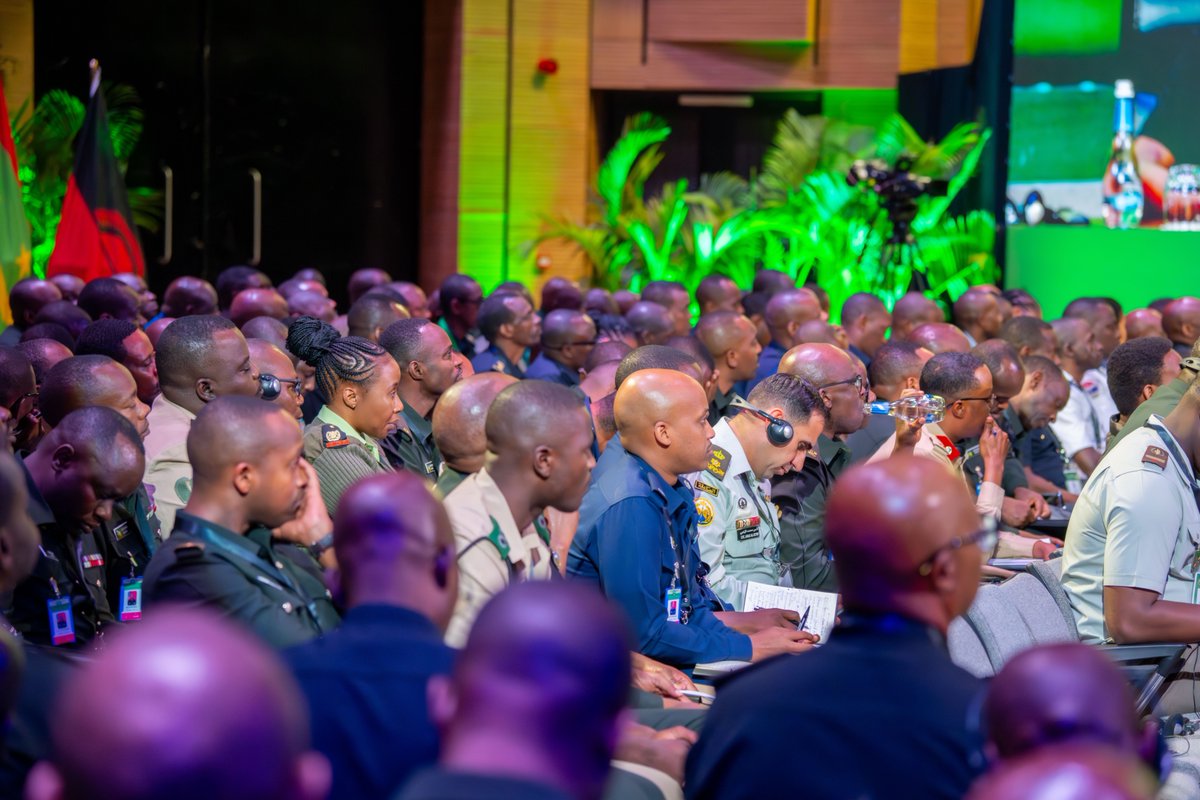
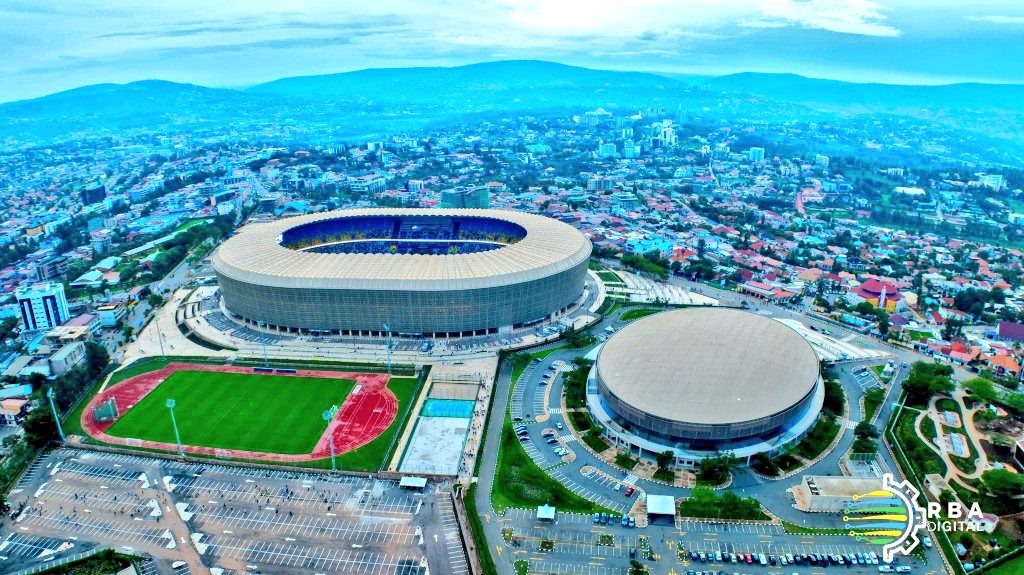
On the second day of the Land Forces Commanders Symposium, taking place at Intare Arena, Kigali, the third session focused on the theme: “Cementing Civil-Military Cooperation through Citizen Outreach Programs.”
Panelists underscored the military’s role in community development as a cornerstone of lasting peace and security. They emphasized that military-led outreach initiatives significantly contribute to the well-being of citizens, foster public trust, strengthen civil-military relations, and promote human security and development.
The session was moderated by Mrs. Chidi Blyden, Principal and Founder of Culturally Bound Consulting, former Deputy Assistant Secretary of Defense for African Affairs at the U.S. Department of Defense under the Biden Administration. Speakers included Lieutenant General Kayanja Muhanga, Commander of Land Forces of the Uganda People's Defence Forces; Major General Chikunkha Harrison Elijah Soko, Army Commander, Malawi Defence Forces; and Commissioner General Felix Namuhoranye, Inspector General of Rwanda National Police.
Uyu munsi,
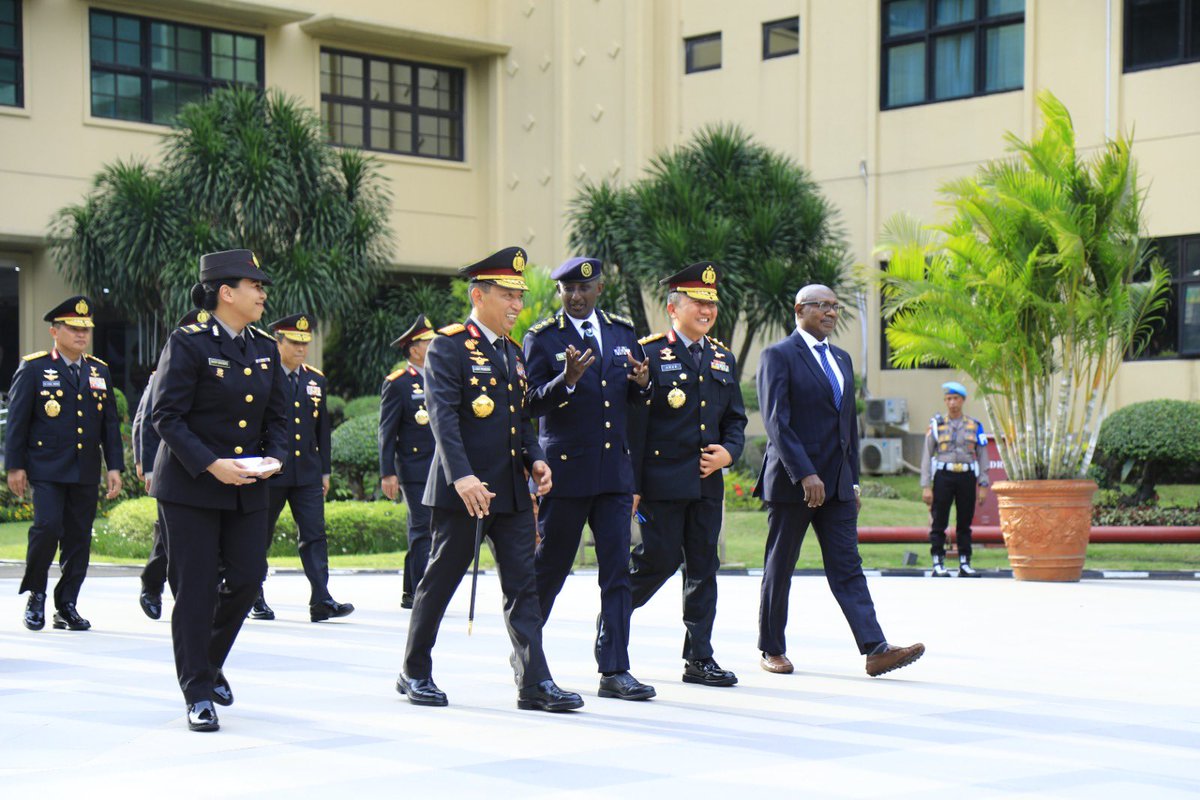
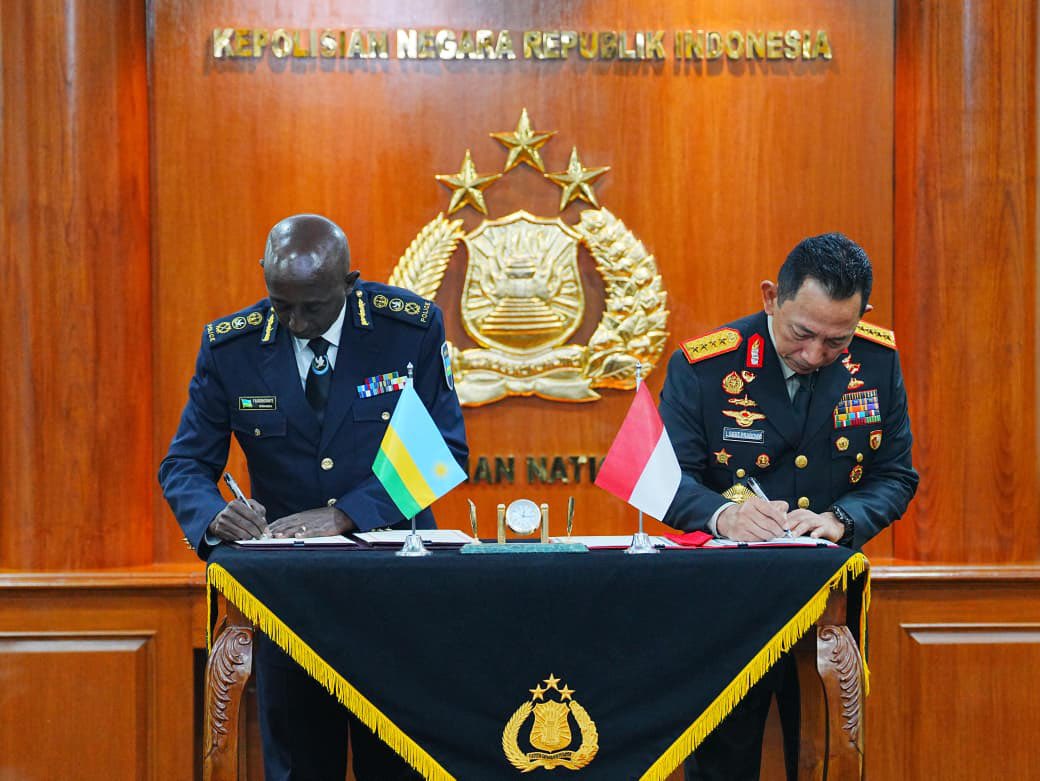
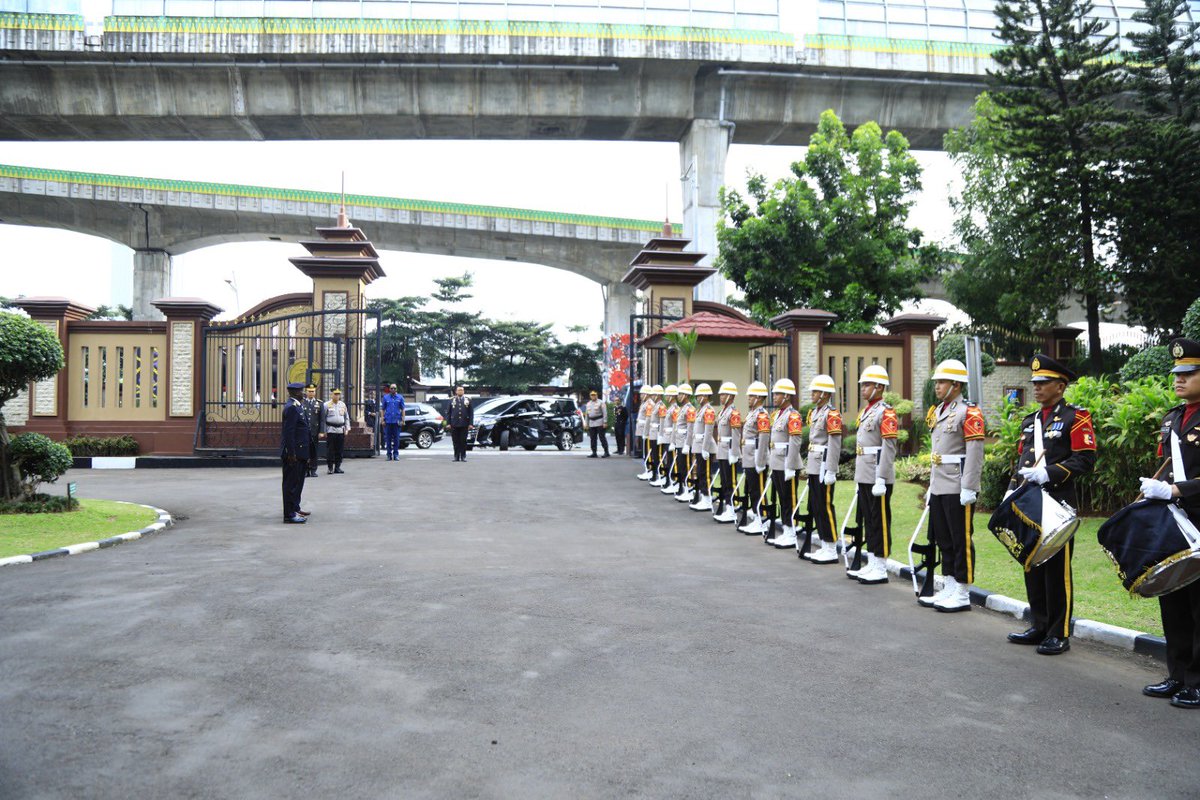
Umuyobozi mukuru wa Polisi y'u Rwanda, CG Felix Namuhoranye n'itsinda ayoboye bakiriwe n'umuyobozi mukuru wa Polisi ya Indonesia General Listyo Sigit Prabowo ku cyicaro cya Polisi ya Indonesia, basinya n'amasezerano y'ubufatanye hagati ya Polisi y'u Rwanda n’iya Indonesia nk'ikimenyetso cy'ubufatanye bw'inzego zishinzwe kubahiriza amategeko.
Umuhango wo gusinya amasezerano wabereye Jakarta muri Indonesia witabirwa na Ambasaderi w'u Rwanda muri Indonesia, Sheikh Abdul Karim Harerimana @HarelimanaAK. Ayo masezerano azibanda ku mikoranire mu kurwanya ibyaha byambukiranya imipaka, guhanahana amakuru n'ubumenyi, amahugurwa n’izindi gahunda zijyanye no kubaka ubushobozi.
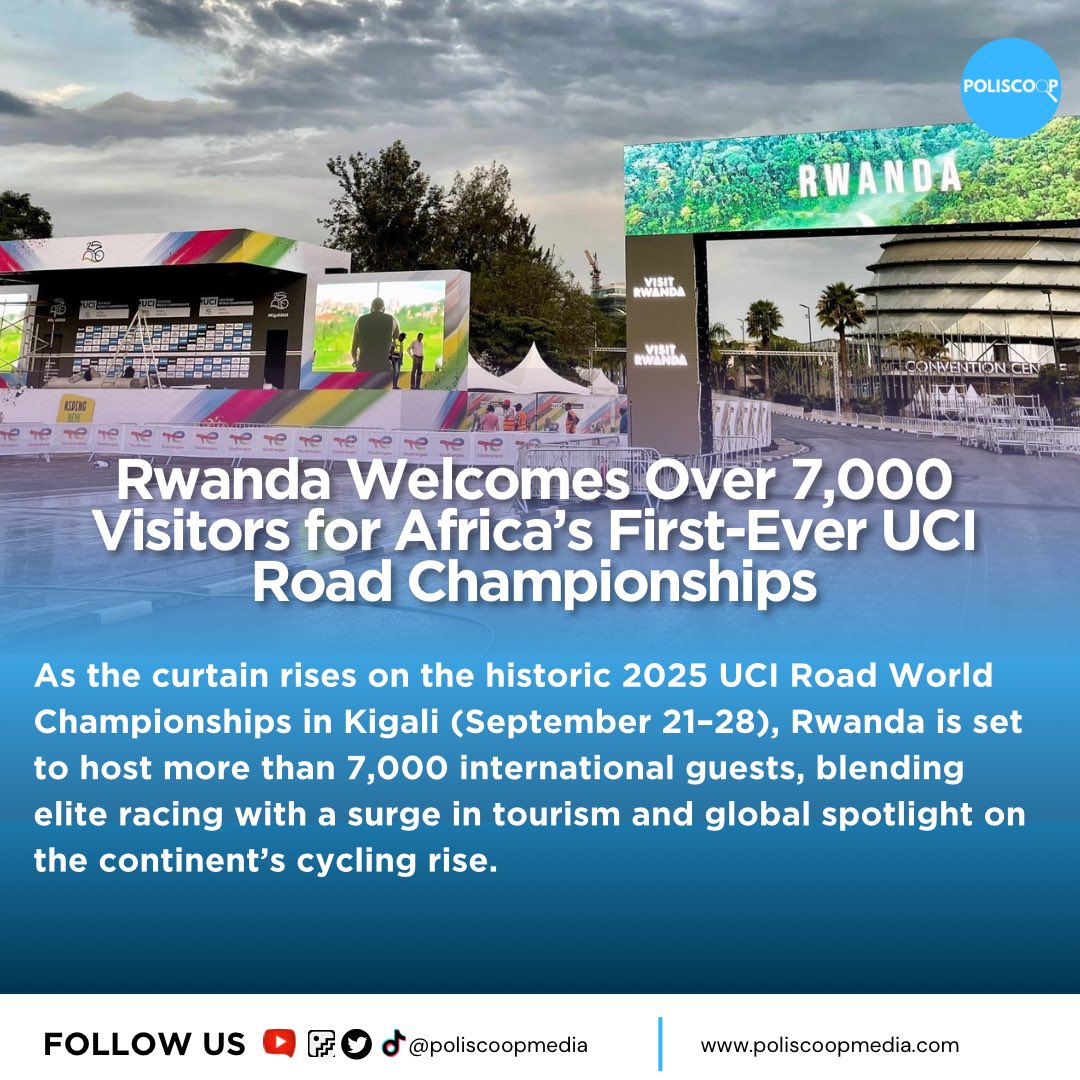
As the curtain rises on the historic 2025 UCI Road World Championships in Kigali (September 21–28), Rwanda is set to host more than 7,000 international guests, blending elite racing with a surge in tourism and global spotlight on the continent’s cycling rise. #Kigali2025
RWANDA
Rwanda increases its 2025/26 budget by over 20%—the highest jump ever—despite EU and Canadian sanctions over disagreement in Congo. IMF also forecasts Rwanda’s growth to stay above 7%, ranking it among the world’s fastest-growing economies. #FactsOnRwanda
"300 Tutsi homes burned to the ground in Nturo by FDLR!"
A report by Bojana Coulibaly
As part of a book project on the Mechanisms of Genocide Ideology in North Kivu, my research partner and I went to investigate the infamous attack on the village of Nturo which took place in October 2023.
➡️ After conducting interviews with Nturo residents, we found that Nturo had about 300 homes owned by Congolese Tutsi. They were attacked by #FDLR on October 2nd, 3rd and 4th, 2023. This was 6 months after the #M23 withdrew from 80% of their previously controlled territory in the Rutshuru and Masisi areas, and one month before the withdrawal of the EAC forces.
➡️ During the main attack, the area was under control of the Burundian EAC contingent.
➡️ We found out that after the #M23 withdrew in March 2023, the 300 Nturo families were systematically targeted by FDLR-Nyatura-Wazalendo. The residents were persecuted and had to pay monthly taxes for cattle and land ownership to the #FDLR. People were killed when they could not pay the taxes.
➡️ The FDLR attacked Nturo several times after M23 withdrew, on the watch of the Burundian EAC forces. All the Nturo residents we interviewed agree that the Burundian EAC soldiers gave a green light to the FDLR-Nyatura-Wazalendo on the day of the main attack. This was confirmed in a video by one of the assailants. The complicity of the Burundian EAC forces with FDLR may be explained by their endorsement of anti-Tutsi genocide ideology.
➡️ On October 2nd, the big attack began. Two Nturo residents got killed during the attack. On October 3rd, FDLR, Nyatura and their families came and looted all the homes, loading trucks with the belongings of Nturo residents. Most residents had fled on October 2nd and 3rd. On October 4th, the assailants came with yellow canisters full of gasoline. They deliberately sprayed all the houses and set fire, which led to the total annihilation of the village of Nturo.
➡️ As we can see in the video footage, FDLR-Nyatura-Wazalendo clearly acknowledged that they were wiping of the map a "Tutsi village".
➡️ During the attack, the majority of Nturo residents fled to the Bwiza IDP camp where 17,000 IDPs had gathered from several parts of eastern DRC, after facing persecution by #FDLR & Nyatura for decades.
➡️ Since November 2023, Nturo residents have began to return to Nturo to rebuild their homes. Those who came in November 2023 witnessed attacks carried out by a FARDC Sukhoi. Indeed, according to the residents, seven bombs were dropped on Nturo.
➡️ When we visit Nturo today, we can see that all the houses have recently been rebuilt.
➡️ ➡️What happened in Nturo is illustrative of the politics of divisionism used by the Government of Kinshasa in its conflict against #M23, particularly through its collaboration with the genocidal force #FDLR. It is also representative of the impact of genocide ideology in DR Congo.
➡️➡️While the attack is slightly mentioned in the December 2023 UN Group of Experts report, it is certainly inadequate as no statement was done by @MONUSCO & no investigation was ever carried out. In fact, around the time of the withdrawal of the EAC forces in November 2023, the Burundian army joined the DRC government coalition comprising FARDC, @MONUSCO, #FDLR, Wazalendo and European Mercenaries, to fight against #M23.
➡️➡️The total annihilation of Nturo is proof that there is ongoing ethnic cleansing of the Congolese Tutsi in eastern DRC. It shows the impact of genocide ideology in the region, as systematic attacks on Congolese Tutsi in Kitchanga and Bwiza by FDLR also took place.
➡️➡️This tragedy similarly highlights that Nturo residents were feeling safe under the presence of #M23. However, when #M23 withdrew in March 2023, letting EAC take over, the security of Nturo residents drastically decreased. This particular element seems to legitimize the existence of #M23.
➡️➡️➡️ In view of these observations, could we conclude that #M23 is the solution to insecurity in Eastern DRC?
(Video by @TEDDYMAZINA)
"RWANDA'S SOVEREIGNTY: A Challenge to Western Power"
____________________________________
Listen, I just had a conversation with a Rwandan friend regarding the relentless actions of Belgium and the United Kingdom towards Rwanda, especially through sanctions which, when compared to the reality on the ground in the DRC, seem completely disconnected.
Today, in Goma and in areas controlled by the M23, the situation improves daily. There are no longer displacement camps resembling concentration camps, no more indiscriminate massacres, and no more targeted killings of Kinyarwandophones.
The city is gradually organizing itself, yet none of this is mentioned in Western media. Instead, absurd accusations continue, including the claim that the M23 uses rape as a weapon of war, which is entirely unfounded.
I asked him: why this verbal and political violence from these countries against Rwanda? Why this relentless pursuit, when, in reality, even access to Congolese minerals can still be negotiated with local actors?
His response was interesting. He acknowledged that, of course, these sanctions result in financial losses, but he stressed that this is not the main issue. For him, what deeply disturbs Western powers is Rwanda’s stance: an African country that dares to act as an equal to them.
It is this attitude, this desire to break free from a hierarchical relationship that has been imposed for decades, that is perceived as an existential threat. By demanding to be treated with respect and fairness, Rwanda challenges an established order where the West dominates and dictates the rules. This challenge is seen as a "cancer" to be eradicated quickly, before it spreads to other African nations.
My friend told me that some countries, especially English-speaking ones like Kenya or Ethiopia, are already starting to follow this path of emancipation. Even in West Africa, some Francophone nations are becoming aware of this dynamic.
But the majority of Central African countries, lacking strong leadership and a political culture rooted in this vision, remain trapped in a submissive relationship with the West. They accept a domination that is no longer colonial, but still a form of tutelage deeply ingrained.
For the West, seeing a model like Rwanda emerge—one that asserts total sovereignty and advocates for a partnership based on mutual respect—is a threat. This is not a typical economic or geopolitical war, but an ideological and moral war. And for those who cling to the old power structures, it is imperative to stop it before it gains momentum.
@PamelaFalk@jornalistavitor@MelissaFleming@Hectorgomezh@UNPeacekeeping@antonioguterres@adex_smithjr@OpeBee @calissii @Accoid@enythnn@DavidHundeyin@patrickanum@abdullahayofel@onyekanwelue@hrw@UN@IntlCrimCourt@afcongo
@titorutaremara4 @dr_dash250@MwangiMaina_@AbiyAhmedAli@realDonaldTrump@elonmusk@AldoHavugimana@YolandeMakolo@DrDamascene@onduhungirehe@KabarebeJames
Here are the key messages from President Kagame @CNN interview, before they were edited to fit the predictable editorial line:
◦FDLR are associated and supported by governments in the region. Their aim is not only to fight M23, who are Congolese, but to fight Rwanda and overthrow the government, as they have said publicly. Does anyone think Rwanda will sit back and wait for that to happen? Rwanda will fight back in whatever form, there is no question about it.
◦I subscribe to the idea of respecting sovereignty of countries. That means the sovereignty of Rwanda must also be respected. There is no sovereignty of any country that is more important than the sovereignty of another. That's the standard principle.
◦The same international community blaming Rwanda is the one that has left FDLR in Congo for 30 years. Two and a half decades and close to $40 billion later, what stability is there? Putting the blame on Rwanda is the easiest way of covering up the mess they have been involved with and caused in our region.
◦The problem is simple to understand. People make it sound complex to avoid doing anything about it. Even the most unintelligent people would understand a problem after 30 years.
◦I don't think anybody is interested in war. I don’t even think Tshisekedi is interested in war himself, but he has been encouraged in that direction by people showing up to fight his wars for him. If they were not doing that, maybe he would see reason in the truth and prioritize the efforts to have peace.
◦I am talking about protecting myself, aware of the dangers that are there. I am managing national affairs and situations to obtain peace, and Tshisekedi is talking about humiliation which has to do with his ego. You can't run a country and cause problems in the region just because of ego.
◦The most important thing for Rwanda is that we have to protect ourselves. In our minds, we understand that nobody is going to be there for us. We saw it in 1994. That has resulted into making investments in security, in defense, and the rest will speak for itself.
Today,
Students and academic staff from Kent State University visited #RwandaPolice General Headquarters in Kacyiru to learn about community policing and other homegrown initiatives that contribute to peacebuilding.