Dear X community,
I run Alpha Metrics, an investment research platform with 500+ subscribers, focused on identifying where market pricing diverges from fundamentals—especially asymmetric opportunities with 2–6x potential.
My research covers the structural trends shaping the next decade:
• AI infrastructure
• Semiconductors and memory
• Photonics and networking
• Data centers and power
• Space and defense
• High-growth small caps
You’ll see analysis on companies such as $AMD, $MU, $SNDK, $RKLB, $NBIS, $SIVE and $AXTI.
I don’t simply share tickers. I break down the fundamentals, catalysts, valuation, risks and market signals behind each thesis through a data-led, investment banking perspective.
Here on X, I’ll share timely insights, market reactions, portfolio updates and high-conviction ideas.
On Substack, I publish the complete research, full investment theses, entry opportunities and transparent portfolio updates.
No empty narratives. No blind hype. Just data, fundamentals and asymmetric opportunities.
Follow Alpha Metrics and find the full research through the link in my bio.
This sell-off isn't AI breaking. It's a headline.
Netanyahu reportedly discussed renewed strikes on Iran with Trump, per Axios.
US officials think he may want them before Israel's October 27 election.
No military decision has been confirmed.
→ Hyperscaler spending: unchanged
→ Optics sold out into 2029: unchanged
→ Memory, power, interconnect demand: unchanged
→ The price the market pays for risk this week: changed
Not fundamentals. One man's election calendar.
Headlines set the price today. Earnings set it after.
The wider that gap gets, the more interesting the businesses on the other side of it.
NFA.
Meta is building its own MTIA chips.
It is still buying Nvidia networking.
→ Spectrum-6: 102.4T of switching on a single chip, built for Vera Rubin
→ Nvidia claims up to 95% efficiency above 100K GPUs
→ Meta runs it on its own FBOSS software
Custom silicon can replace some GPUs.
It does not replace the network.
Nvidia is not selling chips anymore.
It is selling the cluster.
And between racks, that network runs on light.
Lumentum says its lasers are sold out through early 2029.
The layer every architecture needs is the one to watch.
On the Alpha Radar: $NVDA $LITE. Scorecard to follow. NFA.
$META is adopting $NVDA Spectrum-6 switches for its Vera Rubin AI factories using its own open source software to connect 100K+ GPUs with fewer networking layers.
Even as Meta develops its own MTIA chips, those systems still need networking giving Nvidia more revenue opportunities beyond GPUs and keeping it embedded in Meta’s AI infrastructure.
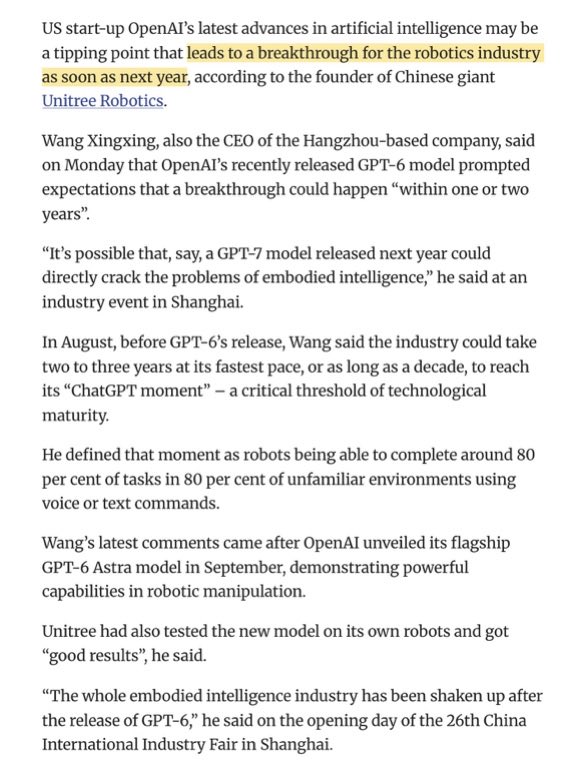
The CEO of China's top humanoid maker is now setting his timeline off OpenAI's roadmap.
August: 2–3 years at best. Up to 10.
This week: 1–2 years.
The trigger wasn't a better robot. It was GPT-6.
The tests show both sides:
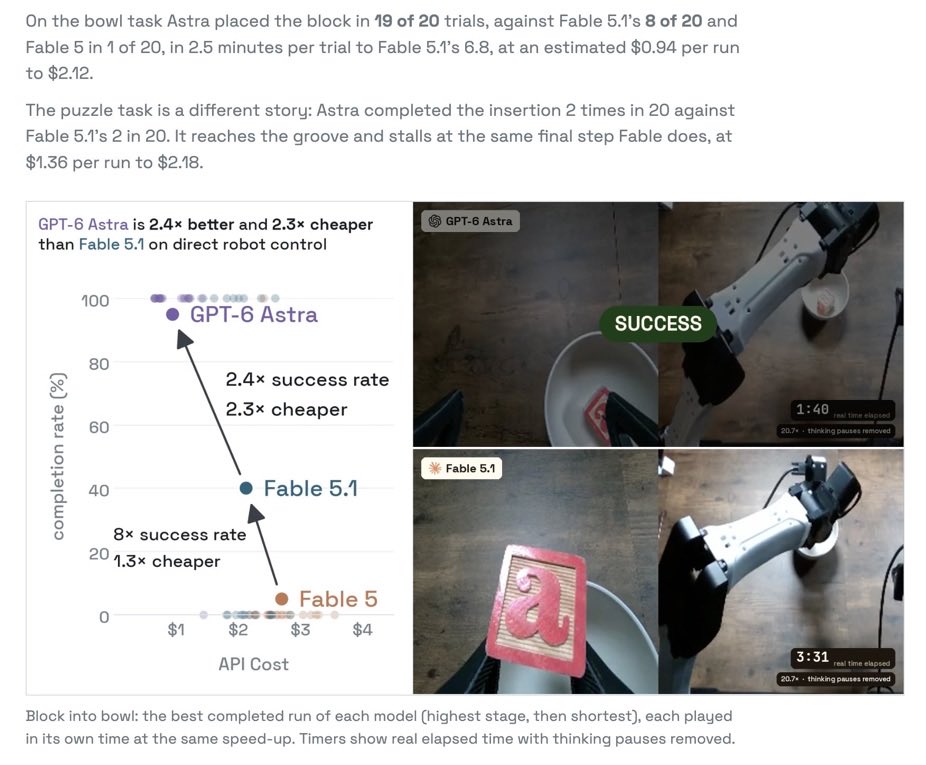
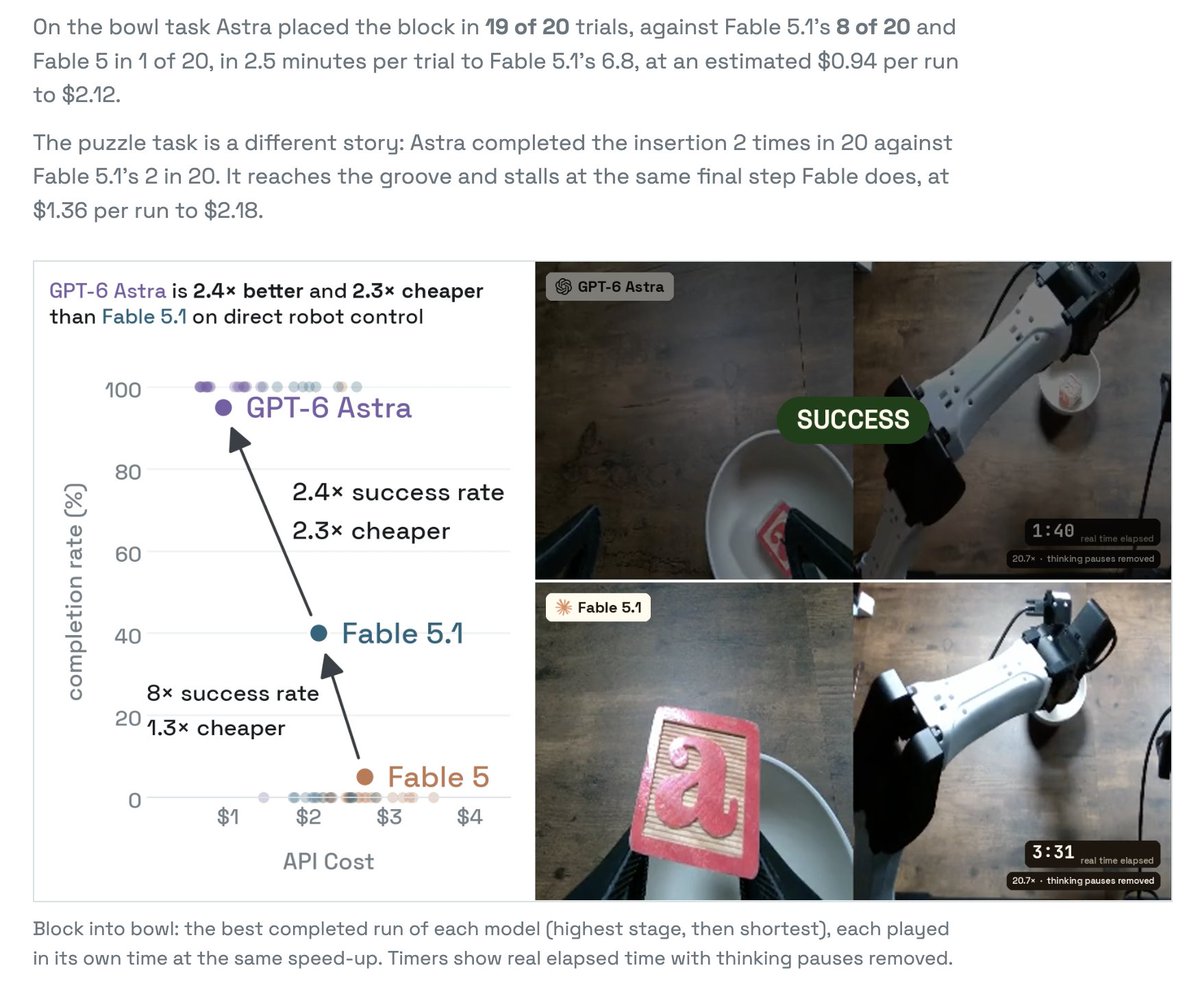
→ Block into a bowl: 19/20
→ Puzzle piece into a groove: 2/20
The brain is arriving early. The last millimetre isn't.
If the brain comes off the shelf, the body stops being the moat.
The value moves to the compute that runs it and the perception that guides the hand.
On the Alpha Radar: $NVDA $OUST. Scorecard to follow. NFA.
Physical AI + Humanoids are the next progression of AI.
$NVDA CES 2025 projections and Elon's prediction on $TSLA + 1 Billion humanoids in the next decade, seems to be speeding up.
New statement from Unitree CEO after testing GPT-6 on their humanoid program was that:
- In August, before GPT-6's release, Wang said the industry could take two to three years at its fastest pace, or as long as a decade, to reach its "ChatGPT moment"
- Now, OpenAI's GPT-6 model prompted expectations that a breakthrough could happen "within 1 or 2 years"
- He defined that moment as robots being able to complete around 80 per cent of tasks in 80 per cent of unfamiliar environments using voice or text commands.
- "It's possible that, say, a GPT-7 model released next year could directly crack the problems of embodied intelligence"
- "The whole embodied intelligence industry has been shaken up after the release of GPT-6"
Just looking at some benchmarks on robotic hand manipulation, "On the bowl task Astra placed the block in 19 of 20 trials, against Fable 5.1's 8 of 20".
But for the puzzle task "Astra completed the insertion 2 times in 20 against Fable 5.1's 2 in 20"".. so we're getting there.
But going from 2-3 years (potentially to a decade), and compressing that down to 1 or 2 years (to achieve 80%+ of tasks in unfamiliar environemnts) is a significant change in outlook.
The market just sold optics like it’s a cycle.
It’s a shortage.
Friday: Lumentum CEO — lasers sold out into early 2029.
Monday: $LITE −9.8%. Zero company news.
$COHR and $AAOI −7% with it.
Nothing changed between Friday and Monday:
→ ~70% of demand for some products still unmet through 2027
→ ~3 years to bring new laser capacity to customers
→ Op. margin 7.9% → 36.6% in six quarters
→ Next quarter guided ~+134% YoY
A cyclical sells off when the order book thins.
This group sold off with the book full into 2029.
When a sector gets dumped as one block, the names with zero spare capacity are the ones being mispriced.
Full breakdown in today’s Bottleneck File.
On the Alpha Radar. Scorecard to follow. NFA.
Deutsche's best argument for $ASTS is that the business is worth almost nothing.
Read the upgrade again:
→ Spectrum = all but ~$10/share of enterprise value
→ Stock ~65% below its May high
→ Last 12 months: ~$115M of sales, −$1.6B of free cash flow
That's not a D2D thesis. It's a spectrum appraisal.
The bull case leans on T-Mobile switching from Starlink.
Evidence so far: website edits.
Cheaper isn't the same as better.
Show me the signed carrier deal.
NFA.
Deutsche Bank upgraded $ASTS to Buy with a $93 price target calling Friday’s 10% selloff “misguided” as $SPCX moves closer to competing directly with mobile carriers.
What stands out is Deutsche values AST’s Ligado spectrum rights at ~$19B against a $23B enterprise value implying rest of the business is worth just ~$4B.
That leaves a ton of upside if AST secures up to $1B in Japan funding, expands its government business and benefits from carriers moving closer to AST as SpaceX becomes a direct competitor.
𝗧𝗵𝗲 𝗺𝗮𝗿𝗸𝗲𝘁 𝗱𝗶𝗱𝗻'𝘁 𝗰𝗿𝗮𝘀𝗵 𝘁𝗼𝗱𝗮𝘆. 𝗔𝗜 𝗵𝗮𝗿𝗱𝘄𝗮𝗿𝗲 𝗱𝗶𝗱.
S&P 500: −0.06%
Dow: +0.38%
9 of 11 sectors green
Meanwhile:
→ Semis (SOX): −2.7%
→ Optics ETF: −7.7%
→ $LITE −9.8%, $AAOI −8.2%, $COHR −7.9%
→ $MU ~−4% on a Chinese DRAM headline
No guidance cut. No lost customer.
𝗡𝗼 𝗰𝗼𝗺𝗽𝗮𝗻𝘆 𝗻𝗲𝘄𝘀 𝗮𝘁 𝗮𝗹𝗹.
Three days ago Lumentum's CEO said its lasers are 𝘀𝗼𝗹𝗱 𝗼𝘂𝘁 𝘂𝗻𝘁𝗶𝗹 𝗲𝗮𝗿𝗹𝘆 𝟮𝟬𝟮𝟵.
Today the stock fell 10%.
𝗦𝗮𝗺𝗲 𝗼𝗿𝗱𝗲𝗿 𝗯𝗼𝗼𝗸. 𝗟𝗼𝘄𝗲𝗿 𝗽𝗿𝗶𝗰𝗲.
The memory scare? CXMT still trails Samsung, SK Hynix and Micron by two to three generations, per the WSJ.
This was profit-taking in the most crowded trade of 2026. Lumentum was up ~170% YTD before today.
A 𝗽𝗼𝘀𝗶𝘁𝗶𝗼𝗻𝗶𝗻𝗴 𝗽𝗿𝗼𝗯𝗹𝗲𝗺, 𝗻𝗼𝘁 𝗮 𝗱𝗲𝗺𝗮𝗻𝗱 𝗽𝗿𝗼𝗯𝗹𝗲𝗺.
Demand gets tested Thursday: TSMC.
Lumentum reports 5 November.
𝗦𝗵𝗼𝗿𝘁𝗮𝗴𝗲𝘀 𝗱𝗼𝗻'𝘁 𝗲𝗻𝗱 𝗼𝗻 𝗮 𝗠𝗼𝗻𝗱𝗮𝘆.
On the Alpha Radar: $LITE and $AAOI . Scorecard to follow. NFA.
𝗦𝘂𝗯𝘀𝗰𝗿𝗶𝗯𝗲 𝘁𝗼 𝗔𝗹𝗽𝗵𝗮 𝗠𝗲𝘁𝗿𝗶𝗰𝘀
Lumentum’s CEO on Friday: lasers sold out until early 2029.
Some products: ~70% of demand unmet through 2027.
Monday: stock -8%. No news.
The numbers: $1.01bn revenue, +109% Guide: +134% Op margin: 7.9% → 36.6% in six quarters
Three years to build a laser fab. The shortage isn’t going anywhere.
Full Bottleneck File on Substack tomorrow.
On the Alpha Radar. Scorecard to follow. NFA.
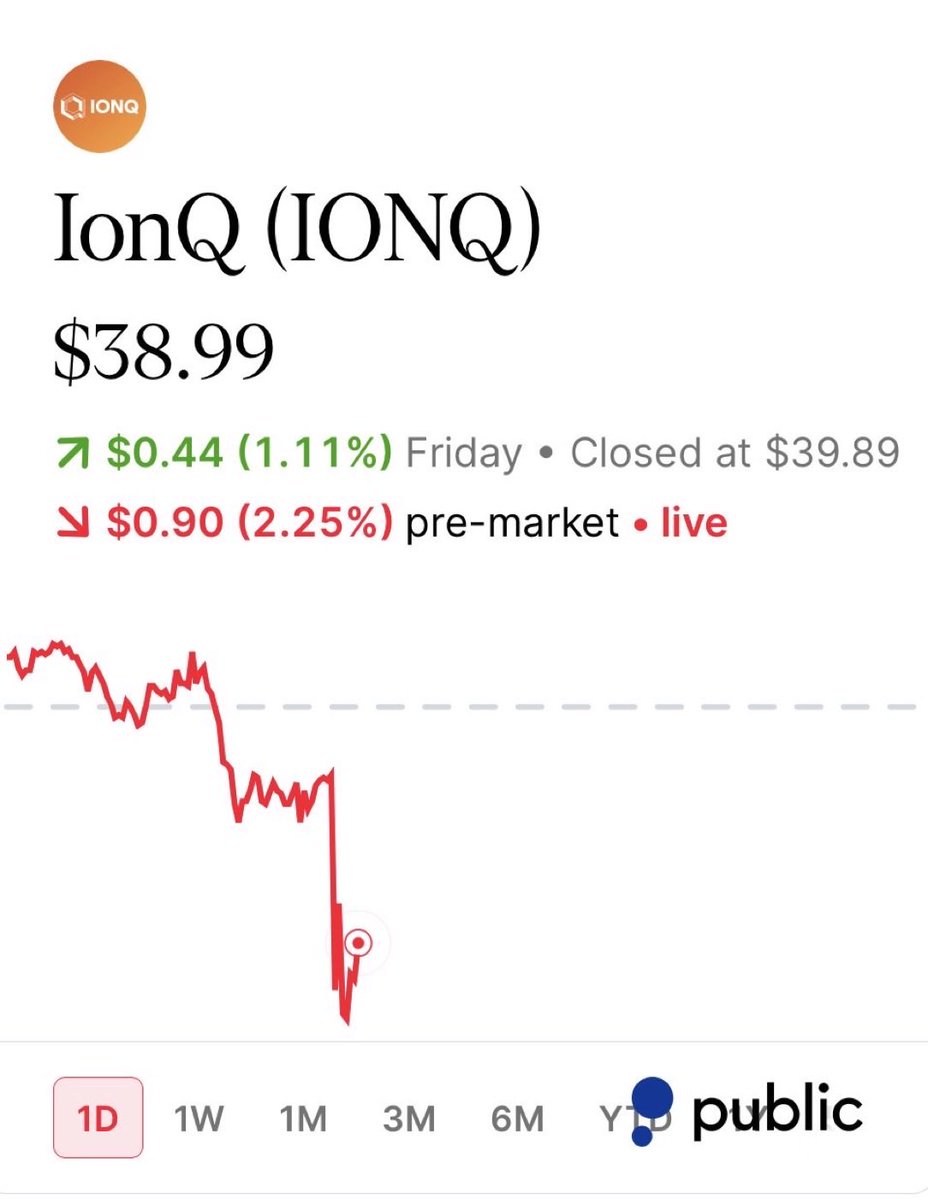
The market sold $IONQ on one word: all-stock.
It missed the one that matters: customers.
→ Elisity: Zero Trust security, 100+ enterprise deployments
→ Revenue and customer base doubled YoY
→ A $10B+ microsegmentation market
→ Price: up to $1.3B in stock, ~8% of IonQ's market cap
IonQ isn't buying technology.
It's buying a door into the CISO's office.
Q-Day is the threat. Post-quantum crypto is the fix.
Now IonQ has the channel to sell it.
July: its own foundry.
Last week: DARPA Stage C.
Today: enterprise distribution.
Premarket −2%.
Dilution is priced in. Distribution isn't.
On the Alpha Radar from $38.99. Scorecard to follow. NFA.
$IONQ agreed to acquire cybersecurity firm Elisity in an all-stock deal worth up to $1.3B, including up to $150M in performance-based payments.
Elisity’s platform helps prevent hackers and ransomware from spreading across company networks.
The market already bought the CPU trade.
It bought the wrong ticker.
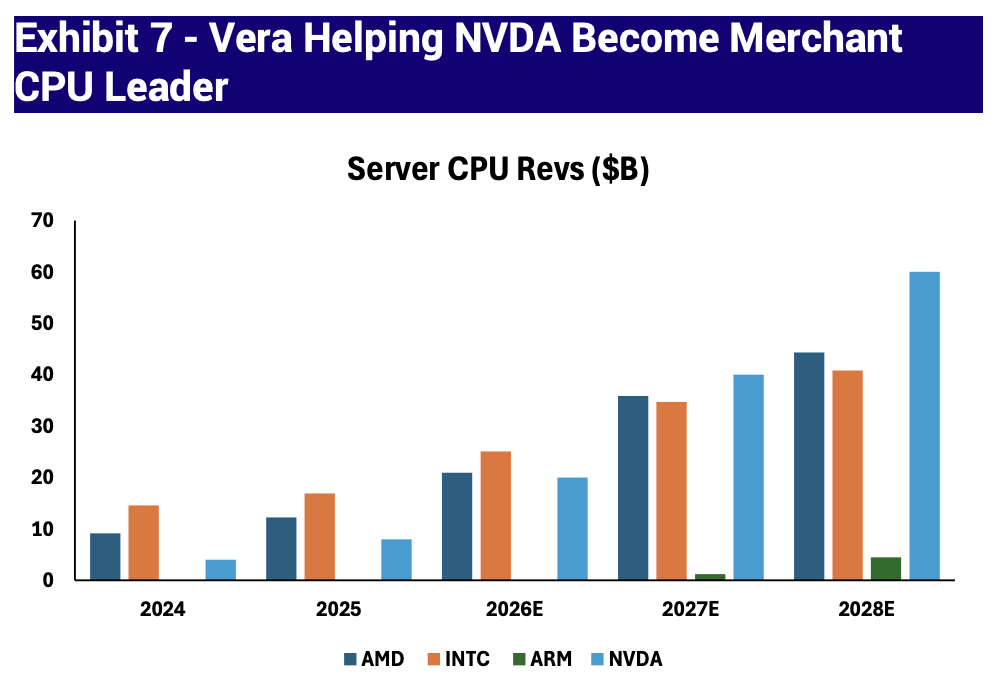
Late September: "AI agents run on CPUs" → $AMD through $1T. $NVDA lagged.
Meanwhile, Nvidia's own numbers:
→ ~$20B of server CPU demand this fiscal year
→ Guided to more than double next year
→ The entire x86 server CPU market: ~$30B a year
Nvidia doesn't need to win a CPU war.
It ships Vera inside the rack it already sells.
Nvidia is guiding itself into the biggest server CPU vendor on earth.
The market still prices it as a GPU company.
On the Alpha Radar. Scorecard to follow. NFA.
$NVDA Vera could turn Nvidia into a ~$60B server CPU business by 2028 overtaking $AMD and $INTC as early as next year.
The growth is coming from agentic AI as orchestration, tool calls and autonomous workloads push server CPU demand toward ~$150B with Nvidia capturing nearly half of that growth by selling complete AI systems.
And it extends beyond Nvidia with $ARM entering merchant CPUs on $2B+ in orders while $DELL and $SMCI could nearly double server revenue as AI agents drive another wave of compute demand.
$NAUT: 𝗔𝗺𝗼𝗱𝗲𝗶 𝗶𝘀 𝘁𝗵𝗲 𝗵𝗼𝗼𝗸. 𝗧𝗵𝗲 𝗯𝗮𝗹𝗮𝗻𝗰𝗲 𝘀𝗵𝗲𝗲𝘁 𝗶𝘀 𝘁𝗵𝗲 𝘁𝗵𝗲𝘀𝗶𝘀.
Up 118% in a month. +23.6% on Friday alone, to $2.25.
The viral angle: Anthropic's CEO did his Stanford postdoc in the lab of Nautilus' co-founder.
True. But there's no deal.
𝗔 𝗰𝗼𝗻𝗻𝗲𝗰𝘁𝗶𝗼𝗻 𝗶𝘀𝗻'𝘁 𝗮 𝗰𝗮𝘁𝗮𝗹𝘆𝘀𝘁.
What matters:
→ $129.2M cash, runway into Q1 2028
→ First revenue in Q2, focused on proteoforms
→ Voyager pre-orders early 2027, shipments mid-2027
→ Market cap ~$286M, about 2x cash
Catalyst: Q3 results, ~27 October. Does the 2027 launch hold?
AI for biology isn't short of models. It's short of data.
𝗬𝗼𝘂 𝗱𝗼𝗻'𝘁 𝗻𝗲𝗲𝗱 𝗮 $𝟭𝟬𝗕 𝘀𝘁𝗼𝗿𝘆. 𝗬𝗼𝘂 𝗻𝗲𝗲𝗱 𝗩𝗼𝘆𝗮𝗴𝗲𝗿 𝘁𝗼 𝘀𝗵𝗶𝗽.
On the Alpha Radar from $2.25. Scorecard to follow. NFA.
𝗦𝘂𝗯𝘀𝗰𝗿𝗶𝗯𝗲 𝘁𝗼 𝗔𝗹𝗽𝗵𝗮 𝗠𝗲𝘁𝗿𝗶𝗰𝘀
134 S&P 500 stocks are down 40% or more. Picking matters again.
The index says record highs.
The stocks underneath say something else.
134 companies in the S&P 500 sit 40%+ below their all-time highs. More than 1 in 4.
PayPal -82%. Nike -80%. Adobe -65%. Netflix -47%.
Household names. Brutal drawdowns.
The S&P isn't rising as a market. A handful of names are carrying the whole thing.
That's exactly why I don't buy the index.
Owning everything means owning the 134 losers too.
I'd rather own the bottlenecks.
Compute. Memory. Light. Power.
The layers AI can't scale without, no matter what the headlines say.
Result so far: +4.57% in the first two weeks of the live portfolio. Ahead of the S&P 500. Ahead of the Nasdaq. Both weeks.
In a market this split, selection isn't a bonus. It's the whole game.
Full portfolio, every weight, every move: paid subscribers only.
NFA.
Subscribe to Alpha Metrics
All green. The scary stories didn't survive the week.
Monday: Burry calls it "denial," compares it to 2000 and 2008.
Thursday: tech sells off on a report that OpenAI's revenue is lower than estimated. Yields at 24-year highs. Oil up.
Friday: every major index closes green.
• Dow +0.83% to 51,654 • S&P 500 +0.59% to 7,811, near its all-time high • Nasdaq +0.64% to 27,366 • Amazon +3.3%, Microsoft +2.4%, Palantir +5.2%
A winning week for all three.
Here's what didn't change: the backlog.
Amazon, Microsoft and Google already have $1.69T in signed contracts. Memory is sold out. GPU rental prices keep going up.
Headlines move prices for a day.
Contracts move them for years.
Fear sold the story. Fundamentals bought the dip.
And Q3 earnings season starts next week, with Wall Street expecting blockbuster numbers.
$AMZN $MSFT $GOOGL on the Alpha Radar. Scorecard to follow. NFA.
Subscribe to Alpha Metrics
@ghbbb334 Those explain why building a network is hard, not why AST wins. The question isn’t whether the barriers are high. It’s whether they stop SpaceX.
The strongest $ASTS bull argument deserves a harder question:
Even if carriers need AST, how much of the profit will AST shareholders actually capture?
Demand can grow while pricing power shrinks.
My concern is that investors are treating carrier dependence as a permanent moat.
Bulls: what protects the margins? That’s the rebuttal I want to hear.
Sometimes the best trade is knowing when to cut.
$ASTS down another 7.6% today. Third red session in a row.
The reason is simple.
The FCC just cleared SpaceX to build a 15,000-satellite direct-to-cell network.
On its own spectrum. No carriers needed.
That's AST's entire business model. Except AST needs carriers.
Then SpaceX locked up a nationwide low-band spectrum portfolio AST had been chasing.
The scoreboard:
• SpaceX: 12M Starlink subscribers, $93.5B in cash • AST: 13 spacecraft in orbit, still burning cash • ASTS: down 22% YTD, ~30% below its 200-day average
When your biggest rival gets the license, the spectrum and the balance sheet in the same week, that's not noise. That's a thesis change.
If I held this, I'd cut it. I think this is the start of the repricing, not the end.
We never owned it. Paid subscribers know why: our analysis flagged the carrier dependency months ago.
Discipline isn't just picking winners. It's avoiding the names where the moat disappears overnight.
NFA.
Subscribe to Alpha Metrics
@StockSavvyShay Respect the conviction, Shay. My concern: low-band validation can coexist with tougher economics for $ASTS shareholders.
What makes this a stronger moat rather than a tougher race?
Just posted my opposing thesis on Alpha Metrics. Interested in where you think it breaks.
@SpacBobby “More strategically relevant” doesn’t automatically mean better shareholder returns.
Can $ASTS turn carrier support into profitable scale before competition pressures the economics?
That’s the debate. Just posted my bear case on Alpha Metrics. Would welcome your counterargument
@LeifInvests Validating the market doesn’t automatically validate $ASTS’s moat.
The key question: do carrier partnerships remain an advantage as a rival gains more control over its own network?
I just posted the bear case on Alpha Metrics. What would make you change your mind?
@VanquishTrader Validating the market doesn’t automatically validate $ASTS’s moat.
The key question: do carrier partnerships remain an advantage as a rival gains more control over its own network?
I just posted the bear case on Alpha Metrics. What would make you change your mind?
Respect the conviction, but I read it the other way.
Ligado is real. The problem is the model: AST still sells through carriers, and SpaceX just got cleared to go direct, on its own spectrum.
Cheap on 2028 sales only works if those sales still route through AST.
Posted my full take on this an hour before yours. It's my latest post if you want the bear case.