VAR Toolbox v4.0 is out 🚀
https://t.co/zPgvUmawwM
A collection of MATLAB codes for VAR analysis—estimation, identification, IRFs, variance and historical decompositions.
v4.0 is a major overhaul: new identification schemes, LPs now in the toolbox, and a long-promised handbook.
Short thread with details below 👇
Hi everyone! I'm Chris Hyland, an Oxford PhD candidate on the job market.
In the past two decades, we've seen multiple tail-risk events: the GFC, COVID-19, and recent geopolitical tensions.
My paper asks: how should monetary policy respond to the risk of such disasters? 🧵 1/15
@scaling01 Hey @AnthropicAI employees, would any of you like to put your money where your mouth is and join this bet?
Still very much looking for counterparties on the fast-growth (=real GDP growth > 15% by 2033) side
https://t.co/NSQZKbg9y6
Happy to announce the release of our first curated dataset from @GLL_Brown@Brown_Economics@Watson_School@RhodesCenter We logged every US tariff rate: threats, announcements, signed into law since January 2025. 749 of them, timed to the minute, with the exact quote and source. Only 30% are executive orders. The rest is the noise markets trade on. Free, updated weekly:
https://t.co/Gw5XEzgPRu
What do tariffs and fiscal populism do to exchange rates, the dollar, and central banks? Four new podcasts from our 2026 Venice EP: PEGI conference on Globalisation and Fiscal Populism, with @timsvengali Tim Phillips in conversation with the authors. @cepr_org@CESifoNetwork@sciencespo Listen: https://t.co/yq3emb6A9L
Come join our macro group @UniBonn! We're hiring two postdocs for three years, starting September 2027. Empirical and theoretical macroeconomists (broadly defined) welcome.
Apply by 15 Nov 2026: https://t.co/gBNfk5jsQf
#EconTwitter#EconJobs@christianbaye13
Here are my keynote slides https://t.co/stFDmvmXr2 from the recent conference by @arebucci1
https://t.co/l0Bfy22xZp
Many insightful panels on how to develop tools and frameworks, backed by evidence, for global policymakers who are trying to navigate through geopolitical shocks. Understanding Macroeconomics of Geopolitics is first order for this goal. My keynote summarizes the research we have been doing at @GLL_Brown@RhodesCenter@Watson_School@Brown_Economics on these issues---How are supply chain trade, investment and capital ownership changing at the firm level, globally, and what are the inflationary consequences of these changes for the United States and other countries?
I mean, 3 out of 5 @RevEconStudies Tourists from @LSEEcon is not a bad result... @amenjalal_@AnanyaKotia@AdriCouturier did a fantastic market and this tour is well deserved. Write down their names, you will hear them often in the next few years.
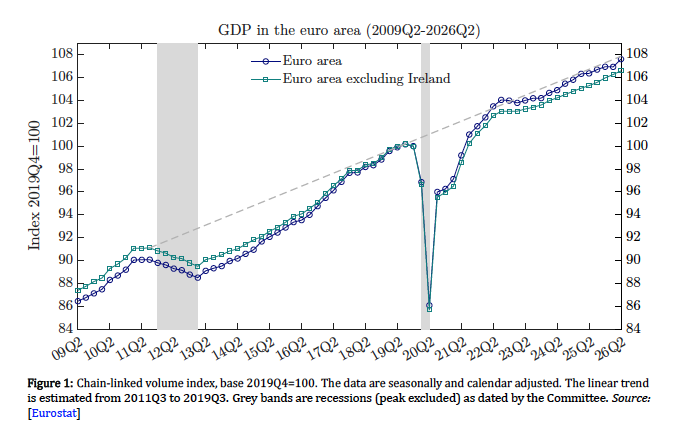
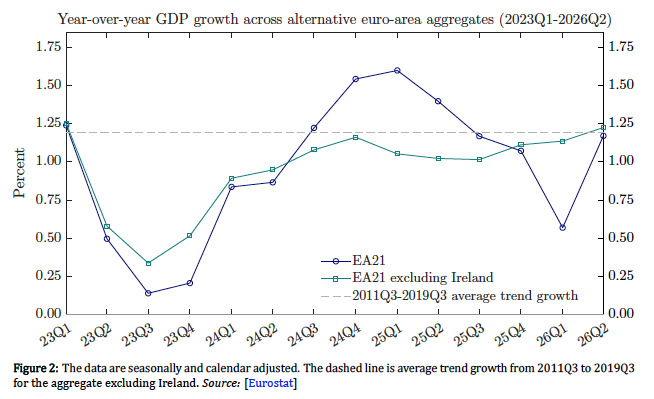
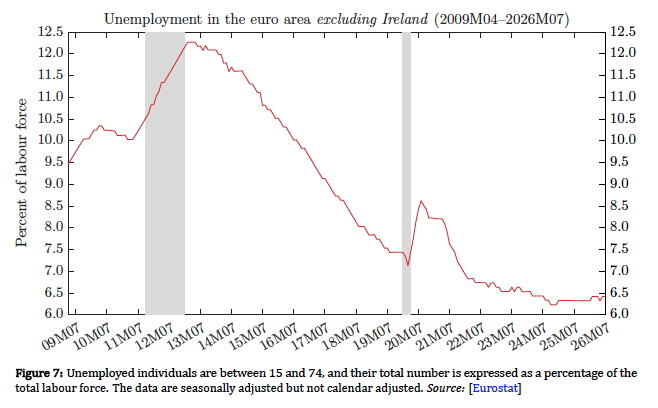
New report from the CEPR-EABCN Euro Area Business Cycle Dating Committee: steady euro-area growth, but changing drivers. Excluding Ireland, GDP grew 1.2% y/y in 2026Q2, back in line with its 2011–19 average. Unemployment is 6.4%, close to its historic low
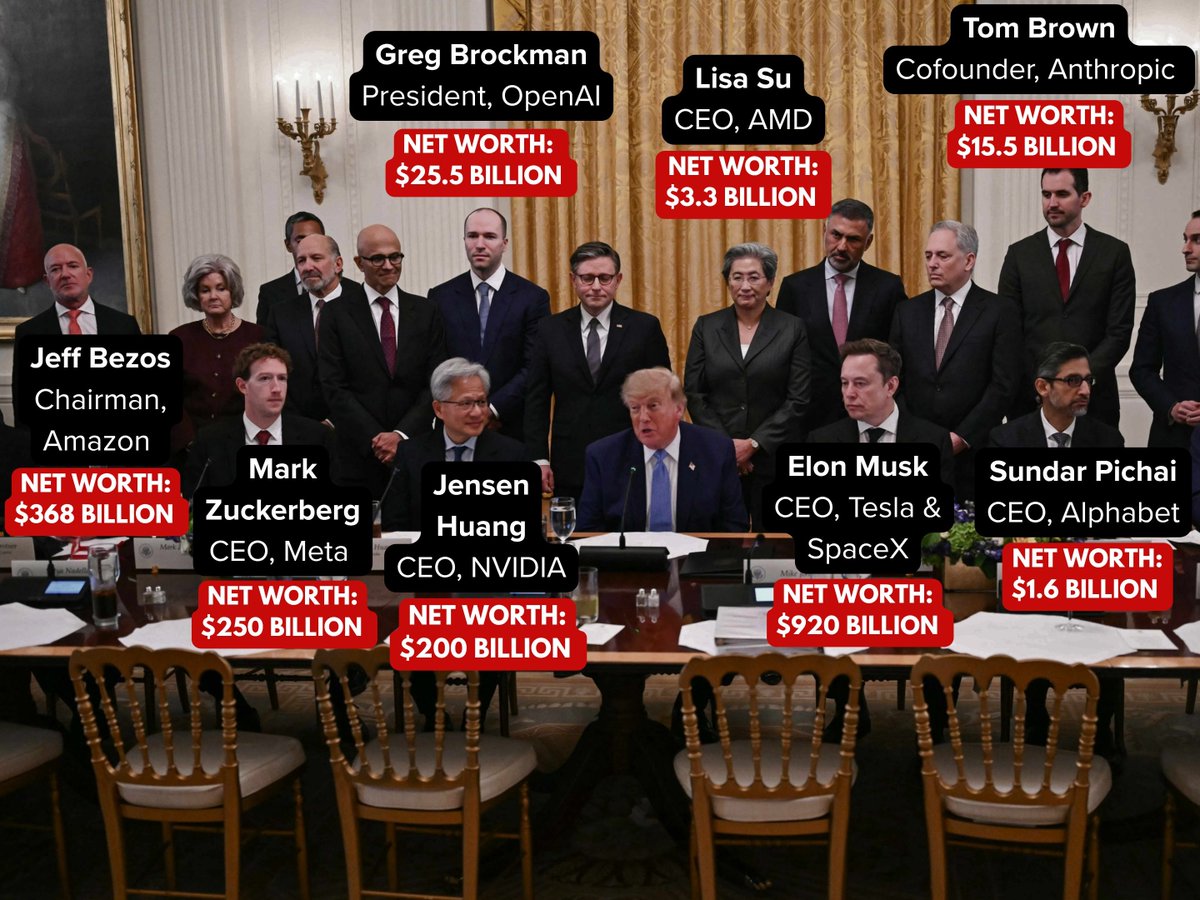
Whose wages will 🚀 and whose will 📉 bc of AI? Important, but hard to know ex ante.
But what about AI impact on *the poor* vs. *the rich* (in terms of financial wealth)?
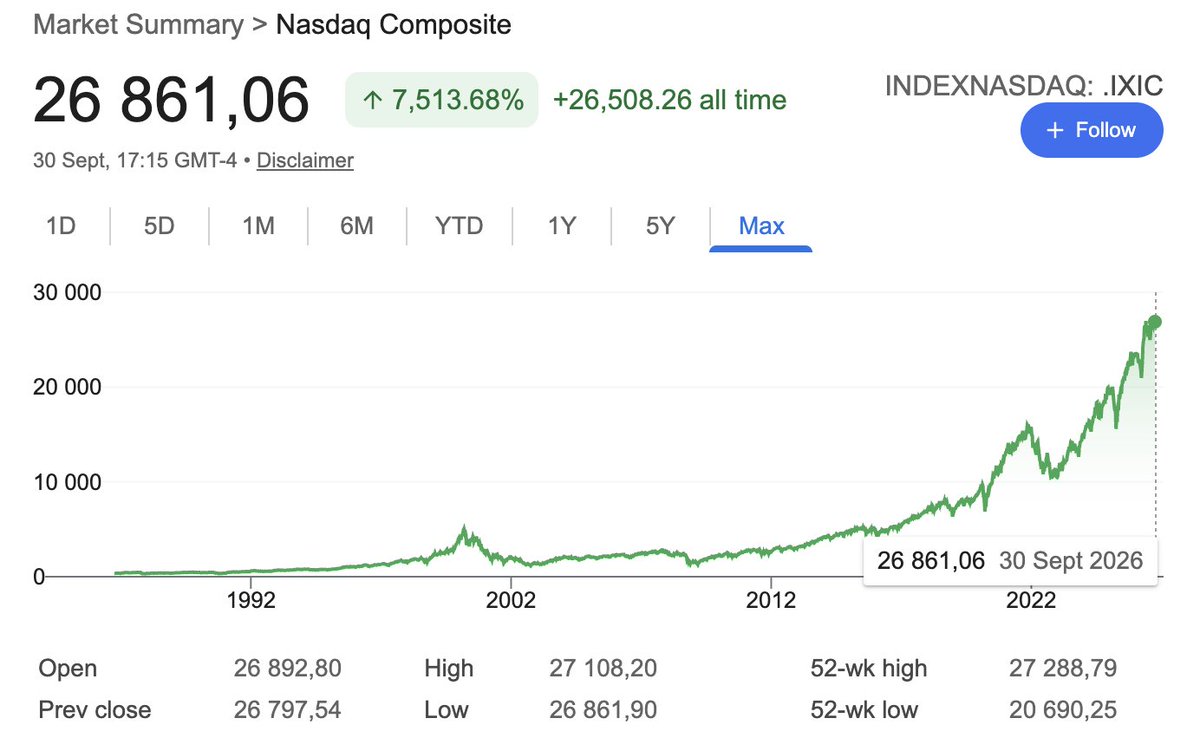
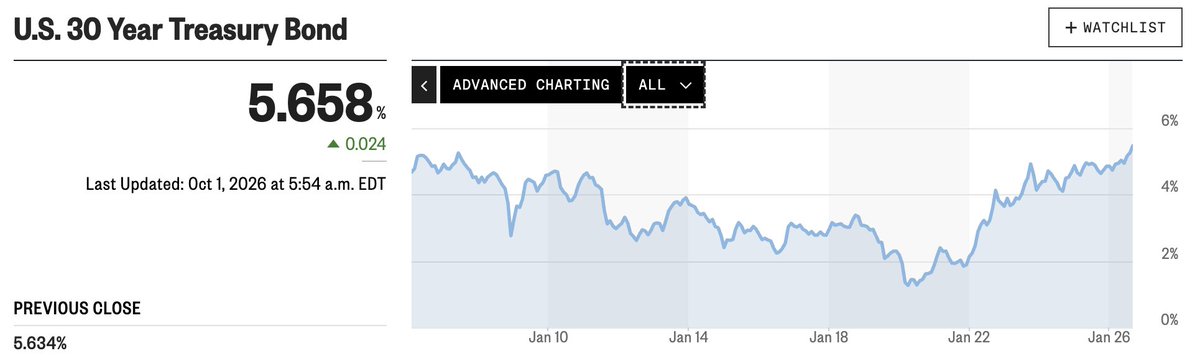
Returns climbing daily, perhaps in part bc of AI... Time for:
💰💰💰💰💰 MEETS 🤖🤖🤖🤖🤖
1/N
After another summer of extreme heat, we are reminded of the mortality consequences of climate change.
In our new paper, we show that rising global temperatures have large and persistent effects on mortality - far beyond the direct effects of local heat exposure.
Adrien has a great thread summarizing our findings below 👇
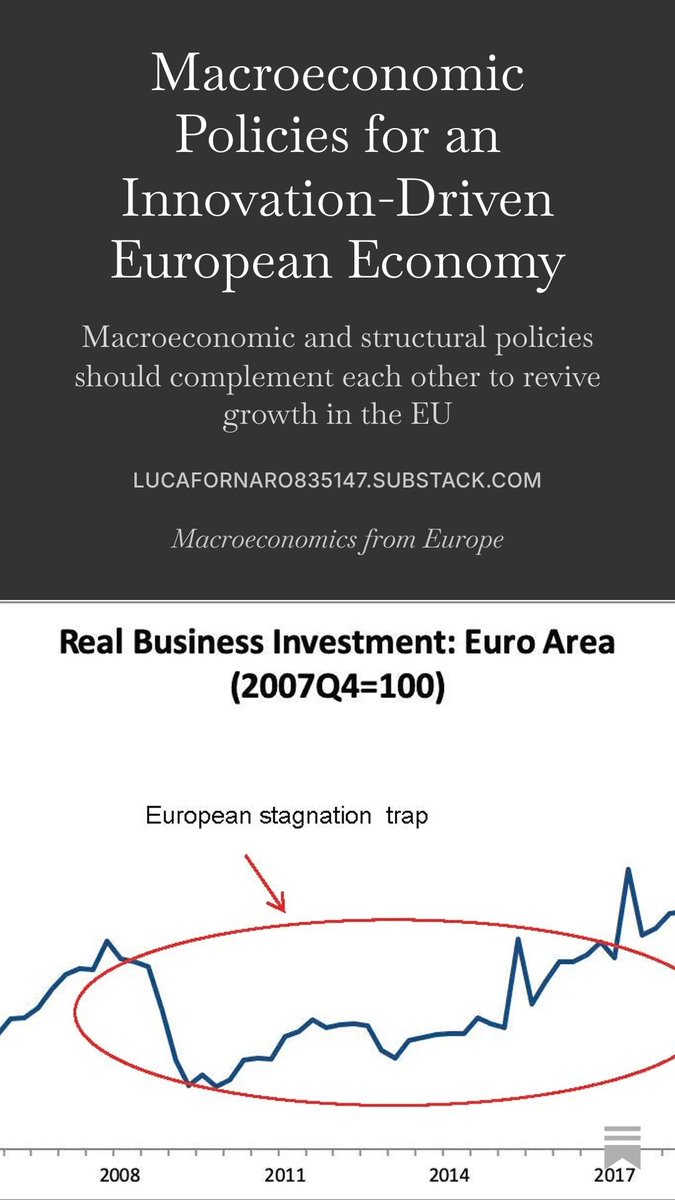
I just started a new Substack newsletter, Macroeconomics from Europe. The idea is, well, to offer a macroeconomic perspective on European issues. Here is the first post, hope you'll have a look!
Dear Kristalina, I am delighted to be appointed as the @IMFNews's Financial Counsellor and Director of the Monetary and Capital Markets Department as of 4 January 2027. In this role, I will devote all my energy to fostering global cooperation and financial stability.
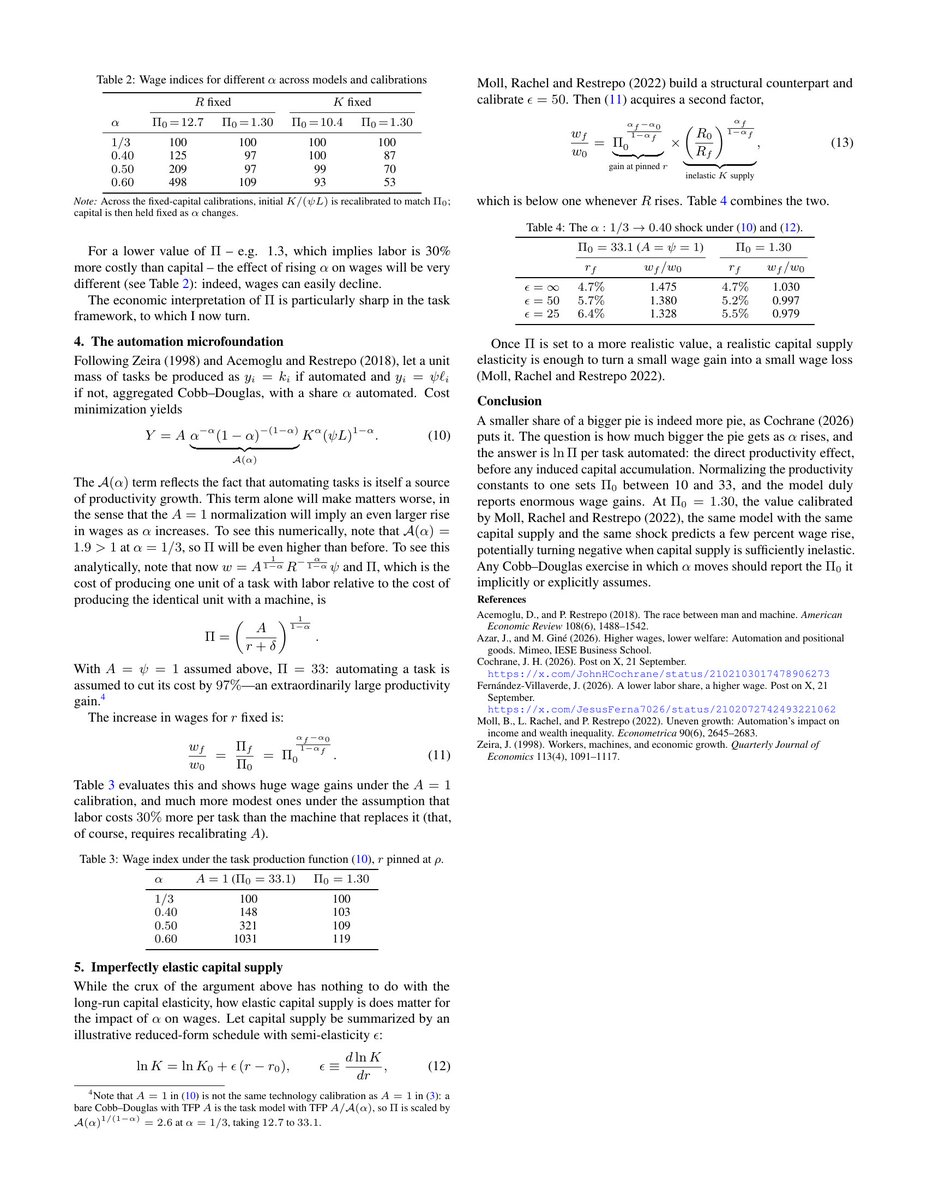
If AI raises the capital share of income, will workers ultimately benefit?
Recent analyses using a workhorse macro model concluded: YES.
I wrote a paper explaining why these conclusions are somewhat misleading. The future of wages might not be so rosy.
https://t.co/DZWxszcIPT
A few thoughts on the macroeconomic policies that could foster innovation and growth in the European Union, written for the Europe 2050 project @ojblanchard1@cepr_org. Key points:
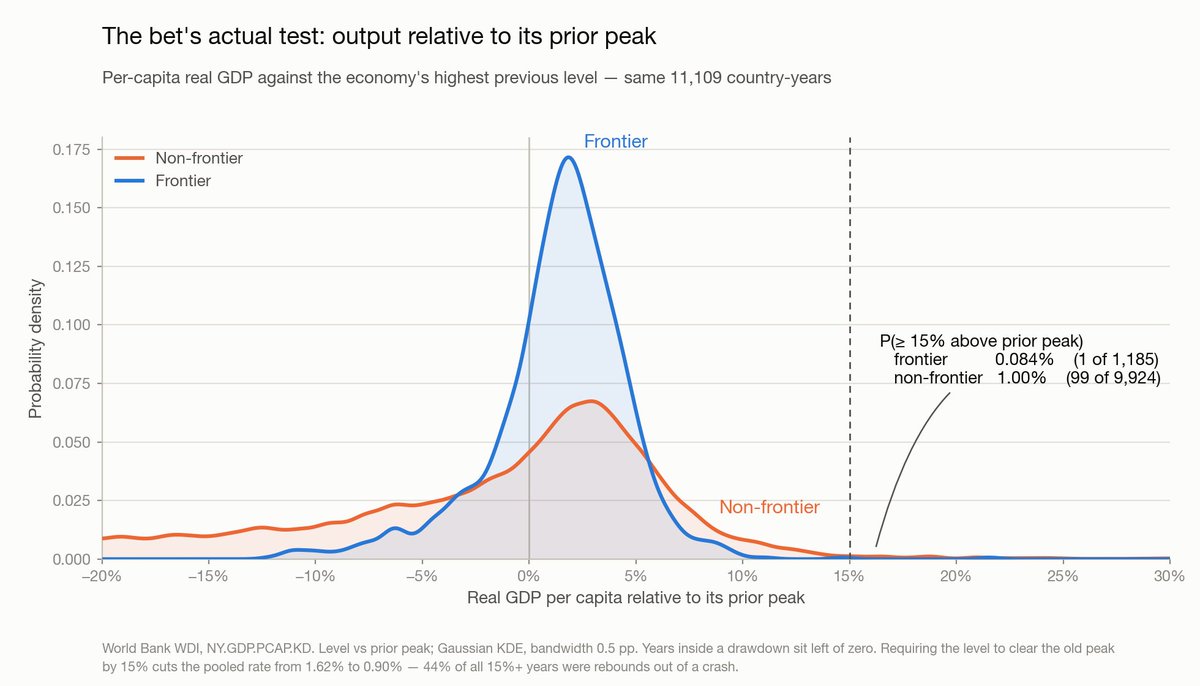
Great stuff from @LukaszRachel who puts our bet in historical context.
Systematic analysis of per-capita GDP growth rates for:
- 211 countries across the whole world since 1962, i.e. including growth miracles like China and not just frontier countries like the U.S.
- 11,109 country-year pairs
Even with this sample Pr(growth > 15% above prior peak) = 0.9% only!
And for frontier countries like the U.S., there is one single country-year pair. But that one is Ireland in 2015 which shouldn't really count (measurement issue due to multinationals).
Summary: basically, it has never happened before.
Of course that doesn't necessarily tell you about the future and for that you want to rely on other arguments https://t.co/PWlIyLgkxe