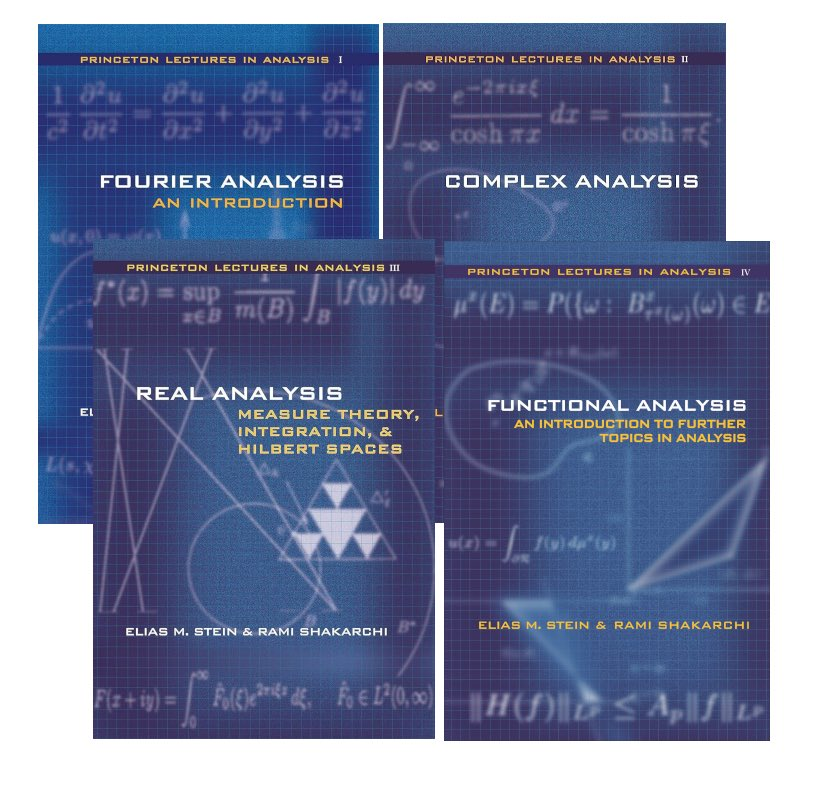
"Princeton Lectures in Analysis"
by E. M. Stein , and R. Shakarchi.
These are one of the most influential series covering mathematical analysis. They're based on a sequence of intensive undergraduate courses Stein taught at Princeton.
https://t.co/vgq23HGdB4
🚨New paper alert!🚨 Cells integrate signals into decision-making. But how do levels of signaling influence cell-fate transitions? Is more always better? Or is there an “optimal” level for cell-fate programming? If we could tune signaling, could optimize production of neurons? Read on! (1/n)🧵
i had this friend back in college; brilliant guy.
he’d spend nights building random games, writing weird algorithms just because he could.
never for grades, never for recognition; just pure obsession with building.
he was the smartest person i knew.
the kind who didn’t even need to try.
everyone knew he was the class topper; but he only had two friends. me and one other guy.
he never went out. never talked to anyone.
just sat in his room, building stuff no one ever saw.
fast forward a few years; he’s at a stable job now, quiet, low profile, doing okay.
but every time i talk to him, i can hear it; that spark he had is gone.
so don’t be that guy.
don’t lock yourself in the room forever.
build; but also show what you build.
talk to people. share your work.
make friends. go to events. collaborate.
engineering is not meant to be a solo act.
if you build alone forever,
the world will never know how good you really are.
New lecture: Self-Organization & Pattern Formation. Can physics explain emergent order in complex systems? Starts 16 Oct.
Info: https://t.co/LQyYXtIoIc
Stream: https://t.co/1rjs7I6xpQ
MIT Course announcement: Machine Learning for Computational Biology #MLCB25
Fall'24 Lecture Videos: https://t.co/tA3zeuIF7g
Fall'24 Lecture Notes: https://t.co/C3WmXZuQur
(a) Genomes: Statistical genomics, gene regulation, genome language models, chromatin structure, 3D genome topology, epigenomics, regulatory networks.
(b) Proteins: Protein language models, structure and folding, protein design, cryo-EM, AlphaFold2, transformers, multimodal joint representation learning.
(c) Therapeutics: Chemical landscapes, small-molecule representation, docking, structure-function embeddings, agentic drug discovery, disease circuitry, and target identification.
(d) Patients: Electronic health records, medical genomics, genetic variation, comparative genomics, evolutionary evidence, patient latent representation, AI-driven systems biology.
Foundations and frontiers of computational biology, combining theory with practice. Generative AI, foundation models, machine learning, algorithm design, influential problems and techniques, analysis of large-scale biological datasets, applications to human disease and drug discovery.
First Lecture: Thu Sept 4 at 1pm in 32-144
With: Prof. Manolis Kellis @manoliskellis, Prof. Eric Alm @ejalm, TAs: Ananth Shyamal, Shitong Luo @luost26
Course website: https://t.co/ateGr6xKLM
@MIT@MITEECS@MITdeptofBE@MITCSBPhD@MIT_CSAIL@Harvard@HarvardMed@BroadInstitute
FROM CELL DEATH TO REGENERATION: What if dying cells -come back to life? Now online @embojournal I https://t.co/eOKTg6qVnk , we aim to answer this question. Here is the journey. If you🩷science, please dont 🛑till the end of 🧵, I promise you will not regret. 1/n
Check out a new SIAM book, Modeling Nonlinear Dynamics from Equations and Data—with Applications to Solids, Fluids, and Controls, by George Haller! #SIAMBooks
For more information and to order: https://t.co/AFUfl5dTQi
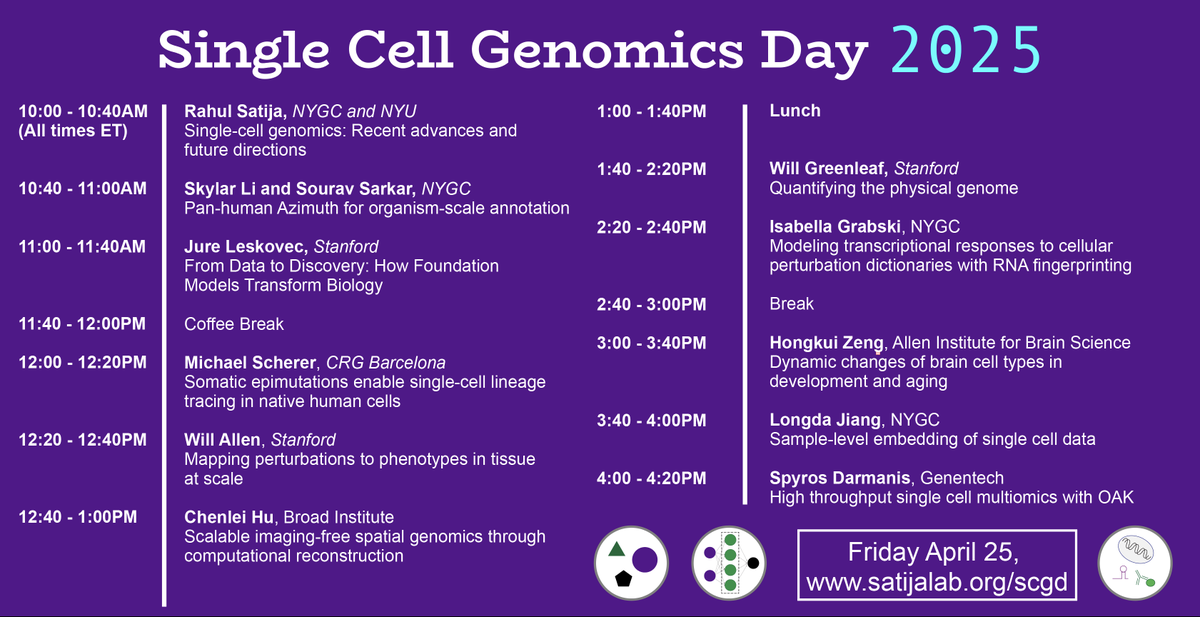
Interested in single cell genomics but need help getting started? Check out the full agenda for our Single Cell Genomics Day on Friday 4/25. All talks will be live-streamed (no registration required) at https://t.co/JqaO6urVPF
I did not realized that “Learning Theory from First Principles” has been published. It is still freely available. I really like this book, for its choice of topics. It covers everything that matters.
I'm looking for mathematics book full of problems to solve and, ideally, their solutions. I want to start solving at least one problem a day and it's easier if I can just browse through a book. It should be at least undergrad level. I am open to a book covering several topics or specific topics such as linear algebra, probability, analysis, statistics, etc.
Our brains love to see patterns in randomness.
A thread on the beauty of Pareidolia 🧵
1. Known as "the thinking tree" by locals, this olive tree in Apulia, Italy, is over 1500 years old.
Calling all researchers interested in developing better tools for understanding cellular dynamics across time in single cell experiments. We’re hosting the Oz Single Cell Hackathon 9-10 Dec in Sydney. Fill out EOI before 10 Oct! Travel awards available https://t.co/o66qfO7AfC
The MIT Bioinformatics Seminar is back this semester! We have an exciting series of speakers, with some joining virtually and others hybrid/in-person. Please check out the talk schedule here: https://t.co/N3v45HpTTu. (1/n)