My honest take on @Kimi_Moonshot K3 👀
As soon as I got access to Kimi, I put it through the exact same 3D football stadium challenge I had previously given Claude Fable 5.
Fable 5 finished in under an hour. Kimi took almost 3 hours 🥵
At first, that was a very bad impression but i decided to see what's taking it this much of time.
It was running E2E tests, validating desktop, tablet, and mobile, taking screenshots, finding failures, fixing them, even adapting for low end hardware and low FPS before moving on.
All these that Fable 5 never did. None of it because it wasn't able to run this WebGL app on a headless browser.
Kimi also shipped a clean React + Three.js codebase with proper components while Fable, as you might have checked codebase, generated one big HTML file with everything stuffed in.
With all of this happening, it felt like I was doing more "Vibe Coding" with Fable 5 and more "Vibe Engineering" with Kimi K3.
It feels like it's spending more time making sure the code actually works and easily scalable.
Really impressed so far. More Kimi K3 experiments coming soon.
Code (Kimi): https://t.co/IcLLZOb5mM
Code (Fable): https://t.co/6siJHap4fb
Live (Kimi hosted): https://t.co/UvArDDjBYW
ORBIT ACHIEVED. 🚀
Vikram-1 Test Flight-1 has reached orbit. India's first privately developed orbital rocket has completed its final burn and injected its payloads into a ~450 km orbit, making India the third country in the world with private orbital launch capability.
History is made. 🇮🇳
#Vikram1 #JourneyToOrbit #SkyrootAerospace
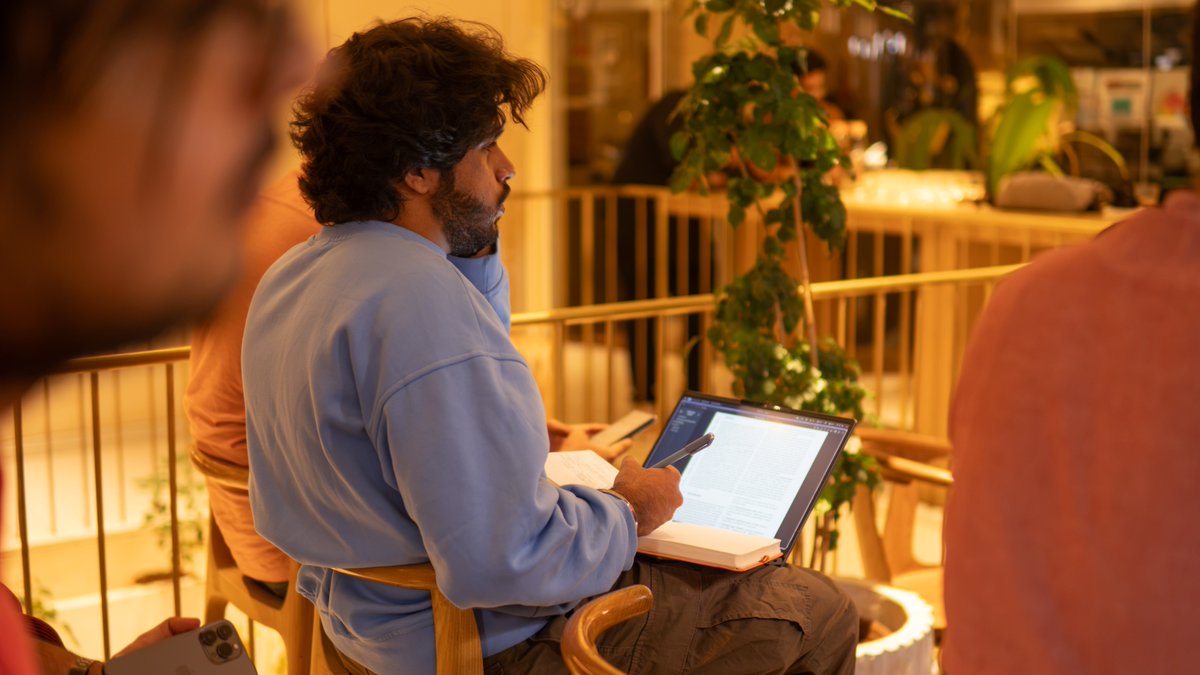
"Bangalore doesn't have good AI research scene, most of them go to SF"
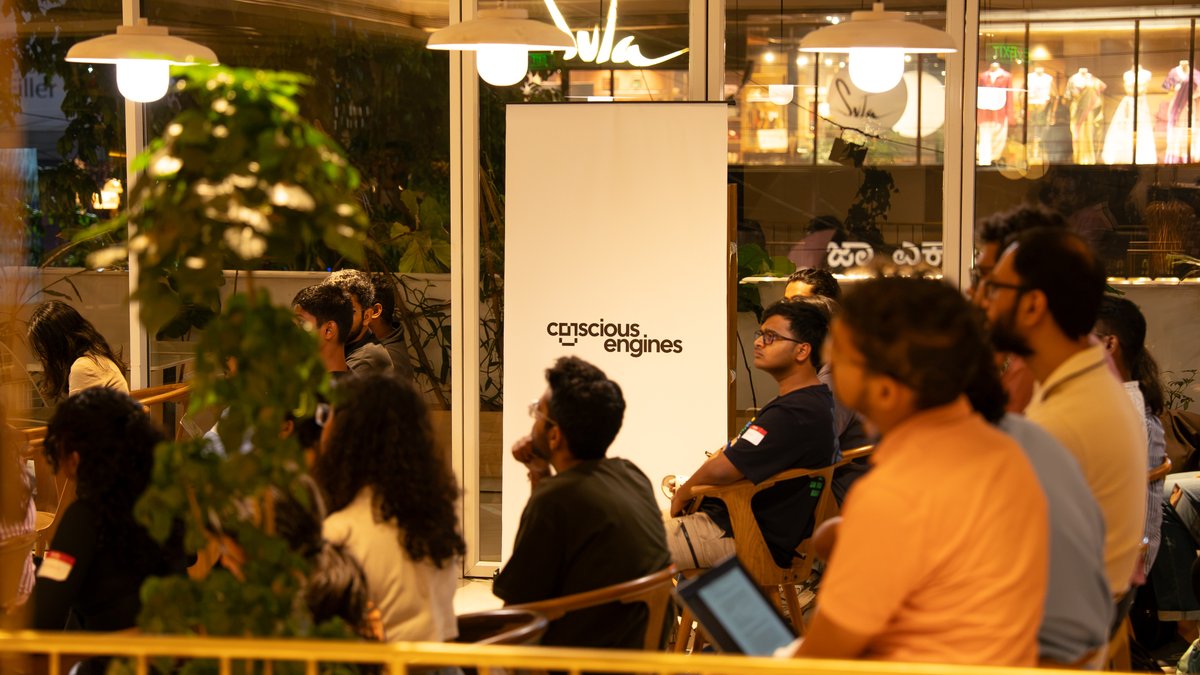
We hosted Bangalore Paper Club edition #1 yesterday to prove it wrong and a goal to make frontier research cool. 400+ people wanted to join.
4 papers were presented on the topics of (3 of them written by my team)
1. Speeding up LLMs with Speculative Decoding
2. Effects on LLM Safety wrt quantization and temperature
3. Current state of LLM inference on edge devices
4. using LLMs in molecule synthesis
Thanks for everyone who showed up and Kudos to people who whipped out notebooks, took notes and asked poking questions (we love those)
We are making it a biweekly thing
- More domains besides LLMs
- Open call for papers for external participants
- Sessions by some notable guests
See you in 2 weeks!
A 15-year-old dream has come true today. I started a PhD with the dream of creating a system that chants any Sanskrit shloka perfectly.
And here I am opening sourcing 𝐕𝐚𝐠𝐝𝐡𝐞𝐧𝐮 - 𝐀 𝐯ṛ𝐭𝐭𝐚 (𝐦𝐞𝐭𝐞𝐫) 𝐚𝐰𝐚𝐫𝐞 ś𝐥𝐨𝐤𝐚-𝐭𝐨-𝐜𝐡𝐚𝐧𝐭 𝐭𝐞𝐱𝐭-𝐭𝐨-𝐬𝐩𝐞𝐞𝐜𝐡 (TTS) 𝐬𝐲𝐬𝐭𝐞𝐦 𝐟𝐨𝐫 𝐒𝐚𝐧𝐬𝐤𝐫𝐢𝐭. This is the world's first vrutta-aware, open-source TTS for Sanskrit Chanting.
How to keep AI spend flat while token usage grows exponentially: Not with friction and spend alerts. With better defaults, routing, and caching.
Better Defaults (not Usage Caps) – Engineers can choose any model they want, but defaults matter. We’re experimenting with defaulting to open weight models like GLM 5.2 and Kimi 2.7 through our LLM gateway, while still encouraging engineers to choose the right model for the task. 91% of our employees were never hitting their usage caps, so instead of lowering caps and driving up alerts, we're moving to cheaper defaults. Note that code reviews use a diversity of models, so they can check each other's work.
Better Routing – In our custom harnesses, we preprocess prompts and route to the best model for the job, considering cache hits and model pricing. For instance, you may want a frontier model for planning, but not for execution where they can be overkill. Ultimately, humans shouldn't be choosing models - AI can automate this task.
Better Caching – Cache misses are the easiest way to drive your cost up. All of our requests are cache aware, so we’re reusing a warm cache wherever possible. For example, our cache hit rate went from 5% → 60% in LibreChat once properly implemented.
Keep Context Lean – Start fresh sessions when switching tasks. Scope file context narrowly. Disconnect unused tools. Don't just compact. The goal isn't fewer tokens used, it's fewer tokens wasted.
Better Visibility – Our engineers can use as many tokens as they want, from whatever model they want, but we’ve made usage visible – and the more you spend on AI, the more impact we expect.
The goal isn't to suppress usage. It's to build the infrastructure that makes exponential growth sustainable.
Putting this into practice has cut our AI spend nearly in half, while our token usage continues to grow.
Every enterprise will have its own model-harness-sandbox-eval flywheel with token value per watt optimization. This is the future. Simple reason: tacit knowledge about the domain and customers and their workflows that the company uniquely understands and has built trust around.
something has definitely shifted in the past few weeks. seeing a huge uptick in large enterprises wanting to secure compute and post-train their own models in house, frequently on top of GLM-5.2. everyone is starting to understand how open source wins.
श्री खेम राज सुंद्रियाल को पारंपरिक हथकरघा एवं भित्तिचित्र बुनाई कला के संरक्षण और संवर्धन में उनके उल्लेखनीय योगदान के लिए पद्म श्री 2026 से अलंकृत किया गया है। पचास वर्षों से अधिक के अनुभव के साथ उन्होंने पंजा दरी लूम में हत्ता तकनीक को विकसित किया, ऊनी धागे में जामदानी बुनाई को नई पहचान दी तथा देशभर में 10,000 से अधिक बुनकरों को प्रशिक्षित किया।
#PadmaAwards2026 #PeoplesPadma #CultureUnitesAll
From palm leaves to pixels!
Shri Siddharth Singh, Vice Chancellor, Nava Nalanda Mahavihara, a Deemed University under the Ministry of Culture, Government Of India, writes on how the Gyan Bharatam initiative of the Ministry is democratising India's vast manuscript heritage through digitisation.
Read the full article 👇
https://t.co/bdOgXiQHys
#GyanBharatam #CultureUnitesAll
Sarvam joined the AI discussions at the 52nd G7 Summit in Évian-les-Bains, France.
@vivekrag participated alongside G7 leaders and chief executives from some of the world’s leading AI companies. The discussion centered on frontier AI risks, infrastructure, and sovereignty in the age of AI.
A significant moment for Sarvam and for India’s AI ecosystem.
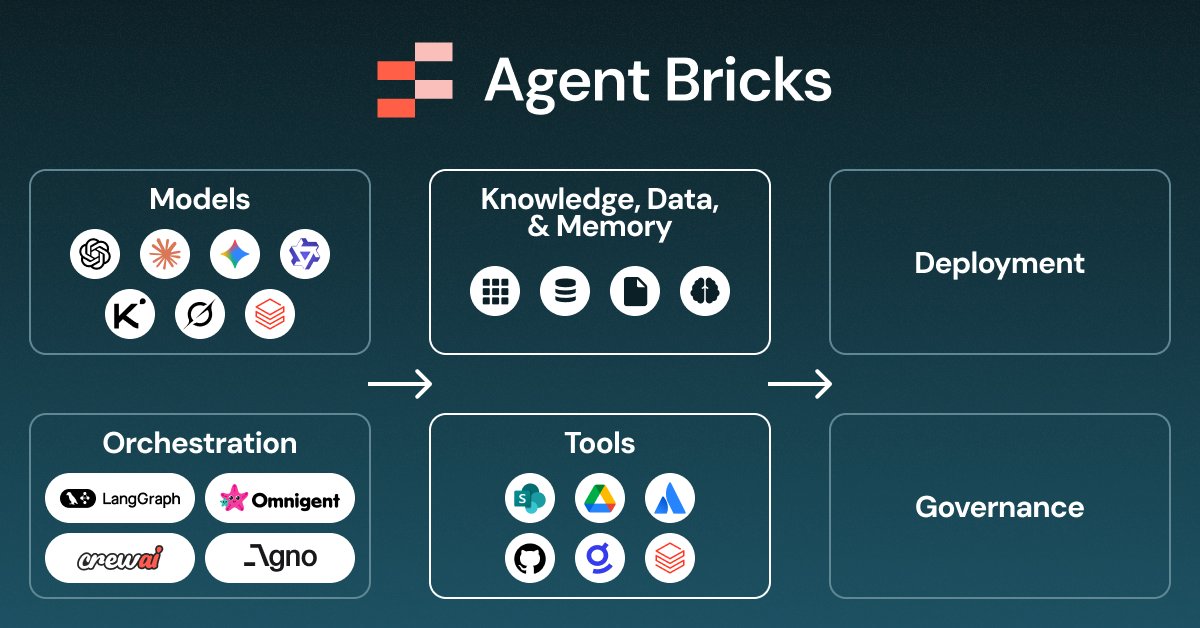
We are excited to announce the next evolution of Agent Bricks as our agent platform.
Agent Bricks has expanded into a comprehensive platform for building agents with any model and any harness, accessing data anywhere, and confidently deploying and controlling agents in production.
Agent Bricks provides the building blocks developers need to build impactful agents, including secure sandboxes, agent memory, token capacity, and managed infrastructure.
The platform is open by design, supporting any model, any harness, and any data source. We also offer a managed version of Omnigent, our open source meta-harness, to orchestrate different harnesses.
We believe the future of agents requires data and AI on a single platform, making it easier to build and operate agents in production.
We can't wait to see what you build! https://t.co/EsKDdsqncW
#WWDC26: a smarter, more conversational Siri AI! Apple Intelligence features across apps! Expanded child safety features, and faster, more reliable software than ever before!
You may have been practising Surya Namaskar. But have you heard of Chandra Namaskar? While Surya Namaskar energises & boosts stamina, Chandra Namaskar offers calmness, balance & inner peace. One harnesses the sun’s strength, while the other embodies the moon’s serenity. Together, they create harmony, keeping the body active & the mind centered.
For more such interesting trivia on Yoga, keep following #FeelBetterWithYoga🧘♀️
#CultureUnitesAll
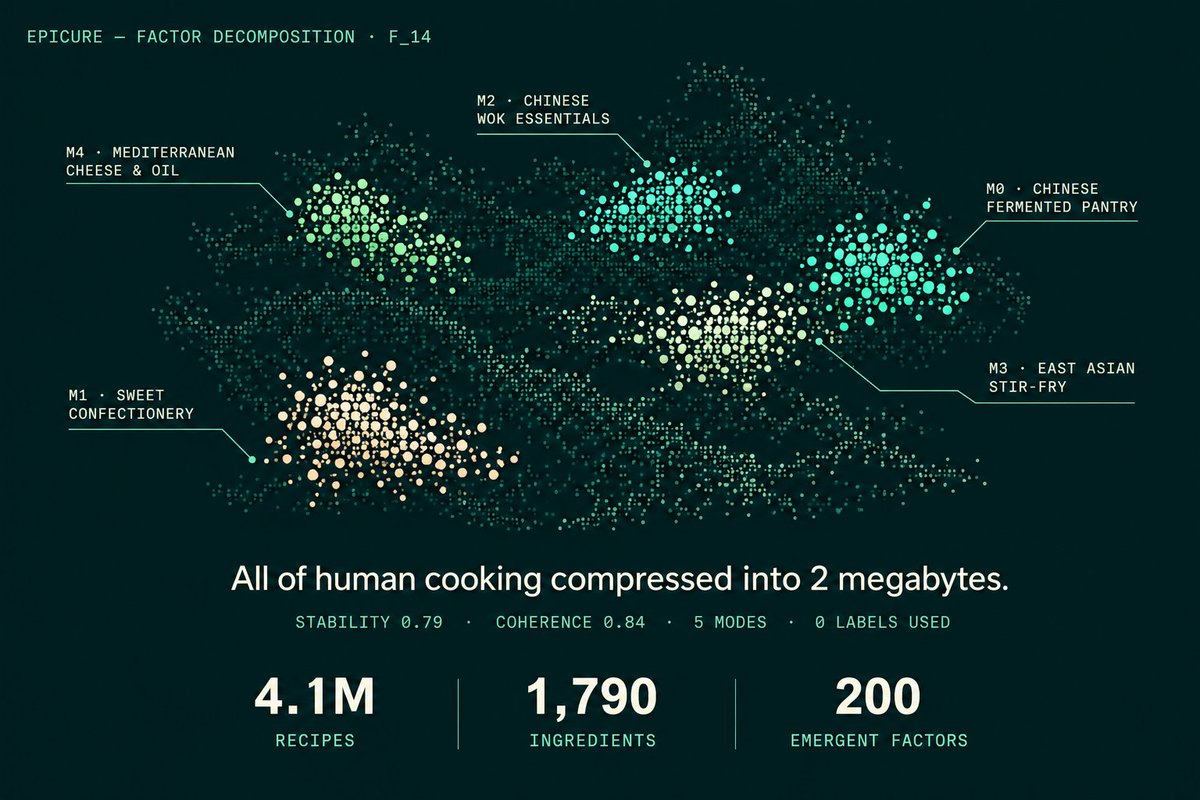
Launching our new paper on arXiv: we trained the largest multilingual food model ever built.
4.1M recipes. 7 languages. 1,790 ingredients. 300 dimensions.
All of human cooking compressed into 2 megabytes.