How to Operate the Big Bird Costume
Big Bird is an 8-foot 2-inch (249 cm) anthropomorphic canary that was operated by Carroll Spinney (swipe left) from 1969 to 2018. As Spinney got older, Big Bird appeared less frequently on the show, and when he did, his on-screen time got shorter and shorter because it was difficult for him to hold up his arms for long periods of time.
On 19 September 1991, German couple Erika and Helmut Simon were exploring the Ötztal Valley region of the Austrian Alps when they came across the corpse of a human who they assumed was a mountain climber who had an accident.
As it turned out, the mummified corpse had actually been in the ice for more than 5,300 years. The Iceman mummy, was given the nickname of Ötzi.
His belongings, scattered around the body, included a bow and quiver with arrows, a complete copper-bladed axe, a flint dagger with a wicker sheath, two birch wood vessels clad with maple leaves, remnants of a backpack, a leather pouch with small objects, fur and leather garments, shoes, and other minor artifacts.
Because of the presence of an arrowhead embedded in his left shoulder and various other wounds, researchers believe Ötzi was murdered.
BREAKING: Workers at @McDonalds in LA have walked off the job ON STRIKE due to inside heat of nearly 100 degrees.
Workers at this store helped launch a strike wave that spread to over 350 stores statewide in 2020 through 2022.
We're reminding our bosses who has the power.
Switzerland's obsession with bunkers stems from the Cold War and the looming threat of nuclear war. Since 1963, at the height of the Cold War, Switzerland has maintained a unique 'shelters for all' policy. According to this policy, every person in the country must have a designated spot in a bunker in case of any kind of catastrophe. The current population of Switzerland is just over 8.7 million.
Pedestrians in Johannesburg, South Africa fled for safety on Wednesday after an explosion ripped through the central business district. At least one person was killed and dozens others injured, but the cause of the explosion has not yet been confirmed.
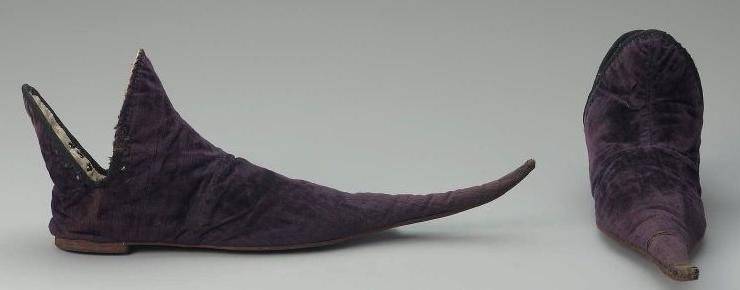
During the 14th century, Europe experienced a significant trend known as the "shoe craze," where there was a widespread demand for poulaines. Poulaines were pointed-toe shoes that could stretch up to an impressive 2 feet in length. Due to their impracticality for laborious work, these shoes were a luxury reserved for the wealthy elite. Interestingly, in medieval times, poulaines were considered highly alluring and associated with sex appeal for men. The fashion of that era involved shorter tunics, and young men would proudly showcase their legs, accentuated and elongated by these low-cut shoes with their long, pointed tips.
However, the popularity of poulaines eventually led to a series of unfortunate consequences. The association with sodomy emerged, leading to disapproval from several European monarchs, who eventually banned them entirely. Despite these actions, the damage had already been done. The poulaines era triggered a significant increase in bunion cases across Europe, with the number of cases more than quadrupling within a short period.
Recently, archaeologists have made intriguing discoveries, unearthing skeletons from that era that provide evidence of the severe bunion epidemic caused by the fashion trend of wearing poulaines. These skeletal remains paint a vivid picture of the extent of the bunion-related issues that afflicted individuals during that time.