I am pleased to share the story about how non-coding antisense transcription regulates the model yeast PHO5 gene – done in collaboration with @LabStutz@julien_soudet and now published in @PLOSGenetics
1/9
https://t.co/LesbeVEptf
Do you really need to spread plasmid libraries on mountains of plates to get uniform growth, or can you just dump them in a flask and call it a day? We make huge plasmid libraries in the de Boer Lab, so we tested whether culture method really matters. 1/ https://t.co/3HbkGnBw6G
How do cells efficiently respond to stress? Transcriptional stress responses are well-known—and in our latest study, we discover that cells use biomolecular condensation to redirect translation from old to new mRNAs 1/n https://t.co/pc9v3TdFQU
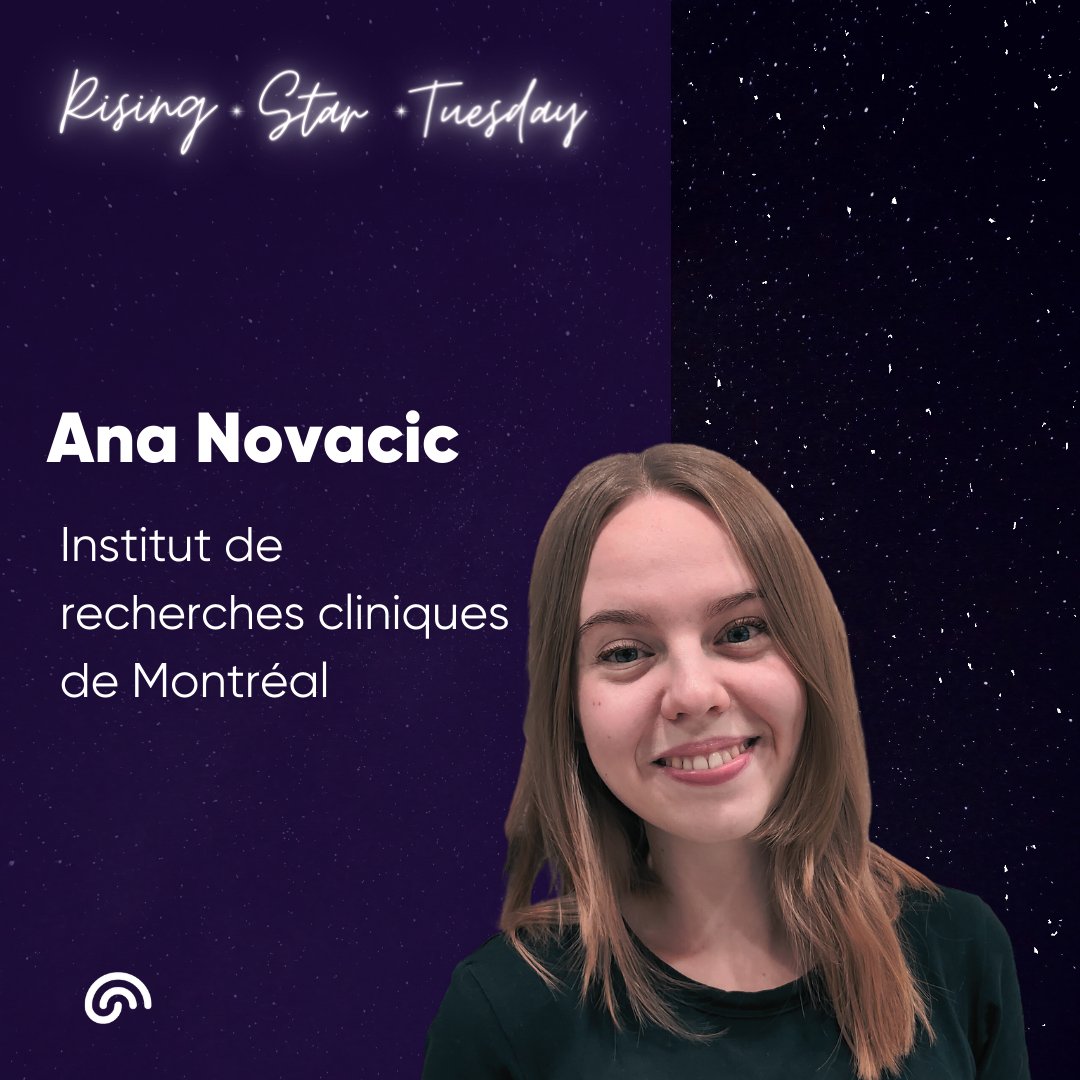
Congratulations to @AnaNovacic for receiving a Pierre Auger Morissette Capacity-Building Award in ALS Research! Ana’s research aims to address RNA-induced cell transport issues, providing insights for therapeutic strategies to treat #ALS. #RisingStarTuesday
@DHuzard@JanHomolak@JanHomolak Cajal's Advice for a young investigator you recommended to me should also be on this list - insightful and a bit unhinged
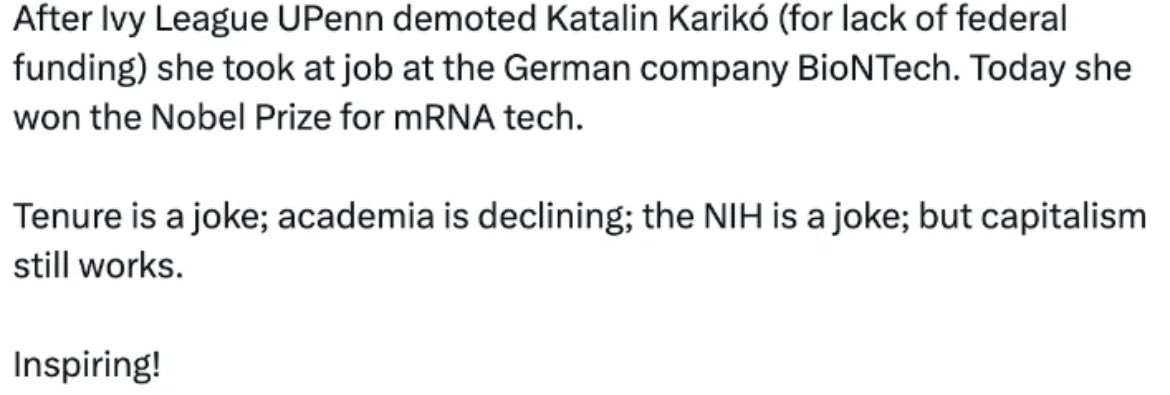
I’ve seen ppl claim that we can just abandon academia: the private market can take care of everything, including funding research. This was especially prominent after Kariko won the Nobel Prize. I’m usually the in-house capitalist, but here I don’t agree!
Below is a nice piece of research showing that state funded research has particularities that make it non easily replaceable with private funded research. In particular, public funded research tends to be more fundamental and “ahead of its time”. This can be seen by looking at patent categories: patents deriving from publicly funded research were more likely to start a whole new subfield, with filings in that subfield going up after the foundational patent.
It doesn’t take long to understand why that might be the case: science is inherently serendipitous; it’s very hard to predict what practical results might come out of a scientific finding. It also takes a long time for any given finding to end up having any practical implications: sometimes in the order of decades. Private markets are very good at one thing: optimising when a given outcome that generates profit Is wanted. But when it comes to foundational research, that might be profitable in decades, there’s no clear optimisation pathway. In biotech, the private sector tends to add value only after the foundational discoveries have already been made in academia. I know this very well, as I’ve worked with VCs and understand what kind of ideas they like to invest in: it’s usually stuff that has already shown proof of concept results in academia, so it’s de-risked to some extent.
Even in the case of mRNA tech, the idea that it was only the private sector that saved the day is wrong; After all, Kariko’s most important research was carried out in academia. Yes, it was undervalued at the time; but it’s not like in 2004, when she published the famous Immunity paper on modified mRNA, private investors were clamouring to help her start a company.
Let’s take another famous example of a technology which traces its origins to decades of fundamental research in academia: CRISPR/Cas9, the gene editing tool that won the 2020 Nobel Chemistry Prize. CRISPR/Cas9 was adapted from a naturally occurring genome editing system that bacteria use to defend themselves against viruses. Thus, the tool has its origins in research done back in the 90s by Francis Mojica, who was studying the bacterial immune system. At the time, this was very fundamental, curiosity-driven research: it wasn’t at all obvious that it would have such important applications. No private company would have funded him.
It was only in 2012 that Doudna and Charpentier published their famous Science paper, showing that CRISPR/Cas9 could be engineered to edit specific gene sequences in a rational fashion. And this discovery happened in academia too! Academia also produced the ppl making the discovery: Both Doudna and Charpentier had been fundamental researchers; Charpentier in particular was studying the immune system of bacteria and findings from an earlier 2011 paper of hers were crucial for getting the gene editing system over the line.
After this proof of concept, the private market did what It does best: there are now several CRISPR based therapeutic companies (w/ the 1st CRISPR therapy having been recently approved). Researchers can now buy CRISPR kits from private companies and do gene editing experiments in their own labs! But crucially, all the very high risk blue sky research has been done in academia.
The question is not: “how do we replace academia?”, But “How do we make academic-like research better?”
Hello @plasmidsaurus (and Full Circle) users! I've made a package which converts low-conf. bases to LOWER CASE so you can EASILY spot them in the fasta file. It also RE-INDEXES the sequencing results to match your map. Imagine the time you will save! https://t.co/MTPACsqxlG
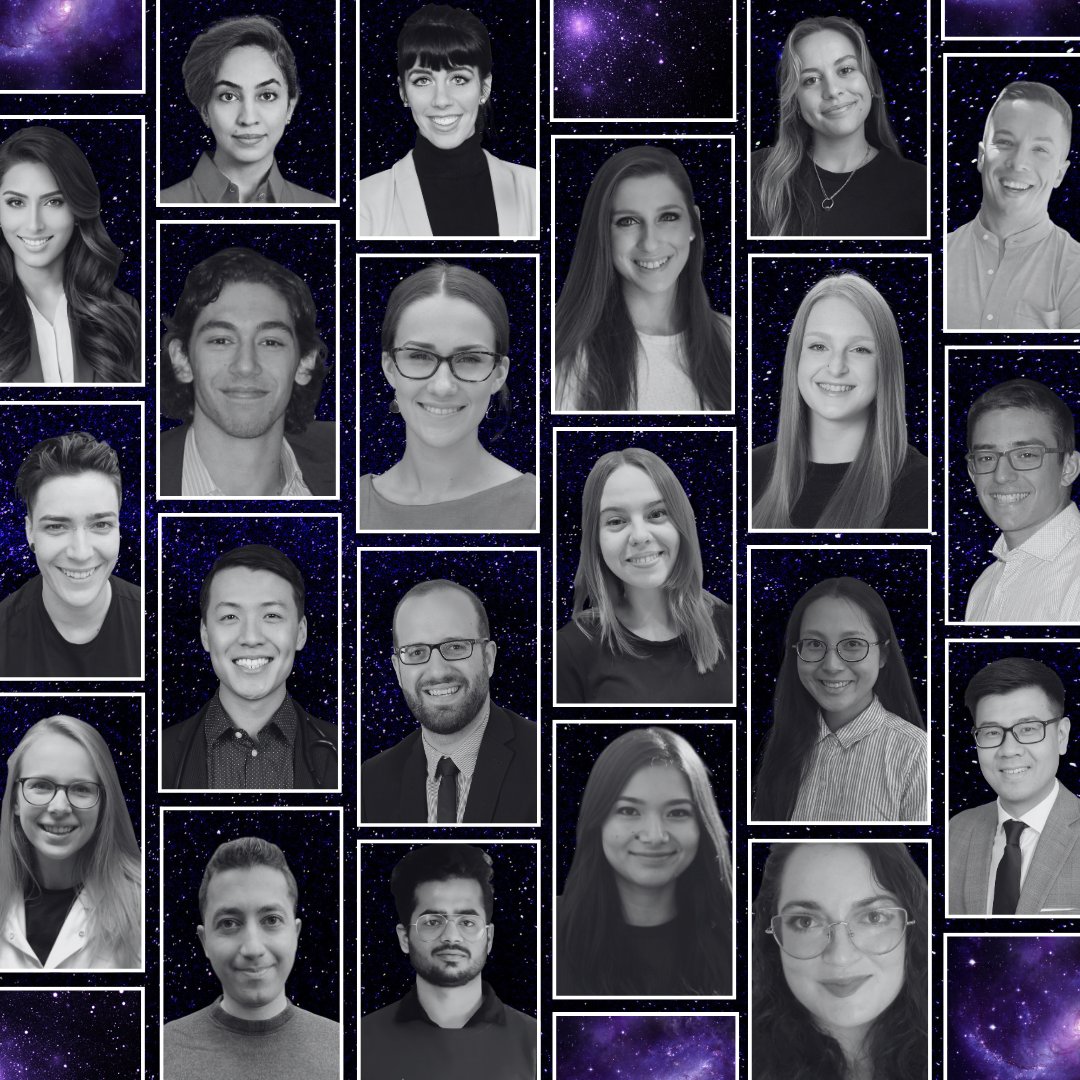
Congratulations to the 21 trainees who have been selected to receive grants through @BrainCanada’s Rising Stars Trainee Awards! 🎉🌟 For more information ➡️https://t.co/ejz1uywnel
@AnaNovacic@BiancaCBondi