That Ruto is cornered is no longer something to dismiss, because the political mood, the anger on the ground and the fractures around him are becoming harder to ignore.
“Ruto Must Go” can win an election, but it cannot run a country, and the opposition must now start telling Kenyans what happens after the celebrations are over.
Start with the national debt. Which loans will they honour, which ones will they audit, what happens to odious or questionable debt, and how exactly will they stop Kenya from borrowing simply to repay previous borrowing?
Then tell us what happens to this bloated government structure where almost every problem has somehow produced an authority, agency, board, council, commission, fund, secretariat, director general, board chairman, CEO, offices, vehicles and allowances.
Why, for example, does Kenya need a whole Kenya Water Towers Agency with its own board and administration to coordinate conservation of water towers instead of placing that work directly inside the responsible ministry alongside the existing forestry, water and environmental departments?
The government itself has admitted that some State corporations have overlapping or duplicated mandates and has been trying to merge or restructure them, which tells you the problem is not imaginary.
How many water agencies does one country need before water actually reaches people's taps, when we already have the Ministry of Water, Water Works Development Agencies, the National Water Harvesting and Storage Authority, Water Resources Authority and other institutions funded from the same taxpayer?
How many agricultural boards, authorities and corporations do we need before farmers receive affordable fertiliser, functioning markets and reasonable prices for what they produce?
How many youth funds, women funds, enterprise funds and empowerment programmes must exist separately, each carrying administrators and operational costs, instead of creating one properly managed financing institution with measurable results?
Why do functions that could comfortably sit as departments inside ministries repeatedly become standalone State corporations requiring CEOs, boards, procurement departments, HR departments, finance departments, legal departments and expensive headquarters?
The opposition must tell us which State corporations it will abolish, which ones it will merge, which boards disappear on day one and how much money those changes will actually save taxpayers.
Tell us what happens to SHA and whether healthcare will continue being built around deductions, unexplained private technology companies and layers of agencies before money finally reaches the hospital treating the patient.
Tell us what happens to the housing levy, and whether government should really be collecting money from every worker, building houses, identifying beneficiaries, financing mortgages and competing with private developers at the same time.
Tell us what happens to university funding, HELB, school capitation and the endless experiments that leave parents discovering new education policies after schools have already opened.
Tell us what happens to county financing and whether governors will continue travelling to Nairobi every few months begging Treasury to release money that Parliament already allocated to counties.
Tell us what happens to corruption cases, because Kenyans do not need another government that arrives with its own thieves, protects them for five years and suddenly discovers corruption when somebody falls out politically.
Tell us what happens to procurement. Will every tender, beneficial owner, contract variation and final payment become publicly searchable, or will we continue pretending transparency exists when more than half of government contractors can remain hidden behind companies?
Tell us what happens to the police. Will the next president still call commanders when he wants opponents arrested, or will Kenya finally build a police service where an officer fears the law more than he fears State House?
Tell us what happens to the DCI, ODPP, EACC, intelligence services and other institutions that become extremely energetic when powerful people have private problems but suddenly develop weak knees when politically connected goons, killers and thieves are involved.
Tell us what happens to State House spending, advisers, presidential delivery units, special envoys, taskforces and endless committees created whenever somebody in government wants another office.
Tell us what happens to Cabinet size, principal secretaries, CAS style positions if they return under another name, government advisers and political appointees scattered through State corporations.
Tell us whether government vehicles will still consume billions transporting officials to meetings where they discuss why government has no money.
Tell us whether every new president will continue creating offices for election losers and coalition partners instead of forcing political parties to carry the cost of their own political settlements.
Tell us what happens to taxes, because promising to reduce taxation is easy until the same politicians enter Treasury and discover they inherited a government whose recurrent expenditure they are unwilling to cut.
Tell us what happens to pending bills, because thousands of businesses have supplied government, paid VAT, borrowed money to perform contracts and then waited years for the State to pay them.
Tell us what happens to electricity costs, fuel taxes, manufacturing, agriculture and small businesses, because Kenya cannot tax itself into prosperity and then wonder why investors move production elsewhere.
And most importantly, tell us what happens to the structure of political power itself.
If all the opposition is offering is another president controlling Parliament, influencing prosecutors, intimidating independent institutions, appointing friends everywhere and borrowing billions with no consequences, then we are simply preparing the next “Must Go” movement.
Ruto going is now a reality.
But Kenya cannot spend the next year discussing who takes the cake without asking why the cake is this expensive, why so many people are eating from it and why ordinary Kenyans are always the ones paying for it.
Kenyans have suffered enough under the misuse of power.
I am committed to ending it, so that public office finally serves the people, not the few who abuse it.
#Ukombozi2027
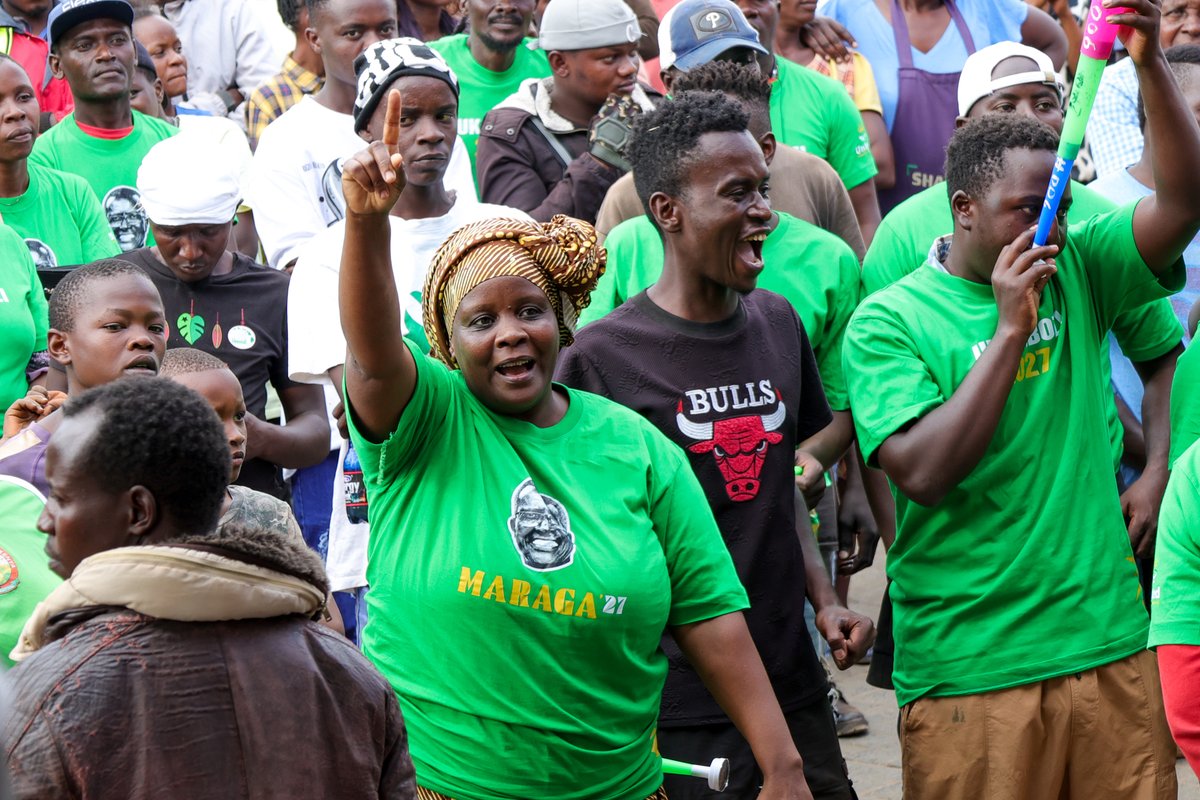
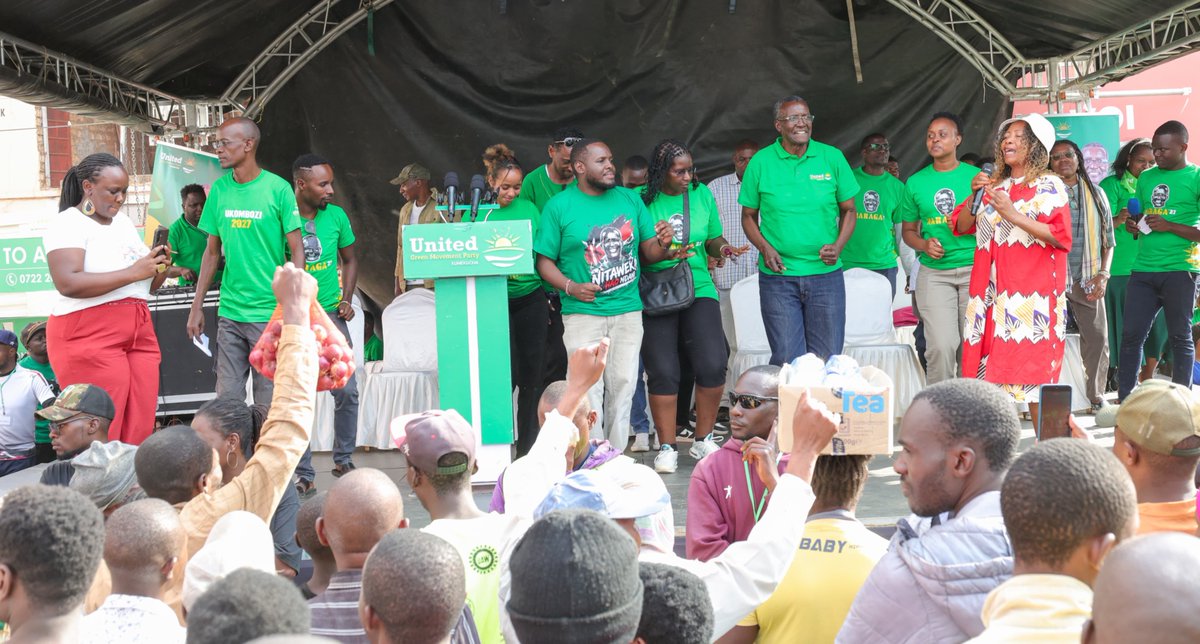
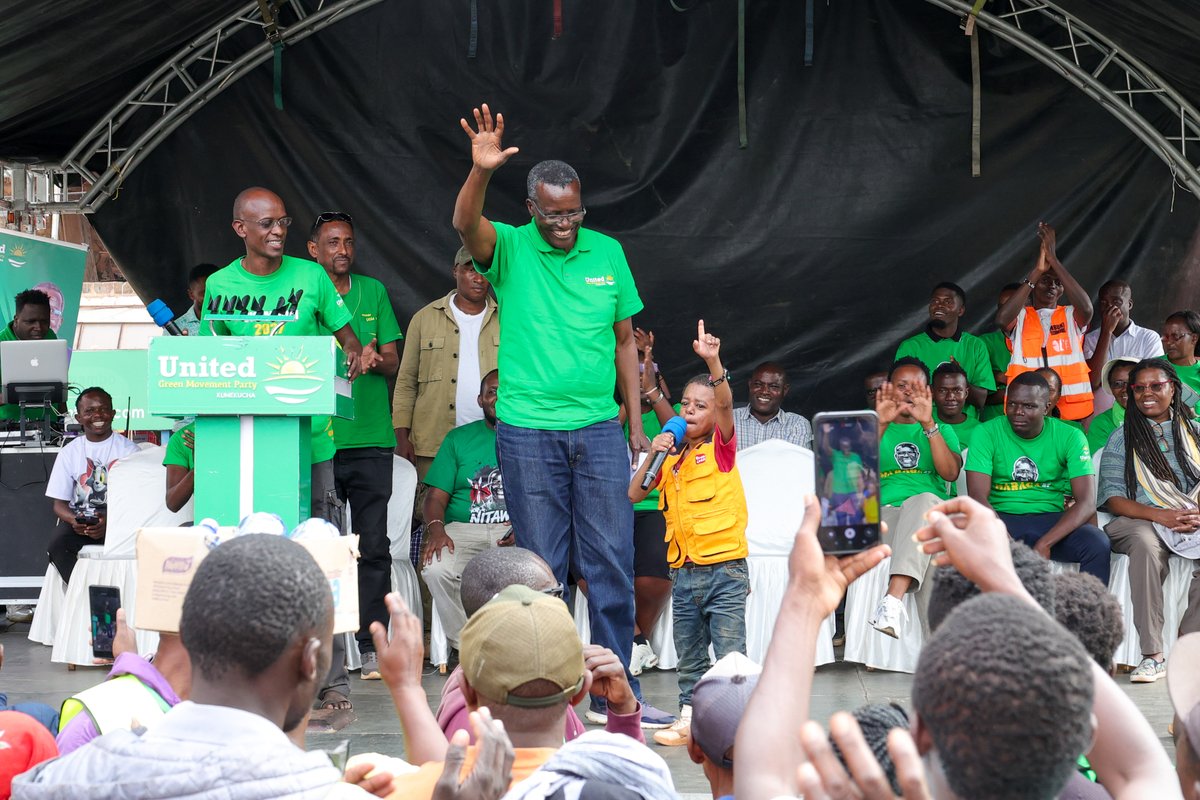
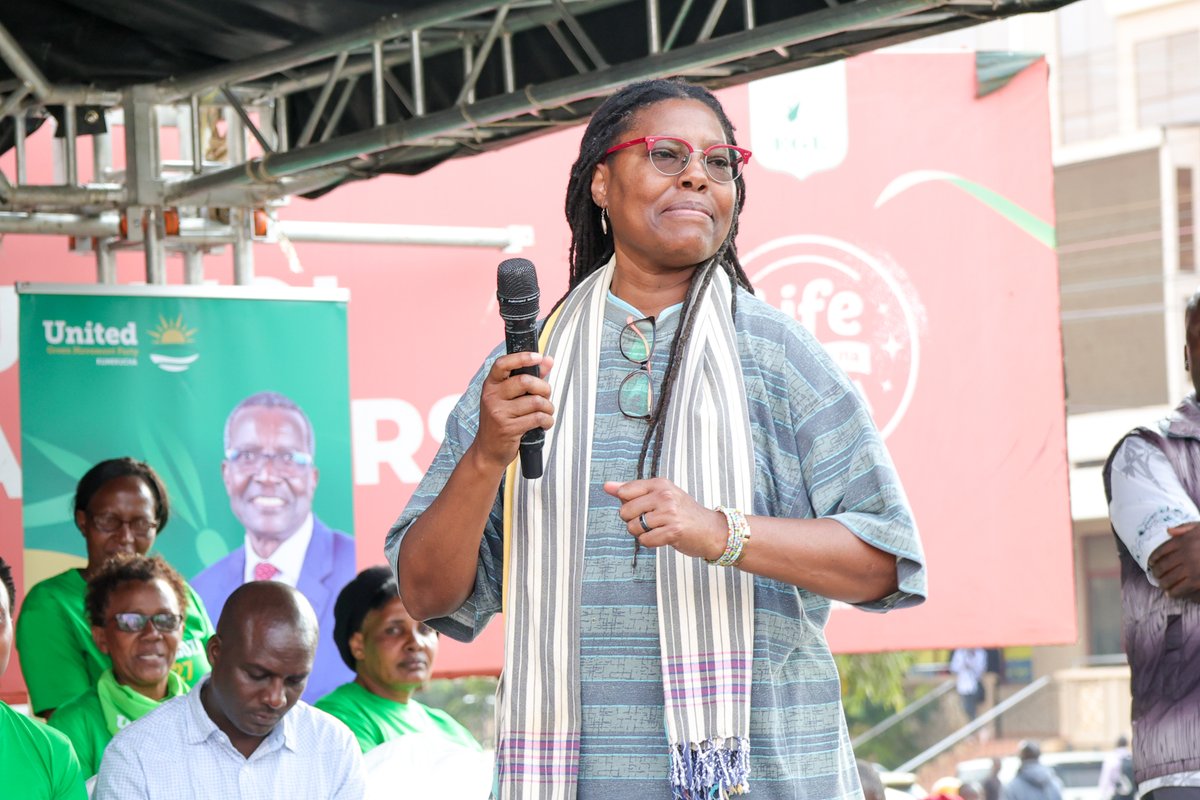
Today at Dan Mwazo Hall in Voi, I told the people of Taita Taveta: the full implementation of our Constitution will end their status as squatters on their own land.
Corruption has stolen enough from Kenyans, @UGMParty will have zero tolerance for graft.
SHA has failed to deliver healthcare, and our youth remain jobless on some of the most fertile land in this country.
Agriculture is dignified work. Let's support it, create jobs, and restore livelihoods.
#Ukombozi2027
Correct ✅ The 2017 Court of Appeal in IEBC v Maina Kiai settled this permanently: once a Constituency Returning Officer declares presidential results at the constituency tallying centre, those results are final. They are not provisional, not subject to "confirmation," and not open to alteration by the @IEBCKenya Chairperson at the National Tallying Centre.
The Chairperson’s role is strictly ministerial; receive, tally mathematically, and declare. Any attempt to vary, "verify," or administratively "correct" constituency figures at the national level is an unconstitutional assault on the sovereign will of the voter.
The polling station and the constituency are the true loci of our democracy. The national centre merely counts what the people have already decided. If you dispute the numbers, go to the election court. You cannot fix them by fiat.
The Constitution is unequivocal. It DOES NOT not permit ANY verification, re tallying or confirmation of presidential election results after they have been declared by the Constituency Returning Officer.
Articles 86(b) and (c), together with Article 138(2) and 138(3)(c), establish the polling station and the constituency as the only constitutional venues for counting, tallying, verification and declaration of presidential results.
Article 138(10) assigns the @IEBCKenya Chairperson a purely ministerial function. The Chairperson must aggregate the 290 constituency results exactly as received, without altering a single vote, and only confirm whether a candidate has attained the constitutional threshold under Article 138(4).
Section 39 of the Elections Act, particularly Section 39(1C)(b), and Regulation 83(2) purport to create a National Tallying Centre with powers to tally and verify presidential results. Those provisions introduce an extra constitutional process that the Constitution neither creates nor permits.
This unlawful expansion of power has been at the heart of the presidential election disputes of 2013, 2017 and 2022.
The Constitution provides a complete code. Verification ends at the constituency. The National Tallying Centre has no constitutional mandate to re tally, re verify or confirm results. Its role is limited to the mathematical aggregation of constituency results and confirmation of the Article 138(4) threshold.
Today in Voi, I met with @UGMParty delegates at Dan Mwazo Hall to listen to the people of Taita Taveta.
Anti-venom shortages, water access, mining benefits, title deeds, roads, education.
Real problems deserve real solutions. I heard you, and I carry your voice forward.
#Ukombozi2027
The greatest achievement of the 2010 Constitution was not just devolution. It was the constitutionalisation of public finance.
Public money no longer belongs to politicians. It belongs to the People and must be raised, borrowed, allocated, spent and audited strictly within the Constitution.
When governments treat the National Treasury as a political department instead of an independent constitutional institution, they undermine the very system Kenyans created to protect public resources.
The Constitution is clear. Public finance is governed by constitutional principles, not political convenience. Defending Chapter Twelve is defending the sovereignty of the People. #ReKe #KnowYourConstitution #GetitDone
Half of the companies awarded government tenders failed to disclose their beneficial owners, despite a legal requirement meant to improve transparency in public procurement
A total of 14,819 out of 25,994 contracts were awarded to firms that kept their ownership details secret.
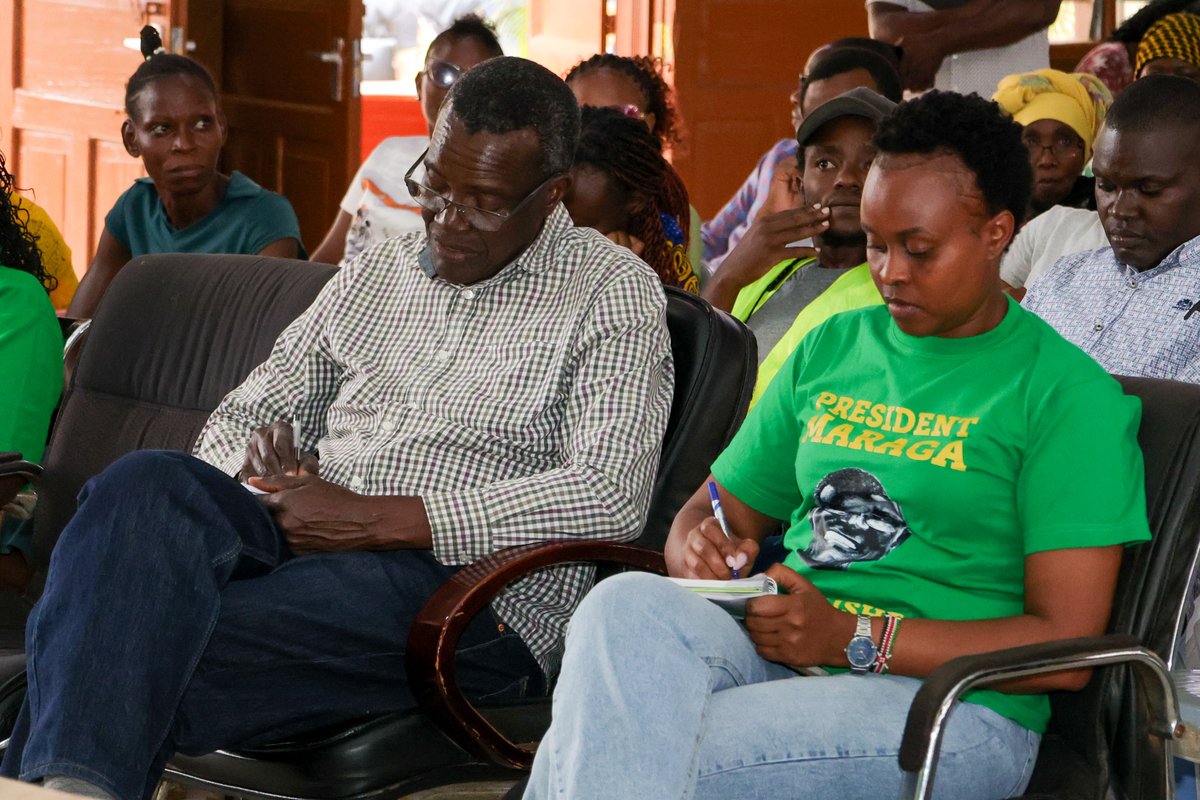
Today, in the company of @ugmparty leadership, I sat with young Kenyans from Taita Taveta County to listen, not to lecture.
Their concerns are urgent and legitimate: corruption that steals their future, the need for jobs through real industrialization, easier business registration for young entrepreneurs, fair fuel prices for our boda boda riders, stronger devolution, and healthcare every mwananchi can afford.
These are not abstract policy points.
They are the daily reality of our youth, and they must shape how we govern.
#Ukombozi
Ruto gathered 5,000 watchmen at State House and gave them a new title. Same salary, same suffering, but at least the poverty now sounds professional....
SENATOR OMTATAH'S MUSINGS ON CHAPTER 12 OF THE CONSTITUTION
In my view, Chapter Twelve 'constitutionalizes' the power of the purse by distributing financial authority among multiple constitutional institutions so that no single political actor controls the raising, custody, allocation, implementation, oversight and audit of public resources.
But by providing that...
"The National Treasury shall comprise of-
(a) the Cabinet Secretary;
(b) the Principal Secretary; and
(c) the department or departments, office or offices of the National Treasury responsible for economic and financial matters; [and]
(3) The Cabinet Secretary shall be the head of the National Treasury,"
Subsections 11(2) and 11(3) of the Public Finance Management Act (PFMA) undermine that constitutional settlement by structurally subordinating the National Treasury - the institution responsible for implementing the constitutional system of public finance - to political office-holders serving at the pleasure of the President, thereby materially concentrating influence over the constitutional system of public finance in the Executive.
Parliament was tasked to organize the National Treasury not to fundamentally alter the institution’s constitutional character.
Article 225(1) of the Constitution conferred upon Parliament a limited implementing authority to provide for the establishment, functions and responsibilities of the National Treasury, and Parliament could not, in the exercise of that authority, materially reconstruct the constitutional identity, constitutional function or constitutional character of the National Treasury recognized by the Constitution.
But vide sections 11(2) and 11(3) of the PFMA Parliament materially reconstructed the constitutional identity, function or character of the National Treasury.
I reiterate that Parliament may organize constitutional institutions. It cannot fundamentally alter their constitutional character as it did with the Treasury.
To drain this swamp which Parliament fraudulently created through the PFMA to revive and protect the old order which the 2010 Constitution rejected, and in which Kenya is totally stuck today, we must restore the National Treasury as the constitutional institution entrusted with the implementation and maintenance of the constitutional system of public finance established by Chapter Twelve, subject always to the Constitution and the oversight mechanisms established by the Constitution itself.
That will reflect the Committee of Experts' description (in their various reports on the Constitution Review Process) of the Treasury's role in establishing financial controls, while preserving the distinct constitutional responsibilities of Parliament, the Controller of Budget, the Auditor-General and the Commission on Revenue Allocation.
To save Kenya, the National Treasury must remain the constitutional pivot of Chapter Twelve. Not because it is superior to the other institutions. But because it is the institution through which the constitutional financial system is administered on a day-to-day basis. #ReKe #GetitDone #KnowYourConstitution













![OkiyaOmtatah's tweet photo. SENATOR OMTATAH'S MUSINGS ON CHAPTER 12 OF THE CONSTITUTION
In my view, Chapter Twelve 'constitutionalizes' the power of the purse by distributing financial authority among multiple constitutional institutions so that no single political actor controls the raising, custody, allocation, implementation, oversight and audit of public resources.
But by providing that...
"The National Treasury shall comprise of-
(a) the Cabinet Secretary;
(b) the Principal Secretary; and
(c) the department or departments, office or offices of the National Treasury responsible for economic and financial matters; [and]
(3) The Cabinet Secretary shall be the head of the National Treasury,"
Subsections 11(2) and 11(3) of the Public Finance Management Act (PFMA) undermine that constitutional settlement by structurally subordinating the National Treasury - the institution responsible for implementing the constitutional system of public finance - to political office-holders serving at the pleasure of the President, thereby materially concentrating influence over the constitutional system of public finance in the Executive.
Parliament was tasked to organize the National Treasury not to fundamentally alter the institution’s constitutional character.
Article 225(1) of the Constitution conferred upon Parliament a limited implementing authority to provide for the establishment, functions and responsibilities of the National Treasury, and Parliament could not, in the exercise of that authority, materially reconstruct the constitutional identity, constitutional function or constitutional character of the National Treasury recognized by the Constitution.
But vide sections 11(2) and 11(3) of the PFMA Parliament materially reconstructed the constitutional identity, function or character of the National Treasury.
I reiterate that Parliament may organize constitutional institutions. It cannot fundamentally alter their constitutional character as it did with the Treasury.
To drain this swamp which Parliament fraudulently created through the PFMA to revive and protect the old order which the 2010 Constitution rejected, and in which Kenya is totally stuck today, we must restore the National Treasury as the constitutional institution entrusted with the implementation and maintenance of the constitutional system of public finance established by Chapter Twelve, subject always to the Constitution and the oversight mechanisms established by the Constitution itself.
That will reflect the Committee of Experts' description (in their various reports on the Constitution Review Process) of the Treasury's role in establishing financial controls, while preserving the distinct constitutional responsibilities of Parliament, the Controller of Budget, the Auditor-General and the Commission on Revenue Allocation.
To save Kenya, the National Treasury must remain the constitutional pivot of Chapter Twelve. Not because it is superior to the other institutions. But because it is the institution through which the constitutional financial system is administered on a day-to-day basis. #ReKe #GetitDone #KnowYourConstitution](https://pbs.twimg.com/media/HPCMa3oW8AAgw2r.jpg)