@elonmusk Golden hour lighting through the exhaust plume made the climb-out look unreal. Hard to beat 5+ million pounds of thrust lighting up the Cape's sky like that.
Every single atom in your right hand probably came from a different star, forged in stellar interiors and scattered across the galaxy long before Earth formed. 🌌
@astrooalert Astronomers usually call this the Rho Ophiuchi complex. At roughly 460 light-years away, it’s actually one of the closest star-forming regions to our solar system.
@NASA@Astro_Jessica@Soph_astro@Space_Station Sometimes people forget that routine station maintenance outside the hull is essentially high-stakes orbital plumbing in 300-pound pressurized suits. Excited to watch tomorrow morning.
Be part of the bigger picture! 🌌
With more than a million individual pixels per pointing of Roman’s Wide Field Imager, there’s a spot for everyone in Roman’s first images, set to be released in the next few months.
Grab your certificate and pixel number now: https://t.co/JAHI6BFnJc
Starlight takes thousands of years to reach us, meaning most stars we see at night might already be dead. We are looking at cosmic ghosts frozen in time. ✨
If you placed Saturn in a giant cosmic ocean, it would float. With a density lower than water, this gas giant is the only planet in our solar system that could take a bath. 🌊
Everyone thinks galaxies need stars to exist, but they don't. Cloud 9 proves that "failed" galaxies made entirely of dark matter and unlit gas aren't rare anomalies, they're a normal, predictable blueprint of our universe.
By analyzing 72 young stars, JWST revealed that planet formation is a relentless race against time because stellar winds and radiation constantly blow away the gas and dust required to build worlds.
Planets this close to their stars are supposed to be dead rocks stripped bare by solar radiation.
Yet, HD 176071 b defies the "Neptunian Desert" rule and maintains a shifting, living atmosphere with moving clouds. 🌌🔥
Space is full of light, but scientists just found a massive cosmic ghost: a galaxy with a million suns worth of gas that is completely, totally invisible. Meet "Cloud 9," humanity's best candidate yet for a true "starless" galaxy.
NASA's iconic Swift space telescope is officially out of time, and a private rescue mission has failed, meaning this massive observatory is now on an uncontrolled collision course back to Earth.
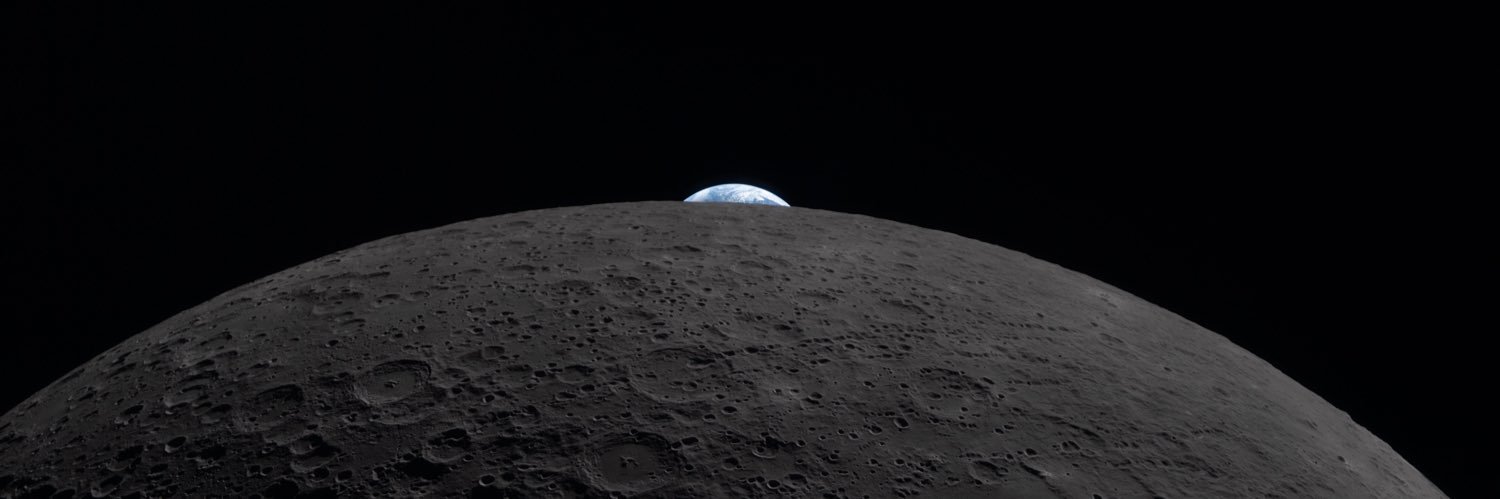
Only 30 people in history have ever received the U.S. Congressional Space Medal of Honor, until today. Legends like Neil Armstrong have it, and now the four Artemis II astronauts who journeyed around the moon bear the nation's highest space distinction.