It’s easy being on this app to start living in a bubble thinking that everyone in the world is obsessed with AI. That really is very far from reality. The truth is AI has very little impact right now on the lives of most Americans.
I spent alot of time this year talking to people in New York, California, DC and Miami that are not in the tech industry. Here is what I’ve learned
1. Most people call ChatGPT - “chat” and that is the primary AI they use. They do not pick a custom model and just use the default. They mainly use it for personal things
2. Most people have never used Claude or Anthropic’s models. Some have used it at work
3. Most people use Gemini through the free Google search
4. Most people have no idea 2 Millennium problems have been solved by AI nor do I think they care
5. Most people have never used a coding agent nor do they want to
6. Most people do not know the model families like Haiku/Sonnet/Opus/Fable
We vastly overestimate on this app how often people are thinking about or following the AI industry.
Same math applies to sleep.
People mistakenly believe it's wasted time.
6hr vs 8hr pushes your system near 100% capacity, multiplying errors, brain fog, and biological debt by 12x.
AI Coding has changed.
My Jan prompts: Okay you need to move the chat box to here and theme like this. Stop pre-loading the entire chat and chunk and virtualize it instead.
My prompts today: Just make it cooler and load faster.
Estamos viviendo una etapa de la humanidad que me genera una mezcla de miedo y entusiasmo.
Hace unos días, Levent Alpöge, matemático de Anthropic, anunció haber encontrado, junto a Claude, una demostración de la hipótesis de Riemann. Uno de los problemas matemáticos más importantes de la historia, que llevaba 167 años sin resolverse.
Hace menos de un mes, OpenAI anunció haber refutado una de las grandes conjeturas de la informática teórica, estrechamente relacionada con P vs NP, otro de los problemas del milenio cuya resolución podría cambiar los límites de la computación.
Y ayer, el científico jefe de OpenAI publicó algo cuanto menos inquietante.
Pequeñas mejoras en la capacidad de predicción de los modelos están dando lugar a saltos enormes en sus capacidades intelectuales. Él mismo contempla que en 2027 podamos asistir a una avalancha de descubrimientos sobre cómo mejorar la propia inteligencia artificial, realizados con ayuda de la IA.
Por otro lado, hablas con la gente de la calle y tengo la sensación de que gran parte de la sociedad todavía no es consciente de lo que viene.
Y es normal.
A principios de año empecé a programar de forma agéntica con Opus 4.5 y ya me parecía una auténtica locura. Por aquel entonces se popularizaba el término vibe coding y mucha gente ni siquiera se lo tomaba en serio.
He pasado prácticamente todo el año utilizando estos sistemas para programar e integrarlos en mis flujos de trabajo. Y la evolución que he visto en cuestión de meses me cuesta incluso asimilarla a mí. Los modelos que tenemos hoy son de otro planeta.
Pero me pongo en la piel de alguien que únicamente utiliza ChatGPT como sustituto de Google, que no programa, que no sigue los avances matemáticos ni lo que está ocurriendo con los modelos frontera, y entiendo perfectamente que su percepción sea otra.
Estamos viviendo el mismo momento histórico, pero dependiendo del uso que hagamos de esta tecnología, parece que estemos viviendo en realidades completamente distintas.
Y creo que en 2027 esas dos realidades van a empezar a encontrarse.
Para mucha gente, el choque con la realidad puede ser bastante fuerte.
Totalmente de acuerdo, a día de hoy veo 0 diferencia entre saber React, Angular, Lit o lo que sea
Lo que marca la diferencia ahora son las bases (arquitectura, rendimiento, criterio), no la sintaxis del framework de turno
Y esto solo va a ir a más
La AI llegó exactamente al punto que quería que llegue, poder hacer vibehardware y que salga realmente bien.
Astra 6.2, una impresora 3D y el límite es el cielo.
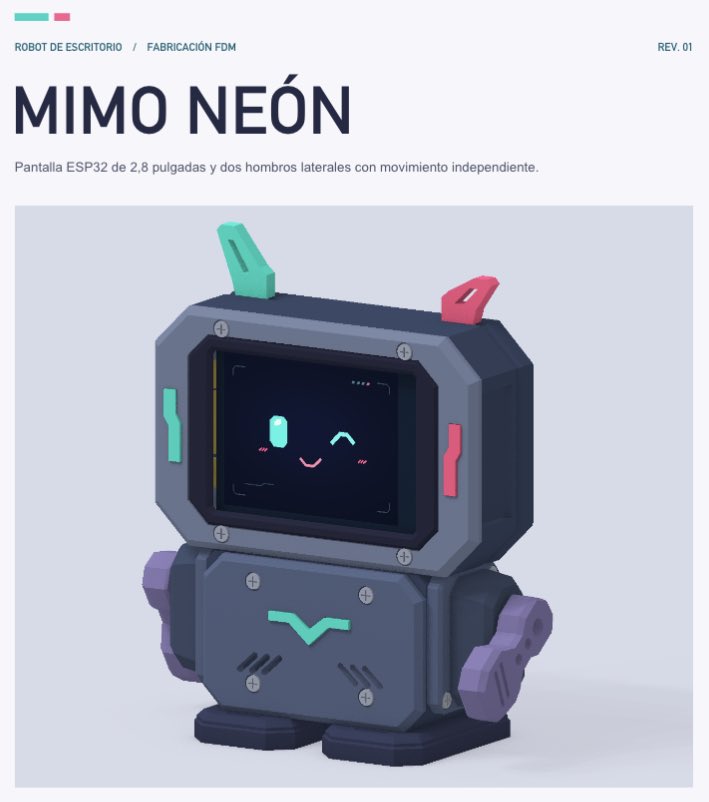
Les presento a Mimo, un robot de escritorio hecho en un prompt con GPT Astra 6.2 y mandado a imprimir tal cual me dio los STLs.
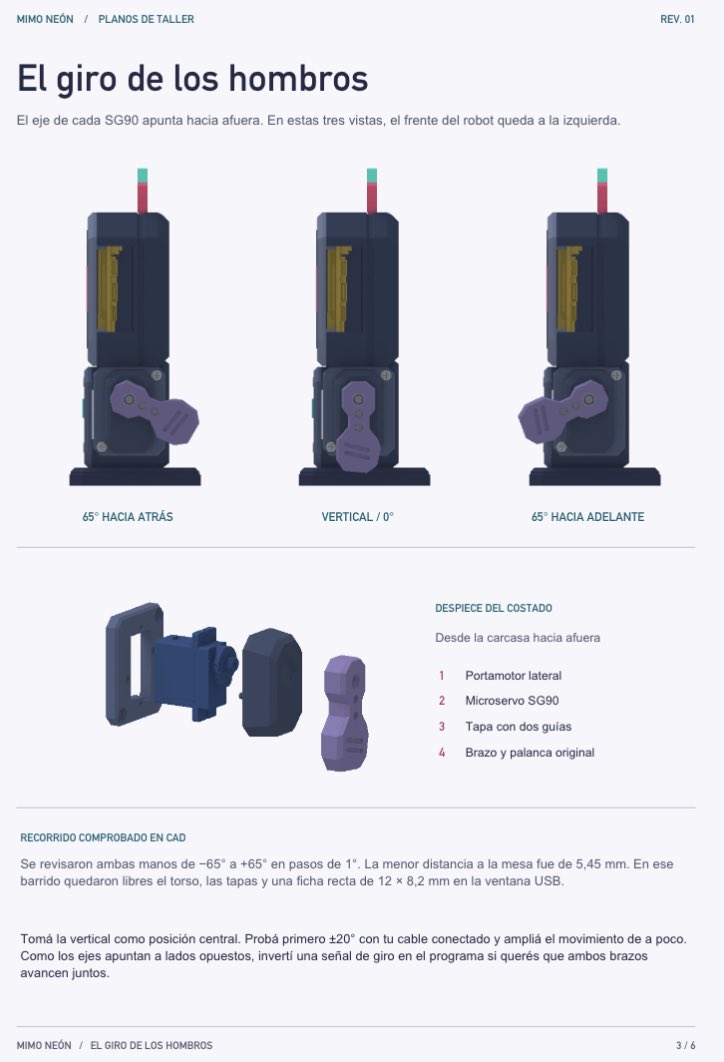
La pantalla es una TFT de 2.8” con un ESP32 integrado y los brazos 2 servomotores SG90.
Ya podemos crear nuestros propios juguetes, robots, lo que queramos.
the problem with elon is that he understood how important media is, and spent $44 BILLION buying twitter in an attempt to free the media and let people speak.
but i think he underestimated just how much people's brains would rot, and how little interest the average person has in actually understanding things.
you can write a 10,000 words essay explaining why an economic policy is retarded, why socialism will lead to millions dying, why something that's really wonderful and kind on paper has terrible consequences in reality. hell, there are already thousands of books and billions of words written about these things.
but people don't care.
and when you spend most of your time on twitter, reading articles, arguing with people, writing essays, it's very easy to forget that this is incredibly rare in today's age. the average person isn't reading your 10,000-word essay. he's watching tiktoks, kick streams, and playing videogames for 8h/day and agreeing with whatever the algorithm puts in front of him.
you might have the most convincing argument in the world, but if you can't communicate it in an 8-second video with a funny cat in the background while shortcircuiting the viewer's dopaminergic system with something extremely emotional, there's a good chance he'll never even see it.
which is the problem with building media around the written word. you're reaching the people who are already interested in understanding what's happening, while the majority of people is living in a completely different information universe.
i suspect elon eventually understood this too. he pushed hard on video and tried to bring video creators to X, and his $1 billion investment in Skydance might be another step in that direction.
but the problem with elon is bigger. you can't model the mind of the average person when you're elon musk. how do you even begin to understand the life of someone who spends his entire day scrolling tiktok and watching streamers when your life couldn't possibly be more different?
there's a universe of difference between the people who spend their days thinking about civilizational revolutionary technology and the people whose political opinions are shaped by whatever they see between a funny video of a cat and a lipstick review.
too many very intelligent people still don't understand just how insane that difference is.
making information freely available and making people pay attention to it are two completely different problems, which means that if one wants to change public opinion, he might be better off setting up tiktok farms, hiring armies of AI slop video creators and flooding every other social media with 8-second truke videos, narrated by a funny cat.
Esta frase de Jensen va a vivir en mi cerebro libre de alquiler por mucho tiempo.
Los lideres y founders de las world class companies tienen este mindset. Tengo pruebas y no tengo dudas.
I'm not even going to sugar coat it. Ocarina of Time represents everything that's pure about video games.
GTA VI represents everything that's dark & greedy, about the industry.
The former needs to win, to send a direct message to the industry. I don't even care about the awards