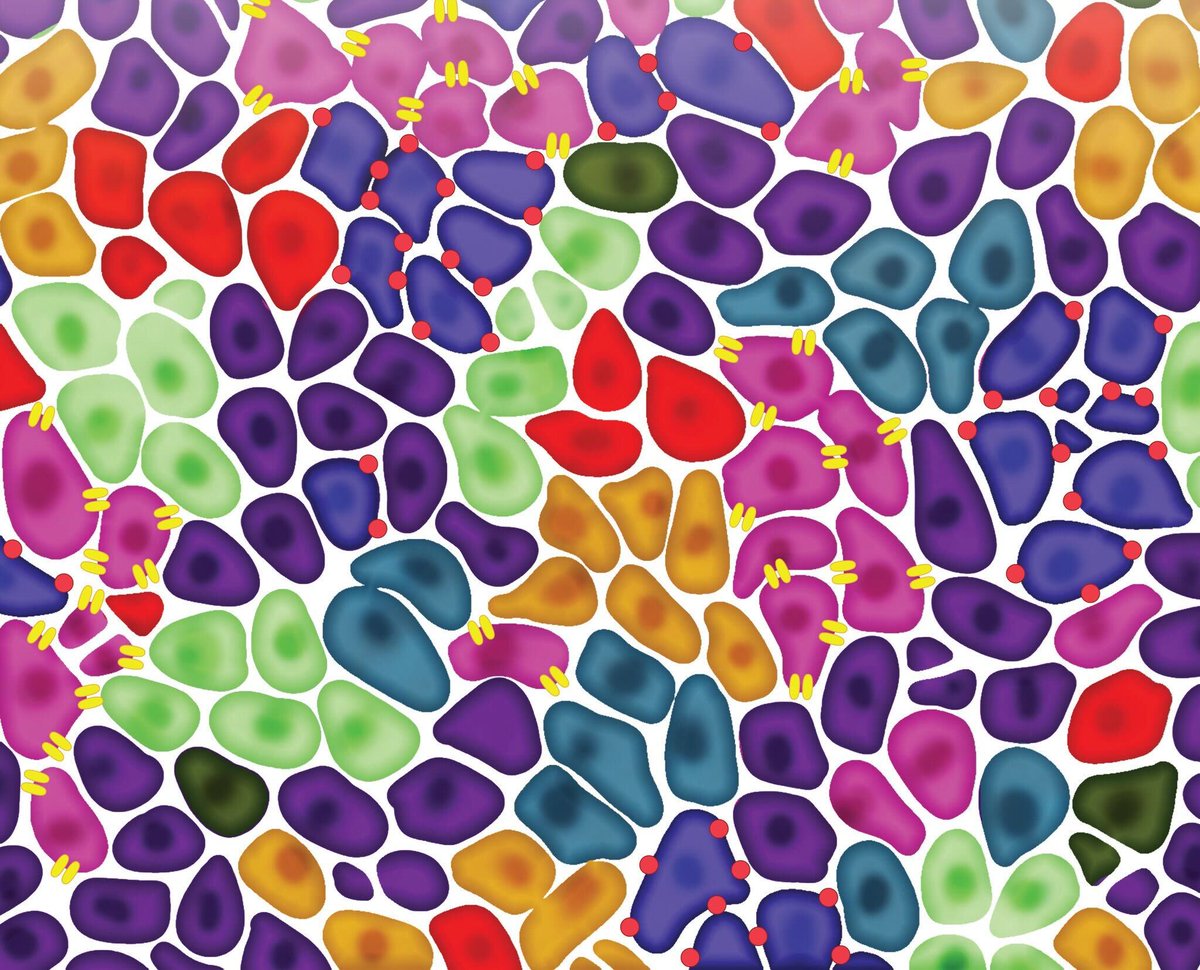
🚨For oncogene addicted LC, targeting the seed (oncogene+tumor cells) rather than modulating the soil (TIME) might be more pivotal for long-term survival benefit
Excited to share our latest paper published in @eClinicalMed! A phase II trial evaluating neoadjuvant immunochemotherapy for resectable EGFR-mutant NSCLC . Three key takeaways💡
https://t.co/tAv8E2CVGW
3⃣Could this improvement translate into a survival benefit?
I'm afraid the answer is NO. For MPR/pCR subgroup, patients not receiving adjuvant Osi showed significantly inferior survival compared to those who did. Yet, whether continue adjuvant IO may benefit remain unclea⚠️
@StephenVLiu Thank you for your kind words. Lorlatinib is and will definitely be the priority choice for ALK+LC for a long time. Understanding why some dont work or at least not that sensitive will help raise the bar even higher
First time at #ASCO2026 and it was unforgettable! Huge thanks to the two moderators @FordePatrick@LauraAlderMD and discussant @MARIANOPROVENCI for leading a wonderful session, and to the audience for all the insightful comments and thoughtful questions.
Truly inspiring week!
Name a common solid tumor cured by drugs alone.
I’ll wait.
The oncology world is drunk on vaccines, pills, and infusions.
Surgery and radiation are quietly doing the work nobody celebrates.
The math is unambiguous. The narrative is embarrassing.
Thread. 🧵
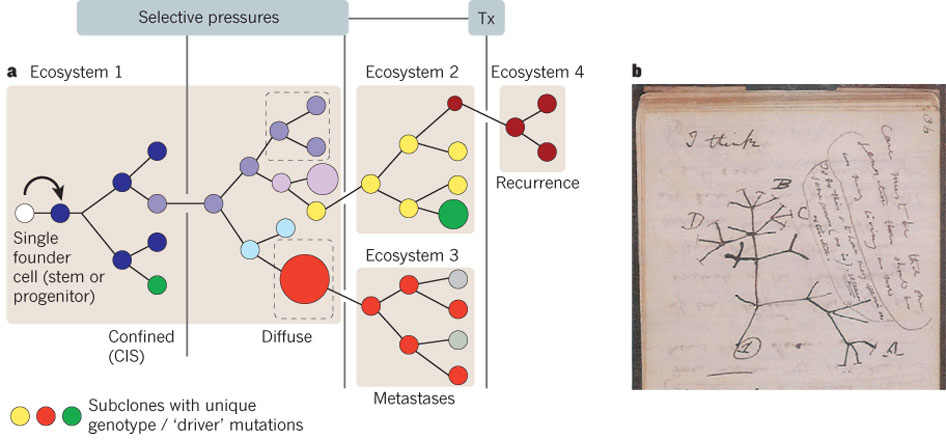
Cancer is an evolutionary process. We've known this for decades, but we didn't know whether its complexity was tractable.
We now know we can measure and sometimes predict cancer evolution in patients from molecular ('omics) data, although with still suboptimal precision.
A way forward is combining evolutionary theory (maths and concepts from theoretical population genetics) with machine learning & AI, the latter filling the theory “gaps” when solutions from first principles are out of reach.
Building predictive models of cancer evolution means we may be able to control the disease, designing evolution-aware therapies that prevent or delay drug resistance.
Come to learn more about this at #AACR26 session: ED53 - Cancer Systems Biology, Ecology, and Evolution. https://t.co/ra7BjJ6DTK
At #TTLC26, @DRCamidge shared powerful insights shaped by both clinical expertise and personal experience living with #lungcancer.
His presentation reminds us why continued innovation in #lungcancer research is essential to improving patient outcomes every day.
https://t.co/xZSd9m1voU
🆕Time to tailor chemo-IO in resected NSCLC. Reconstructed individual pts data show NEOAD= PERIOP in pCR, MPR, non-MPR. PERIOP performs well in pure-MPR (1-10%RVT). pCR or no-MPR deserve descalation or escalation strategies. @AntonioNuccio01@giusvisc@FabioSalomone22@JNCI_Now
What is the role of the TME in lung cancer evolution? We are excited to share our new TRACERx paper “Spatial Architecture of Myeloid and T Cells Orchestrates Immune Evasion and Clinical Outcome in Lung Cancer” at #AACR24, out in @CD_AACR today https://t.co/5bWeXqK2I0 Tweetorial👇
@LungCancerRx@Latinamd@JackWestMD Though surgery is of certain difficulty in these patients when comparing with egfrtkis or chemoIO. Also, ALK ihc of resected specimens might be necessary for more accurate pathological response assessment in these patients.
@LungCancerRx@Latinamd@JackWestMD Neoadjuvant/induction 2nd/3rd G ALK-TKIs followed by re-staging and optimal local Tx (RT or surg). I can’t think of any reasons to reject such unprecedented TKIs and choose undoubtedly inferior chemoRT as upfront Tx in alk+pts. High pathological response rate is real in alk+pts!