Michael Faraday was born into a poor family and had little formal education. He was apprenticed to a bookbinder at the age of 14, where he educated himself by reading books that came into the shop.
"Once we overcome our fear of being tiny, we find ourselves on the threshold of a vast and awesome Universe that utterly dwarfs — in time, in space, and in potential — the tidy anthropocentric proscenium of our ancestors. We gaze across billions of light-years of space to view the Universe shortly after the Big Bang, and plumb the fine structure of matter. We peer down into the core of our planet, and the blazing interior of our star. We read the genetic language in which is written the diverse skills and propensities of every being on Earth. We uncover hidden chapters in the record of our origins, and with some anguish better understand our nature and prospects. We invent and refine agriculture, without which almost all of us would starve to death. We create medicines and vaccines that save the lives of billions. We communicate at the speed of light, and whip around the Earth in an hour and a half. We have sent dozens of ships to more than seventy worlds, and four spacecraft to the stars. We are right to rejoice in our accomplishments, to be proud that our species has been able to see so far, and to judge our merit in part by the very science that has so deflated our pretensions."
- Carl Sagan
"Lo que más odia el rebaño, es aquel que piensa distinto. No es tanto la opinión en sí, como la osadía de querer pensar por sí mismo. Algo que ellos no saben hacer"
Arthur Schopenhauer
The first crewed Apollo mission lifts off!
Wally Schirra, Walt Cunningham, and Donn Eisele became the first 3 astronauts to be launched on a Saturn rocket 58 years ago today. This 11-day mission in Earth orbit was an important test of the Apollo command and service module. Three months later, it would take NASA astronauts around the Moon.
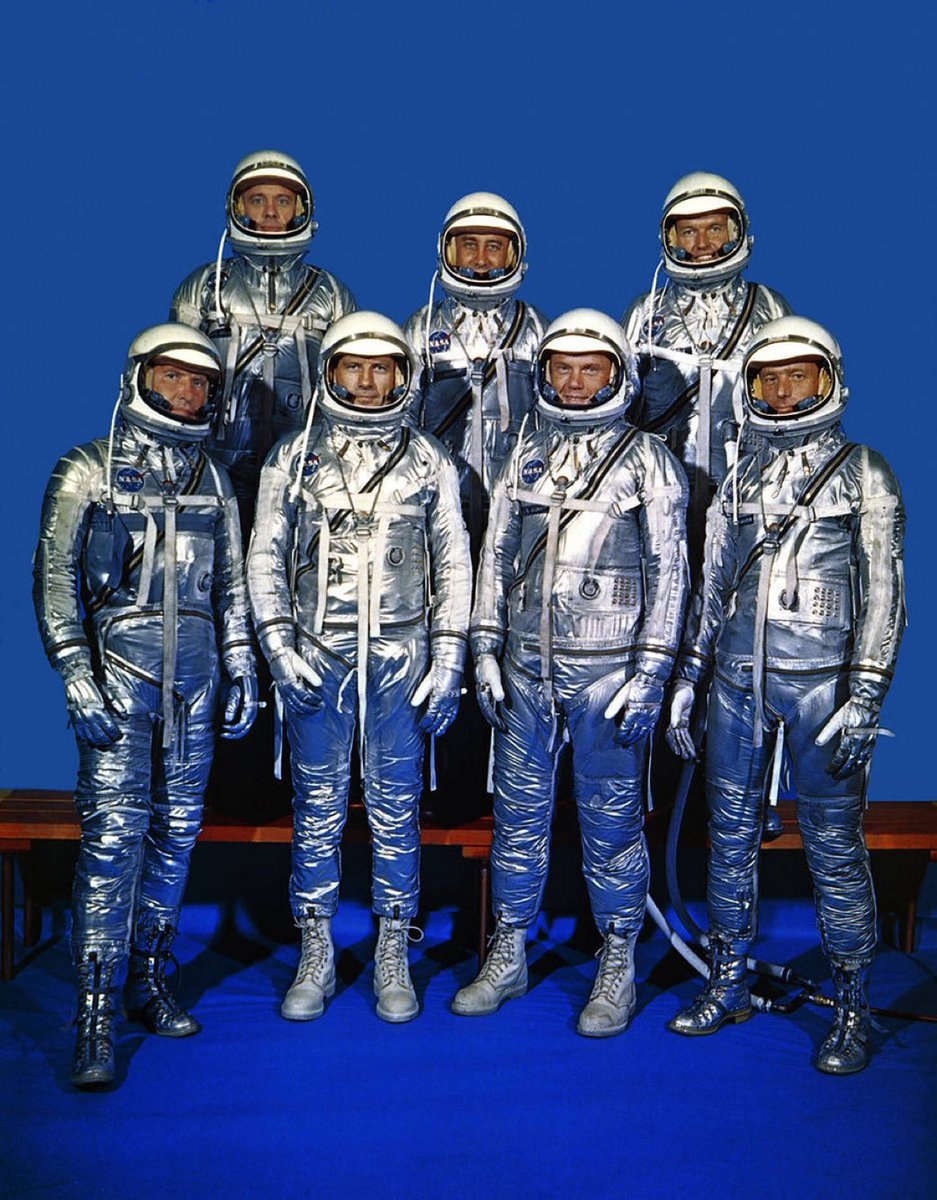
#OTD in 1963, the original Mercury 7 astronauts received the 1962 Collier Trophy for "pioneering manned space flight in the United States." It was the first time the Collier Trophy was awarded to an American space mission.
Two Comedians (1966) was Hopper's final canvas. It shows Hopper and his wife, Jo, on stage taking a bow.
After decades spent spotlighting American life, he ends by stepping into the scene to say a quiet goodbye to the world he painted. #artbots#hopper
Im amazed this myth continue into the modern day.
She did nothing. She was a nepo hire who's boyfriend led the project. That giant stack of code she's famously standing next to was fully written before she had ever joined the project, she wasn't involved in any of it. She literally didn't join the project till the final few months after everything was done.
The funny part is there were women on the team who wrote parts of that code but 100% of the credit goes to "some guys girlfriend" because they wanted it that way.
Parkinson’s Law – Why the State Bureaucracy Grows When the Work Shrinks
In 1955, a British naval historian wrote a joke for The Economist. Seventy years later, it remains one of the most accurate descriptions of the modern state ever written. Everyone knows the slogan: work expands to fill the time available. Almost no one knows the mechanism underneath it. That mechanism explains Europe.
1. The evidence. Between 1914 and 1928, the Royal Navy lost two thirds of its largest warships. Over the same years the Admiralty – the office that ran the ships – grew by three quarters. There were fewer ships and more men behind desks. Then there was the Colonial Office, which kept growing while the colonies left one by one. It was hiring while the empire was shrinking.
2. The first mechanism. An official who feels overworked has three choices. He can resign, he can share the work with a colleague, or he can ask for two subordinates. He never chooses the colleague, because a colleague is a rival. Two subordinates are a rank. So one tired man becomes three. Then each of the two subordinates feels tired.
3. The second mechanism. Seven people now do what one did, and they keep each other busy with drafts, approvals, and comments on the approvals. Everyone works hard, and nothing is produced. You have been in this meeting. You have been copied on this email. You have watched three people sign the form that one person filled in.
4. The law of triviality. Parkinson noticed that a committee will approve a nuclear reactor in minutes, because nobody understands it. The same committee will debate the bicycle shed for an hour, because everybody does. Bureaucracy does not avoid the important question by accident. It avoids it by design – the small question carries no risk, and on the big one, someone’s name goes on the decision.
5. The ratchet. A business that fails closes. A department that fails gets a bigger budget, because the problem is now bigger. Failure is the bureaucracy’s best argument for itself. This is why the state never shrinks on its own: every problem it does not solve becomes a new office for solving it.
6. The civilizational lesson. Burnham described the managers taking over. Parkinson showed how they breed. Put the two together and you get Brussels. You get France, where the state spends more than half of everything the country produces and still cannot fix a hospital. This is not because the people inside are wicked. It is because the machine works exactly as Parkinson said it would.
7. The vindication. Parkinson was dismissed as a humorist. Then Milei cut Argentina’s ministries in half – and the country did not collapse. It barely noticed, except on the bill. The lesson is simple: you cannot reform a bureaucracy by asking it what to cut. It will always propose to cut the ships – and hire someone to manage the cut.
🖤 Rest in peace, Margaret Hamilton.
A pioneer whose code helped take humanity to the Moon. 🌙🚀
Her legacy will live on — here on Earth and far beyond.
#MargaretHamilton#Apollo#NASA
https://t.co/VFnyC9Pz7r
https://t.co/PYUlupxonC
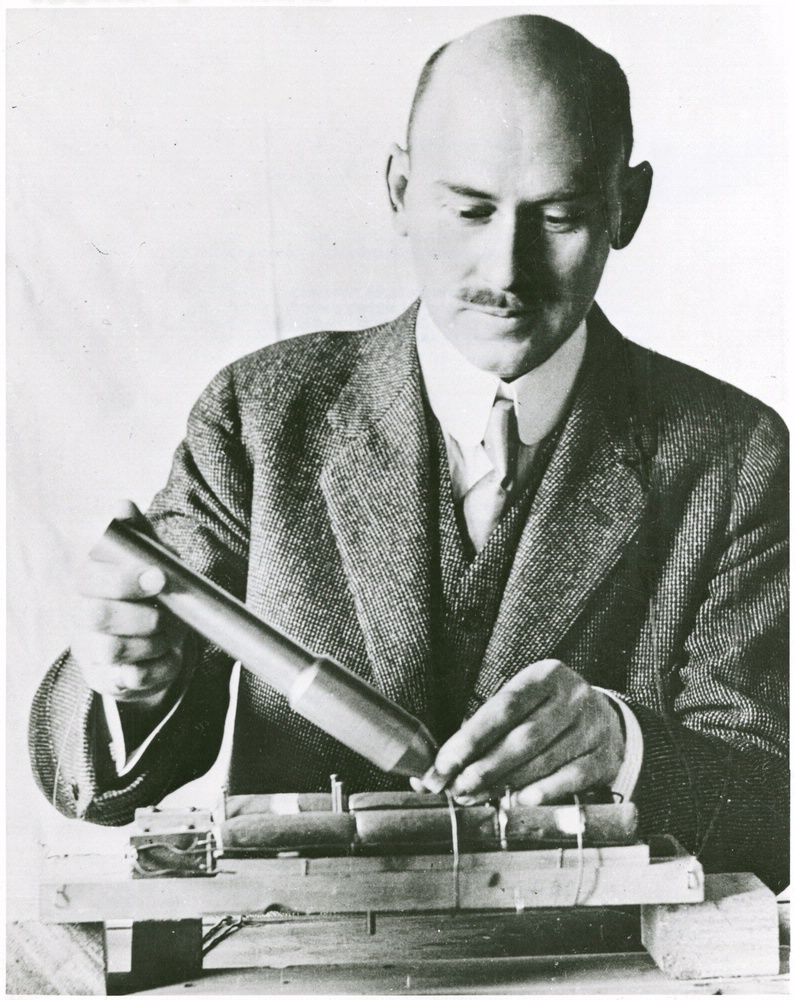
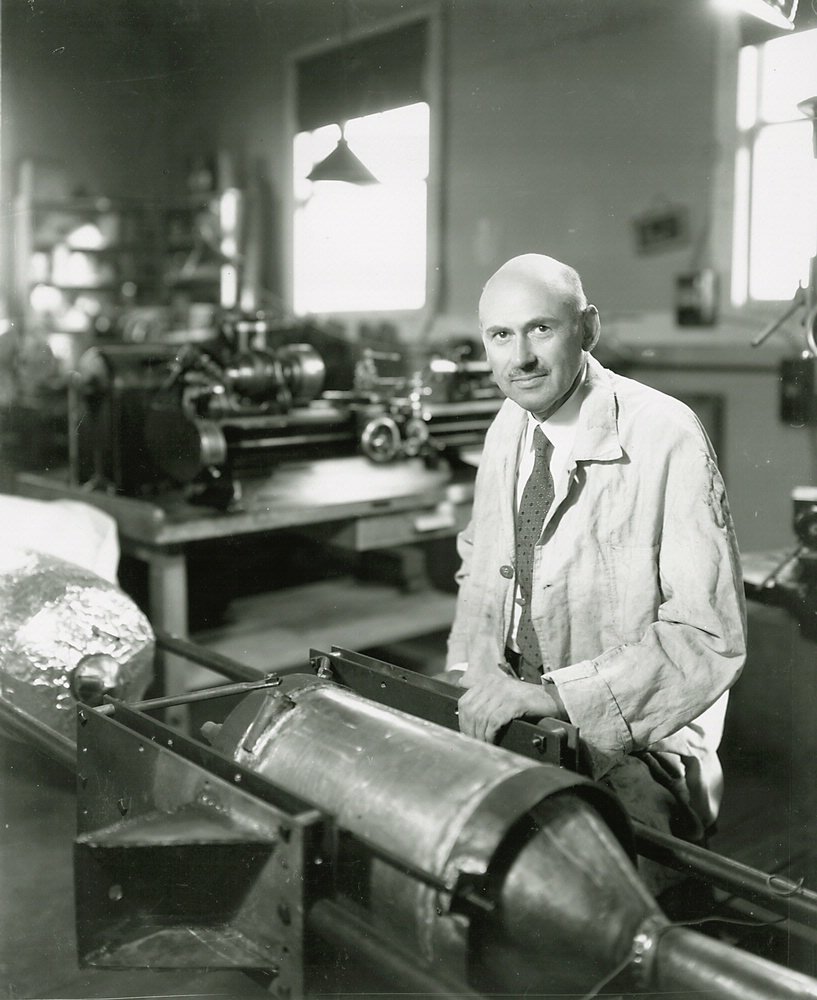
The world’s first liquid-fuel rocket that achieved flight was created by Robert H. Goddard, an American rocket developer, who was born on #TDIH in 1882. His innovative work in the field of rocket technology was marked by numerous pioneering advancements.
Happy Birthday to Robert H. Goddard (October 5, 1882), the visionary physicist and engineer widely regarded as the father of modern rocketry!
Goddard's groundbreaking work in liquid-fueled rocket propulsion paved the way for modern space exploration. His 1926 launch of the world’s first liquid-fueled rocket was a milestone that set the stage for everything from satellites to lunar landings.
Très beau texte de Philippe Noiret sur la vieillesse :
"Il me semble qu'ils fabriquent des escaliers plus durs qu'autrefois. Les marches sont plus hautes, il y en a davantage. En tout cas, il est plus difficile de monter deux marches à la fois. Aujourd'hui, je ne peux en prendre qu'une seule.
A noter aussi les petits caractères d'imprimerie qu'ils utilisent maintenant. Les journaux s'éloignent de plus en plus de moi quand je les lis : je dois loucher pour y parvenir. L'autre jour, il m'a presque fallu sortir de la cabine téléphonique pour lire les chiffres inscrits sur les fentes à sous.
Il est ridicule de suggérer qu'une personne de mon âge ait besoin de lunettes, mais la seule autre façon pour moi de savoir les nouvelles est de me les faire lire à haute voix - ce qui ne me satisfait guère, car de nos jours les gens parlent si bas que je ne les entends pas très bien.
Tout est plus éloigné. La distance de ma maison à la gare a doublé, et ils ont ajouté une colline que je n'avais jamais remarquée avant.
En outre, les trains partent plus tôt. J'ai perdu l'habitude de courir pour les attraper, étant donné qu'ils démarrent un peu plus tôt, quand j'arrive.
Ils ne prennent pas non plus la même étoffe pour les costumes. Tous mes costumes ont tendance à rétrécir, surtout à la taille.
Leurs lacets de chaussures aussi sont plus difficiles à atteindre.
Le temps lui-même, change. Il fait froid l'hiver, les étés sont plus chauds. Je voyagerais, si cela n'était pas aussi loin. La neige est plus lourde quand j'essaie de la déblayer. Les courants d'air sont plus forts. Cela doit venir de la façon dont ils fabriquent les fenêtres aujourd'hui.
Les gens sont plus jeunes qu'ils n'étaient quand j'avais leur âge.
Je suis allé récemment à une réunion d'anciens de mon université, et j'ai été choqué de voir quels bébés ils admettent comme étudiants. Il faut reconnaître qu'ils ont l'air plus poli que nous ne l'étions ; plusieurs d'entre eux m'ont appelé monsieur ; il y en a un qui s'est offert à m'aider pour traverser la rue.
Phénomène parallèle : les gens de mon âge sont plus vieux que moi. Je me rends bien compte que ma génération approche de ce que l'on est convenu d'appeler un certain âge, mais est-ce une raison pour que mes camarades de classe avancent en trébuchant dans un état de sénilité avancée ?
Au bar de l'université, ce soir-là, j'ai rencontré un camarade. Il avait tellement changé qu'il ne m'a pas reconnu."
Fun fact.
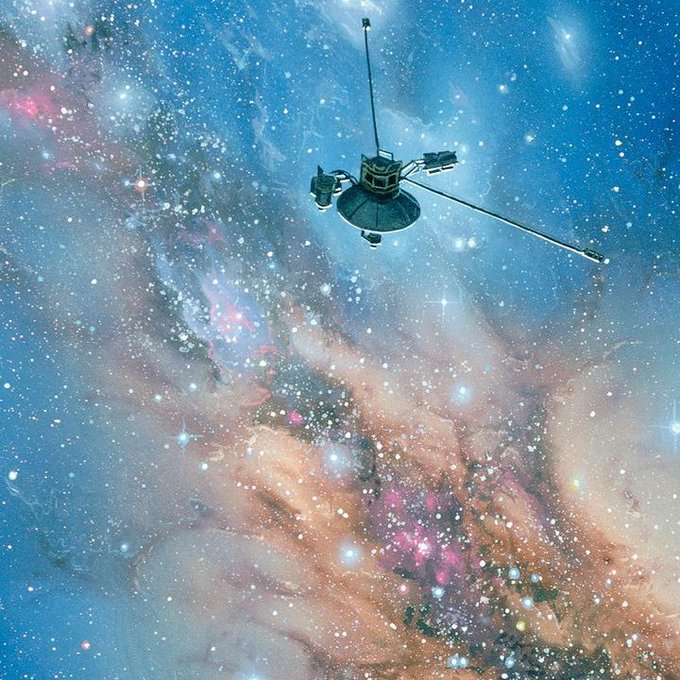
Voyager 1, currently over 15.9 billions miles away (roughly 23.9 light hours), still operates using 69 KB of memory, 8 track tape and Fortran code written in 1977.
Bob Dylan said if you hear a Gordon Lightfoot song, you wish it would go on forever.
gordon lightfoot if you could read my mind live in concert bbc 1972
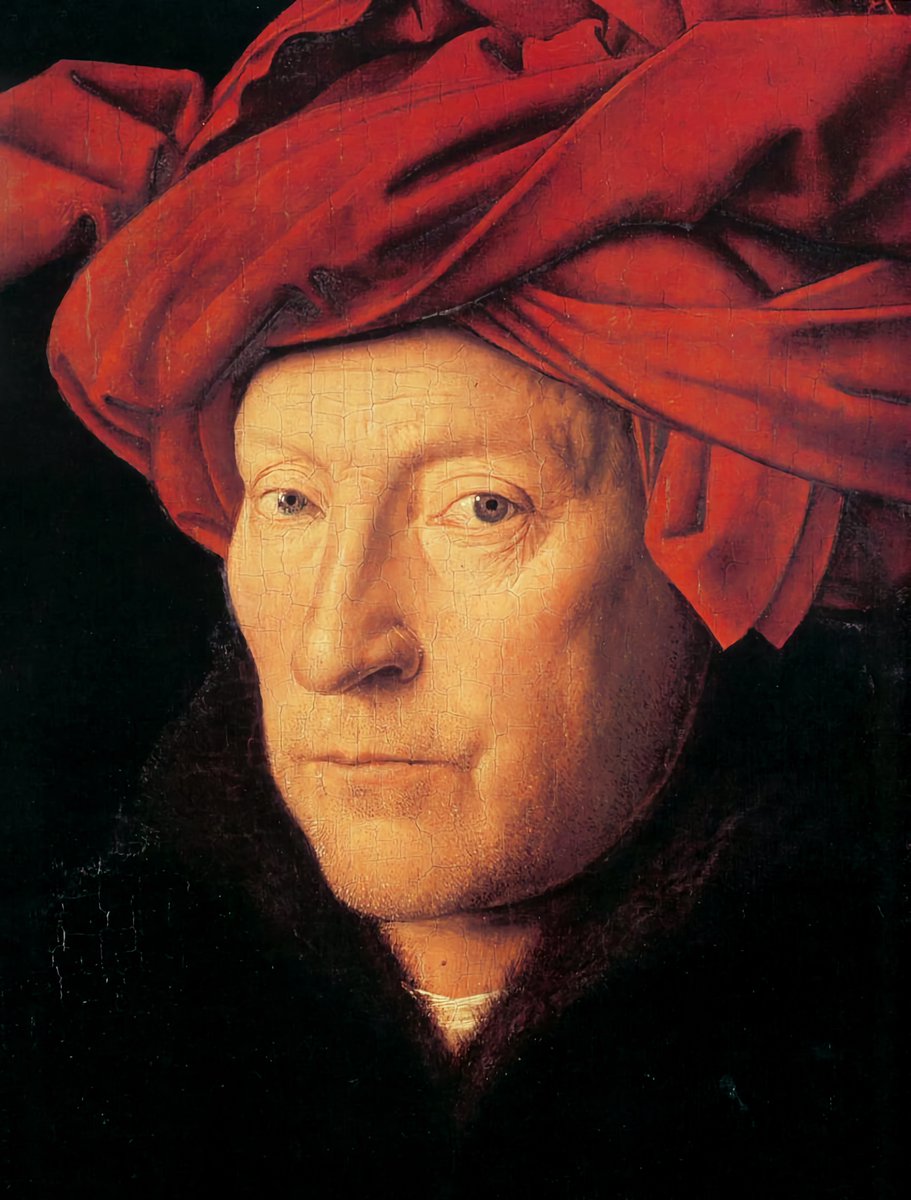
This portrait is so underrated.
Jan van Eyck painted it back in 1433.
Everyone calls it Man in a Turban, but it’s actually not a turban at all. It’s a chaperon, and he just has the long tail wrapped up so it wouldn't get in his way while he was working.
Just look at that stare.
That’s exactly why so many people think this is a self-portrait. If you look closely, the eyes don't quite match. It really looks like he painted one, and then the other, just focusing on each one individually.
He even wrote his motto on the original frame in Greek letters:
"Als Ich Can"—which means "as I can." It's basically a pun on his own name. As Eyck can.