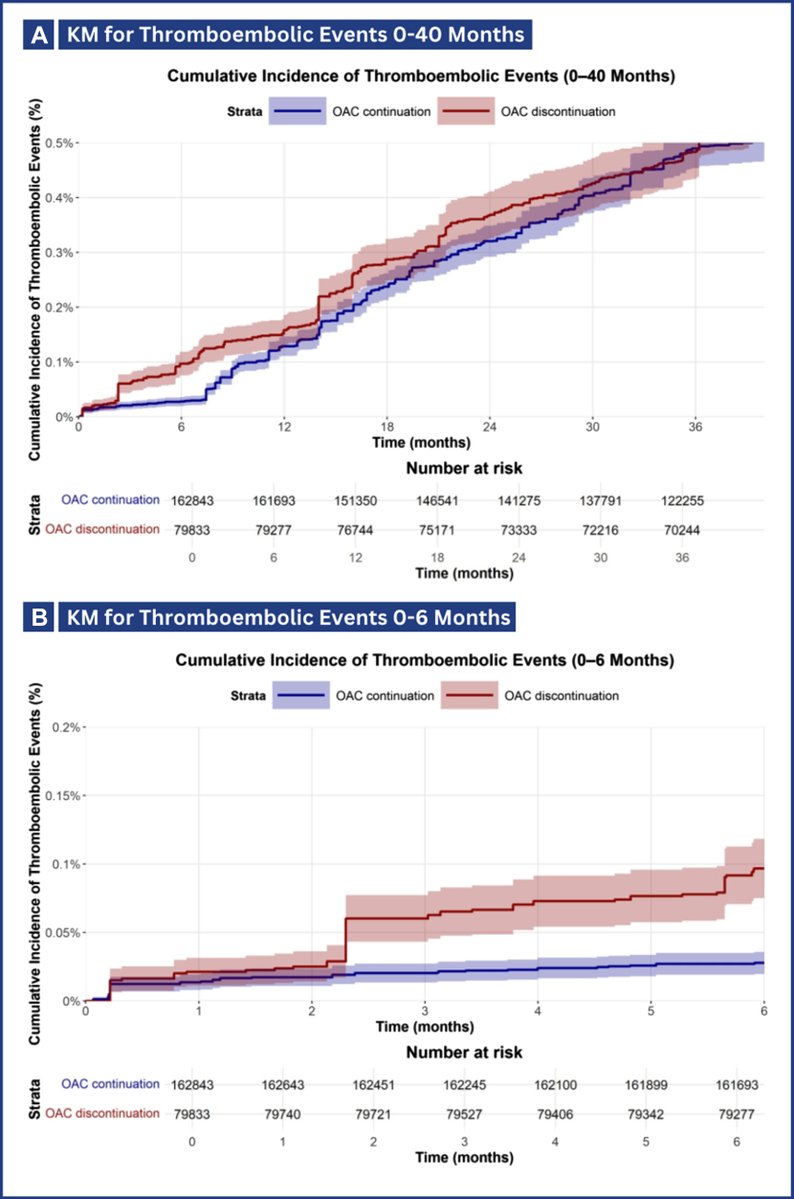
1/6: Can Oral Anticoagulants Be Safely Discontinued After Afib Ablation? A Systematic Review and Meta-analysis of Reconstructed Time-to-Event Data @DLBHATTMD
⭐️Methods
• Systematic review and meta-analysis of 32 studies
• 271,808 patients after AF ablation
• Compared continuation vs discontinuation of OAC
⭐️Findings
➡️No significant difference in overall thromboembolic events after OAC discontinuation
➡️Pts w CHA₂DS₂-VASc >2 -> increased TE risk after stopping OAC
➡️Major bleeding significantly lower after OAC discontinuation
*⃣ Conclusion
• Long-term anticoagulation decisions should continue to be individualized based on stroke risk rather than procedural success alone.
https://t.co/w8YGoYq4tE
See also: Reassessing stroke prevention after atrial fibrillation ablation: Lessons from OCEAN, ALONE-AF, and OPTION trials
https://t.co/o8tMO3ObgS @DJ_Lakkireddy@EP_mom1
Excited to share our new article published in PACE on hemolysis and renal outcomes after PFA for Afib .
This would not have been possible without my amazing team—grateful for your collaboration and hard work!
@AndreeFrans@AndreRiveraMD@CCF_IMCHIEFS@metaacademy_ofc
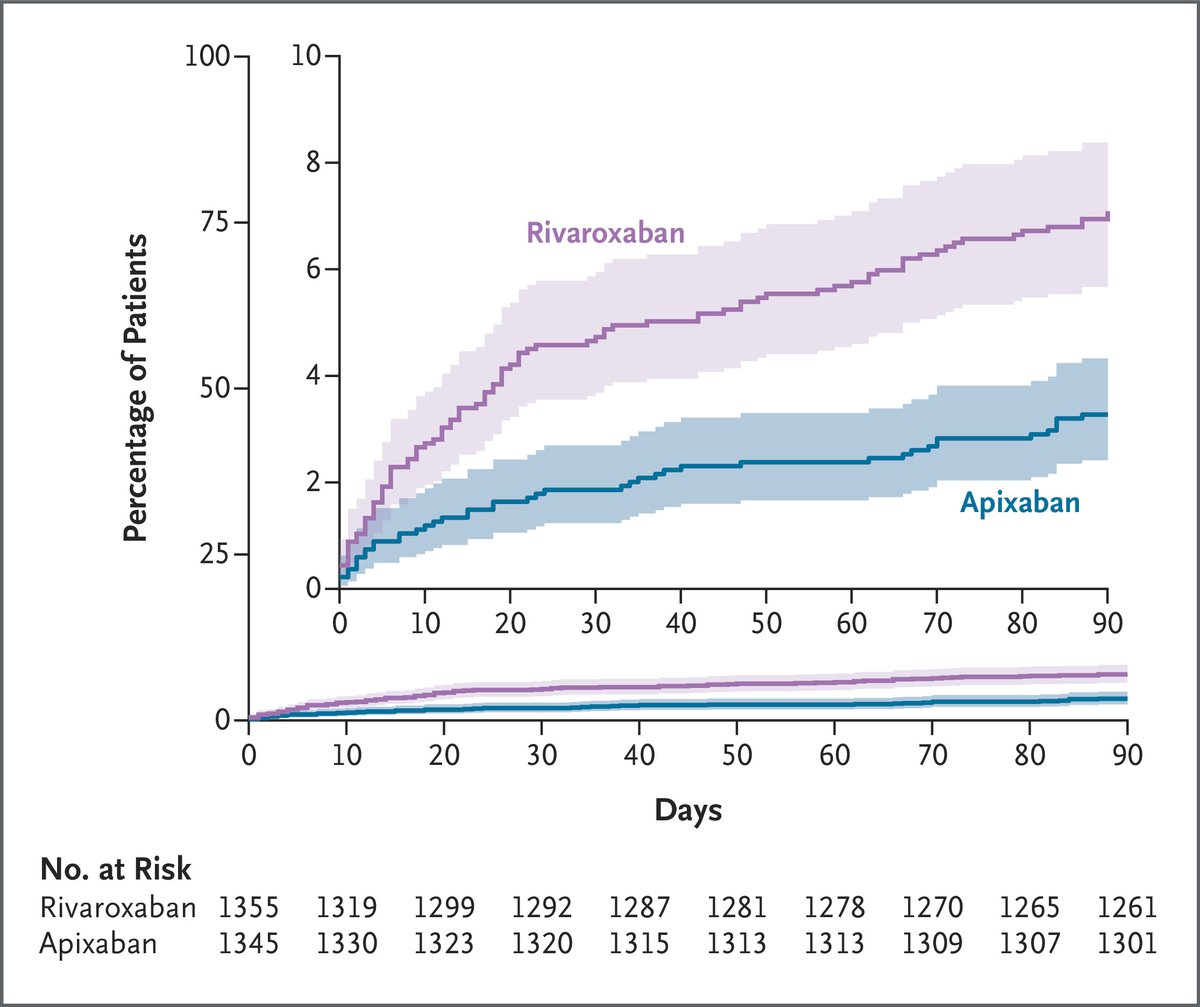
Finally published: the COBRRA trial, the first randomized head-to-head comparison of major DOACs — something the companies would never have done themselves, as a direct confrontation goes beyond their commercial interests. This was driven by independent investigators. The results somewhat support the idea of apixaban being the “safer” DOAC. That said, the list of study limitations is long, and for me, labeling something as “safe” is not enough — after all, even placebo is “safe” when it comes to bleeding. https://t.co/eYehndGzvB
In patients with #HeartFailure and #LBBB, conduction system pacing (#CSP) was inferior to biventricular pacing (#BiVP) for a composite of death, heart failure events, and LVEF change at 12 months.
https://t.co/aZwV1oICjz
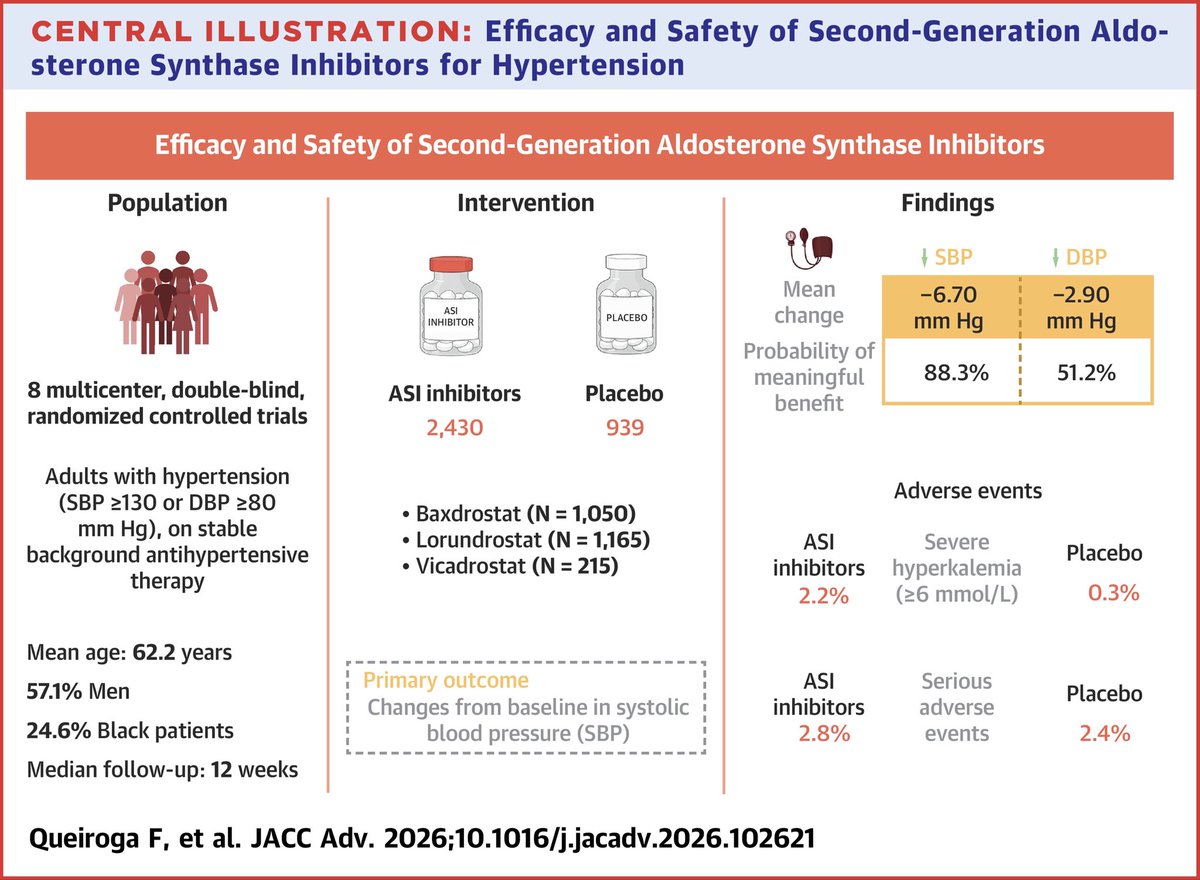
Second-Generation Aldosterone Synthase Inhibitors for Hypertension: A Bayesian Meta-Analysis of Randomized Trials
Second-generation ASIs had a high likelihood of a clinically significant reduction in SBP compared with placebo. However, hyperkalemia, hyponatremia, and hypotension were more frequent with ASIs
#Cardiology #MedTwitter #CardioTwitter #HeartHealth #Healthcare
@JACCJournals@ACCinTouch@mvaduganathan@gcfmd@DrMarthaGulati@hvanspall@ShelleyZieroth
https://t.co/PqSapda61t
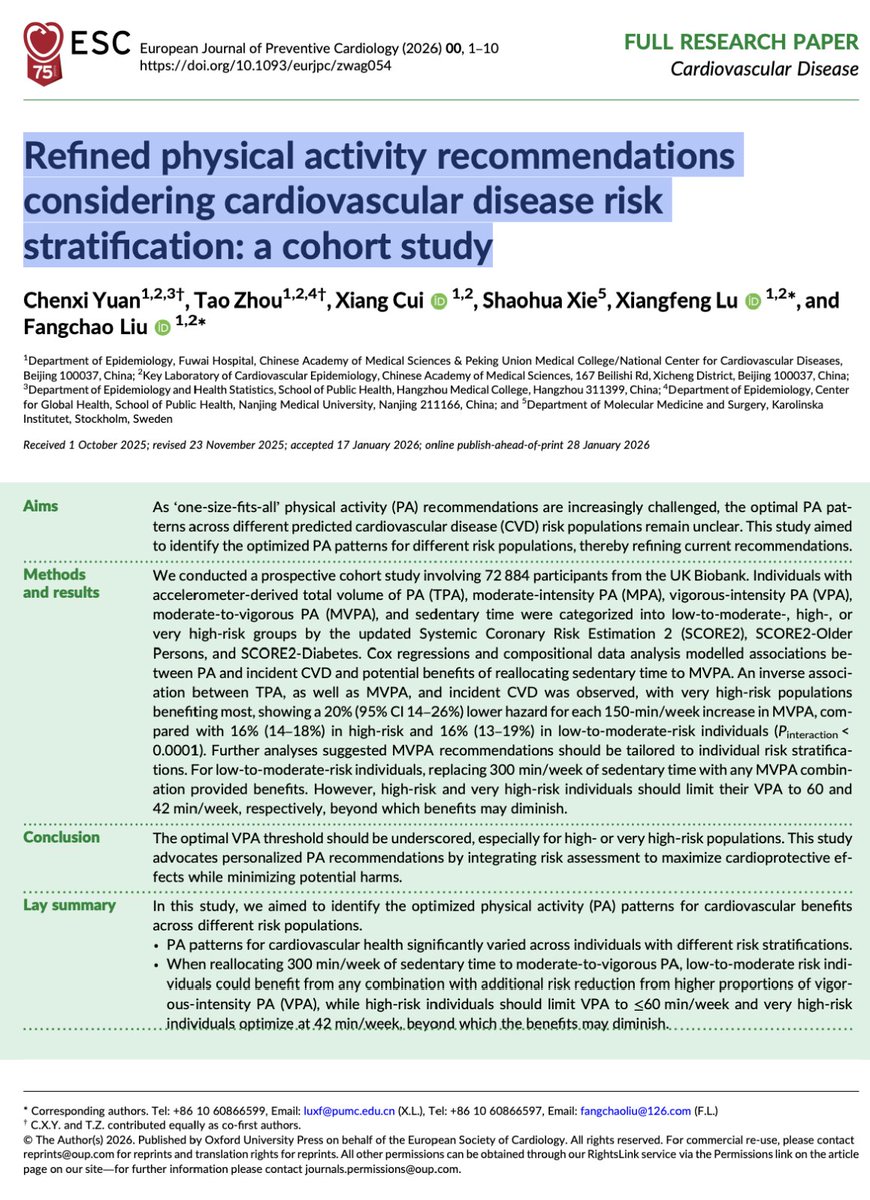
🏃♂️🫀 Exercise Prescriptions Should Be Risk-Stratified — Not Generic
Current guidelines recommend ≥150 min/week of moderate-to-vigorous physical activity (MVPA) for everyone.
But is that optimal for a 45-year-old low-risk individual and a 70-year-old very high-risk patient?
This large UK Biobank cohort (72,884 participants, median 13.2-year follow-up) provides a more nuanced answer .
🔬 What’s innovative?
• Objective 7-day wrist accelerometer data
• ESC-aligned SCORE2 risk stratification
• Isotemporal substitution modeling (reallocating sedentary time)
• Identification of optimal vigorous activity thresholds by risk group
📊 Key findings
Each +150 min/week MVPA →
• 20% lower CVD risk in very high-risk individuals
• 16% reduction in high- and low-to-moderate-risk groups
Higher-risk individuals benefit the most from increasing activity.
BUT intensity matters.
When replacing 300 min/week sedentary time:
🔹 Low-to-moderate risk → Any mix of moderate (MPA) and vigorous (VPA) works. More VPA = more benefit.
🔹 High risk → VPA should be ≤60 min/week (~20% of MVPA).
🔹 Very high risk → Optimal VPA ≈ 42 min/week (~14% of MVPA). Beyond that, benefits decline.
In high-risk groups, excessive VPA may attenuate benefit—likely due to hemodynamic stress, endothelial dysfunction, and oxidative burden.
🎯 Take-Home Messages
1️⃣ Physical activity remains powerfully protective across all risk strata.
2️⃣ Higher-risk patients gain the largest relative benefit.
3️⃣ Vigorous exercise has a ceiling effect in high-risk individuals.
4️⃣ Exercise prescriptions should integrate formal risk stratification (e.g., SCORE2).
Precision prevention now extends to lifestyle medicine.
One size does not fit all.
3/3
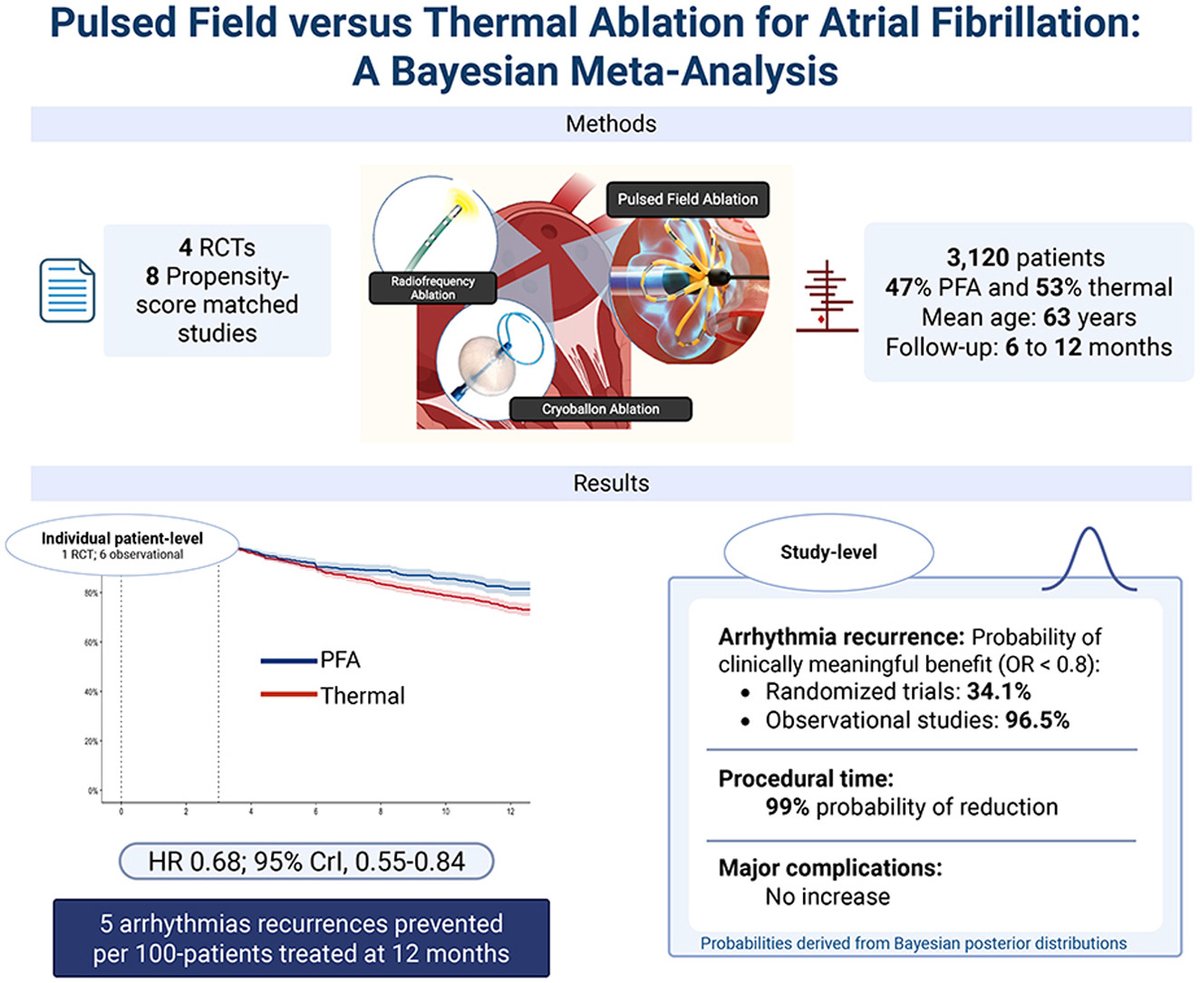
12 studies (4 RCTs, 8 PSM; n=3,120 patients; 47% PFA).
Used reconstructed IPD from KM curves + Bayesian random-effects model.
PFA associated with reduced recurrence and procedural advantages, without signals of increased harm.
@RCardoso_MD@metaacademy_ofc
2/3
Time-to-event data: Higher freedom from recurrence with PFA (HR 0.68, 95% CrI 0.55-0.84)
Time-to-benefit: ~12 months to prevent 5 recurrences per 100 PFA patients.
Probability of meaningful recurrence reduction (OR<0.8): 34% in RCTs vs 96% in PSM studies.
3/3
12 studies (4 RCTs, 8 PSM; n=3,120 patients; 47% PFA).
Used reconstructed IPD from KM curves + Bayesian random-effects model.
PFA associated with reduced recurrence and procedural advantages, without signals of increased harm.
@RCardoso_MD@metaacademy_ofc
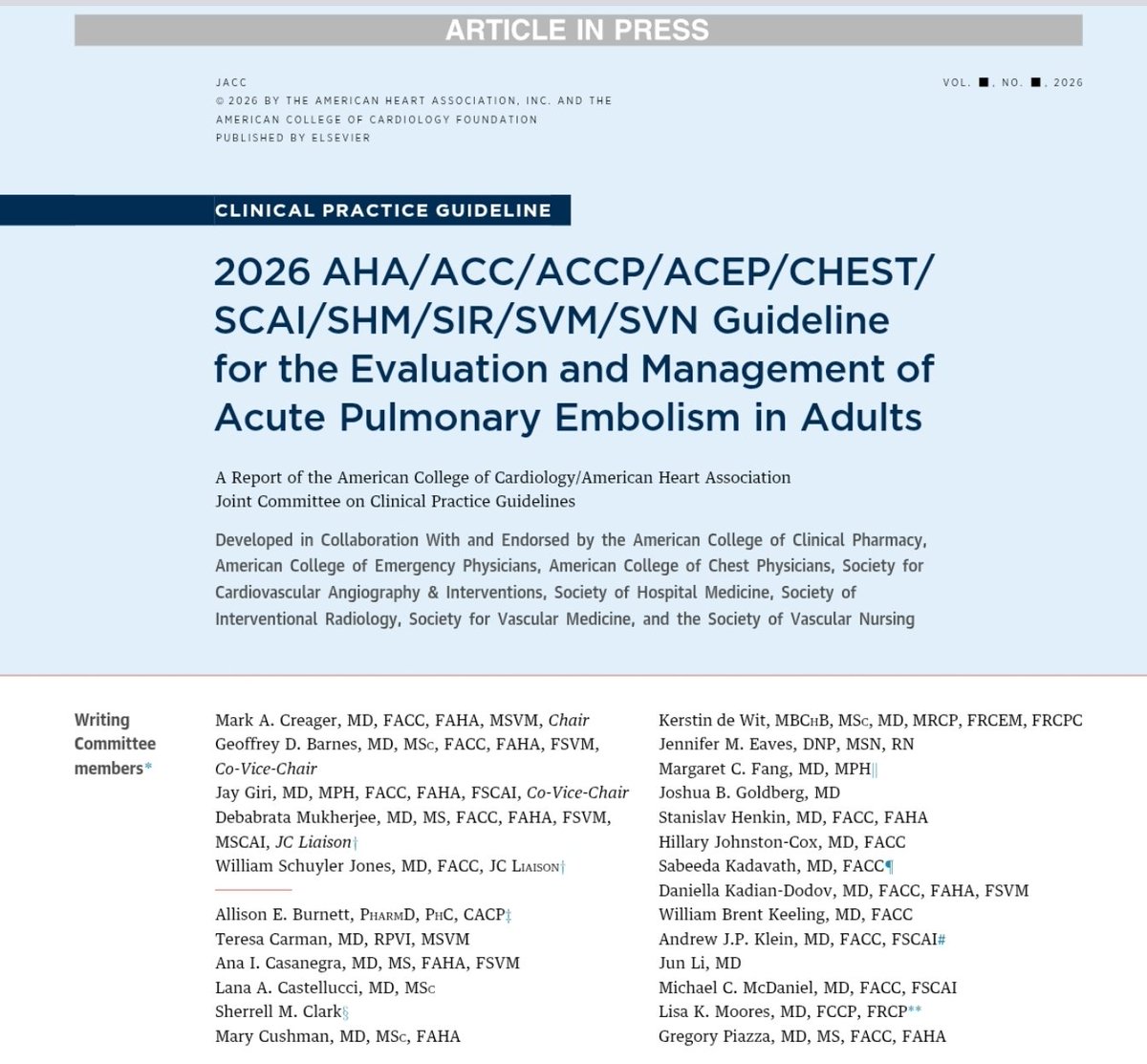
🚨 The 2026 AHA/ACC PE guidelines changed how we think about pulmonary embolism.
Not just new treatments — a new clinical framework.
Say goodbye to “massive vs submassive.”
Meet A–E PE Clinical Categories 🧵👇
TARGET-AI: Our novel approach to AI-enabled targeted deployment of AI tools using disease-specific learnings from an EHR foundation model, now out in @NEJM_AI
See thread by @ekoikonomou
Full text: https://t.co/TIQmhKUmml
Coverage from @YaleMed: https://t.co/CKjMY1D2p7
@cards_lab
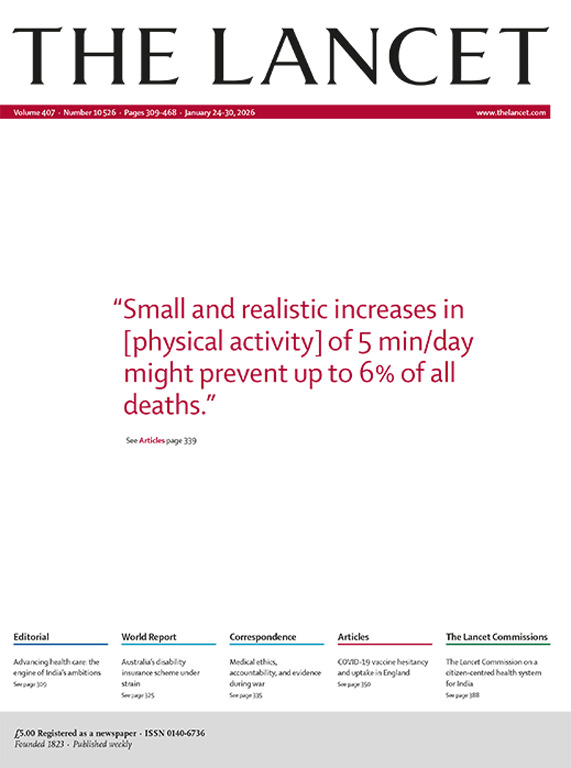
Deaths potentially averted by small changes in physical activity and sedentary time: an individual participant data meta-analysis of prospective cohort studies
+5 min/day of moderate-to-vigorous physical activity → 10% reduction in all-cause mortality at the population level
Can small changes in physical activity make a major difference?
On the cover, a meta-analysis suggests that 5 extra minutes of moderate physical activity a day is associated with a reduction of up to 6% of all deaths in the least active adults.
Read this & more 👉 https://t.co/CjW7g8x8JG