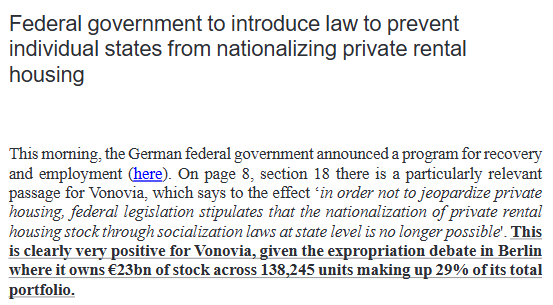
Vonovia Duits huizenfonds schiet omhoog vandaag. De Duitse regering komt met wet die individuele staten verbiedt in te grijpen in huur markt.
Ze willen de Hugo de Jonge fout niet meer maken. Dat hadden ze in Berlijn eerder wel gedaan.
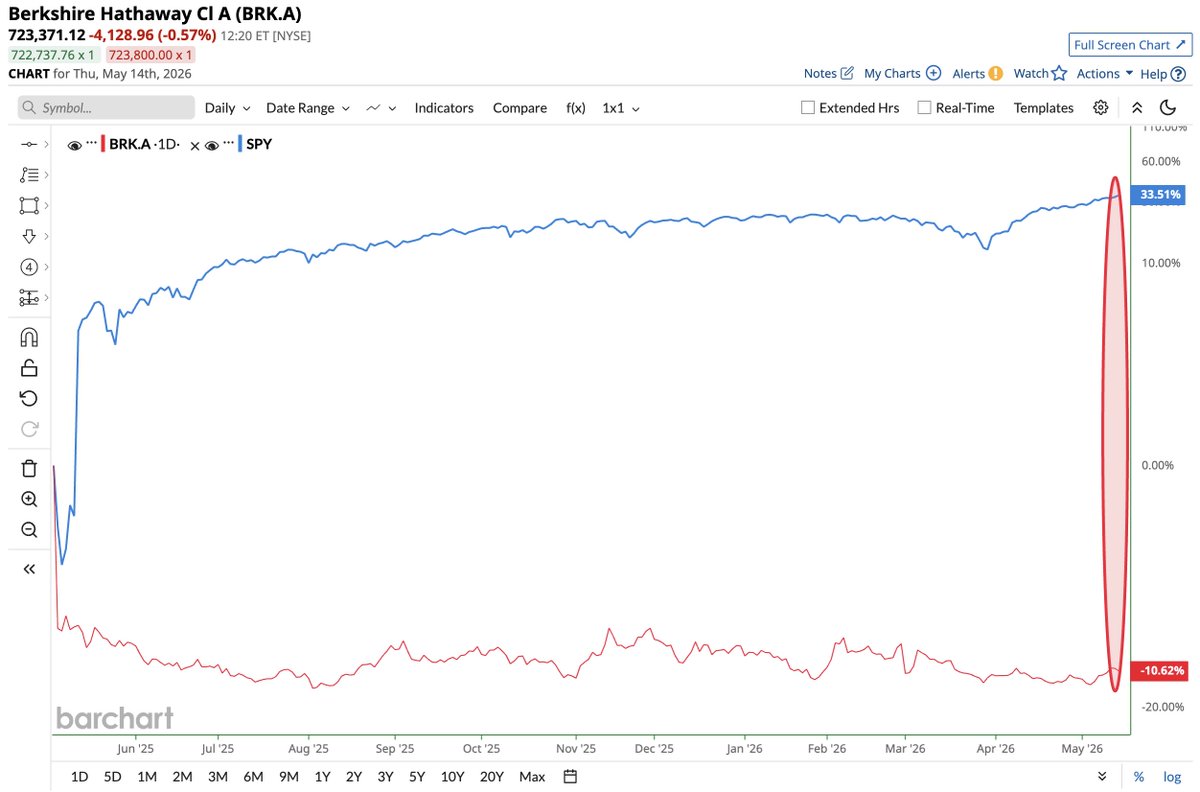
BREAKING 🚨: Berkshire Hathaway
$BRK.A is now underperforming the S&P 500 $SPY by a staggering 44 percentage points since Warren Buffett announced his retirement in May 2025 📉📉 It just keeps getting worse 🤯
Defensive stocks have never been this disliked:
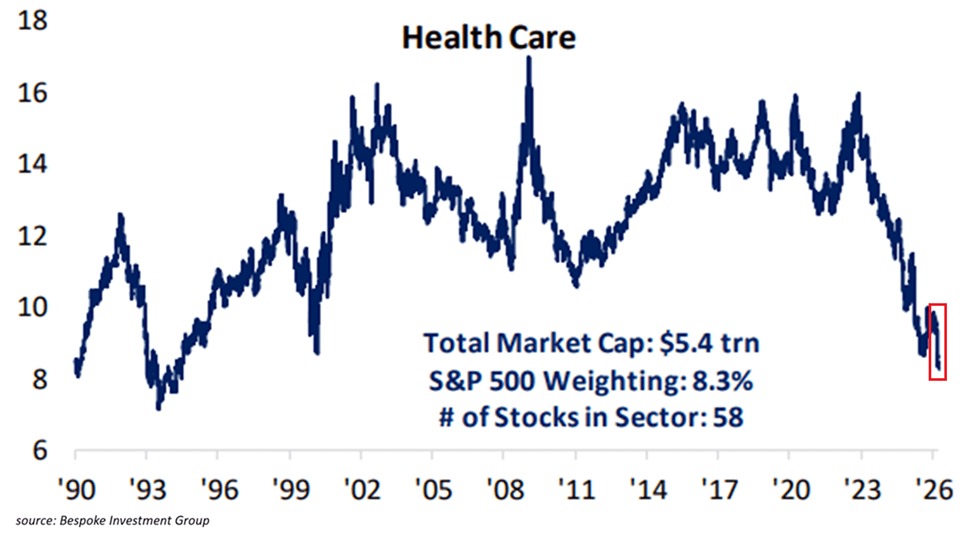
The healthcare sector now accounts for just 8.3% of the S&P 500’s market cap, the lowest percentage since 1994.
Their weight has fallen by -50% since the 2022 bear market.
By comparison, healthcare represented ~9.0% of the index’s value at the 2000 Dot-Com Bubble peak.
Furthermore, consumer staples, healthcare, and utilities collectively now account for just ~15% of the S&P 500’s market cap, the lowest since at least the 1970s.
Their weighting has dropped -12 percentage points since 2022, marking an even bigger drop than during the Dot-Com run.
Tech stocks have never been bigger.
Zoetis $ZTS has recently seen its FCF yield jump up. The market is clearly pricing in slower long-term growth and some margin pressure versus its historical premium.
Yet the core animal health franchise remains highly resilient, with recurring revenue and durable demand from pet owners.
Während der S&P 500 (Stand Freitag) nur 2% unter seinem Hoch notiert, haben 74 von 500 #Aktien sich gegenüber ihrem 5-Jahres-Hoch mehr als halbiert!
Darunter natürlich Software-Titel (15) und Alt-Hypies – aber auch viele vermeintliche "Qualitätstitel", die lange mit sehr hohen Gewinn-Multiples gehandelt wurden, die man jetzt erstmal nicht mehr zahlen will.
Die 25 größten unter den "halbierten" Aktien ⤵️
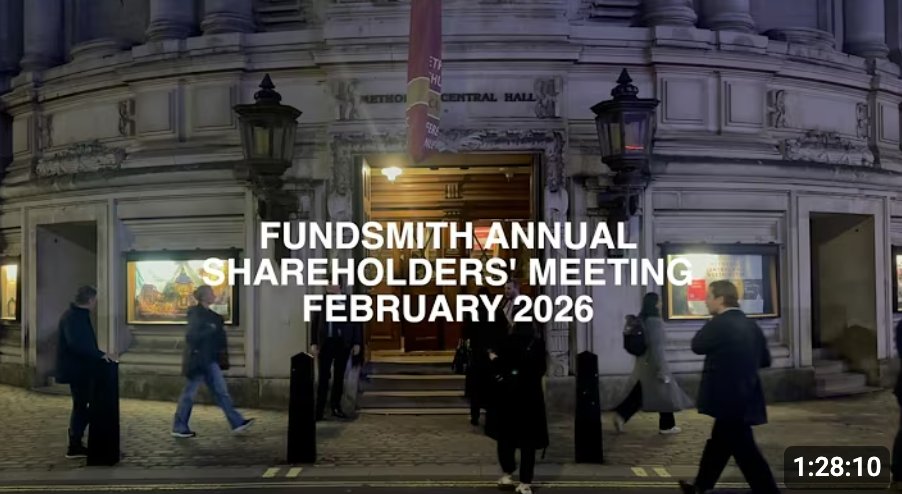
Terry Smith is currently the favorite punching bag of the investing world. After a period of underperformance, his "Quality" strategy is under heavy fire.
But if you actually listen to the 2026 AGM, you’ll find one of the most rational voices in the market. While everyone else is drunk on AI hype, he’s soberly dissecting the data.
I’ve handpicked the 7 most thought-provoking slides 👇🏻
François Rochon compounded at 13.6% annually for 32 years.
He says one of his biggest career mistakes was passing on $LVMH.
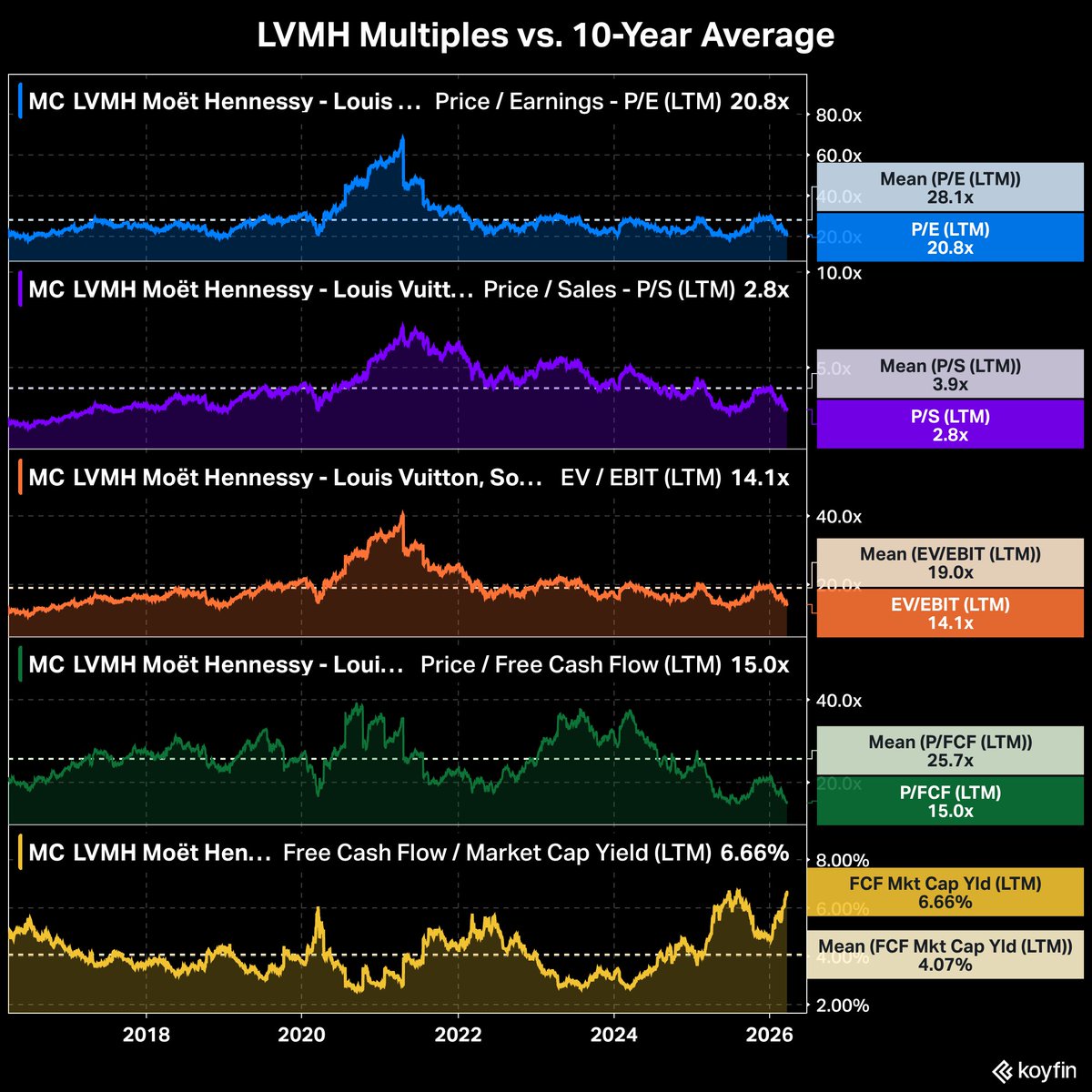
In 2011, during the European crisis, LVMH traded at 15x earnings. Rochon looked at it and thought "it's a little too expensive."
It's up 500% since then.
He called it "probably one of the best business in the world." He was right. He still didn't buy.
14 years later, he finally pulled the trigger.
Rochon added $LVMH as a new position in 2025 below €500. Here's his thesis from his recent conversation on the We Study Billionaires podcast with @Clay_Finck
(1) Brand desirability is the moat. Not this quarter's revenue. "What you really want is the brand, the name still resonate to clients as quality, something you want to own because it's of quality and also it's a symbol of wealth." That's intact.
(2) The slowdown is cyclical, not structural. 2021-2023 was abnormally strong post-COVID demand. The last two years are normalization.
(3) Sephora is the hidden gem nobody talks about. 10% of revenue and gaining share against Ulta. Growing fast.
(4) Spirits is the weak link. He said it directly. Young people drink less. Secular, not cyclical. But it's a minority of the value.
(5) China is a long-term tailwind. GDP per capita growing from a lower base. Ups and downs, but the direction is clear over 10-15 years.
(6) The math. He expects earnings to increase 60-70% over 5 years. 10-11% growth plus a 2% dividend. Gets him to his 13% target return.
(7) The French tax headwind is temporary. Corporate rate jumped from 28% to 33%. If it reverts, meaningful earnings boost not yet priced in.
Rochon identified LVMH as a generational business over 20 years ago. He had it at 15x earnings and passed. He later called it one of his biggest omission errors.
Now he's buying at 22x trough earnings because he refuses to make the same error twice.
Rationality. Humility. Patience. Those are the three qualities he says matter most in investing. This purchase is all three at once.
In case you were looking for a nice weekend read, here’s one by François Rochon from Giverny Capital.
Many interesting snippets; $CSU $TOI shareholders will find the following enjoyable:
“Constellation's stock price has fallen by 26% in 2025 (and by another 12% to date in 2026). Such a decline is completely unrelated to the company's current situation. Indeed, revenue climbed 15% in 2025 and adjusted EPS by 21%. Since our initial purchase in 2014, EPS have grown at an annualized growth rate of 20%. Despite the recent stock price drop, the share price has still risen by more than 1000% since our first purchase 12 years ago.
In our opinion, Constellation Software is not as threatened by AI as some believe. And if it is in certain aspects of its business model, it can adapt (it already uses AI in several areas of its operations). It's important to understand that Constellation owns more than 1000 different companies acquired over the past 30 years, each occupying a niche in a specific market. Constellation has always prioritized software that drives businesses or key aspects of them, where seamless data continuity is essential, and where processes and user interfaces are paramount in their clients' daily operations. The software is often fully integrated into the client's operations while rarely representing a significant cost – relatively speaking. For example, it seems unrealistic to believe that an operator of a dozen mini-golf courses is going to start coding their own AI-powered reservation software to save something like $5,000 in annual fees!
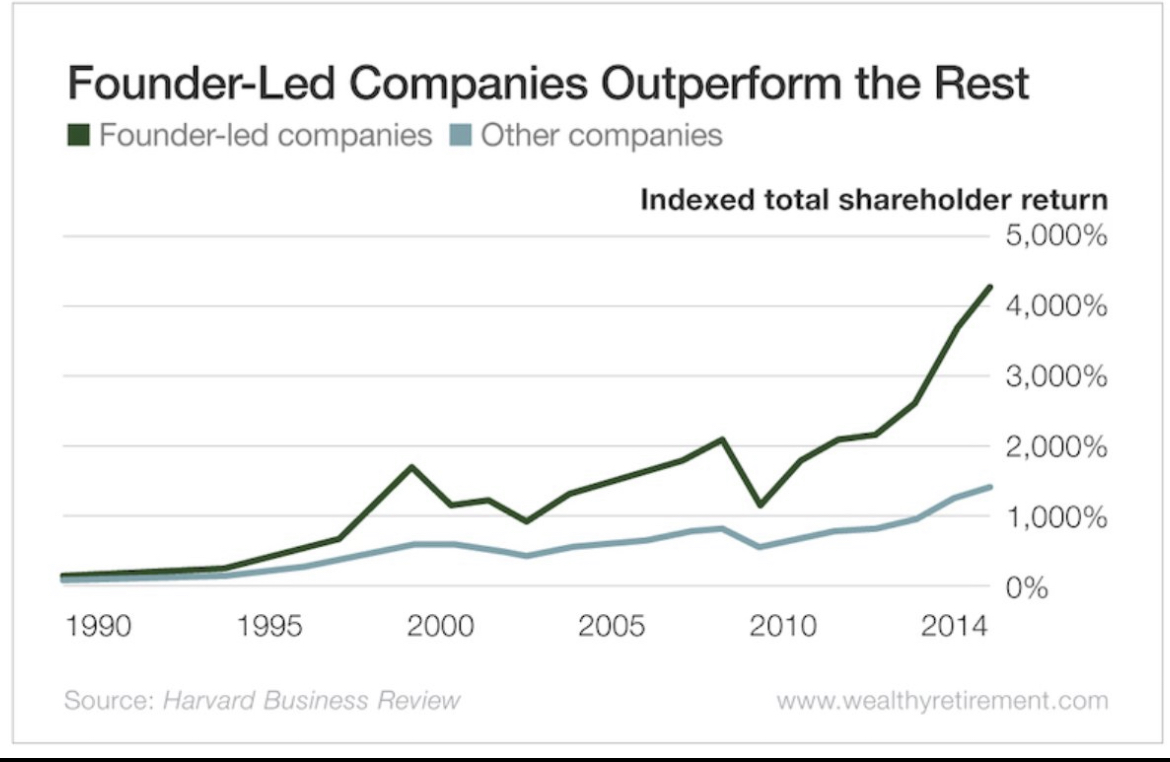
The other news that affected – to a lesser extent – Constellation's stock is the departure of Mark Leonard. We have immense admiration for Mr. Leonard, and I often mentioned that he was my favorite CEO of the companies we own. Mark experienced serious health issues this fall, to the point where his life was in danger. He therefore had to resign and undergo emergency surgery. The good news is that the surgery went well, and Mark is now out of danger. He will therefore remain on the company's board of directors. His replacement as CEO is Mark Miller, Mark Leonard's right-hand man since Constellation's inception in 1995. He was by his side throughout Constellation's development. In our opinion, there could be no better successor. Mark Miller has already addressed the entire company structure to better understand and adopt AI. To date, management has not seen any negative impact of AI on their operations, but they remain vigilant. Mark wants Constellation's various entities to be able to reinvent themselves if necessary to avoid becoming victims of AI. He has tasked all of Constellation's diverse units trying to solve new problems for their clients using AI and generating new revenue streams through it. AI could even be an indirect opportunity for Constellation: the company grows primarily through acquisitions, and clearly, the cost of potential target companies has just dropped dramatically. A lower price paid means a better return on invested capital.
…
We have confidence in both Constellation's resilient business model and the qualities of its new CEO. We therefore intend to keep our shares while, of course, closely monitoring the situation.”
https://t.co/z4u4n33mtW
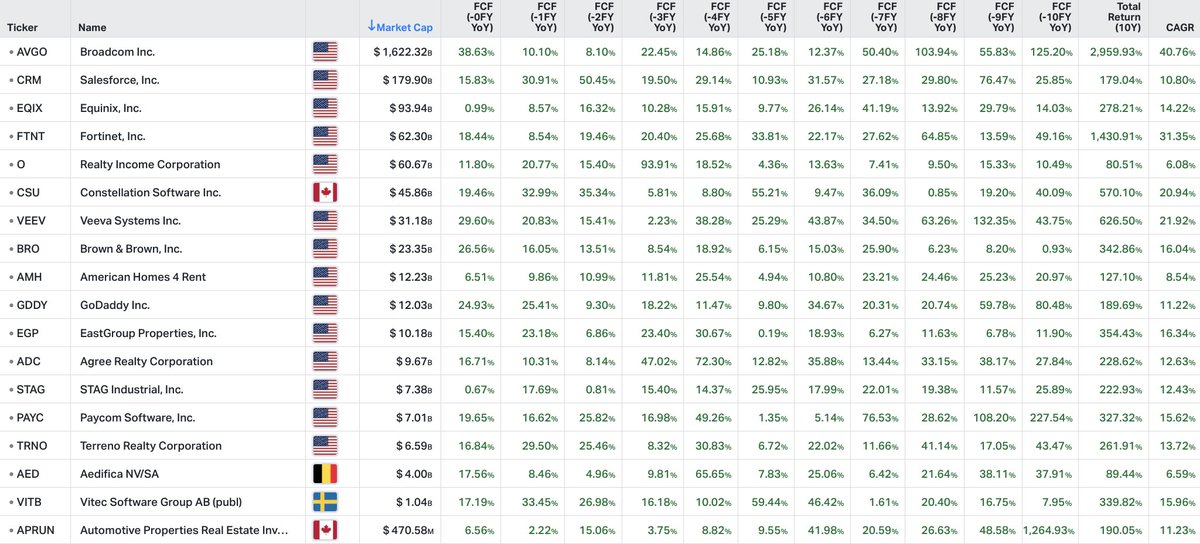
There are just 18 companies in the public universe that have increased free cash flow YoY on an annual basis for the last 10 years consecutively.
All have pretty solid 10Y return CAGRs.
BHP - The Big Australian
15.1%pa return last 50 years
14.8%pa return last 25 years
24.1%pa return last 10 years
16.9%pa return last 5 years
Chart below.... BHP vs ASX200 Total Return Index last 25 years [via Bloomberg]
Second Chart .. Max Drawdowns .. YOU HAD TO EARN IT!
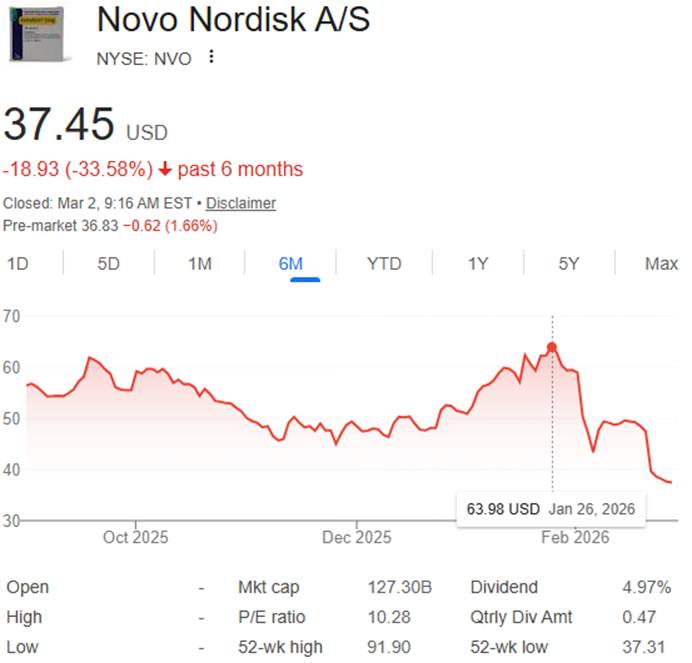
$NVO is in the midst of the fastest drug launch of all time with oral Wegovy over the last 2 months. Not the fastest for $NVO. The fastest for any drug company ever.
Yet, during that same time period, their stock has (*checks notes*)...experienced its sharpest decline ever...EVER!
A fascinating case study is developing here over pricing in investor expectations and the extremes to which sentiment can swing.
Not only has $NVO had its worst stock crash *ever* (down >40% since late January) right in the middle of the fastest drug launch of all time...
...$NVO has now round tripped its entire obesity run...as if the whole obesity craze never even happened!
The stock was in the $40s on the day that injectable Wegovy launched back in 2021, now 5 years later it struggles to maintain the mid $30s. If you go back 10 years from today, the stock is up only ~30% over the last decade, getting absolutely trounced by any index you want to put it up against.
All of that with the society-altering obesity craze in between.
Coming back to the recent move, it's been bizarre to see investors' negative reaction to the cagrisema vs tirzepatide study reading out negative for cagrisema when...anyone who even remotely analyzed existing cagrisema data had to have known that study never had a *CHANCE* at hitting. The fact that the markets could be *that* inefficient by pricing in so much value for that cagrisema study is almost too much of a stretch for me to believe...
Investors have focused on the cargisema study not meeting (apparently somehow still very bullish???) expectations while largely ignoring the oral Wegovy launch that has been breaking every expectation that they had previously set for it...Negative sentiment begets negative sentiment, sometimes directly in the face of objective reality.
Like I've mentioned, pharma isn't really my specialty, but this will be an interesting case study for me to continue to learn from. It'll probably be a good one for the pharma industry at large down the road given how extreme the changes in sentiment have been.
In the meantime, I am buying the Novo dip, though my pharma trades tend to be very short term largely because I use margin to conduct them.
So, will the nonstop $NVO stock crash reverse soon? IDK, but owning a drug company at 5 year lows that is also in the middle of the literal fastest drug launch of all time...does seem a bit asymmetric 😅
$GOOGL is the most profitable company on the planet with $132B in net income.
They’re turning that cash into the largest TPU footprint ever while others burn money to chase AI.
They’re playing a game others do not have the luxury to play.


![mastersinvest's tweet photo. BHP - The Big Australian
15.1%pa return last 50 years
14.8%pa return last 25 years
24.1%pa return last 10 years
16.9%pa return last 5 years
Chart below.... BHP vs ASX200 Total Return Index last 25 years [via Bloomberg]
Second Chart .. Max Drawdowns .. YOU HAD TO EARN IT! https://t.co/LqEEMBObJB](https://pbs.twimg.com/media/HCs8PUpaUAABUmq.png)






![mastersinvest's tweet photo. BHP - The Big Australian
15.1%pa return last 50 years
14.8%pa return last 25 years
24.1%pa return last 10 years
16.9%pa return last 5 years
Chart below.... BHP vs ASX200 Total Return Index last 25 years [via Bloomberg]
Second Chart .. Max Drawdowns .. YOU HAD TO EARN IT! https://t.co/LqEEMBObJB](https://pbs.twimg.com/media/HCs9CFXaUAE4aK9.png)