1/ #EconTwitter
Check out this #JMP by @GiampaoloBonomi, a phenomenal UCSD student on the Market!
webpage: https://t.co/ieFYAcABjX
Giampaolo studies an extremely salient issue: how do social issues, often identitary/moral, interact with economic policy in politicians’ agendas?
🌍 #PlasticPollution impacts the environment, health, society & economy.
Embracing circular economy practices through #trade along plastics value chains can be a game-changer, driving innovation & #sustainable solutions.
More in our 🆕 report ➡️ https://t.co/ZOsa2kUrbS
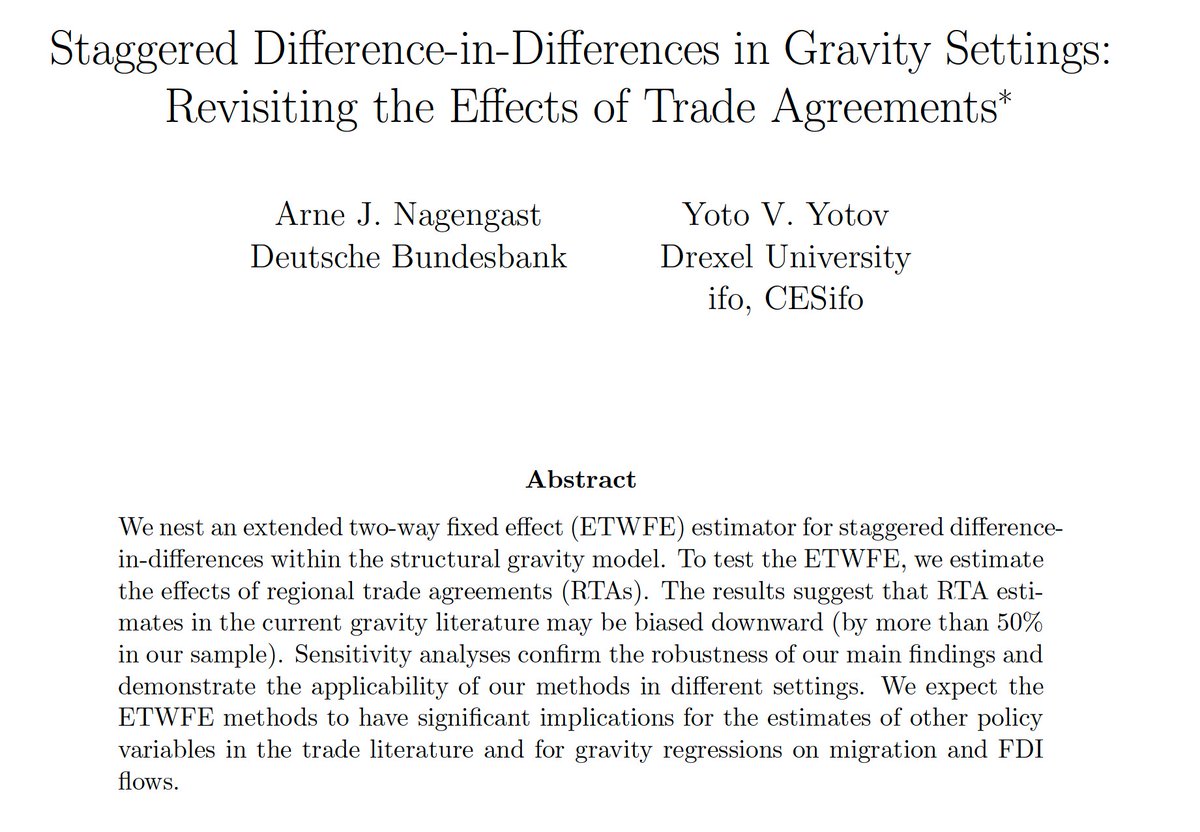
"Gravity estimations with Staggered Difference-in-differences"
https://t.co/Q1kiyPlW6E
Most credit for our new working paper goes to my brilliant co-author Arne J. Nagengast @bundesbank. Thanks to all colleagues who gave us great comments and suggestions!
@EconTwitter
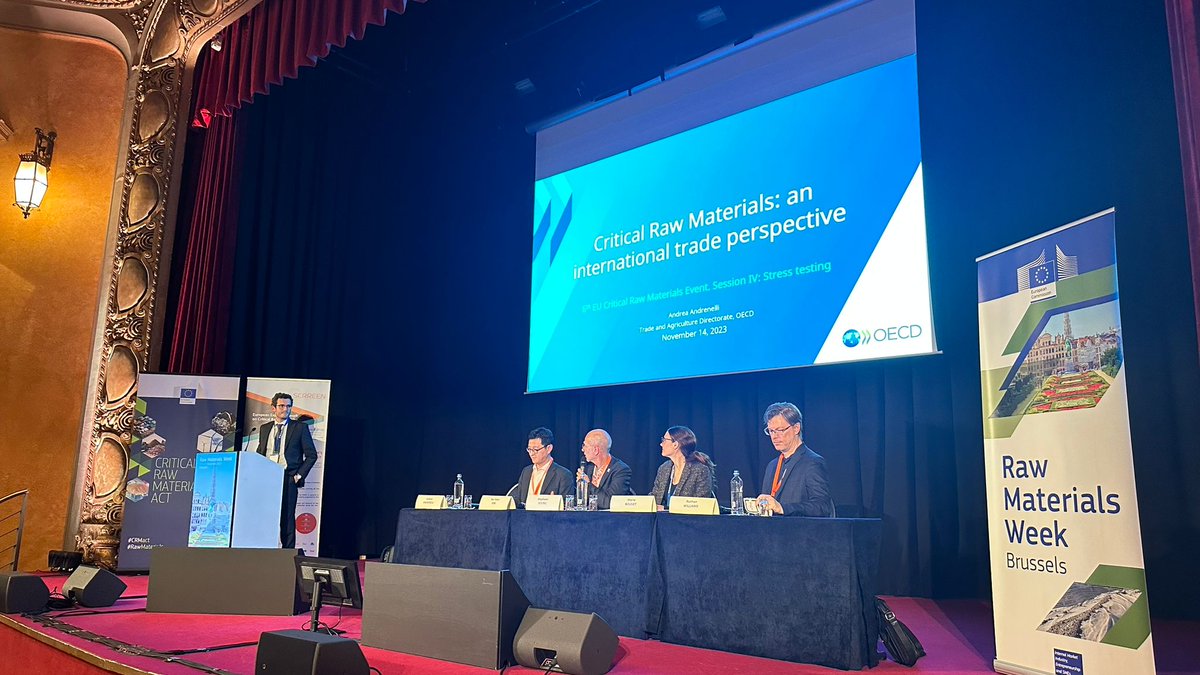
I was lucky to be in Brussels just after the landmark agreement on the Critical Raw Materials Act, talking about the OECD contribution to CRM analysis.
We are keen to expand our network of experts in this area, please reach out if you have an interest in this work.
@OECDtrade
📢TAPED has been updated!
Here's a taste of what's new:
* 48 new treaties
* 8 new items
* insights into customs duty moratorium provisions thanks to @AndrenelliA@OECDtrade
* a new paper
See our LinkedIn post for more info!
#TradeLaw4_0#DigitalTradeLaw
https://t.co/qg2dfAn3jL
📢TAPED has been updated!
Here's a taste of what's new:
* 48 new treaties
* 8 new items
* insights into customs duty moratorium provisions thanks to @AndrenelliA@OECDtrade
* a new paper
See our LinkedIn post for more info!
#TradeLaw4_0#DigitalTradeLaw
https://t.co/qg2dfAn3jL
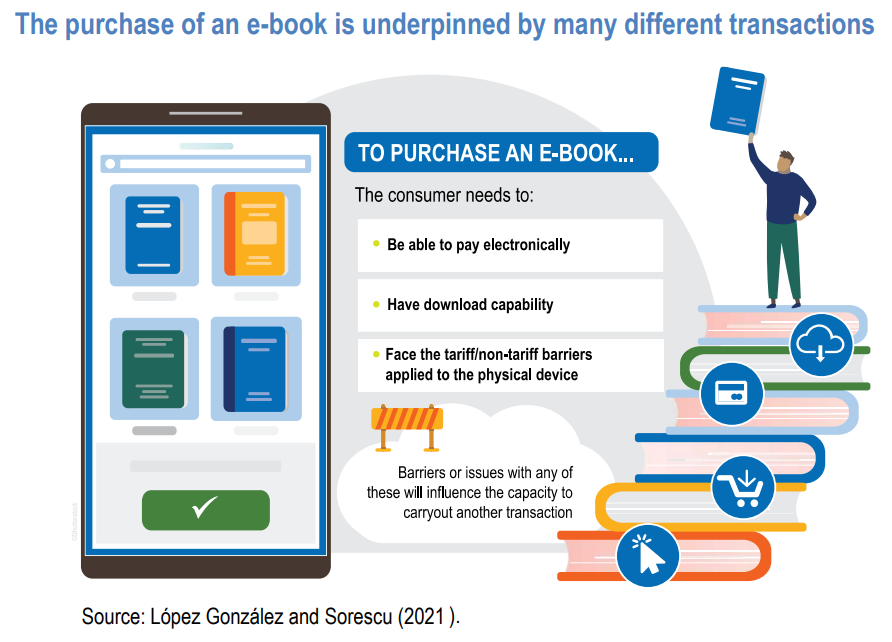
#Digital trade is already part of our everyday lives. When a sale or a purchase takes place online, there are many factors in the background for that to happen!
See here how #trade policies are key to setting the wheels in motion: https://t.co/gXfXsmAYZ7
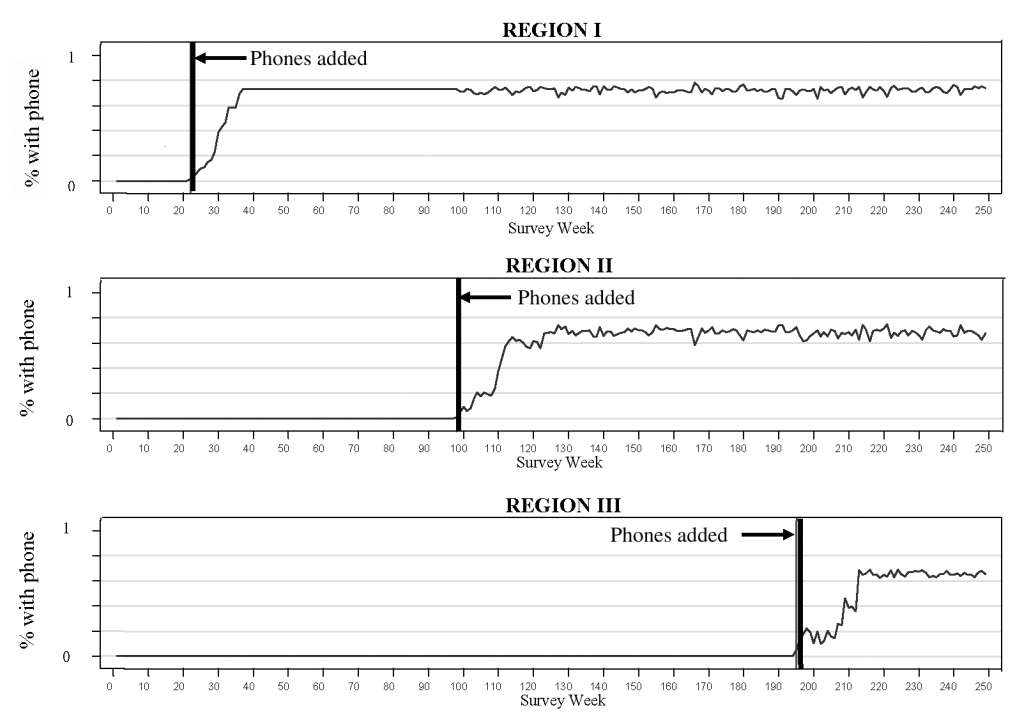
The adoption of cellphones by Keralan fishermen is, I believe, the most stunning example of the contribution of information technology to market performance.
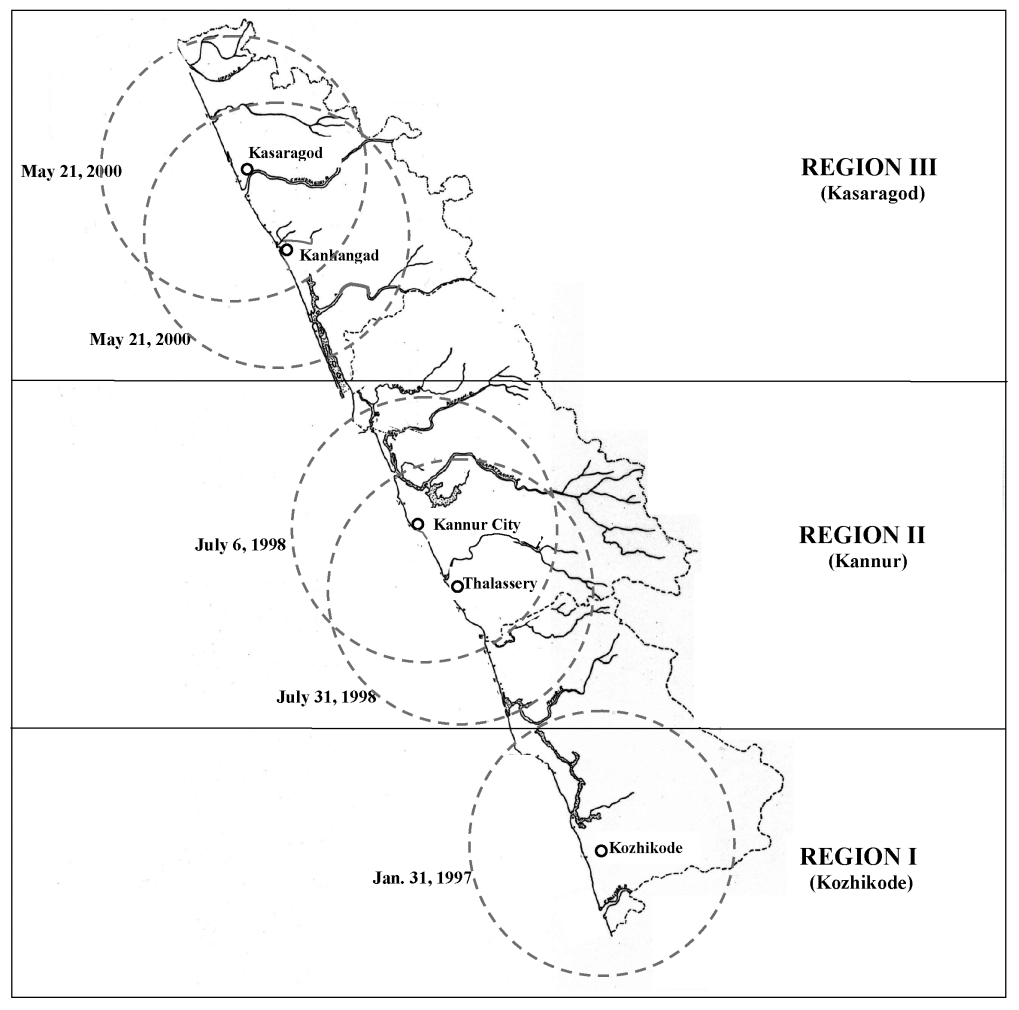
Take a look at this graph for background: in three different regions of Kerala, phones were adopted at different times.
Kozhikode got cellphones before Kannur, who got them before Kasaragod. Adoption by fishermen was fast when phones were finally introduced:
Now look at what happened to the price of fish after phones entered the scene:
The dispersion in prices virtually disappeared! The author of the study wrote about this that:
"Before any region had mobile phones, the degree of price dispersion across markets within a region on any given day is high, and there are many cases where the price is zero (i.e., waste). However, within a few weeks of mobile phones being introduced in Region I, there is a sharp and striking reduction in price dispersion. Prices across markets in the region rarely differ by more than a few rupees per kilogram on any day, compared to cases of as much as 10 Rs/kg prior to the introduction of mobile phones. In addition, the prices in the various markets rise and fall together and the week-to-week variability within each market is much smaller, since catchment zone-specific quantity shocks are now spread across markets via arbitrage. Further, there are no cases of waste in this region after phones are introduced.
"By contrast, price behavior in regions II and III appears largely unchanged after phones are introduced in region I. However, after mobile phones are introduced in region II, prices again become much less dispersed across markets on any given day, less variable within markets over time, and waste is ultimately eliminated, whereas region III again remains unchanged. Finally, the same pattern holds once region III adds phones."
Efficient information transmission enables efficient markets. It's amazing what technology can do.
Read the study here: https://t.co/JcgGQp3G0C
Excited to be heading to the @WTO with @AndrenelliA to speak about ongoing @OECDtrade work on the #ecommerceMoratorium at the Workshop organised under the Work Programme on Electronic Commerce
👇
https://t.co/5ZYK8iF6kE
Looking forward to learning from the discussions!
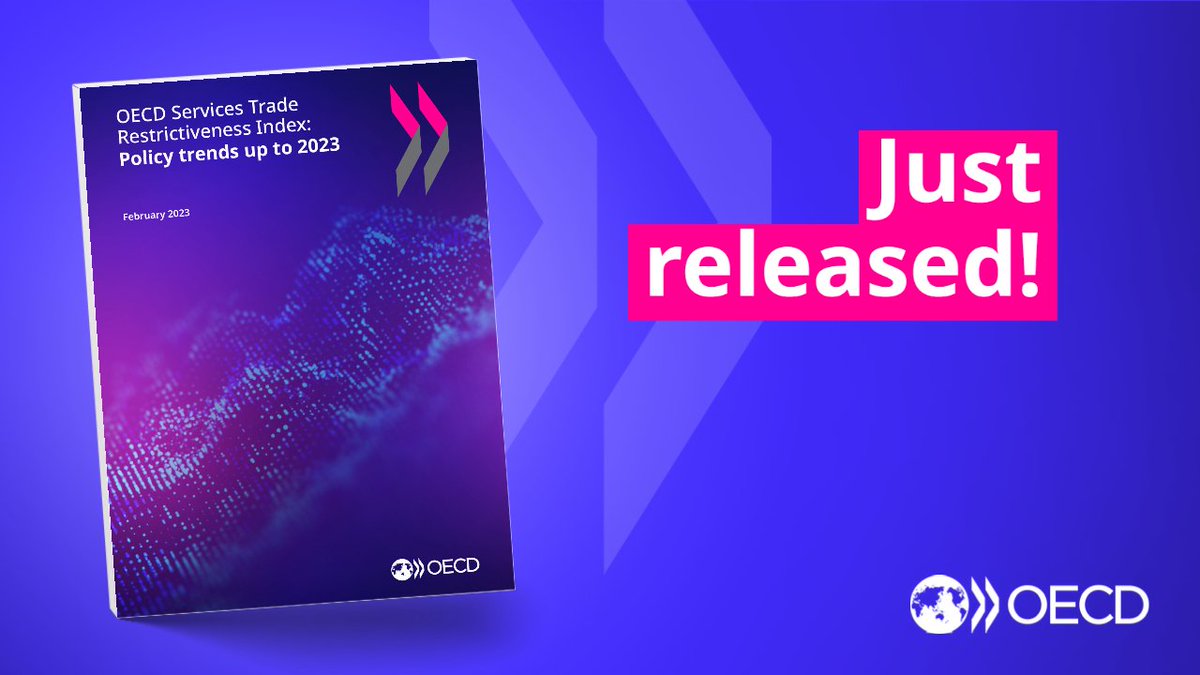
Just released! 📚
Discover the 🆕 edition of the OECD Services Trade Restrictiveness Index & learn about #ServicesTrade Policy Trends up to 2023!
🔎 Read the full publication ⤵️
https://t.co/yDm0v2FB6N #OECDSTRI
Services are a major part of the global economy. They contribute more than 2/3 global GDP, employ the most workers & support vital supply chains. 🌍📊
However, obstacles remain.
More on the regulations affecting #ServicesTrade 📘⤵️
https://t.co/yDm0v2FB6N #OECDSTRI
What is the e-commerce Moratorium & what are its benefits? 🌐
🔍 See how we contributed to discussions concerning its renewal at MC12 with our two-pager summarizing all you need to know about the Moratorium 👇
https://t.co/ejb4ICN3tm #BestOf2022
📣‼️Breaking news:
UAE and Cameroon will host @wto MC13 and MC14 respectively. Exact dates to be confirmed but MC13 to take place in 2024.
The 🇪🇺 is committed to work with both 🇦🇪 and 🇨🇲 and all #wto to achieve meaningful outcomes. No time to rest!!
Jumping on the bandwagon:
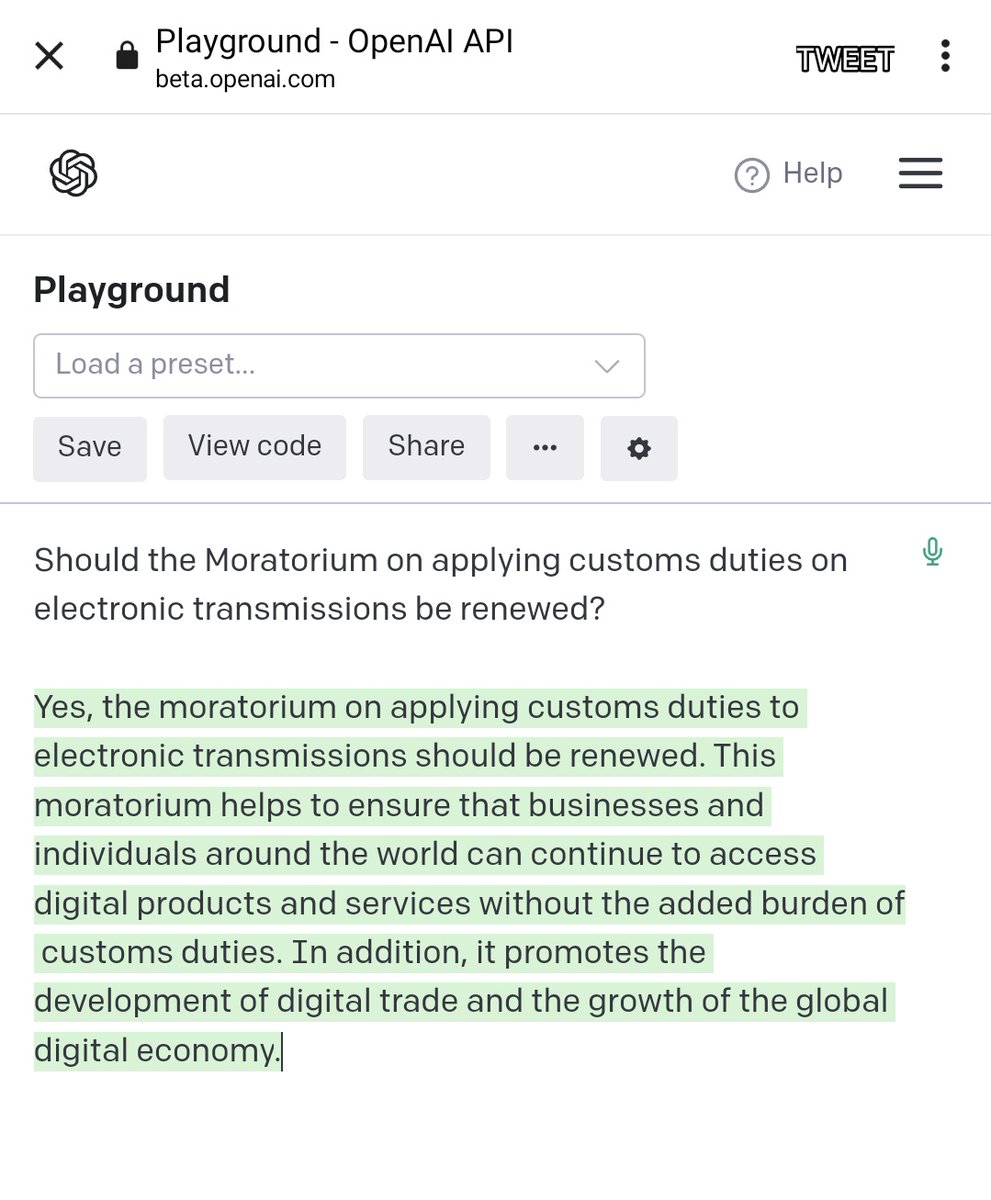
GTP-3 has spoken (unequivocally).
The moratorium on applying customs duties on electronic transmissions should be renewed!
@AndrenelliA our work is done here... Hehe
"Distinguishing facts from perception, actual change from hype, is a key part of my work on #trade at the OECD. Data is essential for policy at this critical juncture for the world economy."🗣️
🔎 Discover some of this work ⤵️
🔸 https://t.co/CP5CDmDHDc
🔸 https://t.co/YnzE4p02dY
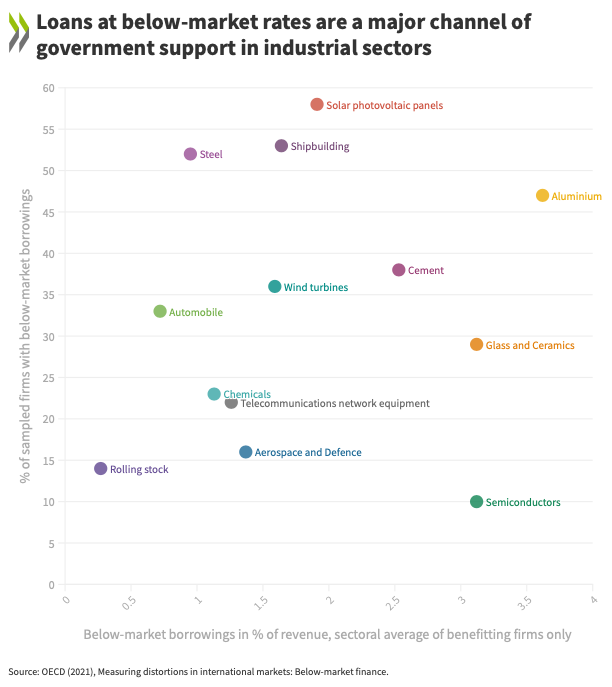
The OECD has a new portal on "Government support and subsidies"! The portal provides synopses to OECD govt. support work relating to industrial sectors, agriculture, fisheries, and fossil fuels. Kudos to @sfstone_trade and colleagues for this new tool!
https://t.co/hdup3cAt5W