I never met Gordon Wood, but I have a story about him.
In one of my grad school seminars, we read Wood’s Creation of the American Republic. The sheer erudition and evidentiary depth of the book bowled me over.
Back then, before kids and before life accelerated to warp speed, I used to call my mother every Sunday to catch up. Lots of times, we ended up talking about what I was reading that week in my grad seminars or for leisure. Mom had an omnivorous mind, and she was always looking for something else to read. She was a true intellectual—curious about almost everything, always eager to integrate new arguments or ideas into her existing schemas of how the world worked or to have those schemas challenged and changed.
When we talked that particular Sunday, I think I tried to describe to her part of Wood’s argument about the relationship between the state constitutions during the Articles of Confederation era and the federal Constitution. Maybe I was tired, maybe I didn’t completely understand her questions, but the end result of the conversation was that Mom had questions about Wood’s argument that I didn’t answer satisfactorily. I told her that she should probably just read the book, and we said goodbye.
She did eventually read the book, but the next Sunday, Mom started our conversation by saying, “Well, I had a lovely conversation with Gordon Wood this week.” For a split second, I thought she was joking, but then I remembered who I was dealing with. I started to sweat. “How?” I asked. A whole variety of unlikely scenarios in which the foremost historian of the American Revolution and my mother, who lived in Wichita, Kansas, might have met ran through my mind. “Oh, I just looked up his office phone number on Brown’s website and called, and he picked up!” Mom said. I decided I would have to find another profession.
As it ended up, Gordon Wood spent about an hour on the phone with my mother answering her questions about the Constitution. Ever since, I’ve had a soft spot for the man when I imagine him picking up the phone in Providence and finding Becky Elder from Wichita on the other end of the line. His generosity in that moment spoke very well of him.
Rest in peace, professor.
Whatever one wants to think about who’s at “fault” for where we are, the idea of the uni campus as a venue for free debate about big controversial issues is truly finished for at least a while. No administrator is going to want to deal with the associated security issues. 1/2
Had the distinct honor of co-leading a day-long Pickett’s Charge seminar and battlefield traipse with my friend @AndrewFLang through @CWI_GC at Gettysburg. In the footsteps of Garnett’s Brigade, focusing on the 18th Virginia, 20th Mass., and the Vermont Brigade.
George C. Rable’s "Conflict of Command: George McClellan, Abraham Lincoln, and the Politics of War" is "fast-paced, absorbing and all too cautionary," writes Andrew F. Lang. Read more about this "brilliant" new book here: https://t.co/tD0JiMvjGa #CivilWar
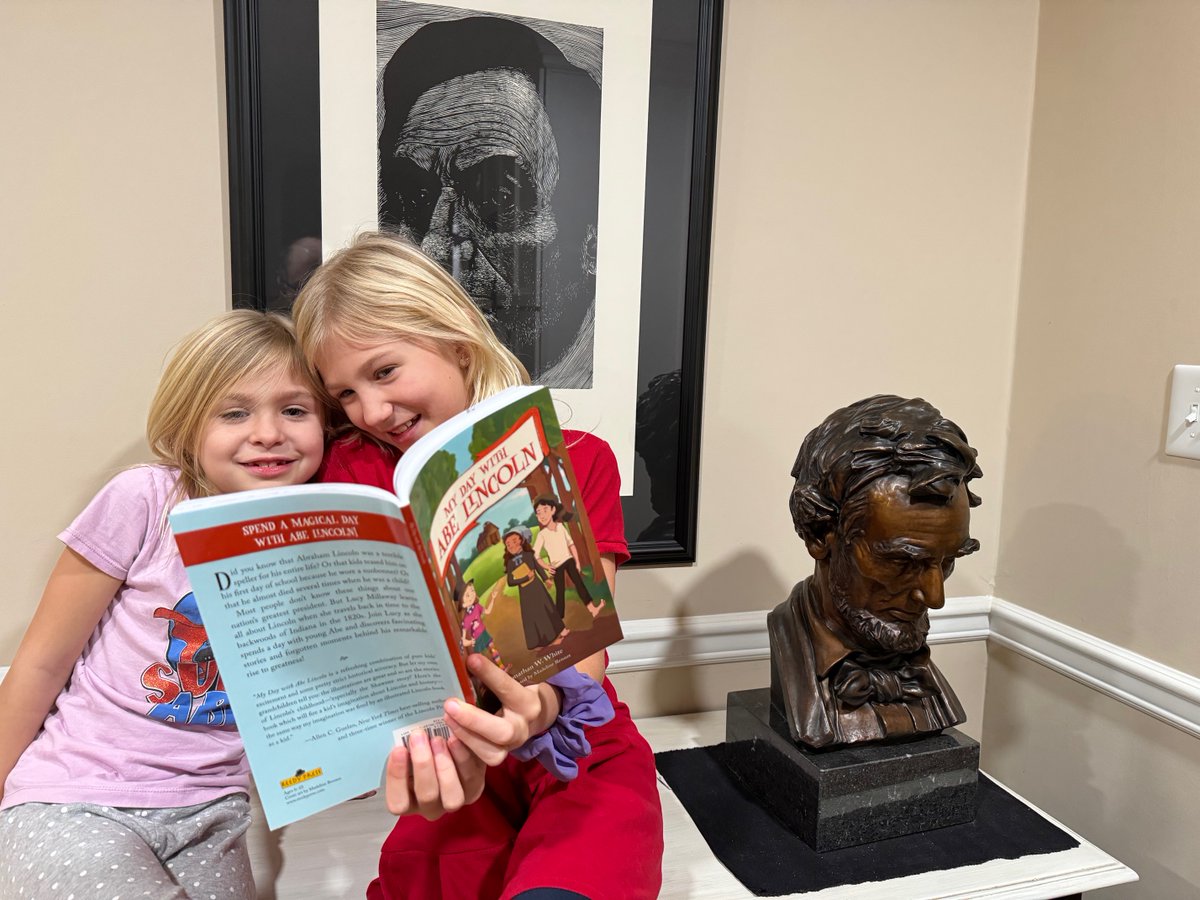
FREE BOOK GIVEAWAY!!!
Our author copies of MY DAY WITH ABE LINCOLN arrived today! The girls have been waiting for this moment for a long time!
Like and repost this Tweet and follow me. On Jan. 19 we'll pick a follower who RTs this to send a signed copy to. #AbrahamLincoln@ReedyPress
https://t.co/V2GKfeeo5h
Adolis García just erased David Freese from the record books. And maybe vanquished all of the Rangers bad World Series juju. Rangers win, 6-5 in 11 innings.
The Center for Civil War Research at the University of Mississippi (@UM_CCWResearch) is calling for papers for our 2023 conference: "The Passage of the Armies: Soldiers, Civilians, and the Enslaved in the Civil War and Reconstruction." https://t.co/kMBCkSjAdk