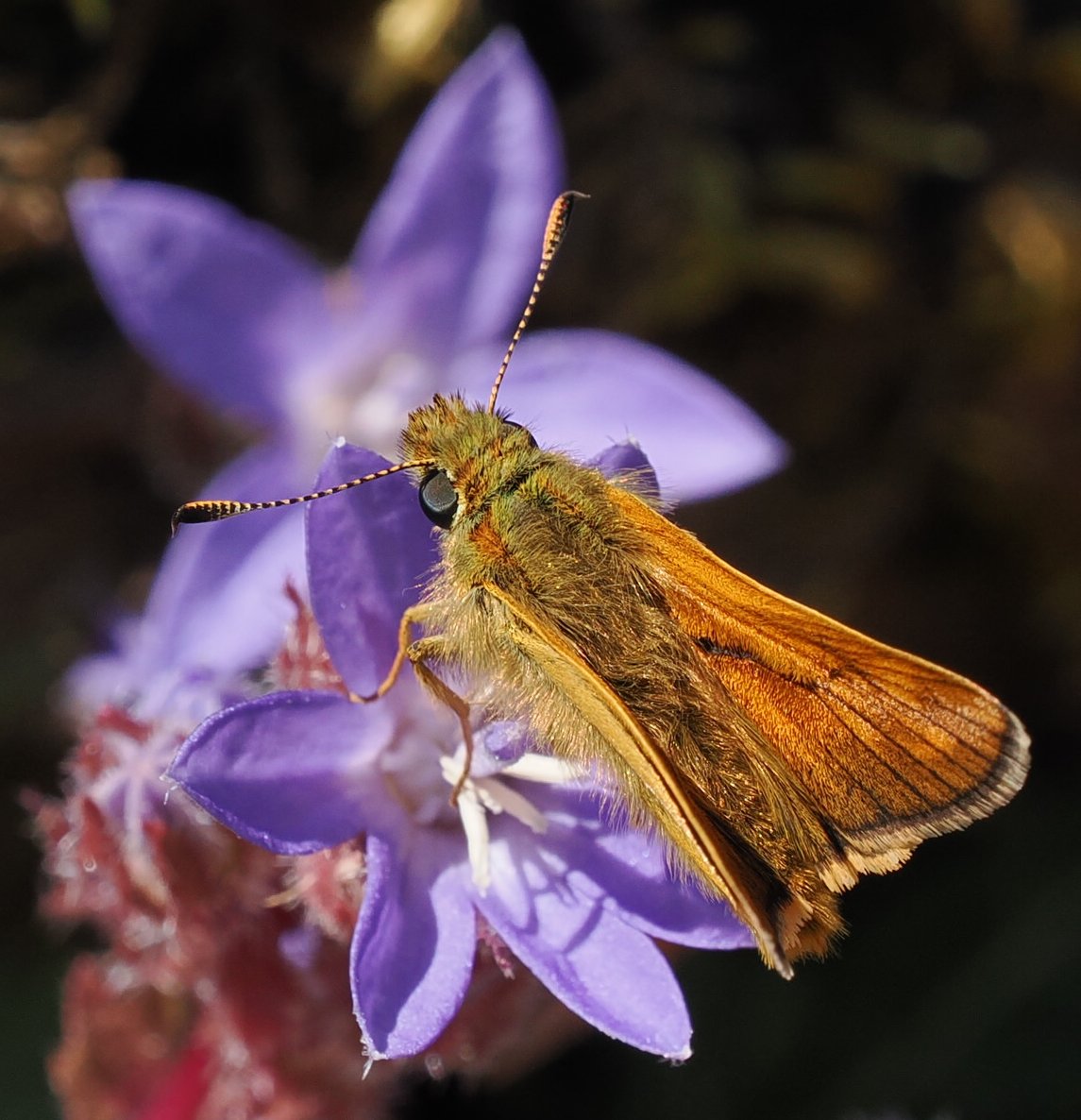
Large skippers have been flying in Cornwall for a couple of weeks now. The male has a thick black line through the centre of the upper forewing—actually a scent brand of special scales used to attract females.
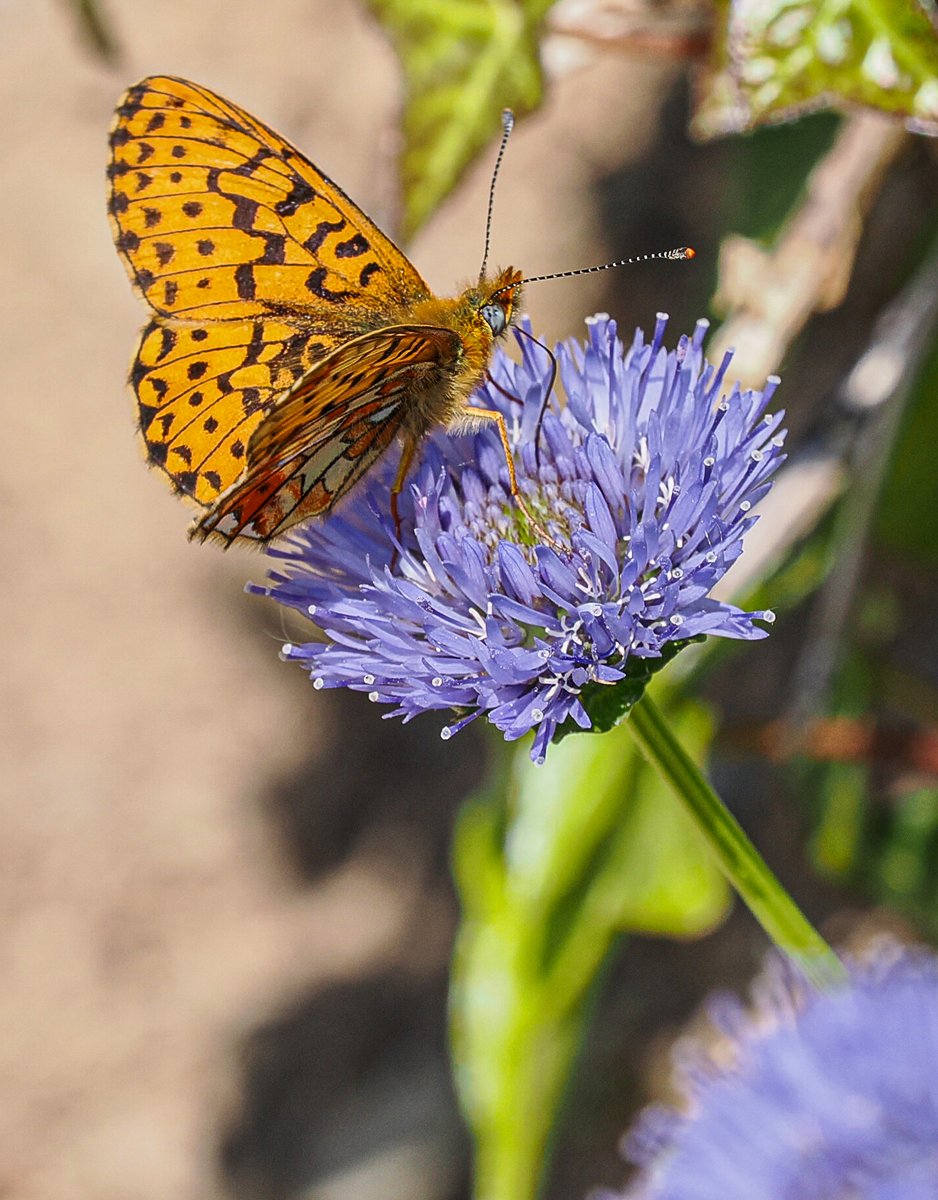
Marsh fritillaries flying today on Bodmin Moor. Living in damp meadows and boggy grassland, needing Devil’s-bit Scabious to survive. Like the pearl-bordered and small pearl-bordered fritillaries, they're under threat—with populations down 66% in England since 1990.
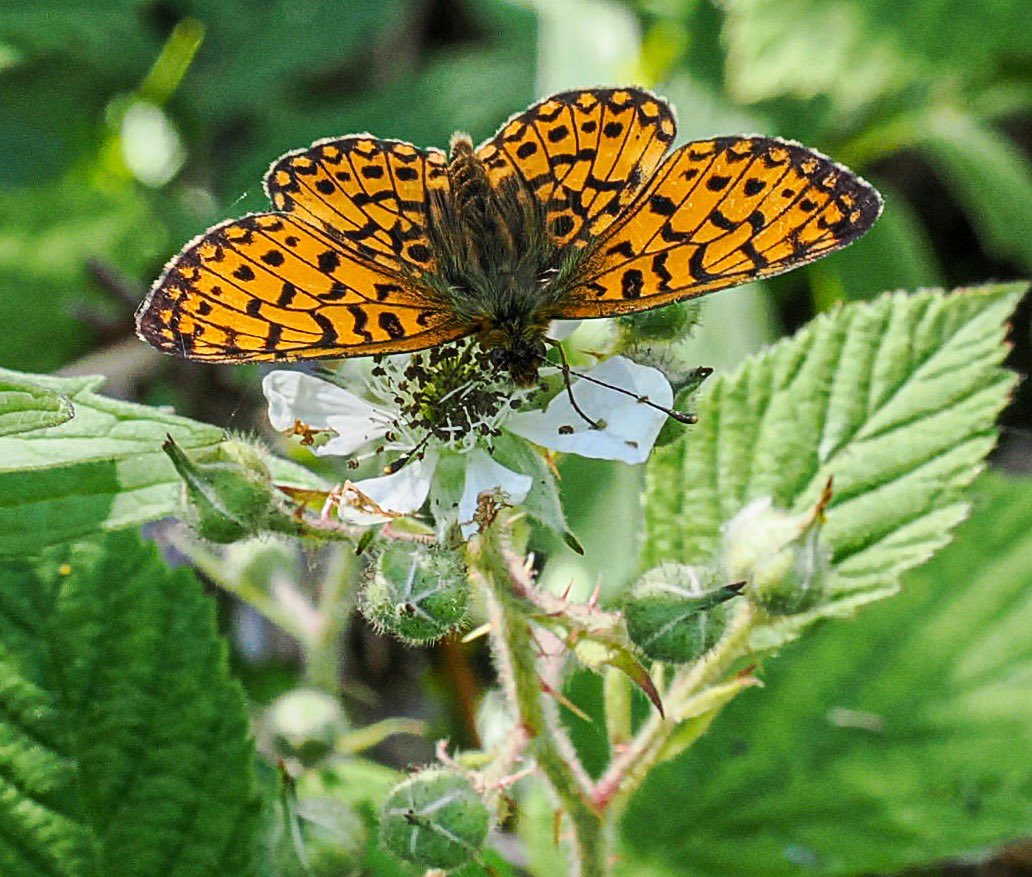
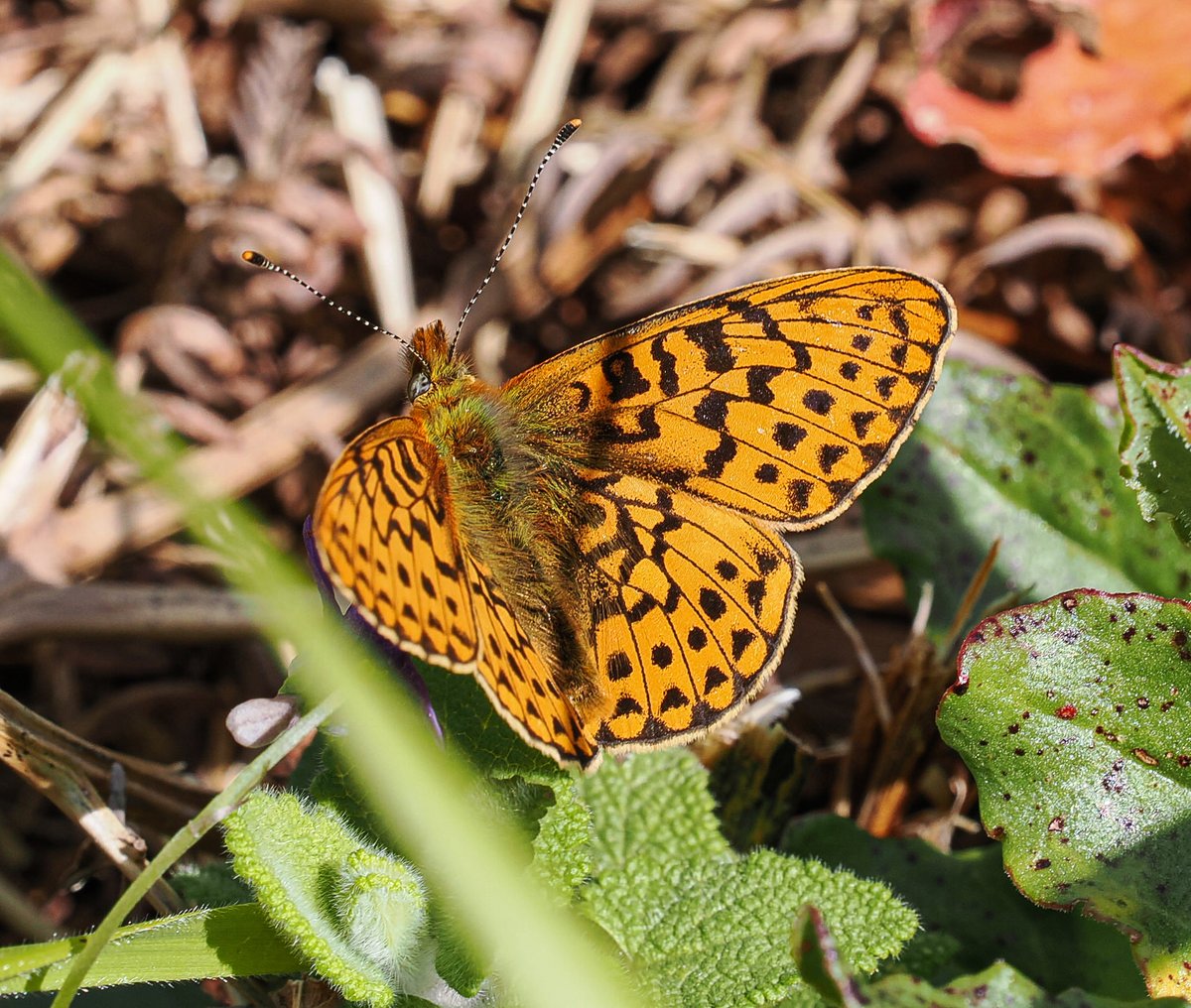
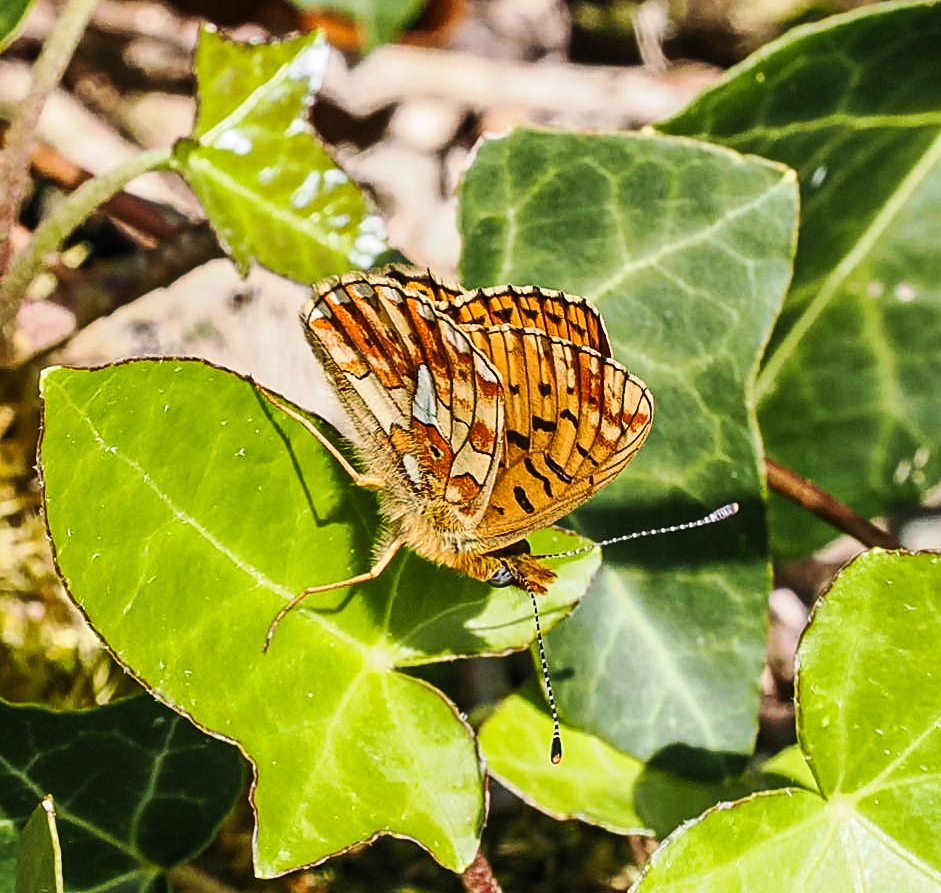
Bunny’s Hill, Cardinham, this morning: a whopping 217 Small Pearl-bordered Fritillaries in just 45 minutes, in blazing temperatures. Absolutely incredible.
No Pearls on the Coast Path this afternoon—flight season’s over for the pearl‑bordered fritillaries along the Cornwall coast. But consoled to find this Large Skipper soaking up the sun instead.
While their caterpillars rely entirely on violets, adult Pearl-bordered Fritillaries need plenty of early spring nectar to fuel their flights. Bugle, dandelion, bluebells are vital, and they also happily visit newly blossomed bird's-foot-trefoil.
Cornwall Butterfly Conservation field trip to Pendrift on Bodmin Moor today was a special one: 70 Pearl‑bordered Fritillaries seen plus 7 Small Pearl‑bordered Fritillaries. A lovely sight but the emergence of the Small PBFs reminds us our Pearls have only a few days left to fly.
Pearl-bordered fritillary nectaring on bluebell at Fellover Brake, Bodmin Moor. Following a very wet winter, cold easterly winds the past few weeks, and only the occasional sunny spell, numbers are running well below typical levels.
Pearl-bordered fritillaries are finally out on Bodmin Moor. In Cornwall they first appear on the Coast Path near Looe, then at Marsland near Bude, and finally on Bodmin – a sequence shaped by altitude, temperature, exposure and microclimate.
26 Pearls seen at Marsland Hard Hills yesterday afternoon, matching last year’s peak count, so we’re hopeful for an even better year this year. @savebutterflies
Strong cold easterly winds on Cornwall Coast Path for over a week. Yet Pearl-bordered Fritillaries show big spirit! 20 seen today—small in size, but mighty! Come on you Pearls! @Cornwall_BC@savebutterflies
@StevenFalk1@savebutterflies@Cornwall_BC I think it’s more likely to be the large number of willows that they are drawn to. I am not aware of comparable numbers of elm. Particularly as Large Tortoiseshells are mostly sighted near the coast here.
I thought it was just a battered Small Tortoiseshell on a muddy patch… but something wasn’t quite right. Then it clicked—it was far too big! My first-ever Large Tortoiseshell, emerging in the sun after months of Cornish rain. @savebutterflies@Cornwall_BC
@jochen_roeder@SmalePerry@savebutterflies@Cornwall_BC We used to have the Large Tortoiseshell here but it went extinct around 1960s. A few may have started breeding on the south coast in the past few years. Cause for optimism!