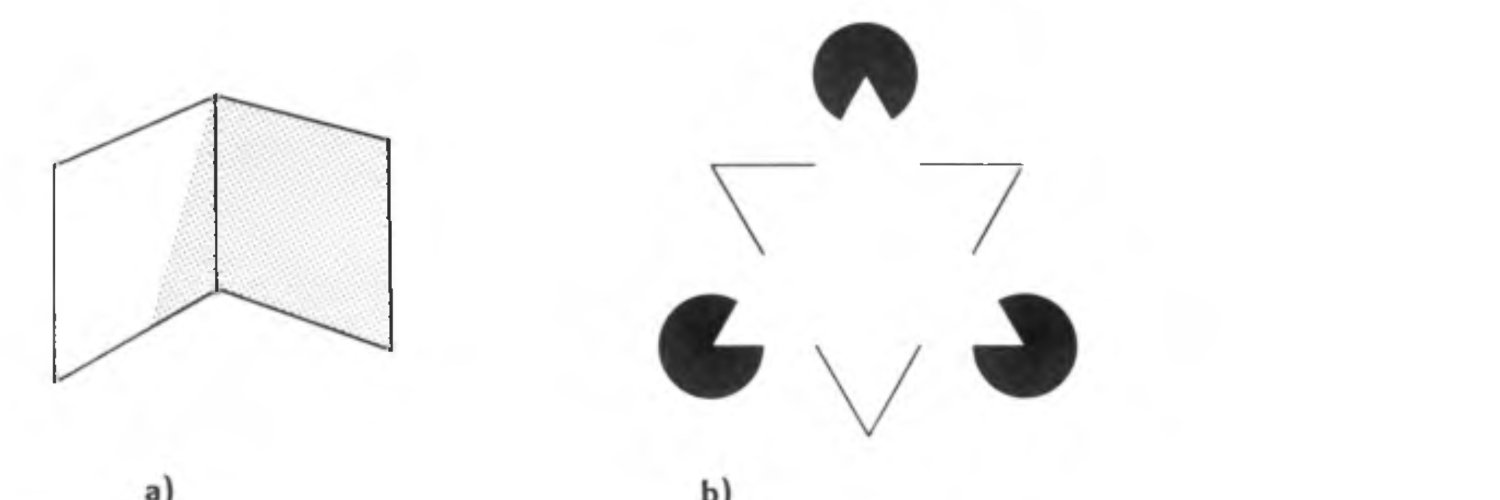
I have a new paper forthcoming in phil sci arguing that selected effect theories of representation don't apply to certain explanations in cognitive science that appeal to representations. (🧵1/n) https://t.co/bW2hnX12aj
1/ I'm excited to announce the launch of the Artificial Consciousness Initiative (ACI) at @UofT, a pilot project on foundational questions about AI and consciousness! We're also hiring a postdoc (details below). 🧵
New paper from our lab! Led by @ayaka_hach and Thomas Baumgarten.
Does conscious object perception proceed in a "coarse-to-fine" or "fine-to-coarse" sequence? We used neural geometry analyses applied to object category information in HD-EEG to find out.
https://t.co/uwjuJOZBW7
The worst legacy of psychiatry's chemical imbalance view is the idea that depression is a highly complex problem that requires medical expertise. One implication of seeing depression as a designed signal, like hunger or pain, is that we innately know how to solve it. Link below.
A talk I gave at NYU about what I think is the most pressing problem for the science of consciousness right now. If I am correct, a significant part of the past ~30+ years of research on consciousness might be wrong. I explain how we can try to mitigate that problem.
@UofT Magazine ran a story featuring my work on consciousness! A core idea: a scientific field can make transformative progress when it learns how to describe its subject matter mathematically. That's now starting to happen with consciousness. https://t.co/mBuiodhpwq
@MatthiasMichel_@dioscuri In that case the biological basis would be different than in the ordinary case, so Block could propose that only certain kinds of biological bases give rise to consciousness, in the same way functionalists propose only some computations give rise to consciousness
@MatthiasMichel_@dioscuri I agree with that. I was just thinking about what an argument for biological naturalism would look like. I wasn’t suggesting it was a good argument.
@MatthiasMichel_@dioscuri I thought there’s some arguments related to concievability — since no computational process appears sufficient for consciousness, consciousness may be a by product of the physical substrate that implements various computations in creatures like us. Is that not an argument?
Imagine the roles reversed and you found AIs researching “mechanistic interpretability for humans”: Methods to interpret how individual human neurons relate to human behavior and reasoning, specific neurons you could stimulate to steer human behavior, methods to read human minds