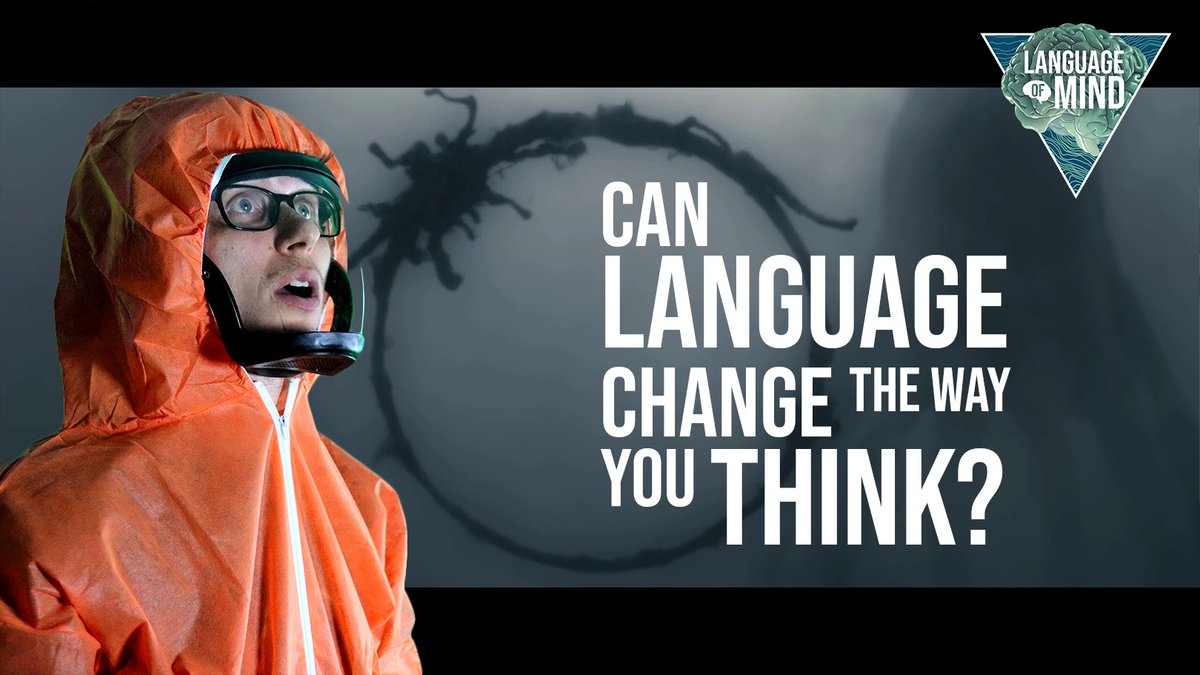
Arrival is one of my favorite movies! It raises so many interested questions about language, culture, biology, and the mind. So I made a video about it! Check it out! 👇
Alien Linguistics — The Science of Arrival https://t.co/jTerpmYYRj via @YouTube
My wife said something sarcastic last night, and it made me realize that sarcastic expressions apparently have the same kind of scope ambiguity that you see with negation, almost like a sarcastic expression is interpreted as though it were a negated version of a declarative
If you're interested in this topic I'd recommend the Uses of Enchantment by Bettelheim. He lays out a case for this exactly this thesis that fairy tales are important for child development
One of the ways modernity fails children is the way it misunderstands folklore, myth and the importance of stories. Stories are archetypal. Slaying a dragon teaches children to be brave in the face of difficulty, the heroes journey teaches the importance of rising to the occasion and responsibility, the wise sage is a figure children will meet again and again in life as they learn skills from accomplished elders.
But in our apparent enlightenment, we have dismissed the importance of these as juvenile and primitive. So we write stories for children where the plot is something absurdly literal like "overcoming anxiety" and then we wonder why people cannot read nor widely apply the things they learn.
@Mattkaveli@AlanLevinovitz@jimcoan The hypothetical you posed is a valid and interesting one! There is a lot of research using ML to reconstruct visual inputs from brain activity, and if it continues it would certainly have biomedical applications.
LLM prompting bears very little resemblance to this process
@cobbaltt We were talking about block towers (towers made of toy blocks, we have a lot all over our house), and I asked if she had built one (which she doesn't often do). She said "yeah, I built a huge tower."
(1) she built a tower, but not a big one.
(2) she didn't build a tower at all.