British English and American English really diverged in the mid-1800s, @andrewvandam writes. But U.S.-flavored (or flavoured) words have been burrowing into U.K. lingo ever since: https://t.co/vyPzXXY0Xd
@cremieuxrecueil@simonsarris great question! it's both definition and sourcing, I'd bet. I used CPS. I'm too slammed on deadline to dig out my full definition right now, but as a sanity check, we can see that a quick and dirty look at IPUMS CPS ASEC produces a very similar trend!
https://t.co/DhsfF2dppC
Who’s most likely to change (or hyphenate) their name after marriage?
Thanks @andrewvandam for answering my question!
The “SAVE” Act will make it harder for women that changed their last names to vote.The bill is #sexist and #misogynistic https://t.co/5Pun11WMsP
It’s Election Day, and members of @PostGuild are working diligently from all sides of the company to keep you informed. The past few weeks have been tough, but we hope you will support us by continuing your @WashingtonPost subscription so we can continue to do this important work
hello! for election night tonight, i'll be the numbers guy on @bbcworldservice radio today as the election returns come in. I'll also be joining the @washingtonpost live blog tonight.
the others will be hosting a @SplitTicket_ live stream, which we'll post about soon. :)
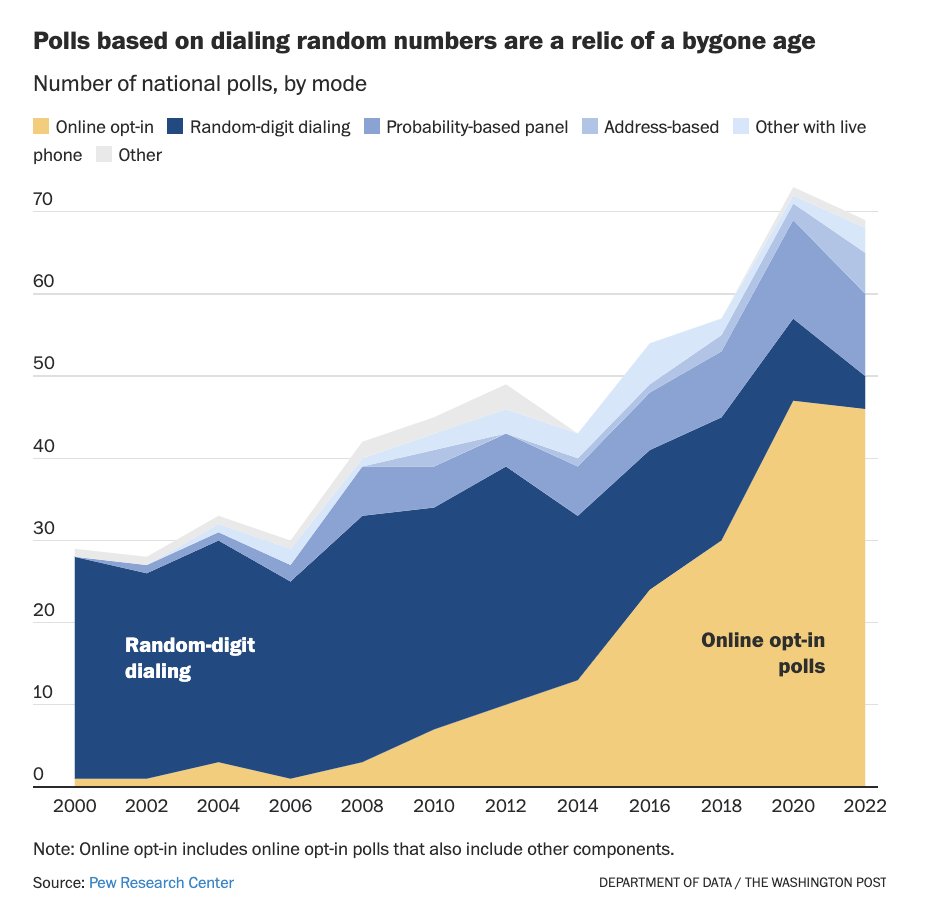
How can polls be right if nobody answers their phones?
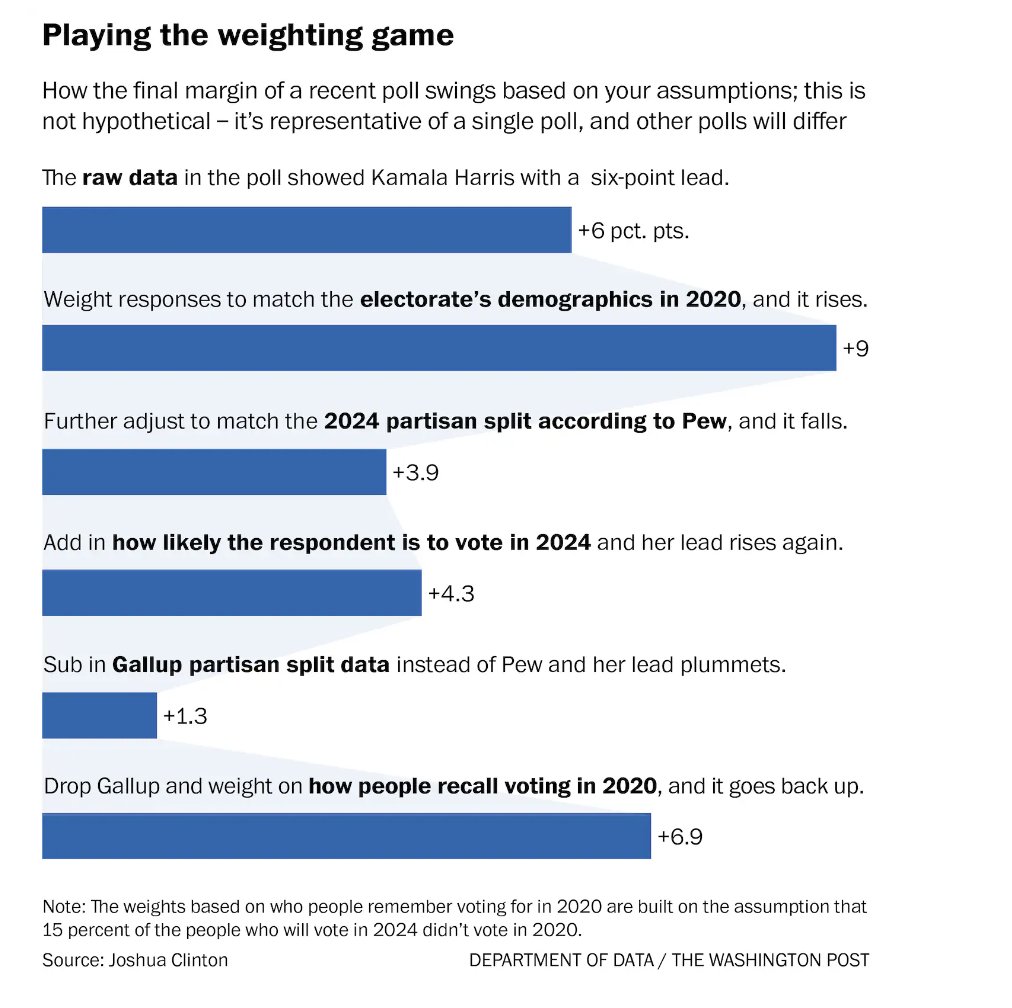
Great overview from @andrewvandam of:
1) Who actually gets polled
2) How polls shifted from phone to online panels
3) The really hard "weighting game" of weighting responses to polls/surveys
I know many of you will roll your eyes at this, but that's OK; I wouldn't be in this field if I was afraid of being dunked on every now and then.
When I first came to The Washington Post in 2017, I was extremely wary it would be too establishment for me. Too corporate. Too deferential to power.
What I have instead found over the last seven years is that the paper has consistently given me a unique, awesome platform to fulfill the highest calling of journalism -- to comfort the afflicted, and to afflict the comfortable.
The Post has spared no resource in allowing me to pursue this mission. It flew me to Puerto Rico to interview hurricane victims cut off from federal food stamp aid. To Maine to cover the long-term care crisis facing the nation's elderly. To Kentucky to document the closure of a steel plant. To Las Vegas to cover the housing crisis. To Wisconsin for farmers caught in the crosshairs of a trade war. To Detroit for a story on the nation's unraveling safety net. To the Bronx to chronicle appalling public housing conditions. (OK, I took the train there.) To Ukraine to cover a war. To Indonesia for meetings of the world's most powerful financial leaders.
Since the beginning of the year, the Post has devoted thousands of manpower hours to a series -- six parts published thus far -- on the unintended consequences of U.S. sanctions. This effort included paying me and a team to travel to northeast Guatemala to chronicle an economic calamity almost 2,000 miles away from my desk, in one of the poorest parts of the world. At least 20 people have worked on this series alone. The Post did not greenlight this series because it thought there would be huge pageviews in U.S. sanctions policy; it did so because it's important for the public to understand how the surging use of the tool is affecting the world and the nation's foreign policy. It did so because the story matters.
I fully understand the misgivings people have expressed about billionaire control over our journalism. (I published a story today -- pitched by an editor, put by editors on today's front page -- about billionaires threatened by Trump who are now hedging their bets.) But these are stories that require more than just substantial resources; they require a devotion to journalism that seeks to document how machinations in Washington affect the lives outside it.
I could try a Substack where I spout off whatever happens to be in my head that day. I could work for a publication that only caters to lobbyists and elite insiders. But there are precious few publications still doing the coverage -- however incomplete; however still in need of improvement -- aimed at serving the broader public at large. I believe The Washington Post is one of them.
I am not here to tell anyone what to do. We are imperfect. My work can suffer from negativity bias, recency bias, imperfect data, faulty assumptions, motivated sources. I get things wrong. My journalism can be flawed and you should yell at me on twitter when it is. I want to be more transparent about the decisions I make and the stories I publish.
But I promise you: I and many, many other journalists throughout this newsroom would quit The Washington Post if we ever felt our work was not in service of the public at large. That is the point of the job. That is why I hope we get to do it for as long as possible.
As a former member of the WaPo editorial board (Dec 2021 to Sept 2024), I was stunned by the news today not to endorse.
I am one of 10 Post columnists (so far) who signed this joint statement tonight:
“The Washington Post’s decision not to make an endorsement in the presidential campaign is a terrible mistake. It represents an abandonment of the fundamental editorial convictions of the newspaper that we love…”
Full column from @andrewvandam
“Wait, are Millennials suddenly the wealthiest generation?”
As Andrew explains, the answer is complicated.
https://t.co/wQehPqL2ny
Gen Z is having a hard time.
Take a look at employment by age.
As hiring has slowed down, Gen Z is struggling to get jobs.
16-to-24 year olds and 25-to-34 year olds are BELOW their pre-pandemic employment norms. (The pink and yellow lines are both below 100 right now). #jobs #GenZ
Im not trying to be a Doomer here but the actual conclusions from the article by my friends @federicacocco & @andrewvandam are considerably more ambivalent
https://t.co/bsrEZbSXlb
"retirement-age folks & #Republicans are the least likely to use #library 'facilities.' Those of us w advanced degrees are among the most likely to use the restrooms, as are followers of major non-Christian religions." Great stuff from @andrewvandam
https://t.co/qZzbRzi4XT
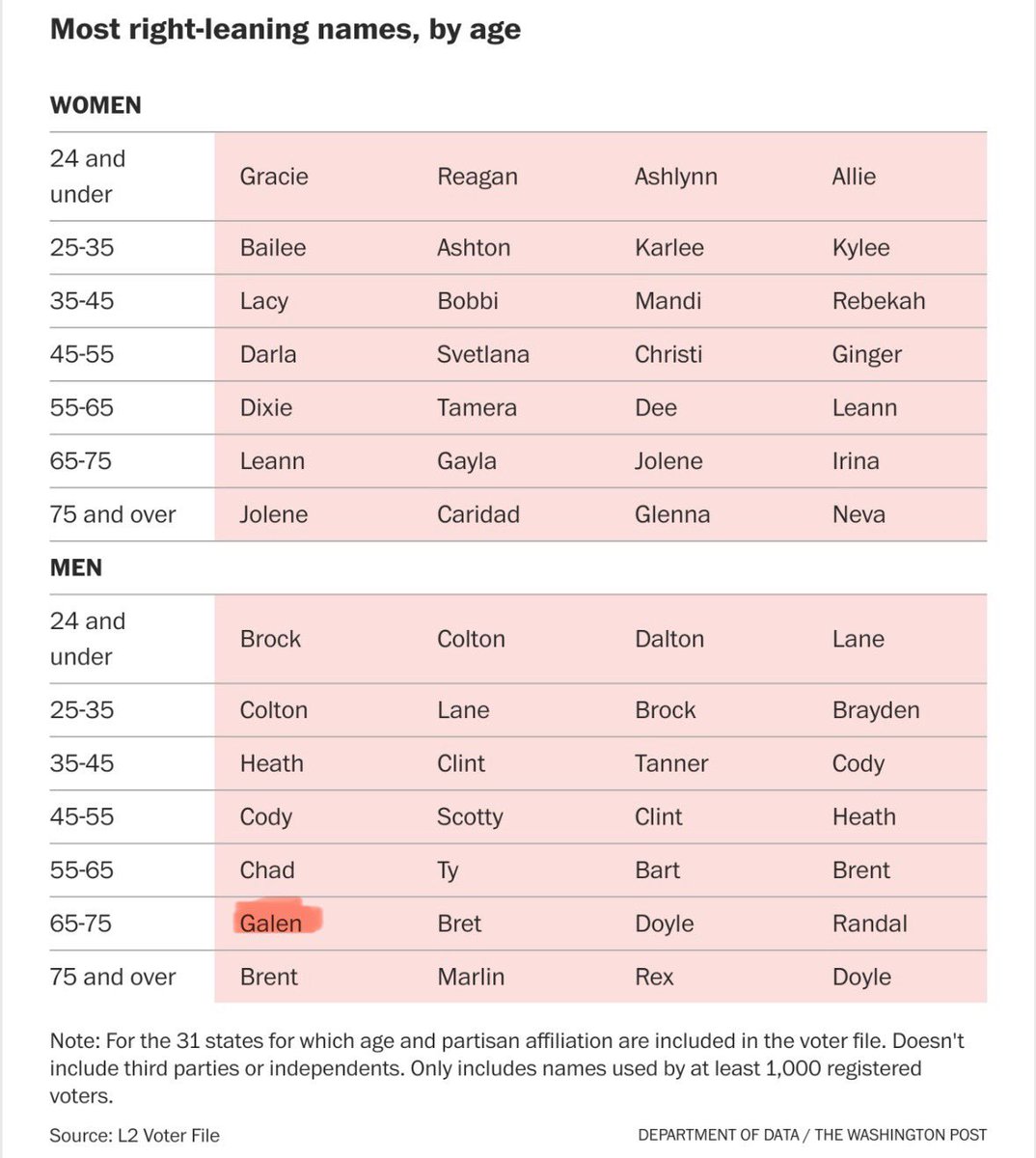
People have said a lot of things about my name. Today @lennybronner & @andrewvandam taught me…
It is the most Republican name in America for men 65-75.
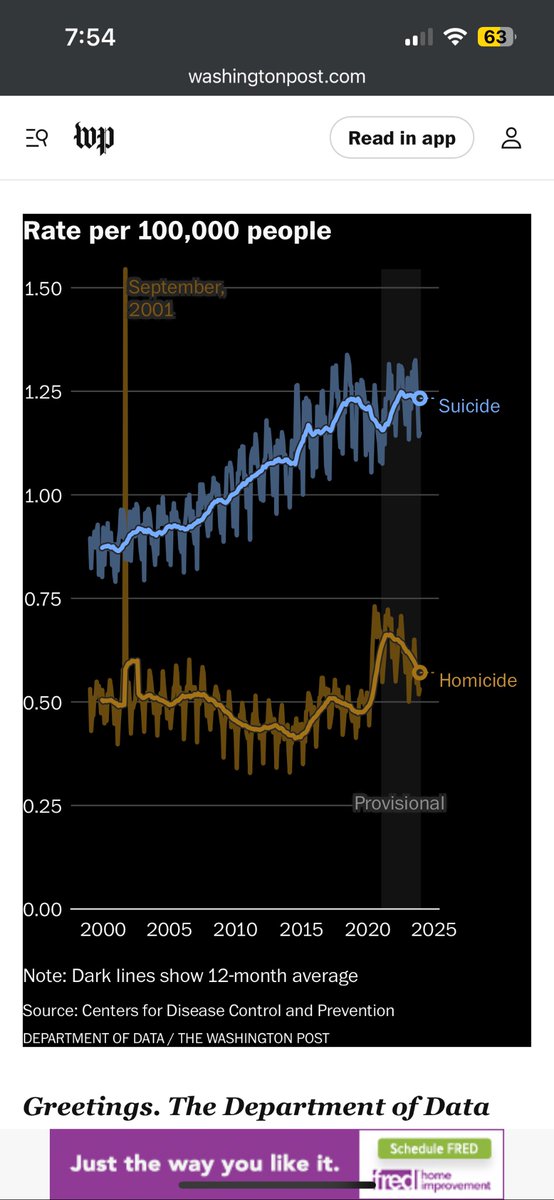
A strange data catch from @andrewvandam: Google searches for “how to kill yourself” are falling, even as the number of suicides has gone up, while Google searches for “how to kill someone else” are surging, even as homicides have fallen
What’s going on?
https://t.co/vqewoyfxmV
Well it's true: Democrats really are more likely to be childless cat ladies.
And childless cat men. And childless dog ladies and men.
Via @andrewvandam https://t.co/PHhSVLrbWi
How reporting and editing jobs have changed: “America still has reporters (and editors). They’re a little different. They have hollowed out in age, with fewer in their prime earning years and more youngsters and folks in their 60s.” @andrewvandam https://t.co/3HsdA0zANi
Newsrooms have declined; reporters have endured, says @andrewvandam.
To reporters who carry the culture into a nonprofit:
It’s OK to remind them that you’re not a psychopath; it's just that certain tried-and-true methods can make you seem a little iffy.
https://t.co/o7fkY1MuOh