AI will do a lot of good things. But it won't cure cancer. Here are a few reasons why
1. AI is trained on the best available published literature. If you have AI read all of the papers in cancer, you have just had AI read 50% or more of literature that cannot be reproduced or may even be fraudulent. If you have AI restrict itself to reading nature science cell JBO, AI has still trained on 50% of material that will not replicate, and is not true. How can AI solve the problem when you pump it full of false information?
2. There is no way to separate the false information from the true information unless you replicate the experiments. That requires beakers pipettes dishes and hands. Now Maybe if AI has a robot form and starts replicating things now you're talking.
3. The limit with cancer cures is is not that we are not reading and synthesizing all the available materials. There are a lot of very smart people working in this space, and they do read widely and think about always all possible ways to combine different strategies. Instead, the limit is biology itself. Understanding what is happening in the cell that has not been seen or detected in current experiments. AI has no way to do this unless it again picks up a pipette.
4. Some of the things people celebrate today to like AI can find more lesions on mammograms. It just reveals the ignorance of the technology people. What is a lesion on a mammogram? It's something that when you stick a needle in it according to a pathologist it has basement invasion. So it looks like cancer under the microscope. this is what AI is being trained on. But it has nothing to do with whether or not the lesion you see is going to progress in your natural life, and kill you, whether or not it's going to stay dormant, whether or not it's spread already. You want to find lesions that are going to kill you. But you can cut out today. We don't know which lesions those are! AI is being trained on a faulty data set yet again. I described this at length in a recent plenary session lecture.
5. 20 years ago they said Judah folkman was going to cure cancer. Then they said immunotherapy was going to cure all cancer. I guess the difference between folkman and immunotherapy is at least immunotherapy has cured some people but folkman cured about zero people. 10 years ago the hype was all about personalized sequencing. Now the hype is AI. There's always going to be some hype. You're better off not smoking, keeping your weight down, exercising and then just accepting that immortality is not going to be happening.
Side note: it's probably a good thing that people are not immortal. People need to die so that their terrible ideas can be replaced with slightly less terrible ideas. Certainly there are backslides, but such is the nature of progress. Reducing untimely death is a much better goal than making people live to 120.
"Data sleuths’ work is thankless. They must get credit for retractions" Totally agree. If a sleuth was instrumental in highlighting the issues that led to a retraction, then their contribution should be acknowledged. https://t.co/Tw8L6Yr2Pf
🇪🇸 Cribado de Hepatitis B y C en el centro de acogida de @fundacioncepaim en Guardamar del Segura (Comunidad Valenciana) para 78 personas de diferentes nacionalidades con barrera idiomático-cultural abordada por nuestros compañeros mediadores de wolof, francés, bámbara y árabe.
CLIMATE CHANGE
"Average" temperature is meaningless*. The data to look at is intra-annual VARIATION in temperature, the variability, the extremes.
*Dont cross a river that is 4f deep "on average".
Note: I will block any commentator who confuses the feed/misses the point.
"For those who worry that already 6 Nobel laureates in medicine or physiology have retracted papers, we can reiterate that science will still be the best thing that can happen to humans, even if all Nobel laureates retract some of their papers eventually." https://t.co/PGJ1vG557u
🔥Proud to publish this work @LancetRH_Europe@TheLancet
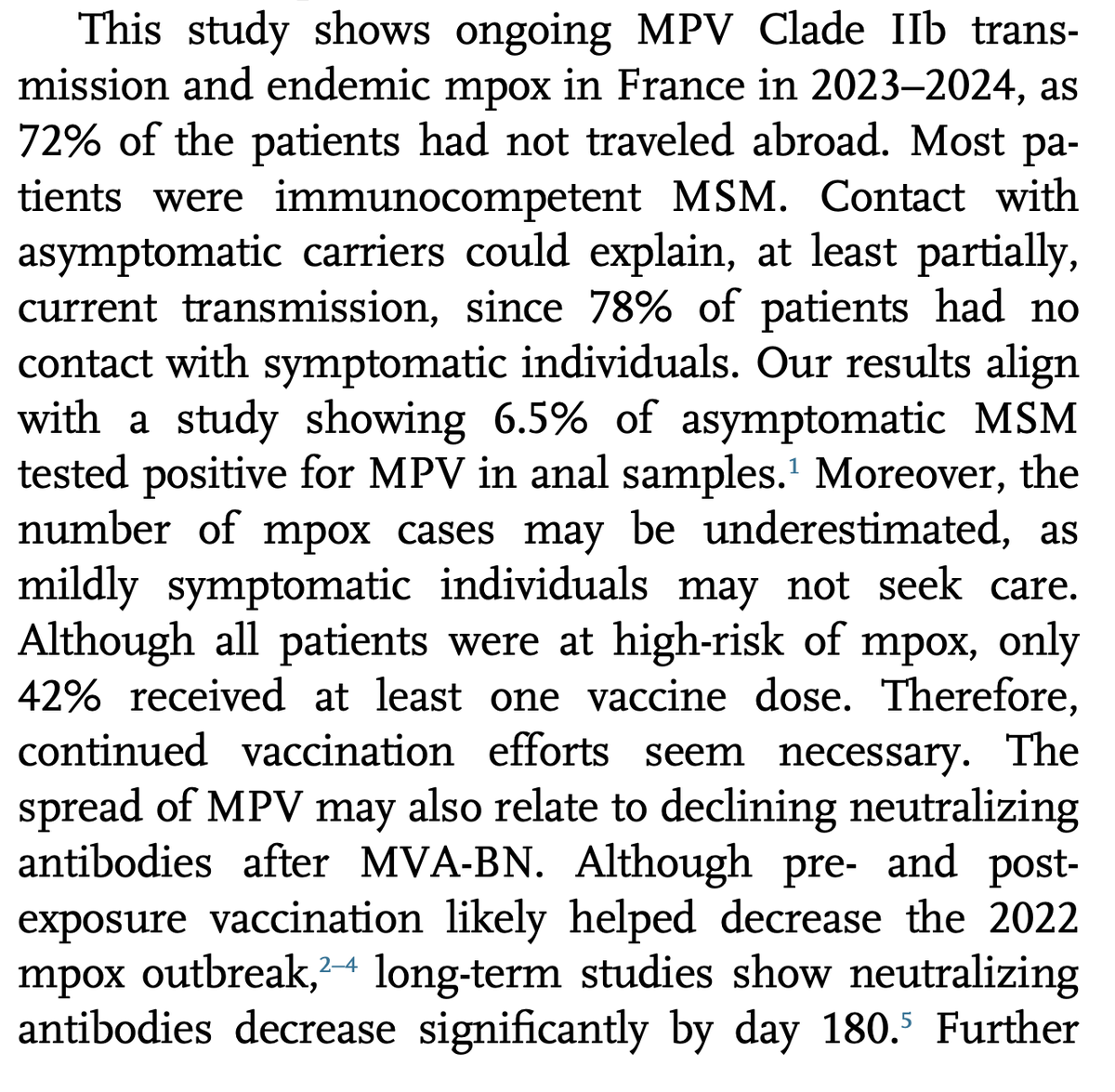
Monkeypox clade IIb in France 2023–2024
We show that mpox is endemic in France despite vaccination in 15/36 patients. Likely underreporting of cases and transmission by asymptomatic individuals
https://t.co/cYVl2F2vXW
Want to learn about Bayes for clinical research/trials? NEW: UCSF-Stanford CERSI Bayesian Thinking in Clinical Research Course
The course is for a broad clinical audience and statisticians not exposed to Bayesian methods.
Information/Registration: https://t.co/bdTxExUDYt
What kind of childhood makes a top scientist? Is it enough to have all the right traits (brilliance, grit, etc) or do you need the right family too?
And why should we care? A 🧵 on our paper on the Nobel Laureates.
A teaser: the income distribution of the laureates' fathers.1/N
Time to rethink leadership in academia? This study reveals that highly-cited researchers seldom lead top universities - only a quarter in the U.S. - and executive boards are dominated by corporate leaders.
https://t.co/OxJwdDm4W1
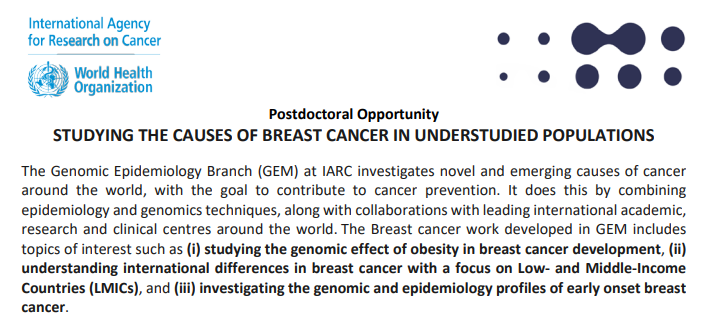
IARC's Genomic Epidemiology Branch (GEM) is hiring a #postdoc!
GEM investigates novel & emerging causes of #cancer, combining #epidemiology & genomics.
Have a recent PhD in e.g. bioinformatics or genetics, & good at analysing biological data?
Get in touch!
https://t.co/FDxo995yum
Vent'anni di passione, di sfide, di sogni trasformati in realtà, dai campi di periferia alle notti europee.
Cinque trofei alzati al cielo, uno Scudetto che ci ha riportato sul tetto d’Italia dopo 33 anni di attesa.
Vent’anni colmi di una passione irresistibile e che continua a battere in tutti i cuori azzurri.
La storia continua!
#ADL20
Oggi comincia la Serie A e la squadra campione d'Italia porterà sulla maglia il marchio Betsson, popolare sito di scommesse. Non è la prima volta che succede, ma oggi c'è (ci sarebbe) una legge che lo vieta. Però (1/6)