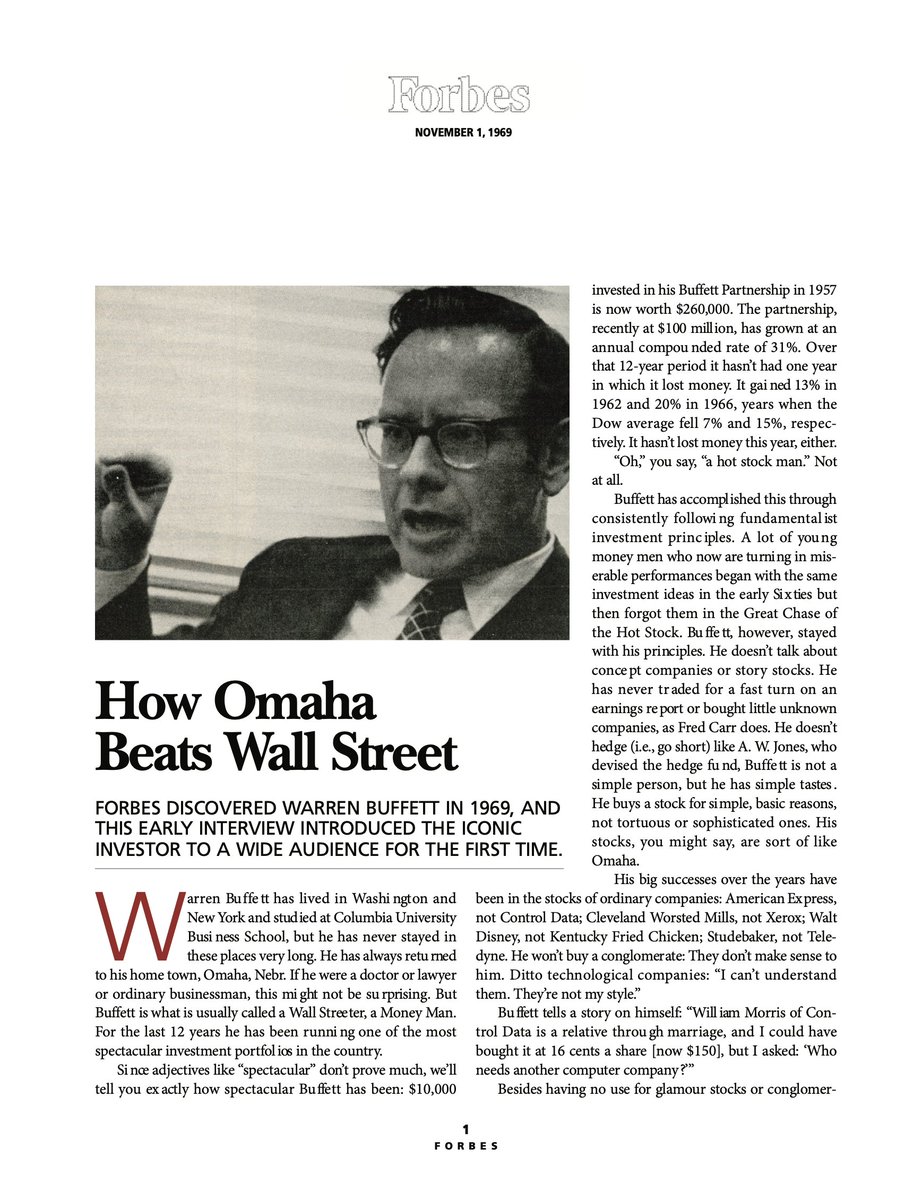
Warren Buffett found the Buffett Partnership at the age of 25
The partnership hasn’t had one year of losing money
It achieved 31% annual return for 12 years
In 1969, after Buffett closed the partnership
Forbes published an article on him for the first time
My takeaways:
Just watched Mohnish Pabrai's Wagons ETF ($WAGN) shareholder call (Sep 23). Here's what stood out to me 🧵👇
1. The name says it all. "Circle the wagons" means you guard your highest-conviction ideas. When redemptions come, those are the last things you sell. Great results usually come from a few great businesses held for a long time. The hard part isn't finding them, it's not selling them.
2. Reysas (Turkish logistics real estate) is the largest position. Mohnish caps his exposure at 30% across his funds, out of respect for the founding family. His rule: "We sell when the family sells."
3. On $RIG: yes, the debt is high. But after the Valaris merger, leverage drops sharply, and management wants to take debt to zero.
4. On $CSU.TO: Mark Leonard has fully stepped back for health reasons, but Mohnish believes the DNA is now hard-wired into the organization.
5. Met coal: he prefers Warrior over Alpha because Warrior sits at the bottom of the cost curve, "the Aramco of met coal."
6. He exited Mongolian Mining. He likes the business, but couldn't underwrite the risk of the government reopening mining terms. Knowing when you can't assess a risk is a skill too.
7. Method over labels. He doesn't think in terms of "cyclicals vs compounders." He looks at where a company sits on the cost curve, and at management's energy, creativity and integrity.
Huge thanks to @MohnishPabrai for sharing so openly and generously. These calls are a free masterclass in value investing. Grateful for the education. 🙏❄️
Full call: https://t.co/irQPqtpujx
Source: Pabrai Wagons ETF shareholder call replay, Sep 23, 2026
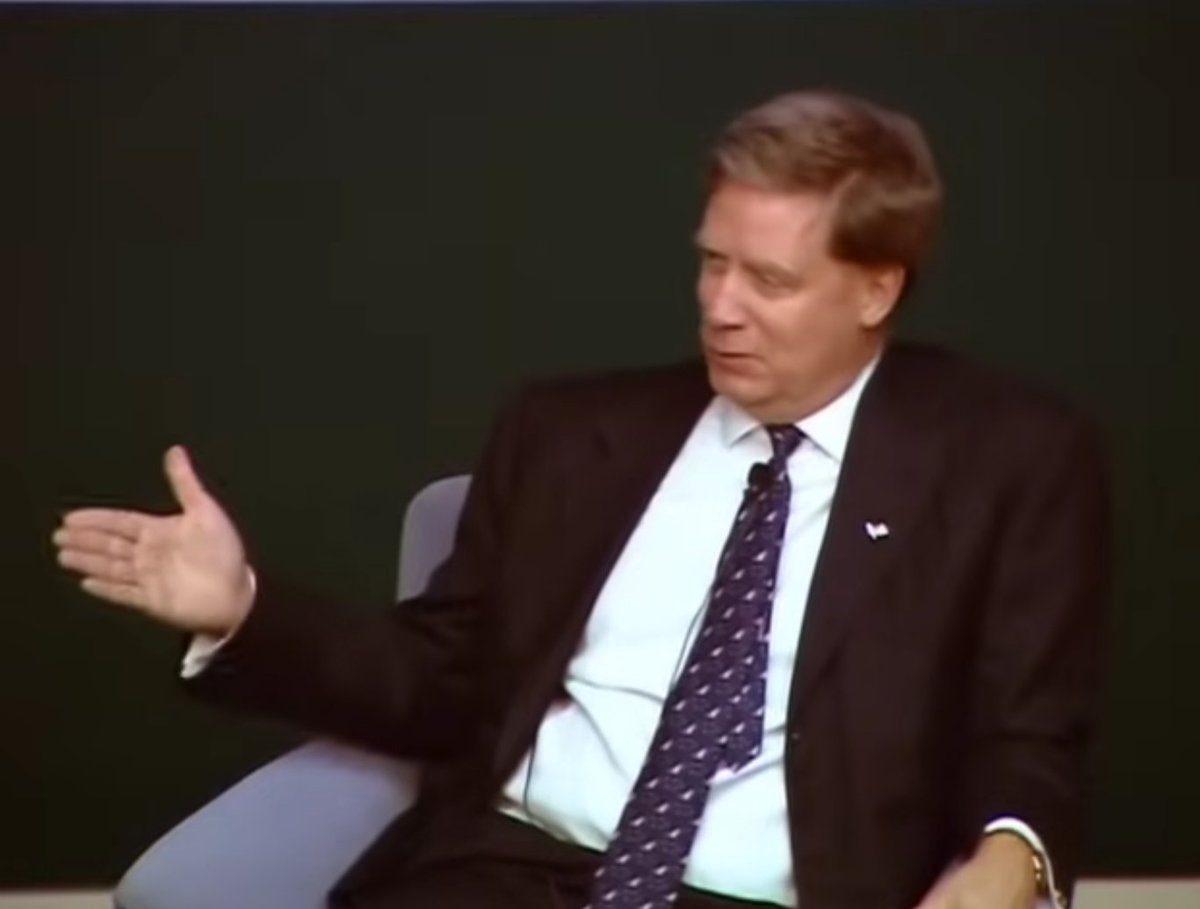
Watch Hard Lessons, as legendary investor Stan Druckenmiller sits down with Morgan Stanley’s Iliana Bouzali, sharing how he would construct a portfolio if he had to start over today, why contrarianism is overrated, and which stock he regrets selling too early.
“I never use valuation to time the market. I use liquidity considerations and technical analysis for timing. Valuation only tells me how far the market can go once a catalyst enters the picture to change the market direction.”
- Stanley Druckenmiller
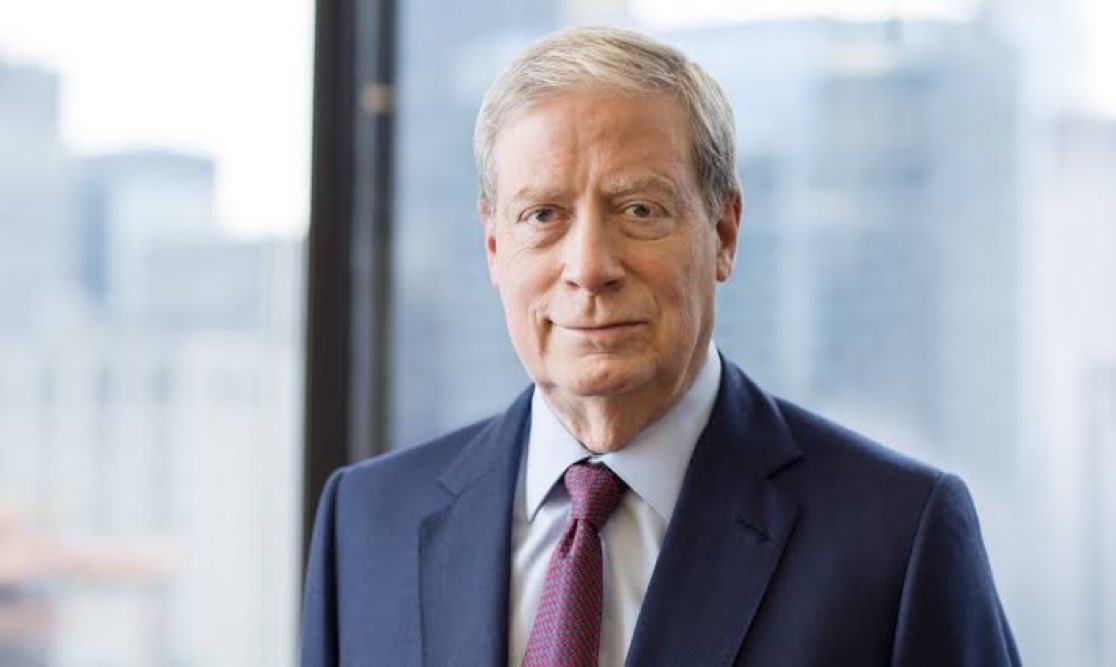
This is Stanley Druckenmiller.
He averaged 30% annual returns for 30 years without a single losing year.
In 2009, he sat down for an 82-minute interview and revealed his entire approach.
Here are the 5 most powerful lessons from it:
Here are the 30 best investors of all time.
And one quote from each investor:
1. Stan Druckenmiller
“I like putting all my eggs in one basket and then watching the basket very carefully.”
Howard Marks just spoke on Bloomberg.
Not to panic.
Not to predict.
But to explain how Liberation Day reshapes the rules of investing.
Here are my distilled insights:🧵
We've got the perfect weekend read for you.
In this exclusive interview with @chriswmayer, the author of 100 Baggers, he shares insights on what drives long-term shareholder value, one of his current holdings, and the most common mistakes investors make. https://t.co/AEEQMawaV2
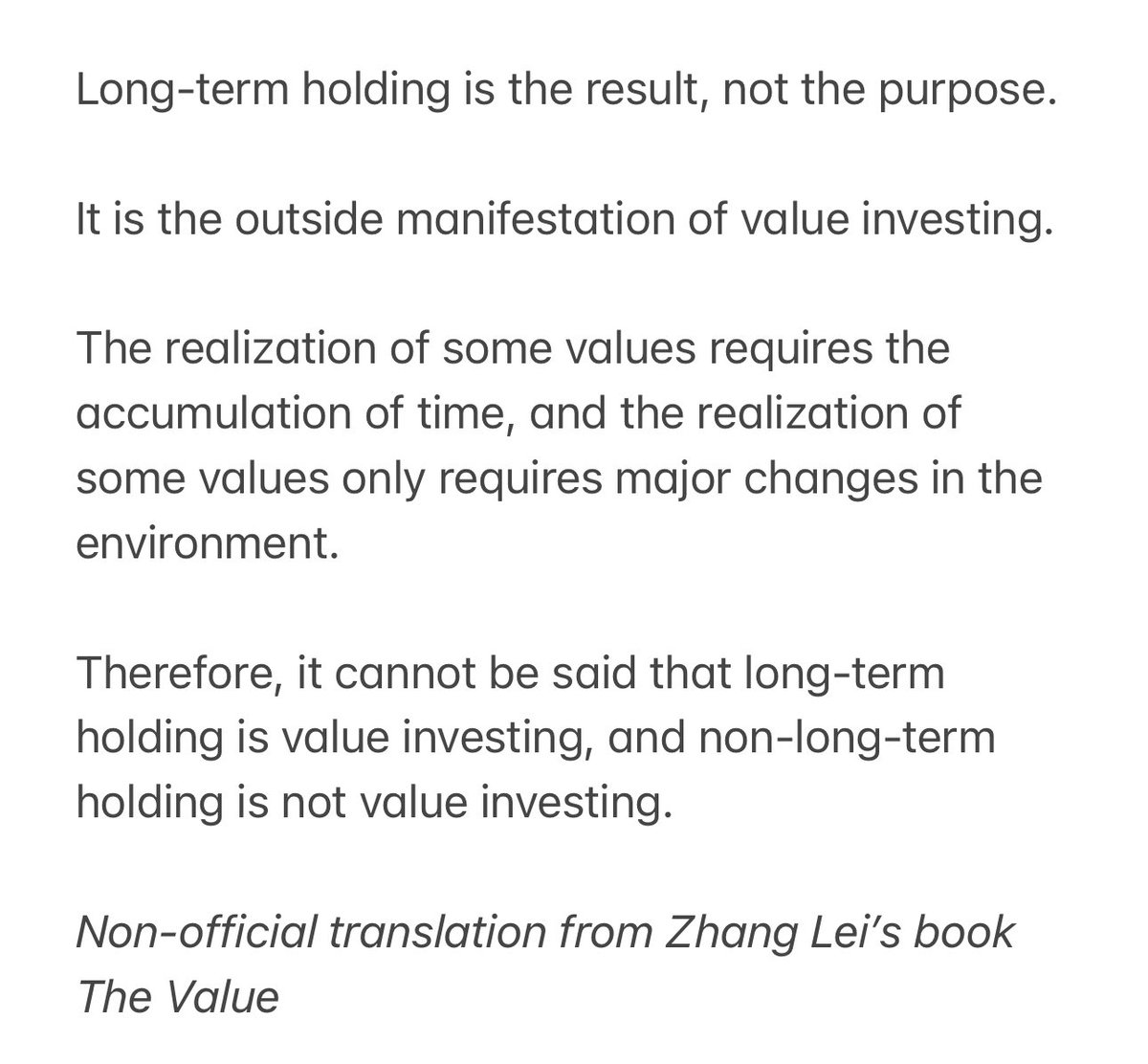
Therefore, it cannot be said that long-term holding is value investing, and non-long-term holding is not value investing.
[Non-official translation from Zhang Lei’s book The Value]
Long-term holding is the result, not the purpose.
It is the outside manifestation of value investing.
The realization of some values requires the accumulation of time, and the realization of some values only requires major changes in the environment.
@Theholisticpsyc Emotionally mature is one the most neglected parts in personal development.
Before handling shits around you, learn to master yourself!
Without stable emotions, one will easily make wrong decisions.
Great thread @Theholisticpsyc!
Thanks for sharing!