Woman of the Day 16 year old sprinter Betty Robinson (1911-1999) of Illinois took Olympic gold in the women’s 100m event OTD in 1928 at the Amsterdam Olympics, the first woman to win the 100m ever and even today, still the youngest person to hold the title.
You might think that’s quite an achievement and nothing can top it. You’d be wrong.
Young Betty knew she was fast. Quite how fast though, she didn’t know. There was no girls' track team at school, only one for boys. “I had no idea that women even ran then.”
Her science teacher, a former athlete and coach of the school team, watched Betty running to catch a train he had already boarded but decided she had no chance. The train was just too fast. As he settled into his seat, Betty took the seat next to him. The next day, he time-tested her over 50 metres along the school corridor and invited her to join the boys’ team so she could benefit from coaching. Four months later, she challenged the US record holder Helen Filkey and was selected for her country’s Olympics team.
The 1928 Summer Olympic Games held in Amsterdam hosted the first ever athletics events for women. They were only allowed to compete in the 100m, 800m, discus, high jump and 4x100m relay. Betty was the only US athlete to qualify for the 100m final. There was a bit of a hiccup when she realised she’d brought two left shoes by mistake but a team member came to the rescue and brought her the right pair.
Betty took gold with a speed of 12.2 seconds. Associated Press reported, “Bobbed hair flying to the breezes, the Chicago girl sped down the straightaway flashing a great closing spurt to beat the Canadian favorite, Fanny Rosenfeld, by two feet.”
“I can remember breaking the tape but I wasn’t sure I’d won. It was so close. But my friends in the stands jumped over the railing, came down, put their arms around me and then I knew I’d won. When they raised the flag, I cried.”
Betty and the rest of the US Olympics team returned home to a ticker tape parade. She was the main attraction in a parade of 1,200 cars, with 20,000 people lining the route. By the time the 1932 Olympic Games in Los Angeles was on the horizon, Betty was in peak condition and odds-on favourite to take gold again.
Sunday, 28 June 1931, was an exceptionally hot day and Betty wanted to cool off by going swimming but her coaches advised her not to - swimming uses different muscles. She decided to go up in a biplane piloted by her recently qualified cousin instead and cheerfully climbed aboard. When the plane reached between 400-600 feet, the engine stalled and the aircraft nosedived. They were both buried under the rubble.
Betty was unconscious. She had an 8” gash across her forehead, a broken arm and a badly mangled left leg. A rescuer put her broken body into the boot of his car and drove her to (her words), “an old people’s home, because he had a friend there who was an undertaker, and he thought I was dying.” The newspapers went into overdrive. One headline said, “Girl Runner Will Never Race Again” and another wrote, “Lying almost paralyzed on a cot, Betty Robinson today fought to win the hardest race she ever ran – a race in which the Grim Reaper was pacing her.”
She drifted in and out of consciousness during the eleven weeks spent in hospital and was then confined to a wheelchair, with one leg half an inch shorter than the other. “The doctor said if I hadn’t been in such good condition I wouldn’t have come out of it as well as I did.”
Doctors were sure she would never walk again. Little did they know. Betty managed it within two years. She couldn’t bend her knee though, so crouching at the starting block for sprints was out…but only the first runner on a relay team needs to do that.
Betty secured her spot on the US women’s relay team in time for the 1936 Berlin Olympics. “It was really a struggle to make the team in 1936. I had to work overtime.” The German team, having set a world record in their heat, were the favourites but Betty ran a blistering third leg and handed over to Helen Stephens who crossed the finishing line. Together with Harriet Bland and Annette Rogers, they won gold, Betty’s second in eight years.
She retired after the 1936 games, aged only 24, but directed her energies into volunteering as a referee and championing women’s sports.
In 1996, Betty, still officially the fastest girl in the world, carried the Olympic flame for the Atlanta Games at the age of 85. She died in 1999, aged 87.
He told his students to go to the windows.
Get out. Jump if you have to.
Then Liviu Librescu walked to the classroom door and pressed his body against it.
He was 76 years old. He weighed 140 lbs
The gunman was in the hallway.
It was April 16, 2007. A Monday morning. Solid mechanics class at Virginia Tech, Room 204. Twenty-two students, most of them 19 or 20 years old.
At 9:45 AM, gunshots echoed through Norris Hall. Room by room, the shooter was working his way down the corridor.
Liviu heard it. He understood immediately.
He had survived the Holocaust. He had survived a labor camp. He had spent decades living under Communist oppression. He knew exactly what evil sounded like.
He told his students to escape through the windows. Second floor — it was a drop, but they'd survive. Then he walked to the door and held it shut with his body.
The shooter tried to force it open. It wouldn't move.
He fired through the door. Wood splintered. Bullets came through.
Liviu stayed.
Behind him, students were climbing out the windows. Dropping to the ground. Running. One by one, all twenty-two of them got out.
The shooter kept firing through the door.
Liviu held it shut until every student was safe.
Then the bullets killed him.
When police arrived, they found his body at the door.
All 22 of his students survived. Not one was injured.
Liviu Librescu was born on August 18, 1930, in Ploiești, Romania.
He was Jewish. In 1941, when he was eleven years old, Romanian authorities sent him and his family to a labor camp. His father died there. Liviu survived. When the war ended, he was fifteen.
He went back to school. Studied engineering. Earned a doctorate from the University of Bucharest.
But Communist Romania had no interest in allowing a Jewish intellectual to succeed. He was blocked from academic positions. Passed over for jobs he deserved. He applied to emigrate. The government kept refusing.
Finally, in 1978 when Liviu was 48 years old — Israeli Prime Minister Menachem Begin personally intervened. Romania let him go.
He had spent most of his adult life trapped in a country that didn't want him.
In Israel, he taught at Tel Aviv University. Published over 300 papers. Became an international expert in aeroelasticity — the science of how air flows over aircraft wings.
In 1985, Virginia Tech offered him a position. He moved to Blacksburg, Virginia. He taught there for 22 years. His students loved him — demanding but kind, high standards, genuine care.
He was still teaching full-time at 76. Still publishing research. Still showing up every Monday morning for solid mechanics.
April 16 was the first day of Passover — the Jewish holiday celebrating liberation from slavery and oppression.
Liviu Librescu died on the day his tradition sets aside to celebrate freedom.
He spent his entire life escaping death and oppression by luck, by persistence, by the intervention of others. And on his last morning, he chose to stand at a door so that twenty-two young people could have the future he had fought so hard to reach.
He could have run. He could have hidden. He could have climbed out a window with his students.
He chose to stay.
The Virginia Tech shooting killed 32 people that day — the deadliest school shooting in American history at the time.
Room 204 had zero casualties.
Because a 76-year-old Holocaust survivor held a door with his body until every student behind him was gone.
His funeral was held in Israel. Students from Virginia Tech flew across the ocean to honor him. The Israeli government awarded him the Star of David Medal posthumously. Virginia Tech named a scholarship in his memory.
His son said his father died the way he lived — protecting others.
A man who survived everything evil threw at him for 76 years.
On his last day, he made sure 22 kids survived too.
Professor Liviu Librescu. August 18, 1930 — April 16, 2007.
Holocaust survivor. Labor camp survivor.
302 published papers. 22 years at Virginia Tech.
22 students out the window.
He held the door.
Paragraphs 4 and 5 here are just shocking. Amnesty International UK have made the the work of a rape crisis centre more difficult. It really is time for the Charity Commission to do something about this.
Of all the examples of gender clinics using fraudulent diagnosis codes, this is the most blatant.
Other clinics hedge their language, but Howard Brown has the subtlety of the Kool-Aid Man:
"If you are prescribed hormones, you will receive a diagnosis of Endocrine Disorder."
They are diagnosing their patients with diseases they don't have so that insurance companies will pay for hormones they don't need. The patients get harmed, the doctors get rich, and the whole thing is paid for by you and me, through insurance premiums or taxes.
And for all of those thinking - 'Is this a crime? Sure does sound like one.' You would be correct.
This is, in fact, a federal crime. Not civil. But criminal. And recent prosecutions of doctors who have been found guilty of similar crimes have resulted in prison sentences ranging between 8 years all the way to 59 years.
No child should die from a treatable condition.
Many countries are screening newborns and ensuring children get the care
they need. They started small – and built up.
Your country can too.
📋 Find out more: https://t.co/0jKFbvngTF
#EveryBabyCounts
The EU has invited Taliban officials to Brussels to discuss a migration deal — and today I am shaken and deeply disturbed by this.
This is the same Taliban that banned girls from secondary schools and forced them into marriage. The same Taliban that, earlier this month, arrested dozens of women in Herat for how they were dressed. The same Taliban that detains, beats and executes women who dare to speak out or break their rules.
Through its system of gender apartheid, the Taliban have erased women and girls from public life. Europe must not legitimise a regime responsible for one of the worst human rights crises in the world.
Any engagement with the Taliban must begin and end with the rights of Afghan women and girls.
I'm a cardiologist. A 42-year-old mother of two came to my office complaining of jaw pain and crushing fatigue. She ran half-marathons. Her EKG was normal. Another doctor had sent her home with anxiety medication.
When I got her into the cath lab, I found severe microvascular disease — plaque choking the tiniest vessels of her heart, the ones standard angiograms routinely miss.
Her heart had been starving in silence while everyone told her she was stressed.
She is alive today. Too many women like her are not.
Heart disease kills more women than every cancer combined. And medicine is still diagnosing it through a male lens.
84% of cardiologists report having patients in the past year whose heart disease was misdiagnosed by another physician. Women with a STEMI heart attack have a 59% greater chance of being misdiagnosed compared to men. Women with an NSTEMI — 41% greater chance.
The reason is structural. For decades, we screened, tested, and treated women using a template built for men.
Men's heart attacks announce themselves — the crushing chest pain, the clutched fist, the Hollywood collapse. Women's hearts whisper. Crushing fatigue that feels like wearing a lead vest. Jaw pain written off as TMJ. Nausea blamed on a stomach bug. An ache between the shoulder blades blamed on a long week. Shortness of breath blamed on being out of shape.
For years, medicine called these "atypical" symptoms. They are not atypical. They are female-typical. Half of humanity is not a variant.
And the biology runs deeper than symptoms.
Women have smaller hearts and narrower coronary arteries. Plaque doesn't only clog the big highway vessels — it hides in the microvasculature, the tiny branches feeding the heart muscle itself. A woman can have a heart attack with a completely "clean" standard angiogram.
SCAD — spontaneous coronary artery dissection — occurs 90% of the time in women. Often young, fit women with zero traditional risk factors. It's the leading cause of heart attack in women under 50, accounting for roughly one quarter of all cases in that age group. Most doctors have never diagnosed one.
And some of the most dangerous cardiac risk factors are hidden in women's medical histories where no one thinks to look:
Preeclampsia or gestational hypertension doubles to quadruples lifetime heart disease and stroke risk. Pregnancy is the body's first cardiac stress test — and these complications are early warning sirens, not closed chapters.
Autoimmune disease — lupus, rheumatoid arthritis, psoriasis — far more common in women, turbocharges inflammation and plaque formation at any age.
Cardiovascular disease in women aged 20-44 is projected to surge nearly 50% by 2050.
The youngest patients in my practice keep getting younger.
What every woman should ask her doctor — and what every doctor should be asking:
"Given my pregnancy history, autoimmune status, and family history — what is my full cardiovascular risk?" If they don't ask about preeclampsia or gestational diabetes, volunteer it.
"Should I have an Lp(a) test and a coronary calcium score?" Standard cholesterol panels miss too much. Lp(a) is genetic, one-time, and most women have never been tested.
"My tests came back normal but my symptoms haven't stopped — what's next?" Normal stress tests and angiograms can miss microvascular disease, spasm, and SCAD. Persistent symptoms warrant coronary CT angiography or cardiac MRI.
And if something feels wrong — say these exact words to your doctor: "I am concerned this could be my heart."
That single sentence changes the workup. Do not soften it. Do not apologize for it.
80% of heart disease is preventable. But the playbook has to be built for female biology.
Two decades ago, I wrote one of the first books warning that heart disease was the number one killer of women and that medicine was diagnosing it through a male lens. It was recognized by First Lady Laura Bush at the White House during the early years of the national conversation about women's heart health.
I'm haunted by how much of that book I could republish today unchanged.
The science has advanced. The awareness has grown. But the gap between what we know and what happens in the exam room is still costing women their lives.
Share this with every woman you love — and every doctor who treats them. READ MORE: https://t.co/4LRugiY8q2
Children aged less than five years face almost three times the risk of illness from unsafe food than older children and adults.
Despite being just 9% of the global population, young children suffer from nearly one third of all cases of foodborne diseases, particularly diarrhoeal diseases which can be deadly for this vulnerable age group https://t.co/g38UohgtDP
#WorldFoodSafetyDay
Clean hands save lives. 🤝
Infection prevention and control action, including #HandHygiene, can reduce the risk of health care-associated infections by up to 70%.
Let’s stop the spread of germs and reduce avoidable infections!
A virus carries no passport and can’t be deterred by weapons. Yet we spend trillions on arms while underfunding the health systems that protect us all.
Health security IS security.
The world needs better global leadership.
Bradley Richard Sirvio beat a man to death with a hammer before setting the victim’s house on fire.
A repeat offender, Sirvio has several other convictions that include multiple charges of assault, burglary, and theft.
He was quietly transferred to MCF-Shakopee, Minnesota’s only women’s prison, in November of 2023, after declaring he felt like a woman and started calling himself “Aurora.”
Female inmates have been told to share a shower with Sirvio, despite the convicted killer having had “no surgery whatsoever.”
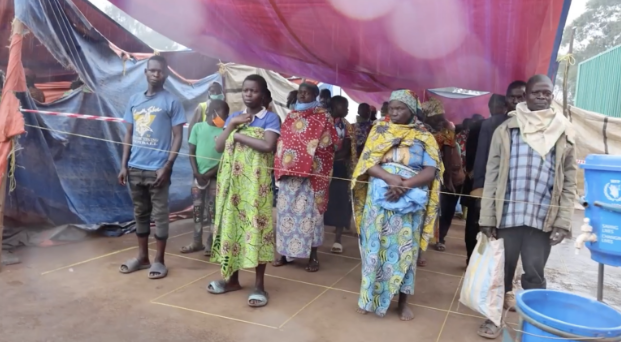
I had the opportunity to meet with Lieutenant-General Johnny Luboya Nkashama, the Governor of Ituri, which is currently the province in the #DRC reporting the highest number of cases in the ongoing #Ebola outbreak caused by the Bundibugyo virus.
I want to express my appreciation for his strong leadership during this complex crisis, which is further complicated by internal conflict and significant population displacement.
During our discussions, we agreed that a key priority for responding to the outbreak is to enhance the coordination among all health and humanitarian actors, ensuring their operations align with the government’s overall leadership in managing this response.
I emphasized to @WHO and our partners in Ituri the importance of actively listening to and supporting the community. The local population is best equipped to articulate their needs and to identify effective solutions for containing the outbreak.
It's #WorldNoTobaccoDay 🚭
Nearly 90% of daily smokers first tried tobacco before they were 18.
Every time nicotine feels like it's calming you down, it's actually tightening its grip.
Tobacco companies design their products to get young people stuck in a cycle of manipulation and addiction.
It’s time to expose their web of lies. Manipulation stops here.
Quitting is possible. Start now! 🔗 https://t.co/0r9hCWMfUd #TobaccoExposed
Even without vaccines or specific therapeutics, people can survive #Ebola disease caused by the Bundibugyo virus if they receive timely healthcare and seek treatment as soon as symptoms appear.
@WHO and many partners are supporting the establishment of Ebola treatment centres in #DRC. Yesterday, I witnessed the opening of one such centre in Bunia, which will ensure that patients in the community can access lifesaving care.
Together, we will stop this outbreak.
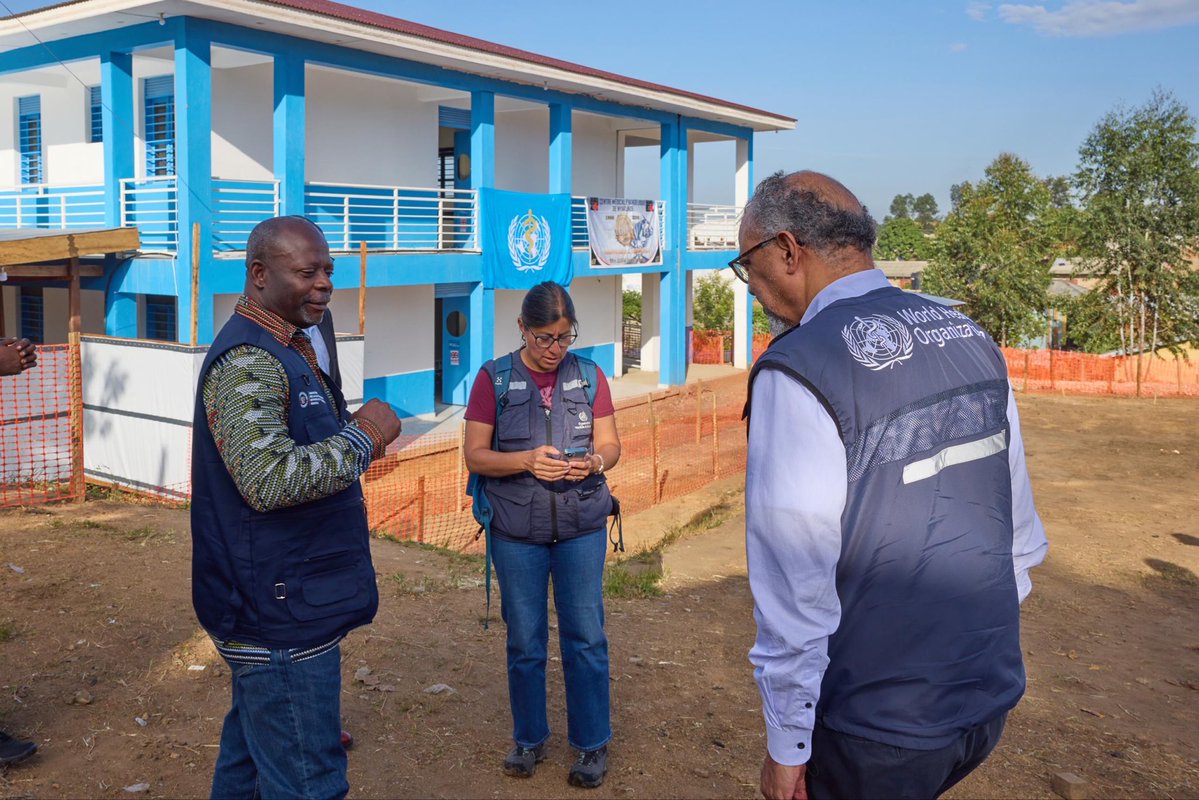
Proud to take in today’s opening of a 42-bed #Ebola treatment center in Bunia, #DRC.
Previously a new pediatric building of the Centre Évangélique Médical entrusted it to @WHO to convert into a facility to provide life-saving, patient centered care to people who have contracted the Bundibugyo virus causing the Ebola disease outreak.
WHO has worked hand in hand with the @MinSanteRDC and local authorities, and partners, including @ALIMA_ORG, @IMC_Worldwide, @UNICEF and @WFP to open the facility. The Centre also benefited from strong support from @FCDOGovUK, which has been a longstanding supporter of WHO’s in DRC.
Following today's opening, the facility started admitting patients.
The centre currently contains 21 beds for confirmed cases and 24 for suspected cases, with the potential of expanding up to 60 beds. In addition, WHO is constructing an annex with 24 beds that is expected to be ready in 2 weeks.
Once fully operational, it will be capable of caring for 65 to 80 patients confirmed or suspected of suffering from Ebola.
The centre represents not just a centre for acute and critical care. It also serves as a testament to the fact people can survive Ebola when symptoms are detected early and optimized supportive and holistic care is provided immediately.
Tobacco and nicotine companies deliberately design their products to hook you.
Sugars, flavours, and cooling agents all mask the harshness of nicotine so you inhale more, and get addicted faster.
But the grip of addiction can be broken. And the benefits are felt almost immediately:
⏱️ In 20 minutes, your heart rate drops
🫁 2–12 weeks, your lung function improves
❤️ In 1 year, heart disease risk is cut in half
Take the next step, break the addiction. Help is available! 👉 https://t.co/0r9hCWMfUd
#TobaccoExposed #WorldNoTobaccoDay