Assistant prof at @UniUtrecht, trying to make science as reproducible as non-scientists think it is. Blogs at @the100ci. Now also on the app with nice weather.
New paper!
Got the best news on the weekend: "Why hypothesis testers should spend less time testing hypotheses", by @LeonidTiokhin, @peder_isager, @lakens, and myself, has been accepted at Perspectives on Psychological Science.
https://t.co/53Q4V60Fvw
1. I love the idea of curing most (or all?) diseases. I just wrote an article about it https://t.co/t3LMmqWyjW and gave a TED talk about it too! https://t.co/hrg4GynBfF
We should be a lot more ambitious with medical innovation, and the history of science makes me more, not less, optimistic about what’s possible. Many diseases we once thought were untreatable turned out not to be.
2. But what’s possible isn’t the same as what’s going to happen, and it’s very different from claiming it’s possible within a timeline of 10 years.
Even if we grant exponential improvement in our technological capabilities, we still wouldn’t be able to cure most diseases within ten years, because technology is just one part of the equation.
One clear illustration of this is Eroom’s law, where the cost of drug development has risen despite massive technological advancement.
3. In our episode ‘Will AI solve medicine?’ (https://t.co/0VxwKjJZlt) Jacob Trefethen and I talk about how funding, institutions, incentives, better measurement, and a lack of data mean that we’ll still have massive gaps in solving diseases despite progress in AI.
These problems fall most heavily on neglected diseases, like rare and tropical diseases, where funding is often the barrier to progress. But they also affect diseases whose clinical trials are long and onerous, disease progression itself is slow, or poorly measured.
4. All this means that, if we want to speed up medical innovation and scale it up worldwide, we should also be unblocking the other barriers to medical progress with clinical trial reform, better data collection, better measurement instruments, better funding models, and more. (See our ‘Clinical Trials Abundance blog’ for some ideas https://t.co/FVLrSmPibQ)
It’s going to take a while before we solve these to the point where we can cure most diseases!
5. I thought the policy proposals in ‘Policy on the AI Exponential’ relating to drug development were quite vague and too brief to be useful.
But even if they were all implemented ideally, we would still be lacking cures for diseases for which financing or clinical trial infrastructure are the barrier, or where we’d need entirely new drug modalities to reach targets safely.
FWIW, I’m fairly skeptical of the use of ‘synthetic control arms’ if we actually want reliably effective medicines, not just faster clinical trials. But platform trials, which include shared control groups that many drugs are tested against, probably get at the intention.
6. I’m very skeptical of the idea that “many of the steps in the clinical process that previously required expensive and slow experiments may soon be done via AI simulation or analysis” ... but maybe this depends on one’s definition of ‘many’.
Human biology is extremely complicated and interactions between drugs and molecules in our body are very hard to predict, in part because of the number of combinations and biological states, and the level of measurement that’s possible in the lab; the way we get around this is through experimental data collection, i.e. clinical trials, but for some diseases, progression is very slow, so we’re not going to be able to collect that amount of data in time, even with perfect measurement.
Unfortunately public health datasets typically don’t include much drug-human body data, with the exception of, e.g., prescription datasets, which would be somewhat useful for analyzing historical drugs.
Getting pharma companies to pool sufficient individual participant data from clinical trials to improve these predictions, though, that would be exciting.
7. I sometimes worry about the deluge of AI ‘slop’ science that’s going to enter the academic literature.
We already needed to reform peer review, catch scientific fraud, improve data quality and rigour before AI (see e.g. my articles ‘Real peer review has never been tried’ https://t.co/7IP539vhoy and ‘The speed of science’ https://t.co/qw31iABVHY), but now it seems like science reform is even more important.
I could imagine a Pangram-like model for AI-written science papers, but that seems like it merely catches the tip of the iceberg of how deep the slop might go, if it involves unpublished data, for example. If AI use increases exponentially, we might end up seeing an AI science slop tsunami, which could affect predictions based on the literature. What’s the solution to this?
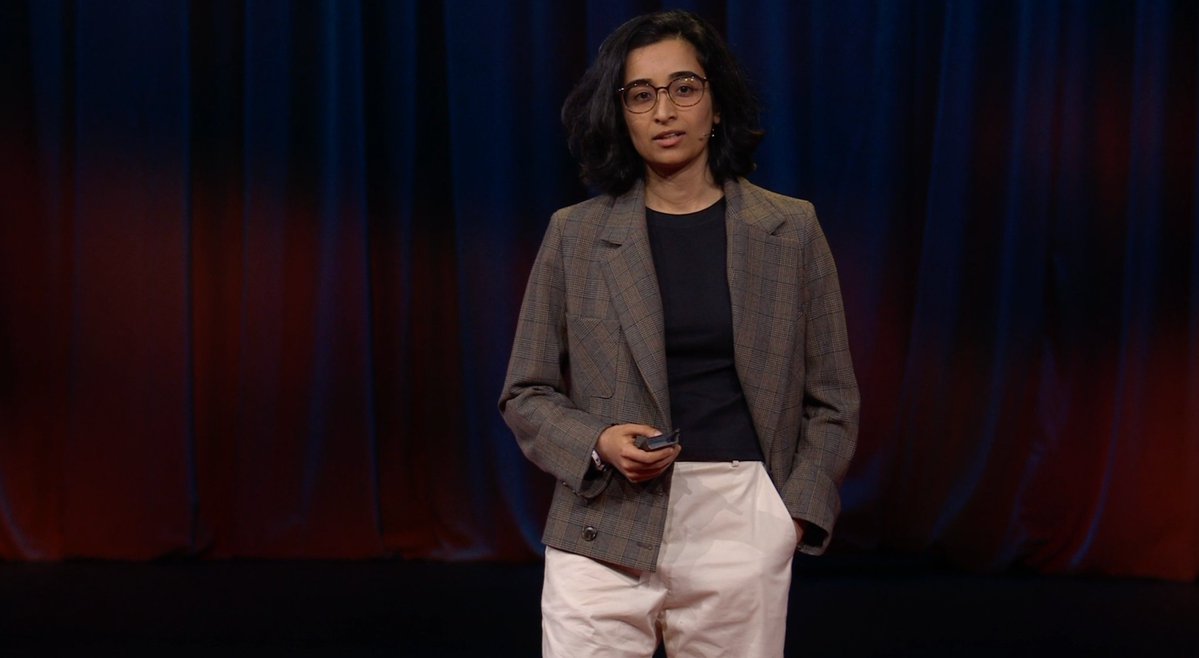
It's finally here! I gave a TED talk in April in Vancouver, and it was released online today.
You can watch it here:
https://t.co/kNYNzElUvJ
I've also adapted it into an article, which was published last week: https://t.co/XojHa75ZpJ
New paper w/ @LeonidTiokhin & @lakens!
Registered Reports (RRs) are great for science b/c publication is guaranteed before results are known, reducing publication bias & QRPs. This supposedly also makes them great for *scientists*. But is that really true?
https://t.co/ebUGNDUn6W
New episode of HARD DRUGS!
Are miracle drugs hiding in plain sight?
GLP-1 drugs have transformed diabetes and obesity, can help treat heart disease, kidney disease, sleep apnea, and may also work against dementia.
But they’re far from the only medicine with more multiple uses. Aspirin, colchicine, minoxidil, Botox, and, famously, Viagra were all found to treat more conditions than expected. (Did you know that BCG vaccines are used to treat bladder cancer?)
In fact, about a third of FDA-approved small molecule drugs are later approved for a second use.
But sometimes, it takes several decades - and public funding - to learn whether existing drugs could work for more conditions.
Moxidectin, for example, went untested for human diseases for decades; we now know that it can cure ~70% of whipworm infections in kids. Aspirin was used for over a century before we found it had cardiovascular benefits.
Why? The commercial incentive to test further is time-limited: once a drug goes off-patent and generics can enter, drug developers can get undercut, so it’s no longer worth it to run expensive clinical trials to test other uses.
The problem is even larger for tropical diseases, which are often not profitable to treat in the first place.
The result is that we’re missing out on knowing about a lot of additional uses of already-approved drugs!
There may be more miracle drugs hiding in plain sight. And economists estimate the ‘missing innovation’ would be worth 100 to 400 billion dollars in social value annually(!)
How do we solve this?
In this episode, @JacobTref and I chat about all the above and more!
Works in Progress is hiring!
We are looking for a Social Media Producer and a Commercial Associate. These are full-time, salaried roles.
Social Media Producer: Someone who can run and grow our social media accounts, clip longer Youtube videos for platforms like IG and Tiktok, and make original content. Please be extremely online and be able to find the most shareable bits of WIP's work. Salary is £35,000–£60,000. https://t.co/NVNlOgaPit
Commercial Associate: Someone who can work with our Head of Commercial to grow our revenues via advertising, subscriptions, events, marketing, and anything else that can make a return. We'd like a real "grafter" for this – you must be very happy speaking to people on the phone! Salary is £35,000–£50,000. https://t.co/84Cg2eSr5q
We are growing quickly and have a lot of fun projects in the pipeline. We're looking for bright, energetic people to join us. Success in these roles will lead to further advancement down the line.
Both jobs are based in London, though this is negotiable in the case of the Social Media Producer for an exceptionally good candidate.
This paper has been a long time in the making, but it’s been a super fun and interesting journey. Special thanks to @LeonidTiokhin, who convinced me that models from biology can be very fruitful for meta-science and taught me a ton in this process! 17/17
If you’re curious about alternative model configurations (or unhappy with our assumptions or parameter settings), feel free to play with the code yourself: https://t.co/YvxXzkyBsN 16/