📺 | E aqui estou, meia noite e ainda tentando processar o último episódio da 1a temporada de 'Os Testamentos: Das Filhas de Gilead' (Tesoura de Poda).
E assim como o episódio anterior, esse último episódio é recheado de uma carga dramática absurda e vale destacar a entrega na atuação da Chase Infiniti, esse episódio exigiu bastante da atriz.
Um episódio lotado de revelações, inclusive revelações relacionadas à série original (O Conto da Aia) e muitas surpresas. Bom demais sempre que a June (Elisabeth Moss) entra em cena, e um dos pontos altos desse episódio é justamente quando ela aparece a primeira vez e confronta a Daisy e daí vem uma revelação que me fez mudar de posição no sofá (sem spoiler aqui).
O final foi simplesmente poético, ver o pequeno "exército" que a Daisy está montando caminhando na contramão das outras meninas foi de um simbolismo absurdo.
Uma pena essa série não ter tanta popularidade aqui no X. Essa 1a temporada beira a perfeição, uma pena que muita gente não chegará a aprecia-la, sou muito feliz por lá atrás eu ter dado uma chance à 'O Conto da Aia' e desde então nunca mais larguei esse universo.
After overtaxing you, drowning you in debt and cooking the shadiest fuel deals in our history, this govt now wants applause for ‘negotiating’ a crisis it created.
They hike prices, blame a ‘global crisis’, then compromise a few loud voices into silence and call it leadership.
Kenya doesn’t need photo‑ops and KSh10 gimmicks on diesel. We need the extractive cartel state dismantled.
We must Reset, Restore & Rebuild Kenya #Ukombozi
@UGMParty@Maraga27@ntvkenya@citizentvkenya@tv47digital@StandardKenya@TheStarKenya@NationAfrica
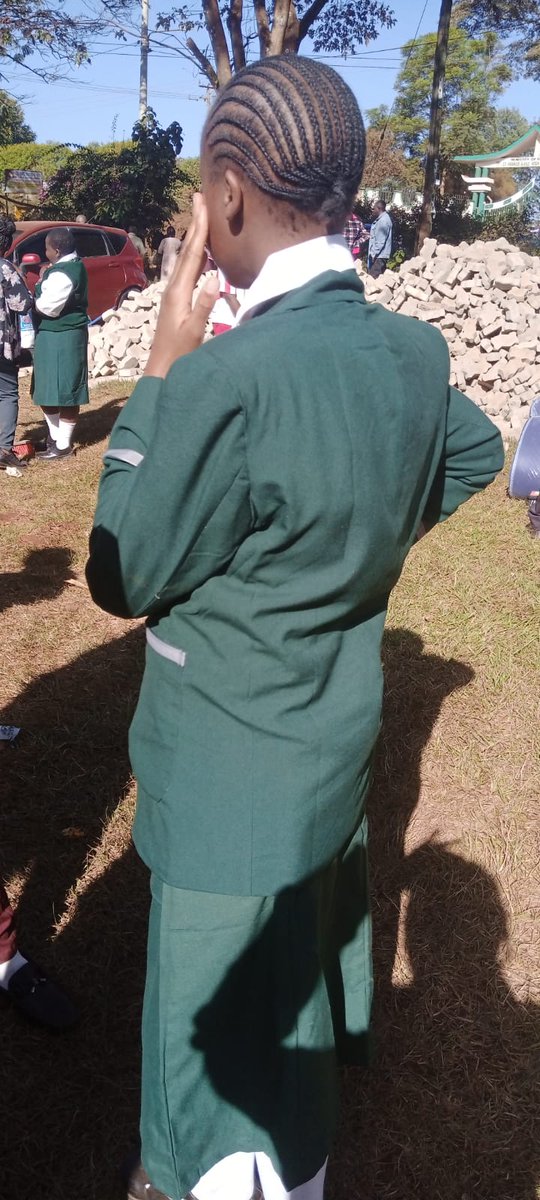
A 16 year old girl vanished from one of the most guarded girls schools in Kenya and the people running that institution are behaving like we are disturbing their peace by asking questions.
Read that again slowly.
A WHOLE CHILD disappeared.
Not outside a nightclub.
Not in a forest.
Not during chaos.
Inside a boarding school.
Inside St. Francis Mangu Girls in Kiambu County.
And what is shocking is not just the disappearance of Grace Wangare Thini.
It is the coldness.
The silence.
The arrogance.
The complete absence of urgency from people entrusted with children.
Grace disappeared on 10th April 2025.
The school only realised she was missing the following day after a teacher attending the third lesson noticed she was absent from class.
Meaning for hours nobody knew where she was.
Nobody checked.
Nobody panicked.
Nobody cared enough to immediately raise alarm.
This is a Form Four student living under school control, not an adult renting her own apartment in Nairobi.
So how does a child disappear from a highly secured boarding school without answers?
Today together with Maina Magret and Amos Koech we went to that school seeking one thing only:
Truth.
But what we found was walls.
The principal refused to face us.
The secretary redirected us like we were beggars asking for favours instead of citizens demanding accountability for a missing child.
Then came the deputy principal Mrs Gitonga in charge of curriculum.
The attitude alone told a story.
Arrogant.
Dismissive.
Defensive.
The kind of behaviour public officials display when they know something is wrong but believe ordinary Kenyans are too powerless to push further.
Simple questions became a problem.
Who last saw Grace?
Which teacher was on duty?
Which gate did she pass?
Was CCTV reviewed?
Were students questioned immediately?
Did she leave alone?
Was she assisted?
Why the delay in informing the parents?
No straight answers.
Only referrals.
Excuses.
Bureaucratic games.
They referred us to the Sub County Education Director over 40 kilometres away as if this is a paperwork issue and not a missing child crisis.
Meanwhile Grace’s parents are dying slowly.
Her father Mr Thini is battling hypertension from stress and emotional torture.
Her mother Eunice Wairimu is surviving on tears, prayers and hope.
Every day they travel from Naivasha near Wanyua Junction searching for answers no parent should ever beg for.
Imagine waking up every morning not knowing whether your daughter is alive, injured, kidnapped or dead.
Then imagine the institution responsible for her safety treating you like an inconvenience.
That is the cruelty this family is facing.
And Kenyans must stop normalising this madness.
A school cannot lose a child then hide behind offices and titles.
This country has become dangerously comfortable with institutional silence.
When poor families cry, powerful offices close ranks.
When children disappear, systems protect reputations first before human life.
That is why this case must not die.
The DCI, Ministry of Education, Child Protection agencies and every security organ in Kenya must move with speed and seriousness.
Because Grace Wangare Thini is not just another name.
She is somebody’s daughter.
And tonight somewhere in Kenya, two parents are staring at a silent phone praying it rings with news that their child is still alive.
A 16 year old girl vanished from one of the most guarded girls schools in Kenya and the people running that institution are behaving like we are disturbing their peace by asking questions.
Read that again slowly.
A WHOLE CHILD disappeared.
Not outside a nightclub.
Not in a forest.
Not during chaos.
Inside a boarding school.
Inside St. Francis Mangu Girls in Kiambu County.
And what is shocking is not just the disappearance of Grace Wangare Thini.
It is the coldness.
The silence.
The arrogance.
The complete absence of urgency from people entrusted with children.
Grace disappeared on 10th April 2025.
The school only realised she was missing the following day after a teacher attending the third lesson noticed she was absent from class.
Meaning for hours nobody knew where she was.
Nobody checked.
Nobody panicked.
Nobody cared enough to immediately raise alarm.
This is a Form Four student living under school control, not an adult renting her own apartment in Nairobi.
So how does a child disappear from a highly secured boarding school without answers?
Today together with Maina Magret and Amos Koech we went to that school seeking one thing only:
Truth.
But what we found was walls.
The principal refused to face us.
The secretary redirected us like we were beggars asking for favours instead of citizens demanding accountability for a missing child.
Then came the deputy principal Mrs Gitonga in charge of curriculum.
The attitude alone told a story.
Arrogant.
Dismissive.
Defensive.
The kind of behaviour public officials display when they know something is wrong but believe ordinary Kenyans are too powerless to push further.
Simple questions became a problem.
Who last saw Grace?
Which teacher was on duty?
Which gate did she pass?
Was CCTV reviewed?
Were students questioned immediately?
Did she leave alone?
Was she assisted?
Why the delay in informing the parents?
No straight answers.
Only referrals.
Excuses.
Bureaucratic games.
They referred us to the Sub County Education Director over 40 kilometres away as if this is a paperwork issue and not a missing child crisis.
Meanwhile Grace’s parents are dying slowly.
Her father Mr Thini is battling hypertension from stress and emotional torture.
Her mother Eunice Wairimu is surviving on tears, prayers and hope.
Every day they travel from Naivasha near Wanyua Junction searching for answers no parent should ever beg for.
Imagine waking up every morning not knowing whether your daughter is alive, injured, kidnapped or dead.
Then imagine the institution responsible for her safety treating you like an inconvenience.
That is the cruelty this family is facing.
And Kenyans must stop normalising this madness.
A school cannot lose a child then hide behind offices and titles.
This country has become dangerously comfortable with institutional silence.
When poor families cry, powerful offices close ranks.
When children disappear, systems protect reputations first before human life.
That is why this case must not die.
The DCI, Ministry of Education, Child Protection agencies and every security organ in Kenya must move with speed and seriousness.
Because Grace Wangare Thini is not just another name.
She is somebody’s daughter.
And tonight somewhere in Kenya, two parents are staring at a silent phone praying it rings with news that their child is still alive.
Behind that ranger sits part of 105 tonnes of ivory worth roughly $150 million on the black market. Days after this photo, Kenya soaked the lot in jet fuel and burned it. Critics warned it would backfire. A decade on, ivory prices have crashed and poaching is at a 20-year low.
The piles held the tusks of around 7,000 elephants and the horns of 343 rhinos. It was the biggest ivory burn in history. The full stockpile was about 5 percent of all the ivory sitting in African government storerooms at the time. Kenya's entire annual environment budget was smaller than what they were about to set on fire.
The argument against burning was simple. Cut the supply, push up the price, poachers come back harder. One conservation economist compared the move to Iraq going offline during the Iran-Iraq war, when oil prices spiked. Burn $150 million of ivory and the same shock should hit.
None of that happened. Raw ivory in China peaked at around $2,100 per kilogram in 2014. Then Kenya burned its stockpile in April 2016, China shut its legal ivory market in December 2017, and similar bans rolled through the US, Europe, and elsewhere. The price broke. By 2020, the going price across Africa had fallen to about $92 per kilogram. In Kenya specifically, what a poacher could get for a kilo of raw tusk dropped from $190 in 2014 to $52 by 2018. Inside China, the share of people saying they would ever buy ivory fell from 43 percent before the ban to 18 percent by 2020.
The bet was based on an old number. A 2014 Sheldrick Wildlife Trust study found that one live elephant brings in around $23,000 a year in tourism revenue. Across a 70-year lifespan, that is roughly $1.6 million. Its tusks, ripped out, sell for around $21,000. That is the 76-to-1 ratio that gets thrown around in conservation circles. Kenya runs around 10 percent of its economy on tourism today, almost all of it built around live wildlife.
The numbers since have backed the call. The UN's 2024 wildlife crime report says the global ivory market is shrinking, with seizures and poaching both down. A 2024 Colorado State study found African elephant numbers fell 77 percent on average between 1964 and 2016. After 2016, things turned. Forest elephant decline slowed from 7 percent a year to under 1. Savanna elephant poaching is at its lowest level since global tracking started in 2003.
The ranger in this photo is guarding ivory Kenya was about to destroy on purpose. Within four years, the market for what he was guarding had collapsed.
watching the testaments which is the handmaid sequel and i love how they capture this canon female experience even in a theocracy where all the girls are brainwashed into piousness. even in gilead it still be a bitch cloaked down to her fuccin ankles think YOU’RE weird
Senator Okiya Omtatah has taken the battle to the High Court with a petition that could change Kenya’s history.
Omtatah argues that of the Sh9.11 trillion borrowed between 2014 and 2024, only Sh2.57 trillion was legally approved by Parliament through Appropriation Acts. He alleges the remaining Sh6.54 trillion is "odious debt" money borrowed unconstitutionally, never appearing in any budget, and never benefiting the people.
The petition specifically targets USD 7.1 billion in Eurobond debt, asking the court to declare it null and void.
In recent sessions, the IMF has attempted to plead diplomatic immunity, seeking to be struck from the case. Omtatah’s team has countered this, arguing that an international organization cannot commit "economic terrorism" by funding illegal processes and then hide behind immunity to avoid accountability.
The Chief Justice has assigned a multi-judge bench to determine this case, acknowledging that the question of whether a nation can repudiate "illegal" sovereign debt is a matter of supreme public interest.
70 and 80 year old people are generally unemployable due to physical and mental decline but for some reason we allow them to run the entire fucking country.