A study of more than 8,400 adults aged 70 and older found that those with persistently elevated levels of NT-proBNP, a marker of #HeartStress, had a higher risk for #CardiovascularDisease and death. However, adults whose elevated levels returned to normal had risks similar to those who never showed signs of heart stress. The findings suggest tracking changes in NT-proBNP over time may help improve cardiovascular risk assessment in older adults. Read here: https://t.co/y6n83yYxu0
It’s so nice to meet ISH President Prof. Stergiou and President Elect of WHL Prof. Parati at the 2024 CHM. Had a great time to discuss future projects and look forward to make contributions.@ISHBP
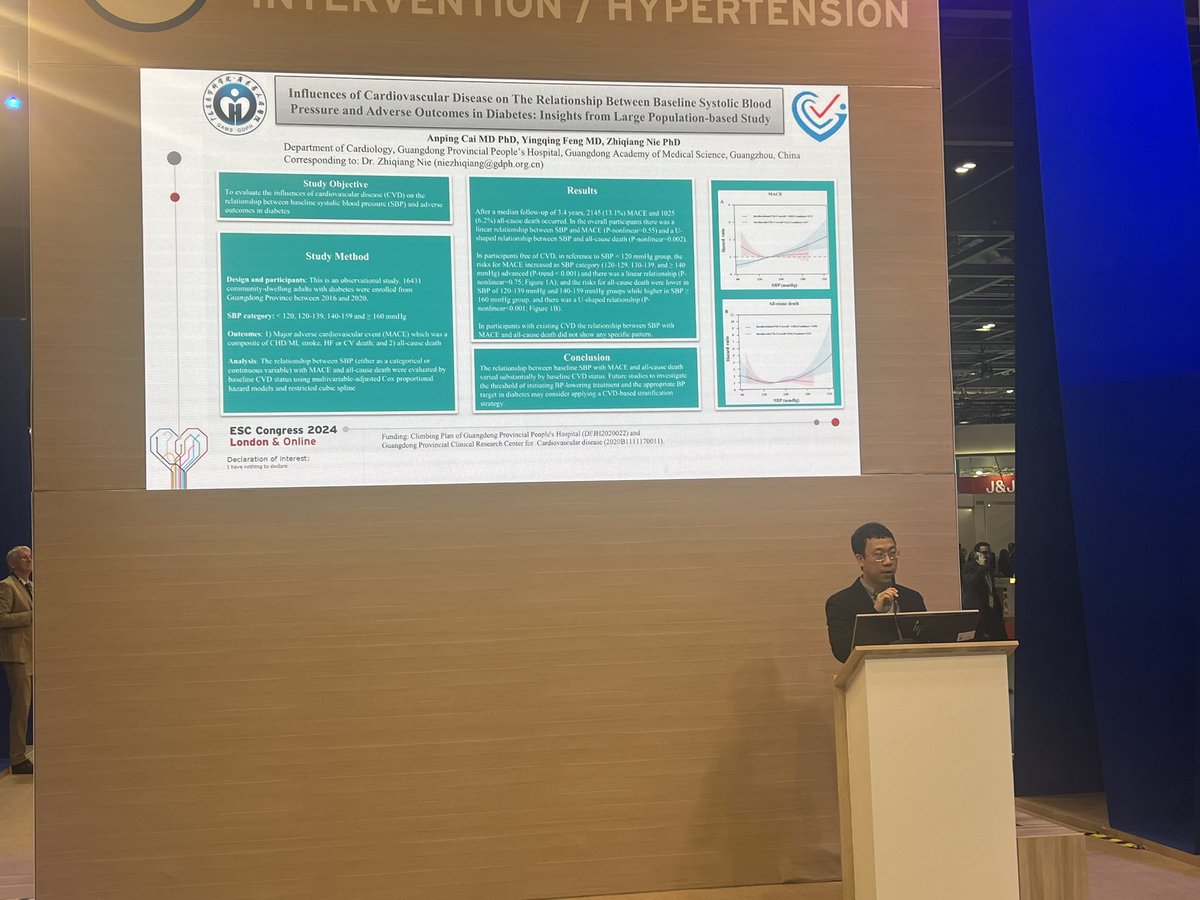
In people w/t diabetes at what SBP levels to start BP-lowering drugs and the SBP target to achieve are mixed, which might be confounded by baseline CVD status. Our study support this hypothesis and also suggests when need to initiate treatment and the SBP goal.
@ISHBP it’s a great honor to be an ISHF. Hypertension is a major risk factor for cardiac remodeling and HF. Wish to collaborate w/ ISH colleagues to combat the final war.
@ISHBP it’s a great honor to be an ISHF. Hypertension is a major risk factor for cardiac remodeling and HF. Wish to collaborate w/ ISH colleagues to combat the final war.
2014 my first time to ESC in London and won the best poster award. Nearly 10 years passed and came back to London to present my research. So nice to meet several leaders and experts in HF fields.
Obesity commonly coexists w/ HTN, both jointly contribute to LVH, a precursor of heart failure. Our study suggests that a SBP target of less than 130 may be needed for these patients even though free of CVD.
Our paper has been online. Our prior paper reported the prevalence of HF stages in China, and this paper we reported the prognostic implications of HF stages. Honor to be the co-first author. Dedicated efforts are urgently needed to prevent HF in China.
Maintaining healthy behaviors and lifestyle as suggested by the AHA is crucial to prevent HF development. Our recent population-based study showed that.