Researcher, PhD, energy & development, energy transition, Founder AG sustainable solutions, 🇳🇱+ 🇪🇹
Opinions are my own and not the views of my employer
Full article: Integrating household energy needs and agricultural productive uses in energy planning can enhance economic development in Sub-Saharan Africa https://t.co/Cwt8UGvR9k
@edo_abraham@stevogallo
📢Final application call
@IRENA opens registration for Winter Youth Programme-a comprehensive 5-week training program designed to equip the next generation of energy professionals with the essential skills & knowledge necessary to tackle both current and future challenges in the energy sector. Learn more & apply now⤵️
https://t.co/LXwZcSg1Zi
Most assessments of global warming use 1850-1900 as a baseline, but researchers have now established a new pre-industrial reference by using Antarctic ice cores to estimate the average temperature before 1700
https://t.co/PAzLj0atBy
The world population grew fast over the last 60 years, but farmers grew fruits and vegetables even faster—
For almost all of human history, food was scarce for nearly everyone. The reason for this perpetual scarcity was that whenever food production increased, it did not lead to more food per capita, but to more people.
Food production did not increase per capita. Population pressure ensured that living standards remained only barely above the subsistence level. Economic historians refer to this mechanism as the Malthusian Trap.
This changed in the last decades. More and more societies around the world broke out of the Malthusian Trap. We see this in the data as increasing food production in per capita terms. The chart shows that farmers have grown many fruits, vegetables, and nuts faster than the world population has increased.
The increase in global agricultural output was crucial for the reduction of hunger and famines that the world achieved in this period. Whether or not we will be able to end hunger globally will depend on whether this increase in food production will continue.
(This Daily Data Insight was written by Max Roser.)
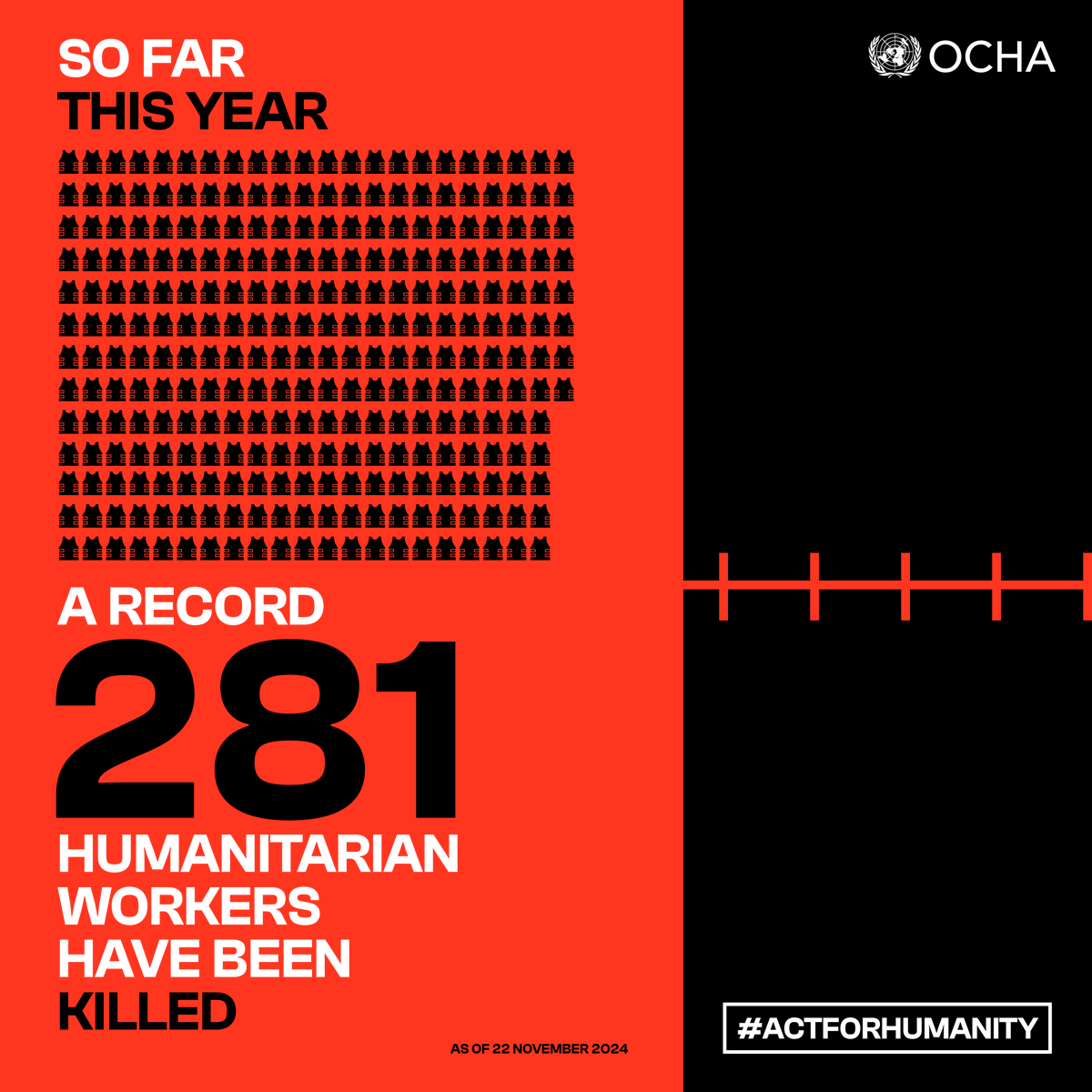
2024 has become the deadliest year on record for humanitarians, driven by the war in Gaza.
“This violence is unconscionable and devastating to aid operations,” @UNReliefChief said, calling for the protection of humanitarians workers.
More from @UNOCHA: https://t.co/MO5CrTgYxg
WE HIRE!
If you are interested in climate change, policy analysis, transformation of energy and land-use, then apply here.
BTW: 30 holidays per year can be freely chosen; on top of legal holidays like X-mas, New Year, Easter, Pentecost ...
https://t.co/mM6ttoxCyw
Forcing people to change their passwords is officially a bad idea
A US standards agency has issued new guidance saying organizations shouldn’t require users to change their passwords periodically ― advice that is backed up by decades of research
https://t.co/LTAetlX3kh
https://t.co/jHflHBwD88
Africa has potential to develop a green hydrogen economy
❌ But prevailing extractive realities pose a barrier
🤝 To break the cycle, Africa must demand equitable partnerships & investment in technological transfer, say @Antex_GD et al. @nlenvironagency
➡️ https://t.co/7KoVPFg6MO
"...keen to ignore the contributions generations of British taxpayers have made to keep them safe and share them with the world"
They are stolen!🤣🤣🤣
https://t.co/rLANHBOfJP
I’ve handled the review of > 1000 papers at @nature. Over time, you notice aspects of presentation on which reviewers tend to comment. In the interests of minimizing hassles during review, I offer the following suggestions (a bit targeted to climate papers).