Many people think of AI as the train.
In reality, AI is the railway.
The real shift is the infrastructure being built today: compute, energy, talent, and digital stack.
Countries that invest in this infrastructure will shape the future of AI.
My conversation with @BCG at MWC.
AI earns its place when it moves conversion and shortens time to value.
Execution becomes the constraint: teams must test in real contexts and connect use cases to revenue, where decisions accelerate.
Source @Gartner_inc Link https://t.co/5OJ7wHQWKY via @antgrasso
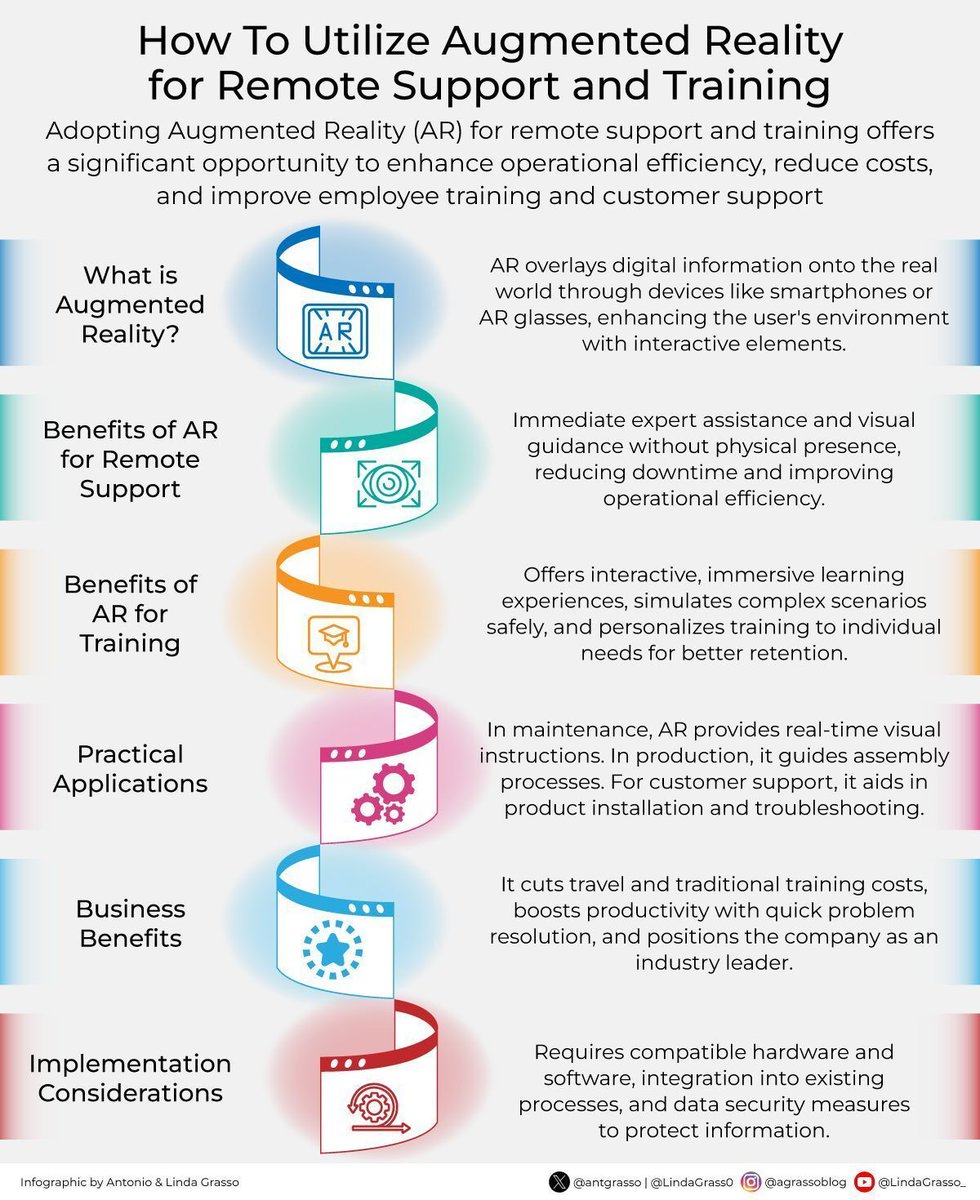
Augmented Reality enters field work, where technicians receive visual guidance while keeping their hands on task. Remote experts join the scene via a shared view, removing physical barriers that delay maintenance and guiding operations with digital overlays.
Microblog @antgrasso
You use AI as an assistant, and that can improve the way you work.
But you must keep judgment active, because convincing outputs can still miss context, hide assumptions, or lead to wrong decisions.
Microblog by @antgrasso#ResponsibleAI#AILeadership
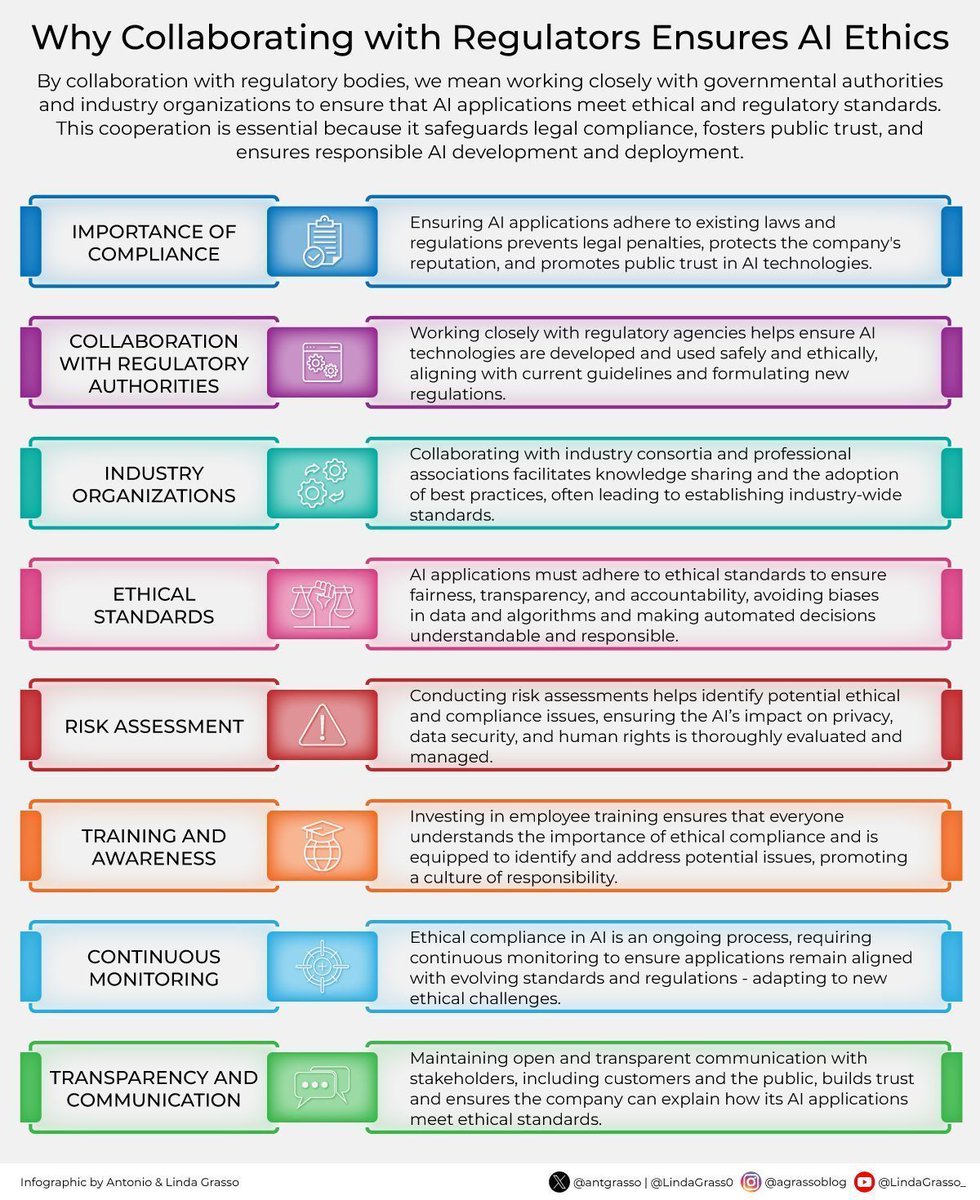
AI ethics becomes practical when companies work with regulators early.
Clear rules help teams design safer systems, reduce legal risk, and explain AI decisions with more confidence.
Microblog @antgrasso
AI agents move from pilots to core operations across sales, research and security. Margins and skills pressure push teams to automate decisions, while keeping control tight.
Source @Gartner_inc Link https://t.co/oreMbhZUI7 via @antgrasso
Agentic AI is pushing tech services to pick a clear role, from enabler to full solution builder. Each choice affects skills and delivery, so organizations must decide where to invest and how to scale.
Source @McKinsey Link https://t.co/7zd92KDTou via @antgrasso
AI gives leaders more signals, but certainty still remains out of reach. The real shift is learning to compare model outputs, explain trade-offs, and act responsibly while evidence keeps changing.
Microblog @antgrasso#DecisionIntelligence#AI#Leadership
We're moving from "do this task" to "achieve this outcome." That's a much bigger change than most people realize.
The most interesting AI systems won't just execute instructions—they'll continuously improve their path to the goal.
#HyperagentPartner
@radeglia59219 Condivido il senso del ragionamento. L’AI restituisce molto della qualità con cui viene guidata, per questo la differenza resta nella capacità umana di porre domande migliori e mantenere il controllo sul processo.
You use AI as an assistant, and that can improve the way you work.
But you must keep judgment active, because convincing outputs can still miss context, hide assumptions, or lead to wrong decisions.
Microblog by @antgrasso#ResponsibleAI#AILeadership
@GlobalAntM Muy cierto. En infraestructuras críticas, el contexto operativo marca la diferencia y la IA debe apoyar el análisis sin sustituir la responsabilidad humana.
@Queen404x Yes, that is the right mindset. AI becomes much more helpful when we stay attentive and use our judgment before turning suggestions into action.
@adelbucetta I see your point, and the quality of the question certainly matters.
At the same time, even a well-framed prompt still needs review, because AI can miss context or make assumptions that are not visible at first.
@S4DInsights I agree, the risk starts when convenience replaces review. AI can support the workflow very well, but people still need to stay responsible for the final decision.
Human-AI collaboration works best when people stay responsible.
AI can process data at scale, while humans review outputs and keep accountability visible across daily work.
Microblog @antgrasso#HumanAI#AIGovernance
Microservices break applications into smaller parts so systems can change without slowing everything down.
As complexity grows, this approach helps teams update features faster, fix issues locally, and keep services running without large disruptions.
Microblog by @antgrasso
What changes in practice:
- Teams work in parallel on different services, reducing delivery time
- Issues stay contained within a service instead of spreading system-wide
- Scaling targets only what is needed, improving resource use
- APIs make communication between services clearer and more structured
- New technologies can be introduced without rewriting the whole system
Strong coordination is still required to keep all services aligned and working together.
Product design is moving beyond screens as spatial computing introduces a direct way to explore and validate ideas in 3 dimensions.
As interaction shifts into immersive environments, teams can test concepts earlier and reduce reliance on physical prototypes
Microblog @antgrasso
@TMobileBusiness In critical environments, resilience depends on more than bandwidth.
The real difference is how traffic is prioritized when systems run at the same time, so essential workflows stay protected under peak load.
@TMobileBusiness