Retired Naval Officer and Aerospace and Defence Executive. Currently consulting in Aerospace, defence, security and maritime sectors. Active volunteer.
Téa Johansson a high school student understands “climate” more than Guilbeault & the rest of eco insane within our Government. Do you think Carney will look up to her like he did Greta?
This is a must watch & share.
Carney doesn't know what's coming! Conservative candidate for Nepean Barbara Bal has a large and enthusiastic team of volunteers who are ready to show central banker Carney the door to defeat.
Let's go!
Listen to his words very carefully. This is the kind of empathy and passion for the lives of everyday Canadians you will NEVER hear from Mark Carney. Carney lives in an elitist bubble that is totally unrelatable to the average Canadian.
Vote wisely!🇨🇦
This is @BarbaraBalCPC
She will be running against Mark Carney in Nepean.
Two days ago she had 1400 followers on here.
Today she has 40,000+
Let's get her to 50K and beyond 🚀
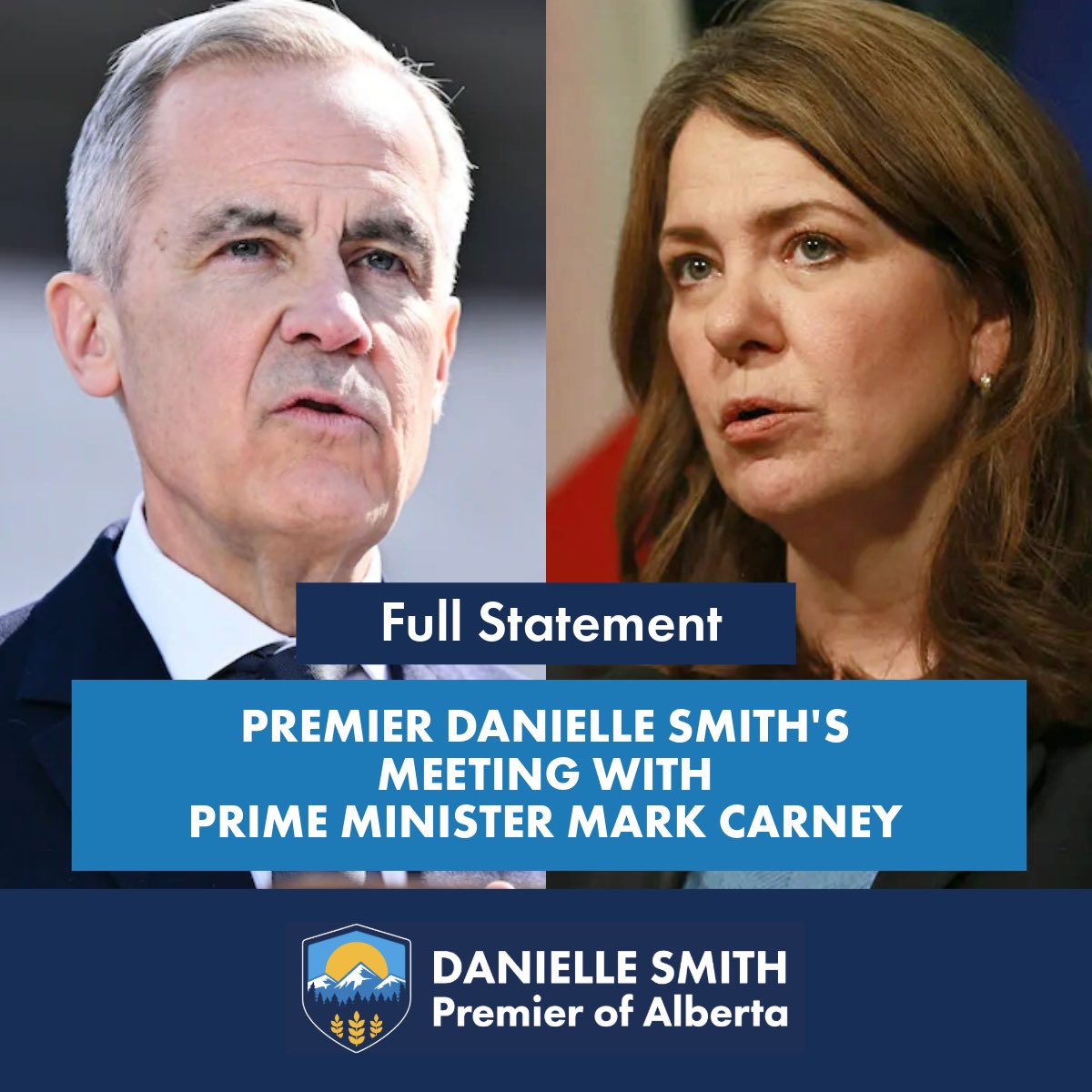
At his request, I met with Prime Minister Mark Carney @MarkJCarney today. We had a very frank discussion in which I made it clear that Albertans will no longer tolerate the way we've been treated by the federal Liberals over the past 10 years.
I provided a specific list of demands the next Prime Minister, regardless of who that is, must address within the first six months of their term to avoid an unprecedented national unity crisis.
This includes:
• Guaranteeing Alberta full access to oil and gas corridors to the north, east, and west
• Repealing Bill C-69 (aka. “no new pipelines act”)
• Lifting the tanker ban off the BC coast
• Eliminating the oil and gas emissions cap, which is a production cap
• Scrapping the so-called Clean Electricity Regulations
• Ending the prohibition on single use plastics
• Abandoning the net-zero car mandate
• Returning oversight of the industrial carbon tax to the provinces
• Halting the federal censorship of energy companies
I also made it clear that Alberta, as owner of the resource, will not accept an export tax or restriction of Alberta’s oil and gas to the United States, and that our province is no longer agreeable to subsidizing other large provinces who are fully capable of funding themselves. Lastly, I made it clear that federal mismanagement of Jasper and Banff national parks resulted in last year’s tragic wildfire in Jasper and is endangering Banff, and the situation must be rectified immediately.
With the federal election about to be called, I encourage all Albertans to get involved in what is likely one of the most pivotal and important elections in our nation’s history, and to support the party and candidates that have consistently advocated for freeing Alberta from federal overreach and the repeated economic attacks our province has faced from Ottawa over the past 10 years.
Trump made Trudeau cry on national TV.
And he tried to gaslight us at the same time.
The Liberal party of Canada is the most embarrassing party in the universe.
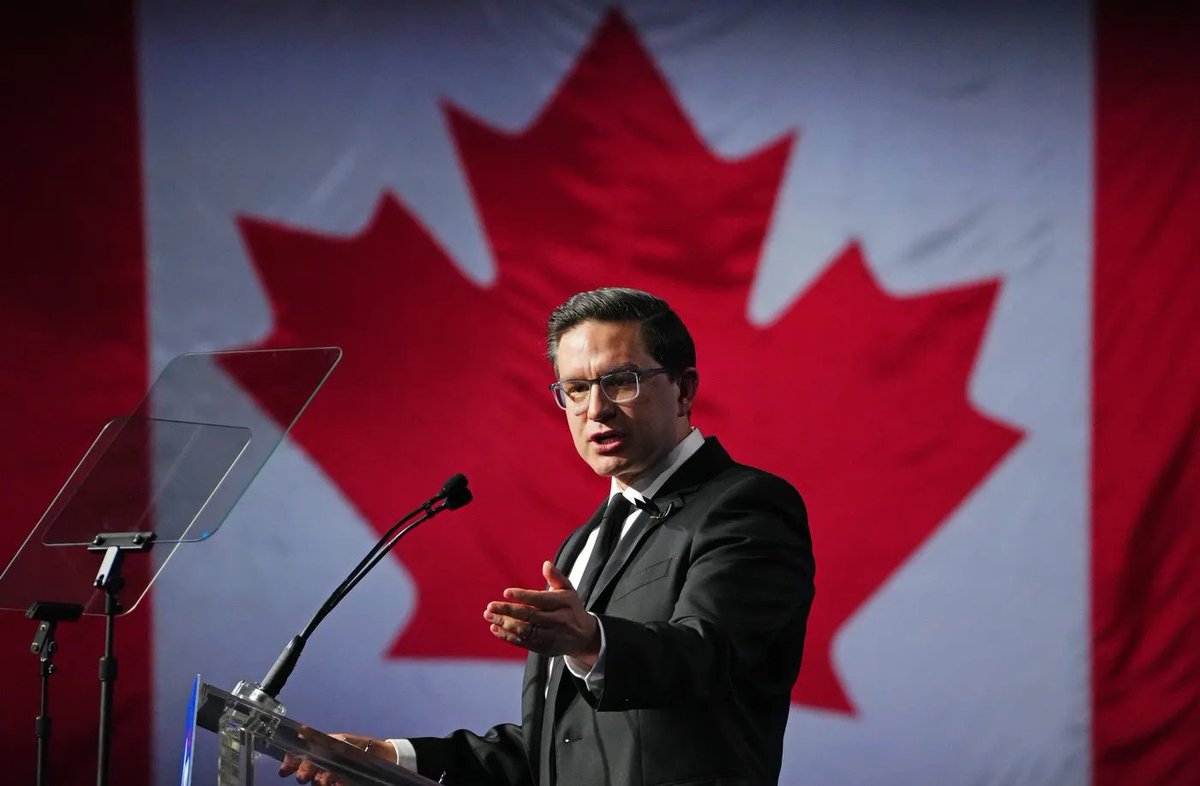
The Rally That Shook Canada—Poilievre Just Changed Everything
Ottawa—My fellow Canadians, Let’s talk about what just happened in Ottawa last night. Because, frankly, if you weren’t paying attention, you just missed one of the most important political moments in modern Canadian history.
Pierre Poilievre didn’t just hold a rally. He delivered a political earthquake. Thousands of Canadians braved the cold—minus eleven degrees, snow falling, streets covered in ice—to stand shoulder to shoulder, packed into an overflowing venue, with even more watching from spillover rooms.
And it wasn’t just a polite gathering of voters looking for a fresh face to replace Trudeau’s tired, corrupt regime. No, this was something else entirely. It was a moment where you could feel the momentum shifting. It was the kind of rally that terrifies political elites because it tells them one thing—this isn’t just a campaign anymore. It’s a movement.
Now, we’ve seen this before. Obama in 2008, Trump in 2016. The political class and their media lapdogs always pretend these moments don’t exist—right up until the moment they steamroll the establishment and change the country forever. That’s the kind of energy we saw in Ottawa. That’s the kind of political force Poilievre is sitting on.
And the real question is: does he understand just how big this is? Because right now, he is either going to ride this wave to an unstoppable victory, or he is going to let the media, the bureaucrats, and the Liberal swamp talk him into playing it safe and blowing the biggest opportunity of his life.
Let’s talk about what he got right—because he got a lot right.
First, Mark Carney got absolutely eviscerated. And not a moment too soon. For months, the Liberal establishment and their media servants have been parading this unelected banker around like some kind of messiah—as if Canadians have been crying out for a smug, carbon-tax-obsessed globalist to come and save us from ourselves.
Well, Poilievre wasn’t having it. He torched Carney’s entire phony image in a single speech.
This is a guy—let’s be very clear about who he is—who has spent his entire career making life more expensive for you while getting richer off it. A man who cheered for the carbon tax in Canada while personally investing in American coal. A man who killed pipelines here while his own company bought them in the Middle East. A man who spent years whispering in Trudeau’s ear, pushing policies that have already driven over $500 billion in investment out of this country—and now, somehow, wants you to believe he’s the guy to fix it.
It was devastating, brutal, and completely deserved. And the best part? Poilievre made it clear that if Carney wins, Canada loses.
But that wasn’t even the most important part of the speech.
The most important moment came when Poilievre didn’t just talk about the economy—he talked about Canada’s survival.
Because that’s what this is about.
And this is where Poilievre really flipped the script on the media’s latest nonsense.
For weeks now, Canada’s press has been running around like a bunch of headless chickens, shrieking that Trump’s tariffs are going to destroy us—as if the biggest economic threat to this country isn’t the people running it into the ground from within.
And instead of taking the bait, instead of playing defense, Poilievre turned the entire argument on its head.
The real problem isn’t Trump. The real problem is that Canada can’t even trade with itself.
Think about that. Canada’s biggest economic problem isn’t some tariff threat from Washington—it’s that we have more trade barriers between our own provinces than we do with the United States. That is insane. That is deliberate economic sabotage. That is the kind of bureaucratic lunacy that only a Liberal government could create.
So instead of cowering in fear about what Trump might do, Poilievre did what no Canadian politician has done in decades—he promised to tear down interprovincial trade barriers in his first 30 days in office.
And suddenly, the entire media narrative collapsed.
Why? Because if Canada is so fragile that one American president can destroy our economy with a tariff, then maybe the real problem isn’t Trump. Maybe the real problem is that Liberal policies have left us so pathetically weak that we can’t even function as a country without America’s permission.
Now that’s leadership. That’s the kind of offensive strategy Canada needs.
And then, Poilievre did it again.
He unleashed his strongest energy vision yet.
He vowed to repeal C-69, the anti-pipeline law, within 60 days. He promised to fast-track LNG projects, restart the Ring of Fire mining industry, and put an end to the foreign-funded radical environmentalists who have spent decades deliberately crippling Canada’s energy sector while collecting cash from foreign oil interests.
The crowd exploded. Because Canadians know what’s been done to them.
This country should be an energy powerhouse. Instead, under Liberal rule, we have entire provinces collapsing under green energy scams while we import oil from countries that hate us.
Poilievre knows it. Canadians know it.
And yet, for all the things he got right, there was one glaring failure.
China.
Yes, Poilievre called China a hostile power. Yes, he promised to strengthen Arctic defenses and build a new military base in Iqaluit. That’s good. That’s necessary.
But that’s not enough.
Because Trudeau didn’t just let China threaten Canada from the outside—he let them infiltrate our democracy from the inside.
And that’s where Poilievre should have gone further.
He should have hammered the Houge Inquiry—the investigation into Chinese election interference that was so damaging that Trudeau shut down Parliament to bury it.
He should have exposed how CSIS warned the Liberals about Chinese interference—and they did nothing.
He should have pledged to ban CCP-linked companies from buying Canadian land, businesses, and resources.
He should have said, plainly and directly, that Trudeau’s government was complicit in allowing a foreign dictatorship to interfere in Canada’s democracy.
But he didn’t. And that was a mistake.
Because when you are standing in front of a roaring crowd, a movement waiting for a leader to take the gloves off, that is the moment you go all in.
Poilievre is so close. He has the passion. He has the policies. He has the momentum.
But now, he has to finish the job.
That means stop holding back on China. That means stop treating this like a normal election. That means expose the entire corrupt system—not just Trudeau, but the elites who profit off Canada’s decline.
Because the crowd is ready. The movement is here. The moment is now.
The only question is: is Poilievre ready to go all the way?
Friday's Chapter 7 fire sale announcement by $MMAT is deeply saddening and extremely disappointing, it could have been avoided. This is a case study on how a Board takes down a company. Over the last 12+ years, I had the incredible privilege of working with an extraordinary team to build this company from the ground up, creating groundbreaking metamaterial and nanomaterial technologies, turning the corner by adding world-class manufacturing capabilities and facilities to support future growth, recognized by leading global brands, partners, suppliers and customers which as of Sept 2023 included TESLA, VALEO, Sisecam, Vitro, MAGNA, AGC, AGP, BAE Systems, NASA, Midea, Panasonic, LG Energy Solutions, Waymo, Bosch, SONY, Dupont, PPG, Sekisui, Covestro, Samsung, SpaceX, and many other great organizations.
Almost 3 months ago, a few days after the company announced the 80% reduction in workforce, I laid out a $45M+ recapitalization plan (out-of-court) to META and their financial advisor, Ducera Partners LLC—a name the BoD and Management strangely kept hidden. IMHO this plan was going to secure the next phase of the company, with bridge financing to rebuild the business under new management and communicate a plan to shareholders. During due diligence and under NDA, I was also assured that the billion-dollar+ potential claim with Wes was rock solid, leading to the last MMAT press release — yet critical facts (the size of the claim and the names of the broker-dealers/market makers/etc.) were also kept under wraps for reasons unknown.
In September last year, there were additional financing offers and term sheets that would, in my opinion, have avoided all this... And now? We’re left hoping the trustee will hire Wes and his team to continue the case. Tragically, the board’s rejection of a recapitalization proposal led to this outcome. Selling off a profitable business unit (Authentication/NTS) was just the tip of the iceberg in a series of questionable decisions. In my opinion, this Board and Management and their advisors have conducted a series of fraudulent activities which I will be bringing to light.
They say hindsight is 20/20, but it seems this Board was wearing blinders. Learn from the past to illuminate the path ahead and avoid stumbling into the same pitfalls. The reality is that neither Jack Harding nor Uzi Sasson visited the majority of our tech sites, met with the senior mgmt teams, or had any plan to create wealth…
No ownership.
No foresight.
No insight.
No oversight.
No communication.
In my opinion, they simply did not care, were completely ignorant, or worse... Despite all this, I remain META’s largest shareholder. I did not sign the original gag order (severance package) last November, and I am committed to seeing the truth come through, in court. Looking forward to meeting the trustee.
#Leadership #CorporateGovernance #Shareholders #BusinessEthics #Chapter7
Narrator: "And Canadians realized that their prime minister’s crimes might be bigger than they thought."
*Smash cut to Justin Trudeau*
"There’s a good chance I may have committed some light treason."
Give this a push if you dig it.
Her comments are reminiscent of those made by Hilary Clinton in the 2016 Presidential campaign when she called those who did not agree with her "deplorables". We all know what happened to her Presidential ambitions!
Cold, cruel and small is what the Deputy Prime Minister calls you when you disagree with her.
Canadians are none of those things. They are the exact opposite of the derogatory names she decided to call them. They are proud, strong and free. #cdnpoli
GC strategies allegedly paid approximately $2,600 per hour for ArriveCan
Good morning, my fellow Canadians. Today, we peel back the layers of a saga that's become all too familiar to those of us who keep a vigilant eye on the workings of our government. The story of ArriveCan unfolds yet another chapter, one that continues to baffle the taxpayer's mind. In the spotlight once again is Kristian Firth, one of the owners of GC Strategies, a figure who has become somewhat emblematic of this ongoing debacle. Mr. Firth was hauled into Meeting No. 108 of the OGGO – the Standing Committee on Government Operations and Estimates, over his company's eyebrow-raising dealings with contracts tied to the infamous $60 million ArriveCan bill.
The Auditor General raised alarms last week that GC Strategies was contracted to the tune of excess of $20 million in their involvement with what many are calling a government waste extravaganza. What were they hired for? Essentially, acting as overpaid LinkedIn recruiters. Now, it’s not Mr. Firth’s first rodeo; this marks his third appearance before this committee. And let's just say his previous visits have left more questions than answers, shrouded in what can only be described as a cloud of suspicion and perhaps, let’s be frank, less than truthful testimonies.
This time, it took issuing a subpoena to bring Mr. Firth to the table. Yes, you heard that right. A subpoena had to be issued. And had he not shown up, a warrant for his arrest would have been the next step, ensuring his presence before the committee. So, the notion of him being a "willing participant" in this process is, at best, a charitable interpretation.
Let's dive into the heart of the matter, shall we?
Conservative MP Michael Barrett came out swinging and he was not pulling any punches. From the get-go, Barrett skewered Firth with a questions: "Have you ever lied to a parliamentary committee before?"
The dance of evasion began immediately. Mr. Firth, with the poise of a seasoned politician, deflected:
"In the previous testimony, you see the answer to that one, about the chalet and the cottage."
But Barrett, undeterred, pressed on, "So is that a yes?"
leading to Firth's suggestion to "go and watch my previous testimony."
But here's the kicker, folks – Barrett was there. He was the one asking the questions. And he reminded Firth, and us, of the lies that danced off Firth's tongue: about Mr. McDonald's secondary residence, about meeting government officials outside government offices, about providing hospitality to these same officials. The list, ladies and gentlemen, is as lengthy as it is troubling.
Barrett continued his relentless line of questioning, uncovering the layers of Firth's evasions and omissions. But here's where it gets even more interesting. The government has kicked the files concerning GC Strategies' role in ArriveCan over to the RCMP. And yet, according to Mr. Firth, there has been radio silence from Canada's national police. No contact, no questions, nothing.
Continuing in that vein, it's essential to spotlight the calm yet incisive approach of Kelly Block, who, in a world increasingly characterized by noise over substance, stands out for her methodical and factual questioning. She doesn't need to raise her voice because, in her hands, the facts do the shouting. Cross-examining Firth, Block delved into the heart of the matter, pointing to the Auditor General's findings and querying Firth on his communications with the Government of Canada during the contract's development—a contract that ballooned to $25 million.
Firth, however, was a fortress of evasion. Claiming the shield of an ongoing RCMP investigation—a curious defense given his earlier admission of not being contacted by the RCMP—he refused to divulge details. This dance of avoidance raises eyebrows. If you're not under investigation, as Firth claims, then what's the harm in transparency? What's the risk in clarity?
Kelly Block's persistence brought this contradiction to light. Yet, Firth remained unyielding, cloaking himself in the vague specter of potential RCMP involvement. It's a defense that, under scrutiny, seems more like a smokescreen than a shield.
Then enters Barrett with a call to order, highlighting the absurdity of Firth's stance. He underscored a fundamental principle: witnesses are required to answer questions before a parliamentary committee. Hiding behind the hypothetical does not absolve one of this responsibility. The committee's role is to uncover the truth, and Barrett's interjection served as a reminder of this mission—a mission that seems to be obstructed at every turn by a lack of Firths forthrightness.
The chair then had to reiterate the stakes: refusal to answer or lying could lead to charges of contempt. Yet, even with the gravity of the situation laid bare, Firth remained undeterred, unwilling to spill the beans.
Garnette Genuis pointed directly at the heart of the matter. Firth, attempts to weave a narrative where his company, GC Strategies, supposedly juggled various projects, not all tethered to the controversial ArriveCan initiative but it was more a of an Omni-Bus contract where everyone within government takes a bit of the ArriveCan pie. But here's where the plot thickens, folks: Genuis cuts through the obfuscation, highlighting the glaring discrepancy between the amounts claimed and the documentation provided.
Firth's response? A smokescreen of hundreds of pages of documents. Yet, as Genuis astutely points out, volume doesn't equate to clarity or accuracy. Firth then shifts gears, painting himself as the besieged victim of public scrutiny, even citing death threats. While threats of violence are never acceptable, it's crucial to note the broader context: a public seething over perceived governmental and corporate malfeasance, especially in an era of skyrocketing living costs.
But here's the kicker: despite all the smoke, despite the claims of widespread misinformation waged against him, Firth admits to a staggering takeaway from the project – $2.5 million each for him and his partner. In a time when average Canadians are pinching pennies, grappling with the cost of living, and struggling to navigate a post-pandemic economy, the contrast couldn't be starker.
And then Genuis, brings the hammer down with precision that could only come from genuine, grounded concern for the Canadian taxpayer– "So you and your partner became millionaires through this project,"
The core of this issue isn't just the sum – though, make no mistake, the figures are eye-watering – it's the sheer disproportion between what was paid and what was actually done. Genuis zeroes in, "How expensive is a LinkedIn account these days?" A question so laden with sarcasm it could sink a ship. Yet, it cuts to the heart of the matter: the exorbitant return on what appears to be minimal input and effort.
Firth, trapped in the logic of his own making, tries to justify the unjustifiable. "[I worked] between 30 to 40 hours every month," he claims.
Garnette Genuis, not missing a beat, lays the figures bare, turning the spotlight onto the staggering sum of $2.5 million pocketed by Firth. Genius's calculations are unassailable: breaking down the income to an hourly rate exposes a figure that would make even the most seasoned professionals balk – approximately $2,600 per hour. In any universe, especially one gripped by financial strain and uncertainty, numbers like these demand justification.
Firth, ever the deflector, attempts to skirt the issue by appealing to the nebulous nature of his work's scheduling. Yet, Genuis, undeterred by such obfuscations, brings the conversation back to the heart of the matter – the justification of such an exorbitant rate to the taxpayers. Firth's response, pointing to government valuation, sidesteps personal accountability, redirecting the query towards the government's appraisal of his firm's worth.
The conversation then shifts towards Dalian's involvement and the opaque nature of their contribution to ArriveCan, with Firth maintaining a stance of separation and ignorance regarding the specifics of Dalian's work. This, too, raises eyebrows. The intricacies of these relationships and the delineation of responsibilities remain muddled, further clouding the waters of accountability.
Firth's complaints about death threats are troubling – no one condones such actions – but they also highlight the boiling frustration among Canadians. When people are struggling to make ends meet, seeing millions funneled so effortlessly into the pockets of a select few isn't just frustrating; it's infuriating. When Firth retreats behind the shield of ongoing investigations to avoid answering direct inquiries, it not only stymies the committee's efforts but also deepens the chasm between government operations and the public's right to understand how their money is being spent. The call for answers, for accountability, is not just procedural – it's a foundational aspect of democratic governance.
There are moments, fleeting though they may be, where light pierces through the fog. During the cross-examination of Firth, even the Liberals, often lost in the haze of partisanship, unearthed a few slivers of crucial insight. Irek Kusmierczyk didn't let the moment pass. He honed in on a critical point raised by both the Auditor General and the procurement ombudsman: GC Strategies' involvement in designing the bid criteria. Now, this isn't just a procedural footnote; it's the linchpin of the entire issue. If a company helps craft the criteria that determine who gets the contract, how can the process be considered fair or unbiased?
Firth's response? A dance around the facts, a deflection dressed up as an answer. He claims never to have participated in the design of these criteria, a statement at odds with the findings of not one, but two oversight bodies. And when pressed, he diverts to the existence of other qualified vendors, as if the sheer number negates any unfairness in the process. But here's where the rubber meets the road: it doesn't matter if there were 40, 400, or 4,000 potential vendors. The issue at hand is the integrity of the process. If the game is rigged from the start, if the fox is indeed let into the henhouse, the number of chickens inside becomes irrelevant. What matters is that the fox is in control.
As we delve deeper into the saga of GC Strategies and the curious case of Kristian Firth, the layers of obfuscation and outright deceit become all too clear. And it's not just troubling—it's infuriating.
Let's break it down: The Auditor General and the Procurement Ombuds, both tasked with the solemn duty of overseeing the integrity of government contracts, found that GC Strategies fell short of meeting critical document safeguarding capability requirements. And how does Firth respond when confronted with this glaring deficiency? By suggesting that the PSPC and CBSA's subsequent screenings somehow make this oversight acceptable. But let's not mince words here—this is not standard operating procedure; it's a glaring loophole that's been exploited, and it puts the security and integrity of the entire process in question.
And it gets worse. When pressed on the practice of copying and pasting requirements for mandatory and point-rated criteria as project experience—a practice that reeks of dishonesty and a lack of due diligence—Firth has the audacity to challenge the accuracy of the Ombuds report. This, after it's been established that falsified resumes were part of his modus operandi. It's like being caught red-handed and then trying to convince everyone that it's not actually your hand.
As this latest chapter came to an end, Garnette Genius call for the chair and accuses Firth of dodging the hard questions, he pinpoints to a breach of the sacred trust we place in our institutions. This isn't just about avoiding answers; it's about undermining the very fabric of our democracy.
Genius's proposed a motion which passed unanimously by the committee, to investigate Firth's conduct, spotlighting a potential contempt of parliamentary privilege. This is more than procedure; it's a statement that in our democracy, evasion is not an option.
One thing's becoming painfully clear: Firth seems to be angling for a plea deal, bracing for that inevitable knock on the door from the RCMP, hence his reluctance to show his hand. But let's not lose focus on what this truly means. As this report heads to the House, it's crucial to remember this saga transcends Firth's silent treatment. It's about mounting a stand for the accountability and transparency that every Canadian is entitled to.
In our great country, in our revered House, it's time these swamp dwellers are held to the fire. Firth, while not the architect of the murky depths of this bureaucratic swamp, sure did swim comfortably in its waters, enjoying the spoils at the expense of the average Canadian. So if the long arm of the law doesn't catch him on fraud, then let's see justice served for contempt. The message needs to be loud and clear: in Canada, no one is above scrutiny.
Stay vigilant, Canada. The battle for clarity, for accountability, is far from over. We'll be watching closely, and you should too. The time to drain the swamp is now.
@FriendsOScience@TrueNorthCentre I have never understood why the Federal Government, led by Justin Trudeau has designated CO2 as a pollutant, ignoring the fact that the gas is a critical element to all life on the planet. Without access to a constant supply of CO2, plant photosynthesis would not be possible.






![DanKnightMMA's tweet photo. GC strategies allegedly paid approximately $2,600 per hour for ArriveCan
Good morning, my fellow Canadians. Today, we peel back the layers of a saga that's become all too familiar to those of us who keep a vigilant eye on the workings of our government. The story of ArriveCan unfolds yet another chapter, one that continues to baffle the taxpayer's mind. In the spotlight once again is Kristian Firth, one of the owners of GC Strategies, a figure who has become somewhat emblematic of this ongoing debacle. Mr. Firth was hauled into Meeting No. 108 of the OGGO – the Standing Committee on Government Operations and Estimates, over his company's eyebrow-raising dealings with contracts tied to the infamous $60 million ArriveCan bill.
The Auditor General raised alarms last week that GC Strategies was contracted to the tune of excess of $20 million in their involvement with what many are calling a government waste extravaganza. What were they hired for? Essentially, acting as overpaid LinkedIn recruiters. Now, it’s not Mr. Firth’s first rodeo; this marks his third appearance before this committee. And let's just say his previous visits have left more questions than answers, shrouded in what can only be described as a cloud of suspicion and perhaps, let’s be frank, less than truthful testimonies.
This time, it took issuing a subpoena to bring Mr. Firth to the table. Yes, you heard that right. A subpoena had to be issued. And had he not shown up, a warrant for his arrest would have been the next step, ensuring his presence before the committee. So, the notion of him being a "willing participant" in this process is, at best, a charitable interpretation.
Let's dive into the heart of the matter, shall we?
Conservative MP Michael Barrett came out swinging and he was not pulling any punches. From the get-go, Barrett skewered Firth with a questions: "Have you ever lied to a parliamentary committee before?"
The dance of evasion began immediately. Mr. Firth, with the poise of a seasoned politician, deflected:
"In the previous testimony, you see the answer to that one, about the chalet and the cottage."
But Barrett, undeterred, pressed on, "So is that a yes?"
leading to Firth's suggestion to "go and watch my previous testimony."
But here's the kicker, folks – Barrett was there. He was the one asking the questions. And he reminded Firth, and us, of the lies that danced off Firth's tongue: about Mr. McDonald's secondary residence, about meeting government officials outside government offices, about providing hospitality to these same officials. The list, ladies and gentlemen, is as lengthy as it is troubling.
Barrett continued his relentless line of questioning, uncovering the layers of Firth's evasions and omissions. But here's where it gets even more interesting. The government has kicked the files concerning GC Strategies' role in ArriveCan over to the RCMP. And yet, according to Mr. Firth, there has been radio silence from Canada's national police. No contact, no questions, nothing.
Continuing in that vein, it's essential to spotlight the calm yet incisive approach of Kelly Block, who, in a world increasingly characterized by noise over substance, stands out for her methodical and factual questioning. She doesn't need to raise her voice because, in her hands, the facts do the shouting. Cross-examining Firth, Block delved into the heart of the matter, pointing to the Auditor General's findings and querying Firth on his communications with the Government of Canada during the contract's development—a contract that ballooned to $25 million.
Firth, however, was a fortress of evasion. Claiming the shield of an ongoing RCMP investigation—a curious defense given his earlier admission of not being contacted by the RCMP—he refused to divulge details. This dance of avoidance raises eyebrows. If you're not under investigation, as Firth claims, then what's the harm in transparency? What's the risk in clarity?
Kelly Block's persistence brought this contradiction to light. Yet, Firth remained unyielding, cloaking himself in the vague specter of potential RCMP involvement. It's a defense that, under scrutiny, seems more like a smokescreen than a shield.
Then enters Barrett with a call to order, highlighting the absurdity of Firth's stance. He underscored a fundamental principle: witnesses are required to answer questions before a parliamentary committee. Hiding behind the hypothetical does not absolve one of this responsibility. The committee's role is to uncover the truth, and Barrett's interjection served as a reminder of this mission—a mission that seems to be obstructed at every turn by a lack of Firths forthrightness.
The chair then had to reiterate the stakes: refusal to answer or lying could lead to charges of contempt. Yet, even with the gravity of the situation laid bare, Firth remained undeterred, unwilling to spill the beans.
Garnette Genuis pointed directly at the heart of the matter. Firth, attempts to weave a narrative where his company, GC Strategies, supposedly juggled various projects, not all tethered to the controversial ArriveCan initiative but it was more a of an Omni-Bus contract where everyone within government takes a bit of the ArriveCan pie. But here's where the plot thickens, folks: Genuis cuts through the obfuscation, highlighting the glaring discrepancy between the amounts claimed and the documentation provided.
Firth's response? A smokescreen of hundreds of pages of documents. Yet, as Genuis astutely points out, volume doesn't equate to clarity or accuracy. Firth then shifts gears, painting himself as the besieged victim of public scrutiny, even citing death threats. While threats of violence are never acceptable, it's crucial to note the broader context: a public seething over perceived governmental and corporate malfeasance, especially in an era of skyrocketing living costs.
But here's the kicker: despite all the smoke, despite the claims of widespread misinformation waged against him, Firth admits to a staggering takeaway from the project – $2.5 million each for him and his partner. In a time when average Canadians are pinching pennies, grappling with the cost of living, and struggling to navigate a post-pandemic economy, the contrast couldn't be starker.
And then Genuis, brings the hammer down with precision that could only come from genuine, grounded concern for the Canadian taxpayer– "So you and your partner became millionaires through this project,"
The core of this issue isn't just the sum – though, make no mistake, the figures are eye-watering – it's the sheer disproportion between what was paid and what was actually done. Genuis zeroes in, "How expensive is a LinkedIn account these days?" A question so laden with sarcasm it could sink a ship. Yet, it cuts to the heart of the matter: the exorbitant return on what appears to be minimal input and effort.
Firth, trapped in the logic of his own making, tries to justify the unjustifiable. "[I worked] between 30 to 40 hours every month," he claims.
Garnette Genuis, not missing a beat, lays the figures bare, turning the spotlight onto the staggering sum of $2.5 million pocketed by Firth. Genius's calculations are unassailable: breaking down the income to an hourly rate exposes a figure that would make even the most seasoned professionals balk – approximately $2,600 per hour. In any universe, especially one gripped by financial strain and uncertainty, numbers like these demand justification.
Firth, ever the deflector, attempts to skirt the issue by appealing to the nebulous nature of his work's scheduling. Yet, Genuis, undeterred by such obfuscations, brings the conversation back to the heart of the matter – the justification of such an exorbitant rate to the taxpayers. Firth's response, pointing to government valuation, sidesteps personal accountability, redirecting the query towards the government's appraisal of his firm's worth.
The conversation then shifts towards Dalian's involvement and the opaque nature of their contribution to ArriveCan, with Firth maintaining a stance of separation and ignorance regarding the specifics of Dalian's work. This, too, raises eyebrows. The intricacies of these relationships and the delineation of responsibilities remain muddled, further clouding the waters of accountability.
Firth's complaints about death threats are troubling – no one condones such actions – but they also highlight the boiling frustration among Canadians. When people are struggling to make ends meet, seeing millions funneled so effortlessly into the pockets of a select few isn't just frustrating; it's infuriating. When Firth retreats behind the shield of ongoing investigations to avoid answering direct inquiries, it not only stymies the committee's efforts but also deepens the chasm between government operations and the public's right to understand how their money is being spent. The call for answers, for accountability, is not just procedural – it's a foundational aspect of democratic governance.
There are moments, fleeting though they may be, where light pierces through the fog. During the cross-examination of Firth, even the Liberals, often lost in the haze of partisanship, unearthed a few slivers of crucial insight. Irek Kusmierczyk didn't let the moment pass. He honed in on a critical point raised by both the Auditor General and the procurement ombudsman: GC Strategies' involvement in designing the bid criteria. Now, this isn't just a procedural footnote; it's the linchpin of the entire issue. If a company helps craft the criteria that determine who gets the contract, how can the process be considered fair or unbiased?
Firth's response? A dance around the facts, a deflection dressed up as an answer. He claims never to have participated in the design of these criteria, a statement at odds with the findings of not one, but two oversight bodies. And when pressed, he diverts to the existence of other qualified vendors, as if the sheer number negates any unfairness in the process. But here's where the rubber meets the road: it doesn't matter if there were 40, 400, or 4,000 potential vendors. The issue at hand is the integrity of the process. If the game is rigged from the start, if the fox is indeed let into the henhouse, the number of chickens inside becomes irrelevant. What matters is that the fox is in control.
As we delve deeper into the saga of GC Strategies and the curious case of Kristian Firth, the layers of obfuscation and outright deceit become all too clear. And it's not just troubling—it's infuriating.
Let's break it down: The Auditor General and the Procurement Ombuds, both tasked with the solemn duty of overseeing the integrity of government contracts, found that GC Strategies fell short of meeting critical document safeguarding capability requirements. And how does Firth respond when confronted with this glaring deficiency? By suggesting that the PSPC and CBSA's subsequent screenings somehow make this oversight acceptable. But let's not mince words here—this is not standard operating procedure; it's a glaring loophole that's been exploited, and it puts the security and integrity of the entire process in question.
And it gets worse. When pressed on the practice of copying and pasting requirements for mandatory and point-rated criteria as project experience—a practice that reeks of dishonesty and a lack of due diligence—Firth has the audacity to challenge the accuracy of the Ombuds report. This, after it's been established that falsified resumes were part of his modus operandi. It's like being caught red-handed and then trying to convince everyone that it's not actually your hand.
As this latest chapter came to an end, Garnette Genius call for the chair and accuses Firth of dodging the hard questions, he pinpoints to a breach of the sacred trust we place in our institutions. This isn't just about avoiding answers; it's about undermining the very fabric of our democracy.
Genius's proposed a motion which passed unanimously by the committee, to investigate Firth's conduct, spotlighting a potential contempt of parliamentary privilege. This is more than procedure; it's a statement that in our democracy, evasion is not an option.
One thing's becoming painfully clear: Firth seems to be angling for a plea deal, bracing for that inevitable knock on the door from the RCMP, hence his reluctance to show his hand. But let's not lose focus on what this truly means. As this report heads to the House, it's crucial to remember this saga transcends Firth's silent treatment. It's about mounting a stand for the accountability and transparency that every Canadian is entitled to.
In our great country, in our revered House, it's time these swamp dwellers are held to the fire. Firth, while not the architect of the murky depths of this bureaucratic swamp, sure did swim comfortably in its waters, enjoying the spoils at the expense of the average Canadian. So if the long arm of the law doesn't catch him on fraud, then let's see justice served for contempt. The message needs to be loud and clear: in Canada, no one is above scrutiny.
Stay vigilant, Canada. The battle for clarity, for accountability, is far from over. We'll be watching closely, and you should too. The time to drain the swamp is now.](https://pbs.twimg.com/media/GIoZse0a4AEzGsi.jpg)





