Laurel Hind, Asst Prof at @CUBoulder, earned the Rising Star Award from the Biomedical Engineering Society @BMESociety for her work on immune response to inflammation, focused on finding new drug targets to improve treatments.
https://t.co/1RZCdCRLe4
#CUEngineering#Biomedical
NOCAP synthase produces a unique glycolipid, requiring hydroxylation by the flavin monooxygenase NocapM.
Del Rio Flores and Khosla explore the substrate scope of NocapM, finding broad tolerance for #biocatalysis applications.
https://t.co/WrbJaIPV6C
#biosynthesis@stanford
A team of researchers led by Wenjun Zhang reported the discovery of the first natural enzyme capable of creating complex molecules, azides, from simpler molecules 🧪
Read the story below 🔗
https://t.co/MfxTaVS2qZ
An enzyme that can synthesize aromatic azides! Bioorthogonal no more? 😝 Cool paper in @NatureChemistry by Wenjun Zhang & colleagues @UCB_Chemistry
https://t.co/zJ9UJUN53f
Celebrating Hispanic Heritage Month as we honor the rich culture, history & contributions of Hispanic & Latino Americans, their profound impact on @CUBoulder and beyond. Meet student scholars, discover groundbreaking faculty & student research, more! https://t.co/q3r6VXsGt4
We delved into bacterial hydrazine biosynthetic pathways using phylogenetic analysis. Huge thanks to the team and @ChemBioChem for highlighting our work as a VIP! https://t.co/OlVszpv8Dd
Funding approved for @LatinXinChE!!! Thanks to the AICHE Foundation Board of Trustees Members, Staff and Donors for the support for our 2024 programming. Stay tuned for our events at the Spring and Fall Meetings, our 2nd Virtual Symposium and more.... @ChEnected@MacAiche
I would like to share my first paper from my postdoctoral studies alongside lead author Shreya Kishore! In this work, we uncovered the structure of a polyketide-derived glycolipid produced by Nocardia associated with life-threatening human infections!
https://t.co/071h4urbDb
Excited for a full room of more than 100 people at the Cafe with @LatinXinChE today, followed by 8 great presentations of LatinX Voices in ChE Research. Thanks to the AIChE Foundation for supporting these events.
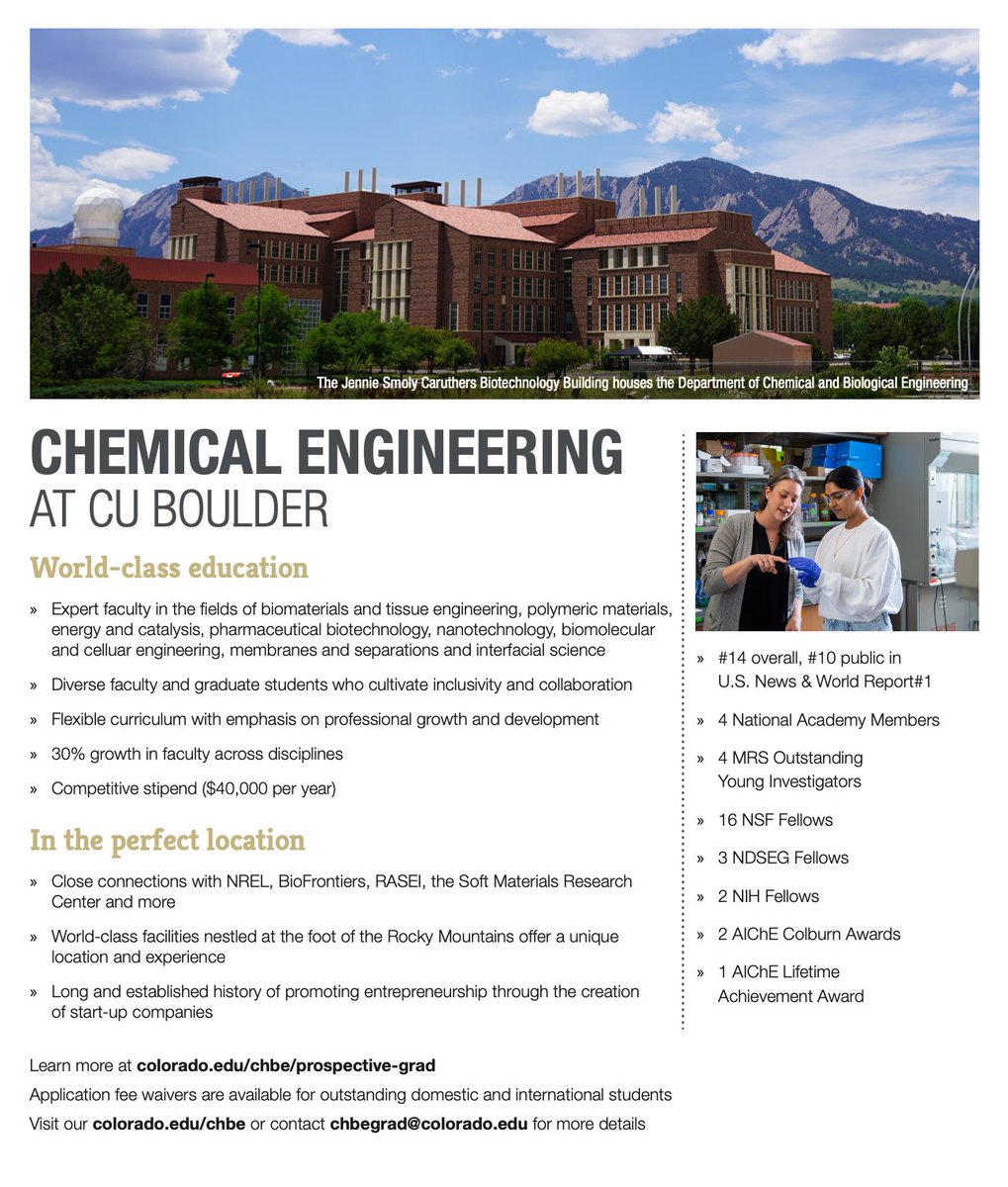
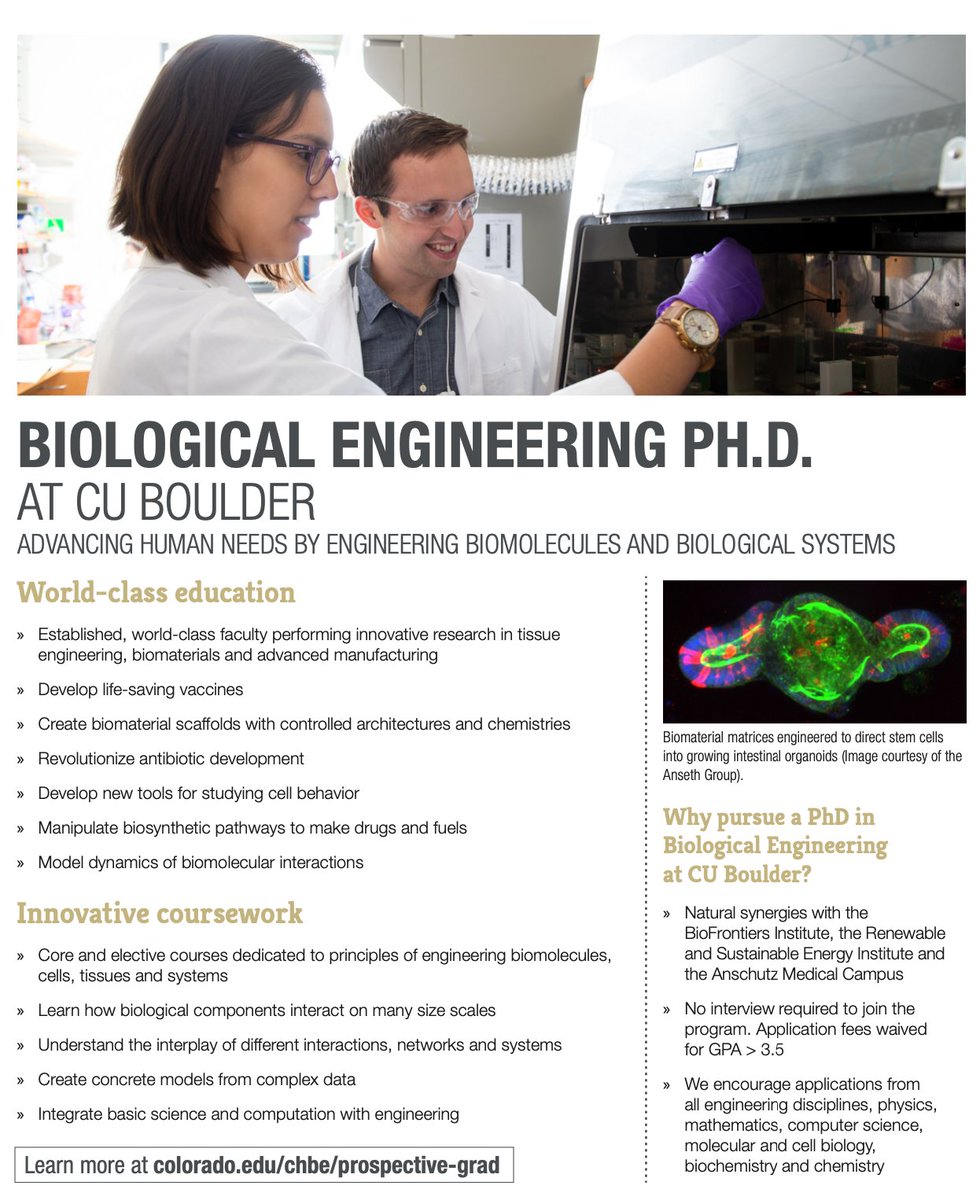
It's PhD application season again! Consider applying to Chemical and Biological Engineering at @CUEngineering. Our dept faculty have exciting research portfolio in a variety of topics. Got questions? We're here to help! #AcademicTwitter#phdlife https://t.co/T5dfSDlxOZ
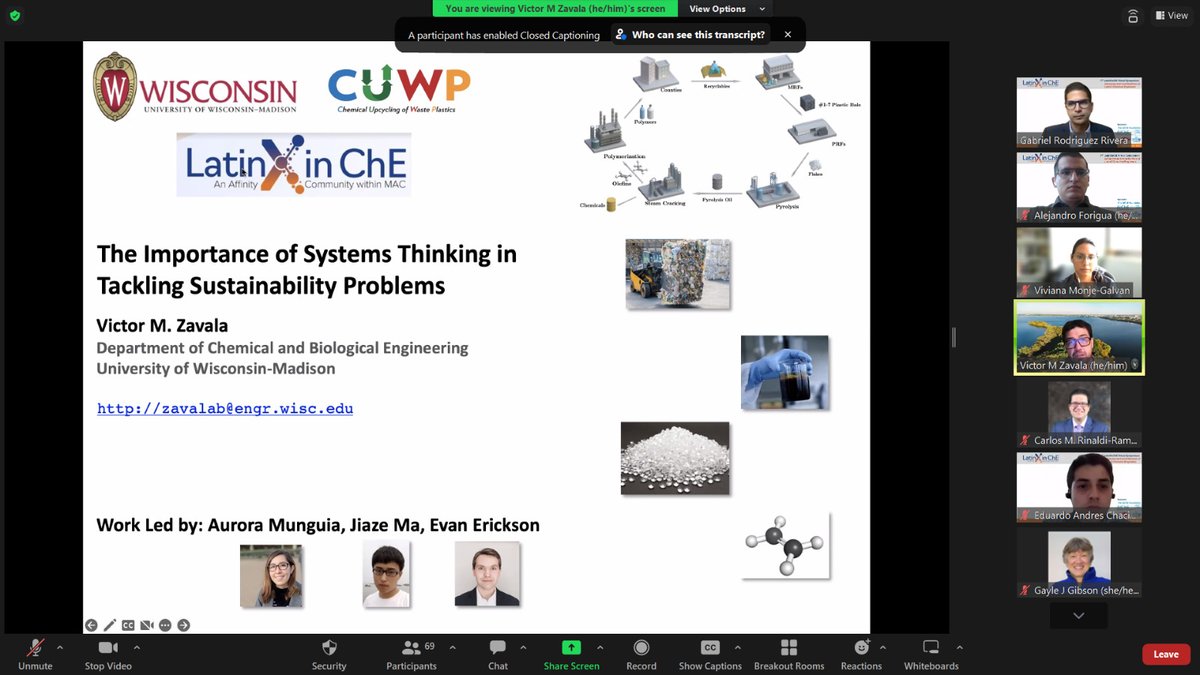
That is it folks! Our first #LatinXinChE 2023 symposium has ended. We thank everyone involved: presenters, keynote speakers, sponsors, judges, attendees and LT team to make this event posible.
Stay tuned for the public announcement of the awards and notable talks.
Excited to share our lab's work on leveraging our recently described TG2-LRP1 pathway for degradation of proteins of interest! https://t.co/PcXJCP6EKi
@Stanford@Stanford_ChEMH@StanfordUChem@StanfordEng
Reductases Produce Nitric Oxide in an Alternative Pathway to Form the Diazeniumdiolate Group of l-Alanosine by Menghua Wang and Katherine S. Ryan at @UBCChem in @J_A_C_S https://t.co/iWrKqPWdeE
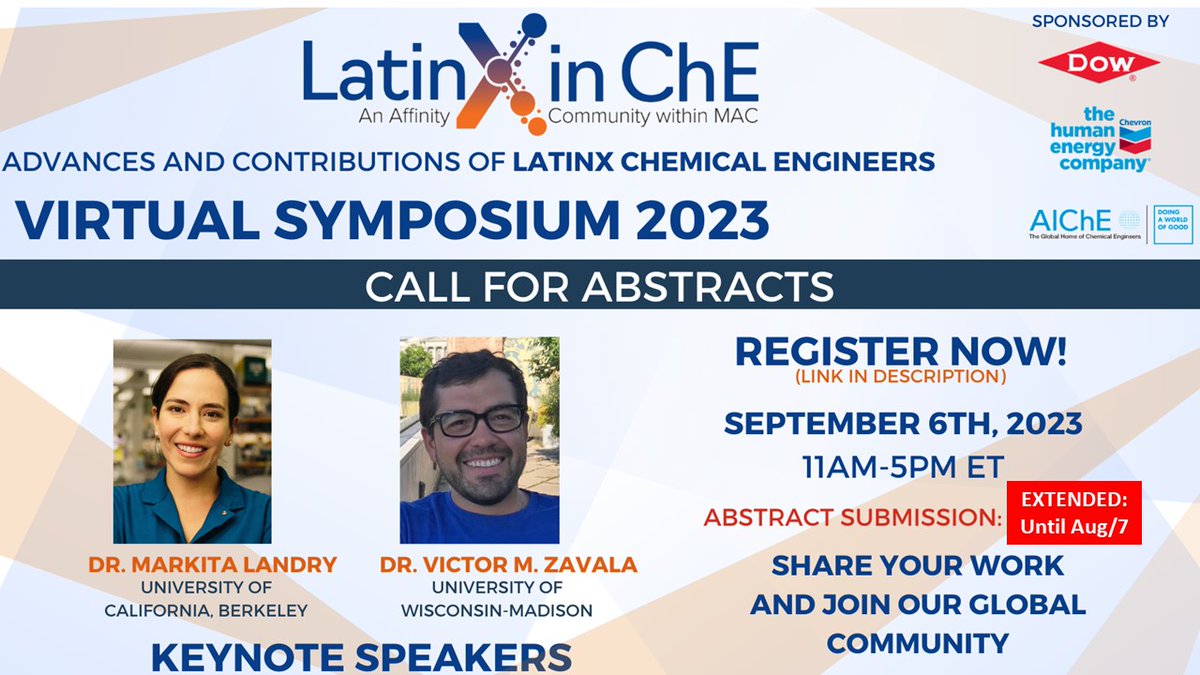
‼️Abstract submission extended to Aug/7 by popular demand‼️
Don't miss out on submitting your work and have the chance to win cash & travel awards.
Submit ABSTRACTS here: https://t.co/thgaeDIIui.
To attend, sign up here: https://t.co/vXYiBfyVCh.
DM/email us for questions.
Identification and Analysis of the Biosynthetic Gene Cluster for the Hydrazide-Containing Aryl Polyene Spinamycin | ACS Chemical Biology https://t.co/KPNEQ2hvT8
@VitalyGanusov Have a discussion in private with presenters later to address technical concerns thoughtfully. Publicly criticizing comes across as a power dynamic, is humiliating, and puts people on defense. Kindness and empathy go a long way to improving work, rather than calling it wrong.
Tune in to the latest episode of The Future of Everything podcast (@StanfordEng) to hear Chaitan Khosla talk about the future of antibiotic synthesis! https://t.co/d9WW9PZljt