The Himalaya never ceases to surprise us
Beyond the lines we draw on maps, birds continue to reveal stories we have yet to understand.
Our newly accepted paper, Beyond Known Boundaries, reminds us that nature rarely fits neatly within the boundaries of our knowledge.
🦅 Beyond Known Boundaries!
WII team from National Mission on Sustainable Himalayan Ecosystem (NMSHE) project examined 551 camera-trap detections of 55 bird species across 228 stations in Western Himalaya and found that 26 species were recorded above their published upper elevational limits, with 14 showing repeated detections across multiple stations.
These findings highlight potential gaps in our understanding of Himalayan bird distributions and the importance of systematic field observations in refining existing distribution records.
Read the full publication: https://t.co/cifVUolCBz
@moefcc@wii_india@IndiaDST@GobindsagarBha1@Anuj_Bio@RanjanaPal12@Vineet_Climate@jajohny2013
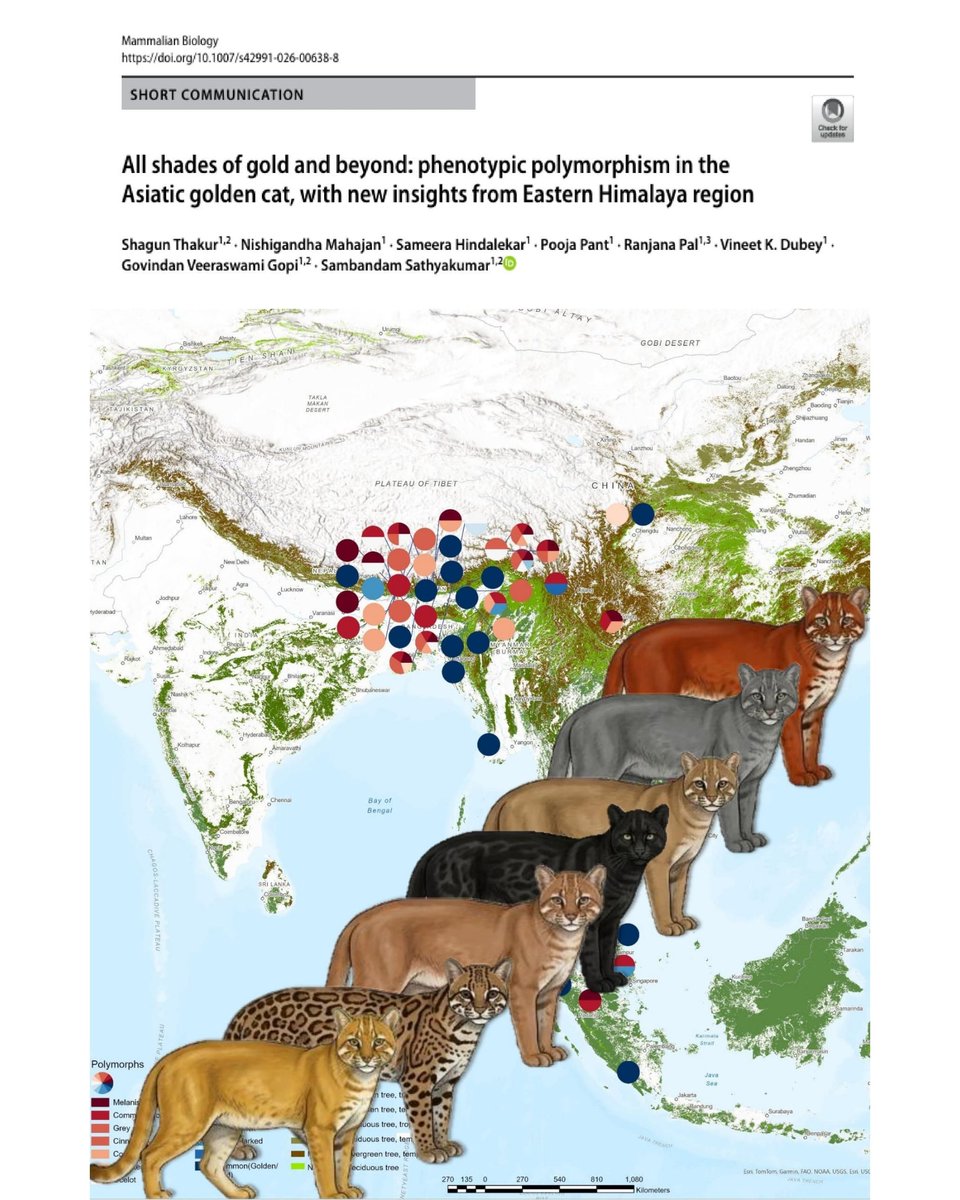
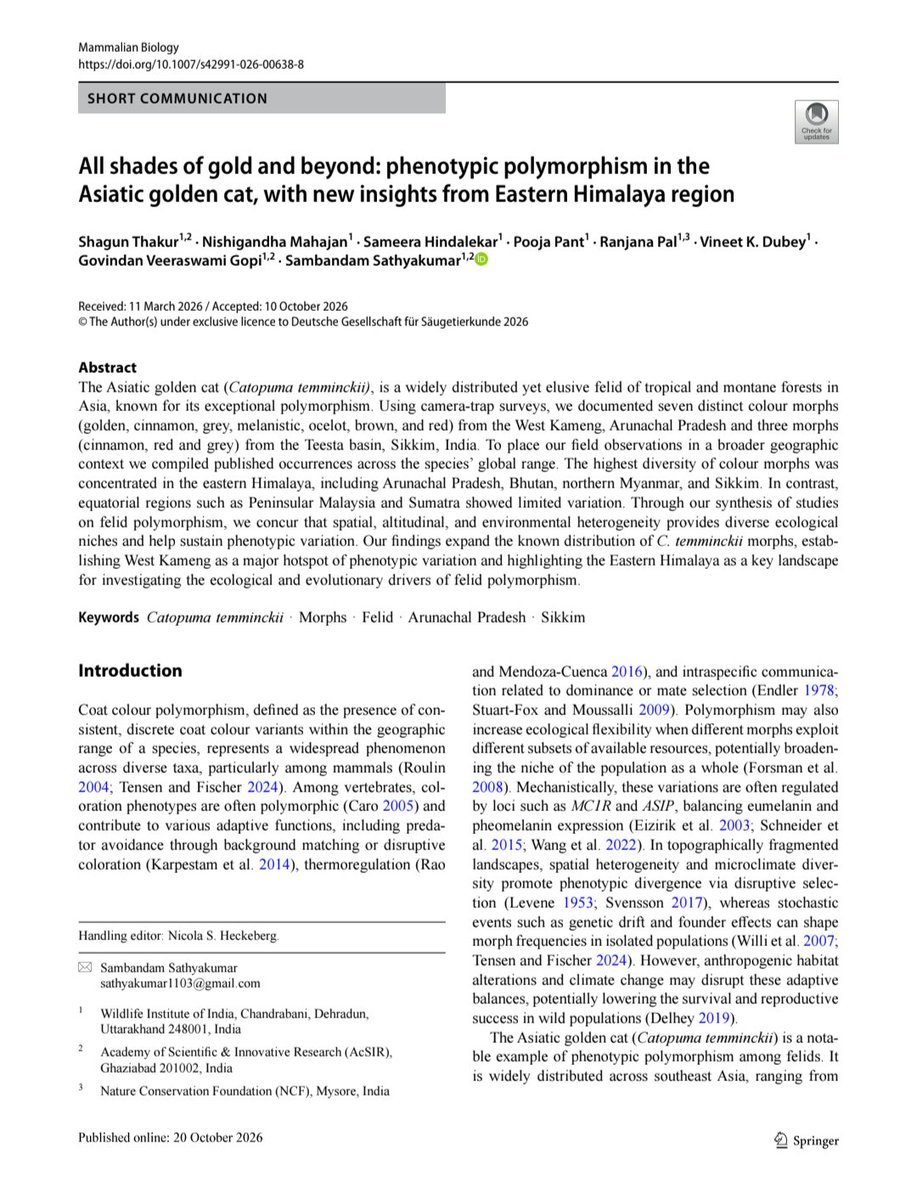
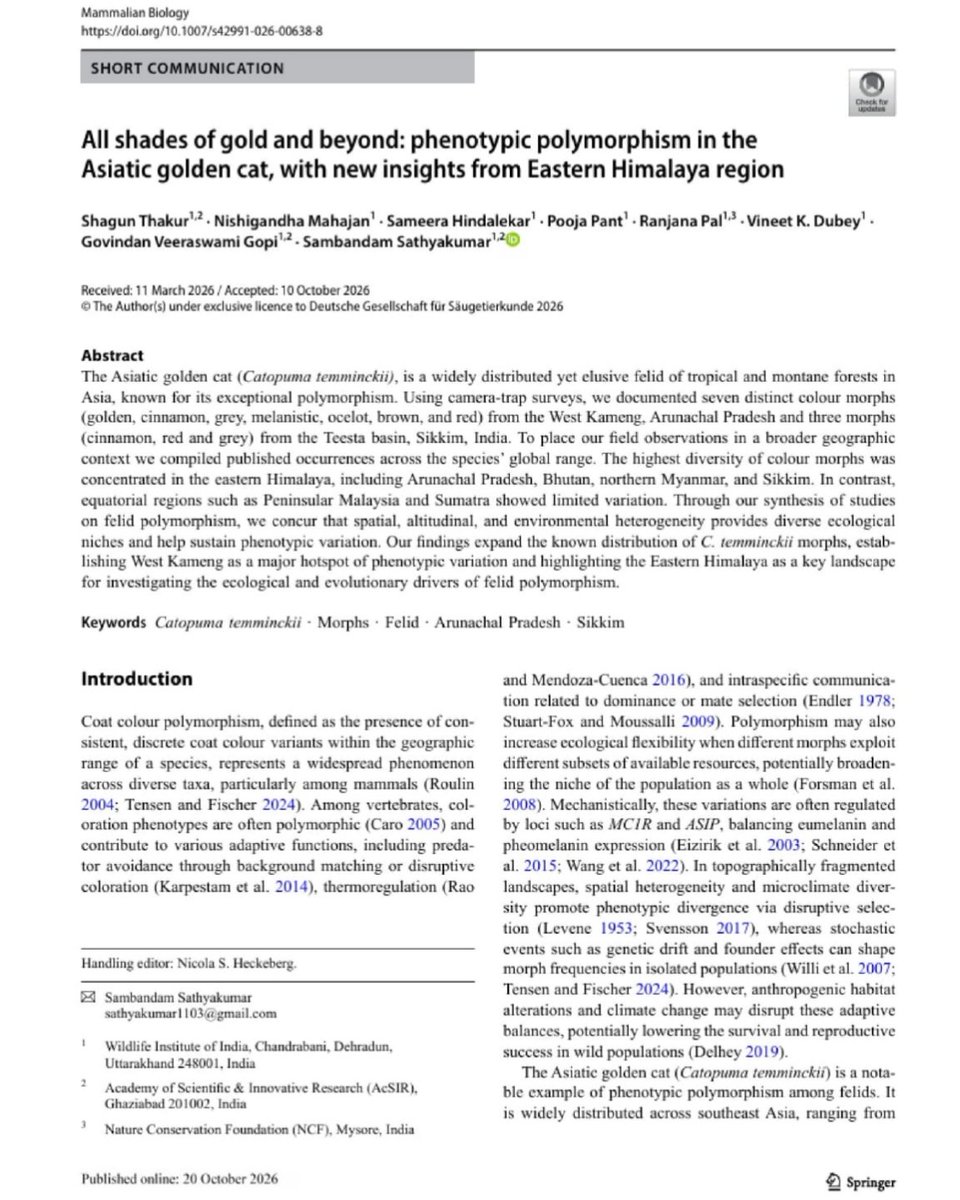
All shades of gold—and beyond! 🐱
Our study reveals 7 coat variations in Asiatic golden cat from West Kameng, Arunachal Pradesh and 3 polymorphs from Sikkim state, Eastern Himalaya, India.
@ArunForests@moefcc@IndiaDST#Sikkim@wii_india@WestKameng
Our new short note reports the first-ever record of the woolly flying squirrel (Eupetaurus cf. nivamons) from Arunachal Pradesh, India, extending the known range of this elusive Himalayan mammal into the eastern Himalaya.
#ArunachalPradesh#WoollyFlyingSquirrel#EasternHimalaya
Filling the gap: first regional record of the Little Owl Athene noctua ludlowi (Strigiformes: Strigidae) from Uttarakhand, India
https://t.co/ysARNyPWH0
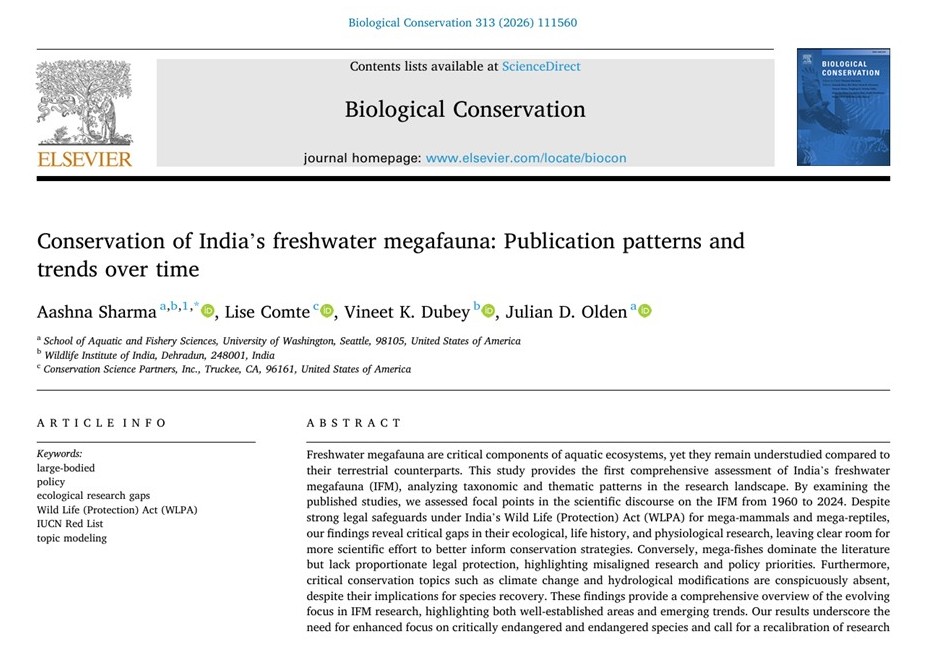
India’s megafishes are the most studied yet least protected. Megamammals & reptiles are the reverse.
Our new Biological Conservation paper uses an innovative text-mining approach revealing how research, WLPA protection & IUCN priorities misalign.
Link: https://t.co/nROez0QtD5