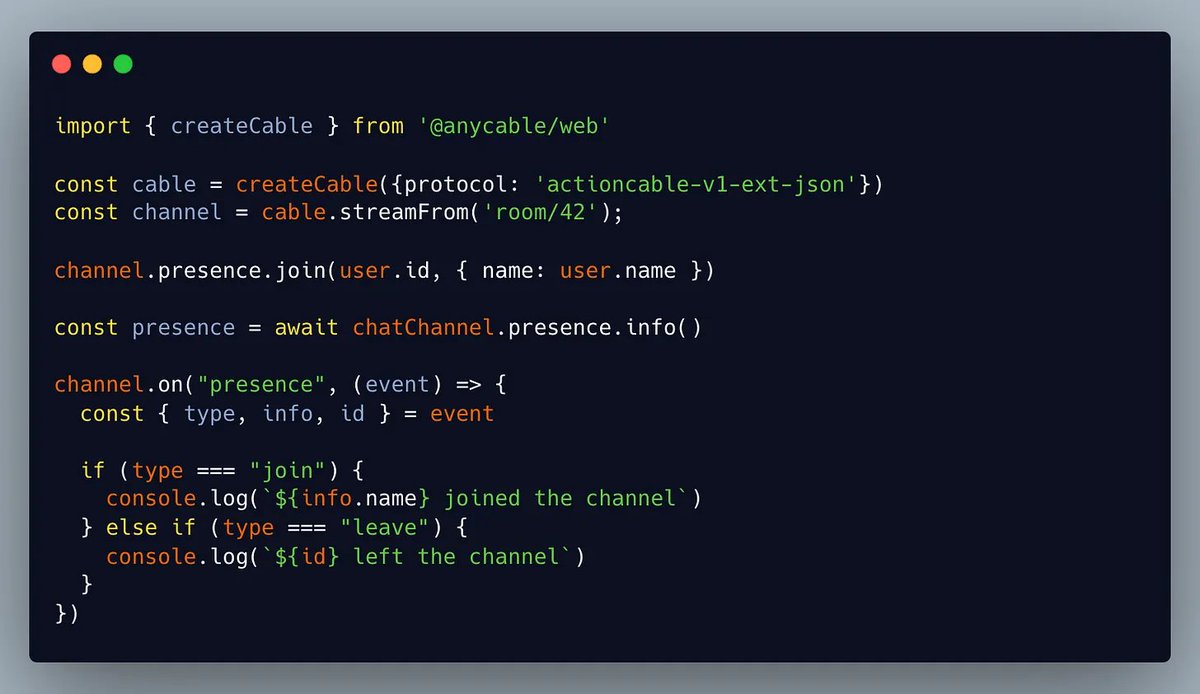
AnyCable v1.6.21 is out!
Fixes, improvements, and better connection storms handling with the new disconnect notification queue design.
https://t.co/H6tBDTT1aF
Here’s what @any_cable’s CLI page looks like in the @terminalwire directory 🤩
I kinda want to add support for logos so these pages take on more of the look and feel of the companies shipping TUIs.
https://t.co/5VqveAgQgP
We compared five ways to run WebSocket servers for Node.js: @SocketIO. uWebSockets.js, and AnyCable (OSS and Pro).
Here’s how @inazarova caught our own load generator lying, and how to keep your WebSocket benchmark numbers honest.
https://t.co/ac9zR50S9w
I wanted to test WebSockets for Node.js on production-grade questions: round-trip latency, deliverability when clients drop and reconnect (unsteady wifi), surviving a deploy (reconnect avalanche), and RAM per connection.
I got a Railway CLI and started testing: @SocketIO, @uWebSockets and @any_cable on the same box (32 vCPU / 32 GB). It wasn't easy: literally months passed as I was figuring things out and resolving limitations of the testing setup. I ended up running 30-50 VMs to emulate the client side!
That's why I'm so glad to present the report https://t.co/7KycEZHTqG
Findings:
1. Default https://t.co/47Qndhom6P and uWS are both at-most-once. Under WiFi jitter at 10K clients (TCP drop every \~15s, \~2s offline), https://t.co/47Qndhom6P delivered 85% and uWS 87%.
2. Embedded WS servers sever every connection on deploy. A rolling deploy on embedded https://t.co/47Qndhom6P froze every user for 2s+ when their node restarted. CSR doesn’t save you, because the state surviving doesn’t stop the socket from dropping. The fix is architectural: run the WS layer as its own service - I know many will disagree but otherwise your users get UI freezing on every deploy - even rolling.
3. uWS is the raw-efficiency king, and it isn’t close. 1M idle connections at \~5.4KB each. For bare transport with nothing else, hard to beat. But it comes at a cost: no guaranteed delivery mode.
Where AnyCable wins and loses: it holds 100% under jitter, runs its WS layer as a separate Go process, so deploys don’t touch connections and recovers connections on its own deployments. AnyCable leads on throughput tail latency. But uWS crushes it on RAM per connection (5.4KB vs 18KB), and in the in-memory jitter test https://t.co/47Qndhom6P + CSR has a shorter replay tail at p99 than we do.
Methodology and code are in the repo. If something looks wrong, please open an issue. I want to make it right:
https://t.co/eiTu2P1xf0
We get our industry news from @Any_Cable's Broadcast. Issue #33 came with the sad news that Heroku is no longer taking on new business and is moving into maintenance mode.
Heroku users can keep running things as usual for now, but it might be a good time to start looking at alternatives.
You can read the full newsletter here:
https://t.co/3oRVgCjCSM
At @any_cable we've been building reliable real-time infrastructure for our customers for, jeez, 10 years now! And we support Durable Streams by Electric: it's an open standard, which means you are not vendor-locked when you run the cloud version!
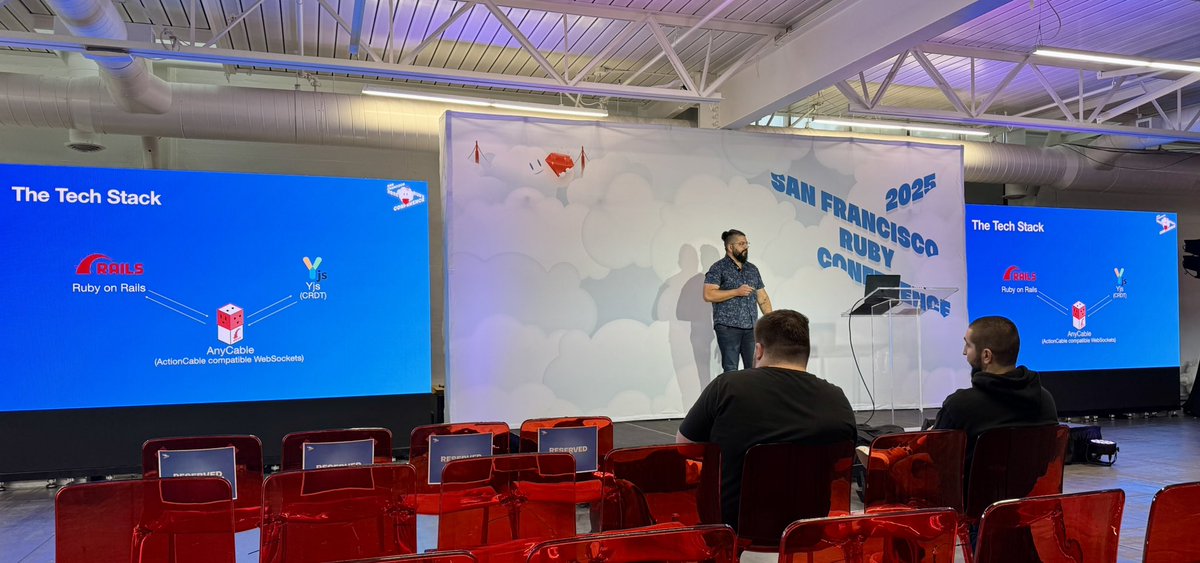
@JPcamara talked about real-time collaboration and invited other participants to try YJs and @any_cable to build a collaborative text editor in a Rails app.
https://t.co/biI6lotxgd
My favorite talk!! @jpcamara used Yjs and @any_cable to build a collaborative text editor in a Rails app, and it was super fun trying it out live with other folks during his talk.
@thruflo@inazarova@ElectricSQL@any_cable Deal 🤝
We have a similar concept, Reliable Streams, which can be used over WS (Action Cable protocol) or SSE (native last-event-id).
Now, we should add a Durable Streams API endpoint.
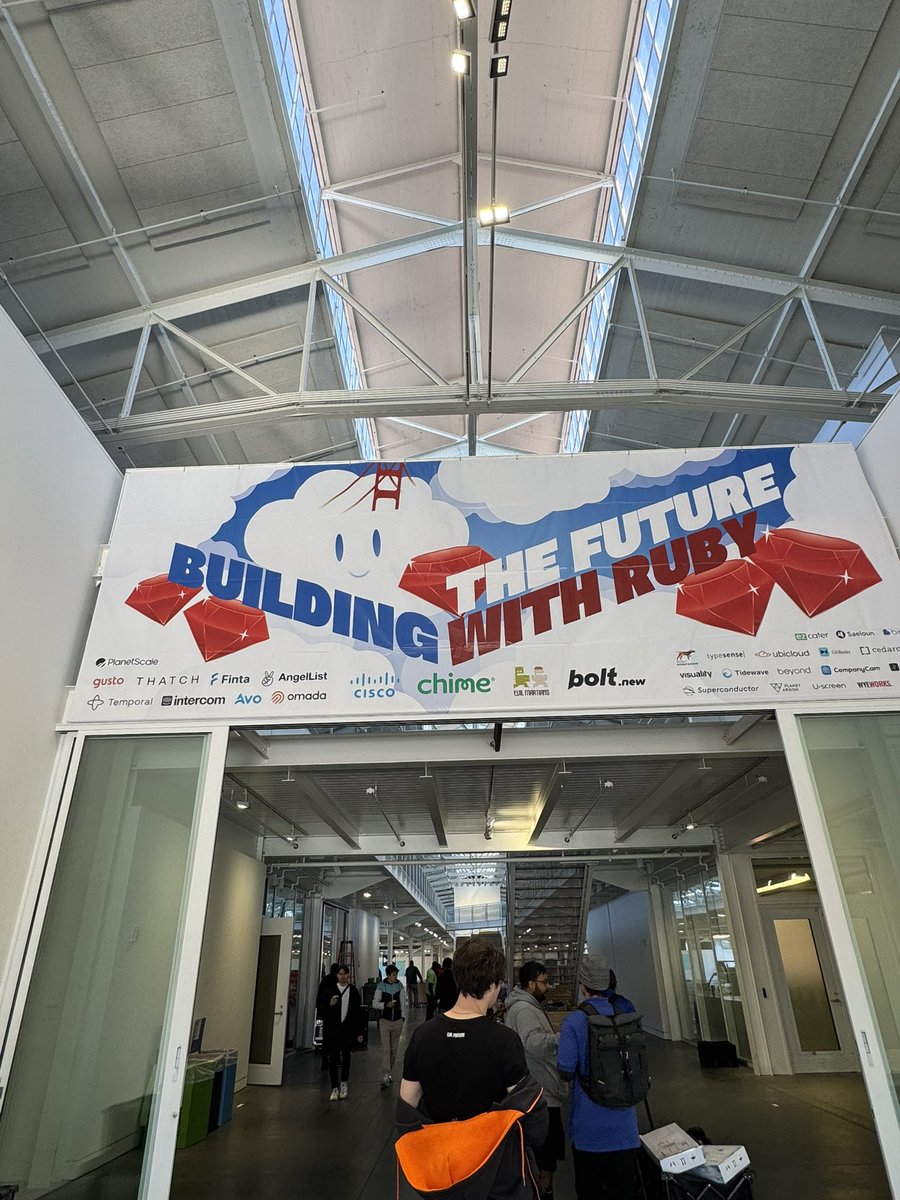
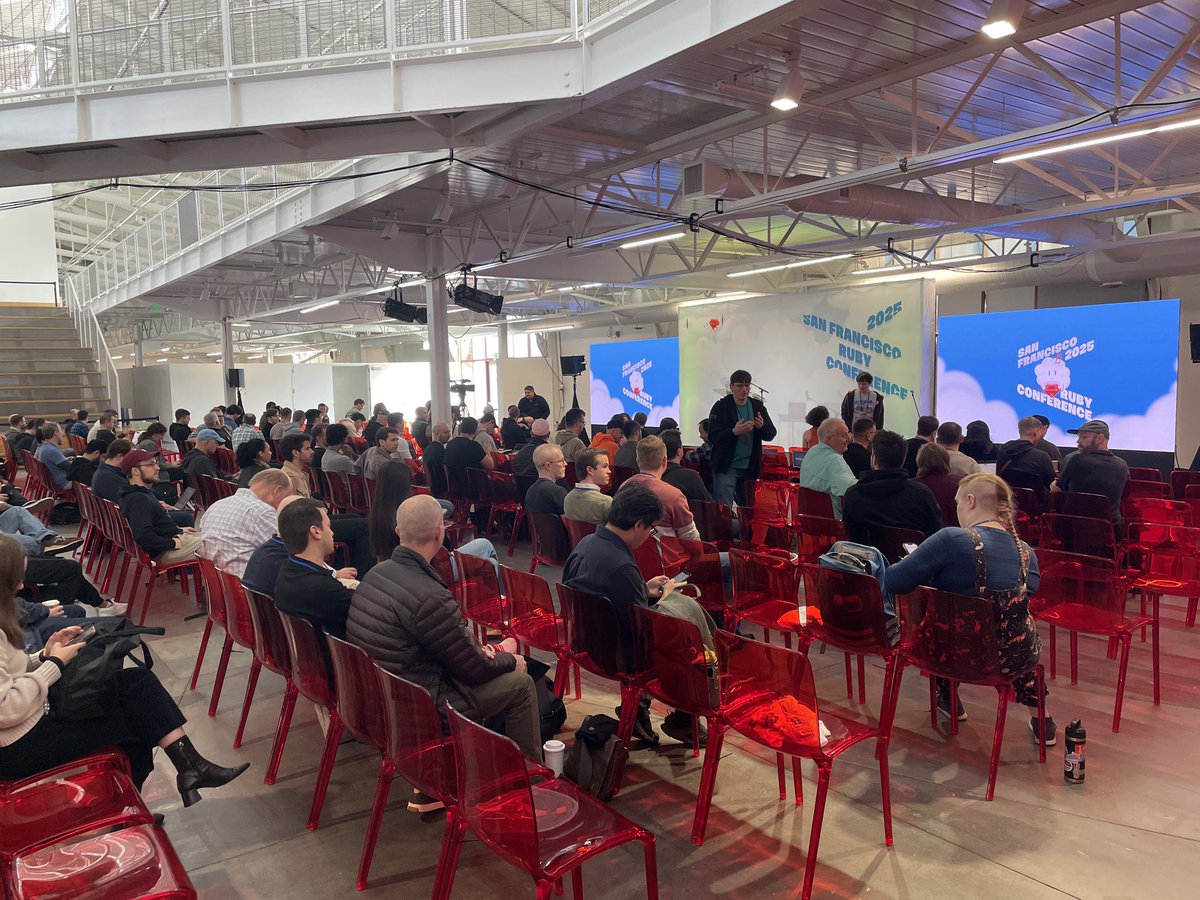
Together with community members, sponsors, speakers, volunteers we @evilmartians ran the most epic @sfrubyconf last week for 410 people and over 2 dozen Ruby startups! I am now positive we can do anything🔥🔥🔥