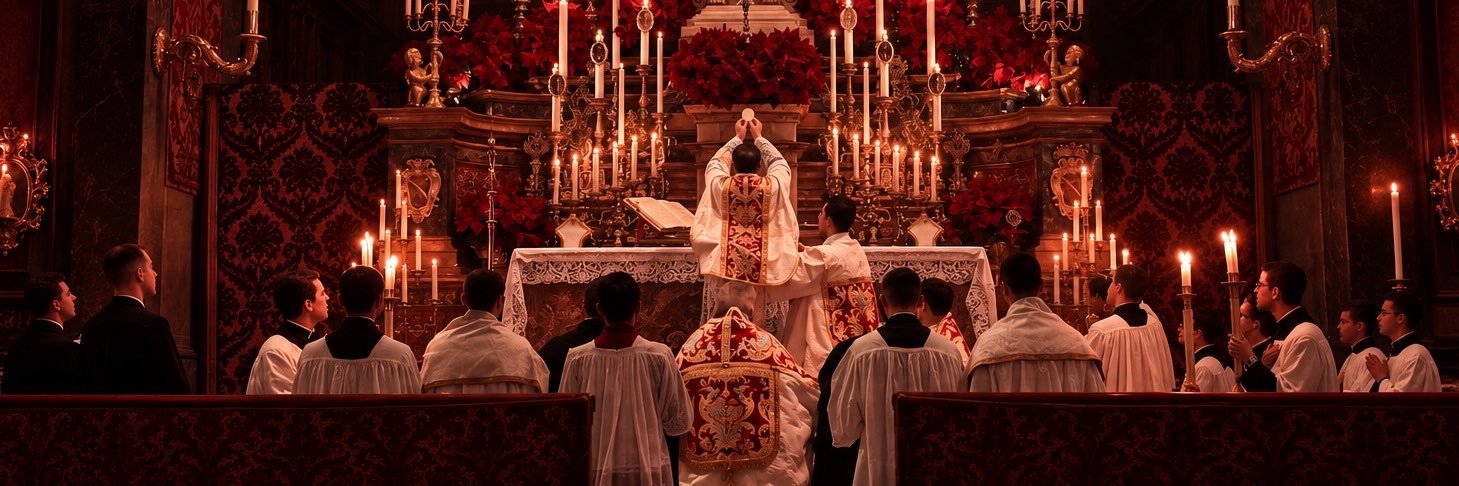
If a firefighter who is entrusted with extinguishing a burning house refuses to act, the bystander who has the means to fight the flames does not become a rebel by taking up the hose.
Necessity does not abolish authority but neither does authority abolish the duty to protect souls.
Salus animarum suprema lex: the salvation of souls is the supreme law.
God forbid. I can already imagine how they would try to spin such a move: “In this renewed season of synodal communion, how beautiful it is that East and West may rediscover together the ancient witness of women in ecclesial service, allowing the Spirit to renew this ministry for our time, for ‘there is neither male nor female, for you are all one in Christ Jesus. (Gal 3:28).”
In my former home parish, before I knew better, a woman would go into the adoration room every morning, open the tabernacle, and shuffle through the individual hosts like a bag of Cheetos to pile them in a ciborium. Particles of Our Lord on her fingers were spilled everywhere and trampled on. Continuous daily sacrilege.
Imagine taking glee in the prospect of excommunicating hundreds of thousands of faithful Catholics, like the ones in this video, all around the world.
Reminder: in 14 countries, the SSPX is the ONLY option for the Traditional Latin Mass and Sacraments.
Something I have noticed in discussions about the SSPX is how rarely their *actual* arguments and positions are addressed.
Instead, their positions are often recharacterized into something easier to attack and far from the truth like, “They deny the Church’s indefectibility,” “they reject the Magisterium,” “they think they’re the true Church,” or “it’s just Protestant private judgment.”
Then, when those characterizations are corrected and the actual distinctions are explained, the response often shifts to labels and attacks rather than addressing the substance. Deliberately misrepresenting someone’s position, attributing beliefs to them they do not hold or attacking their character instead of their argument are sins against truth, justice, and charity, especially when it harms their reputation. The Eighth Commandment still applies in theological disputes.
You do not have to agree with the SSPX. But if their position is wrong, quote what they actually teach, represent it accurately, and show where the argument fails. That would make for a far more serious and charitable discussion.
„Należy unikać zażyłości (...) z tymi, którzy ukrywają się pod maską powszechnej tolerancji, szacunku dla wszystkich religii oraz usilnego dążenia do pogodzenia zasad Ewangelii z zasadami rewolucji, Chrystusa z Belialem, Kościoła Bożego z państwem bez Boga.”
Leon XIII, Custodi di quella fede
When the SSPX calls the New Mass “evil,” people often twist this into a claim that the Eucharist is evil (God forbid), that the Mass is invalid, or that Catholics who attend it are evil. That is not the Society’s position.
“Evil” is used in its classical sense: the privation of a good that ought to be present. The criticism concerns what the rite itself removed, weakened, or obscured.
Compare the texts.
Traditional Offertory:
“Receive, O holy Father… this spotless host… for my innumerable sins… that it may avail unto salvation.”
New Offertory:
“Blessed are you, Lord God of all creation… we have received the bread we offer you… it will become for us the bread of life.”
The first explicitly speaks of a sacrificial offering, sin, and salvation. The second is based on a Jewish blessing formula and emphasizes bread offered as the “bread of life.”
The traditional rite contains repeated references to sacrifice, victim, propitiation, sin, the sacrificing priest, the intercession of the saints, and reverence toward the Real Presence. In the reform, many of these prayers, gestures, and repetitions were removed, reduced, or made optional.
This is why Michael Davies’ comparison with Cranmer matters.
Cranmer reformed the Catholic liturgy by:
- removing or altering explicitly sacrificial language
- suppressing the traditional Offertory
- moving emphasis from sacrifice toward a communal meal
- increasing vernacular worship
- removing prayers and ceremonies associated with specifically Catholic Eucharistic doctrine
- simplifying the inherited rite
Then compare the postconciliar reform:
- the traditional Offertory was removed
- sacrificial language was substantially reduced in several places
- the meal/banquet aspect received greater emphasis
- vernacular celebration became normal
- numerous traditional prayers and ceremonies disappeared
- the inherited Roman rite was extensively simplified
Look at what Cranmer removed from the Catholic Mass, then look at what the Consilium removed.
That does not make the Novus Ordo invalid or mean that Our Lord is not truly present. The SSPX accepts that a properly celebrated New Mass can be valid. Incense, beautiful vestments, Latin, chant, or ad orientem cannot solve the fundamental objection. They may make the celebration more reverent, but they do not restore the suppressed prayers or undo the watering down of Catholic doctrine.
These are only a few comparisons. The Offertory, Eucharistic Prayers, Communion rites, genuflections, signs of the cross, invocations of saints, priestly prayers, rubrics, altar orientation, and other changes could be examined in the same way.
The new rite is deprived of goods that the Mass of all Times possessed. According to the classical definition of evil as the privation of a due good, this is the sense in which the SSPX says the New Mass is evil.
Father, with respect this attacks a position the SSPX does not hold.
1. The comparison isn’t that he rejected Nicaea. It’s that he resisted Church authorities during a crisis while holding to the Faith he recieved.
2. “Evil” means a privation of a due good. The argument is that the reform removed or obscured Catholic elements that ought to be present. (One of my latest posts goes into this) They also dispute the premise that indefectibility guarantees every prudential liturgical reform or discipline must be free from anything harmful.
3. Comparing new, non-infallible teachings with previous Magisterium isn’t Protestantism. The living Magisterium exists to transmit the same deposit of Faith, not replace what came before.
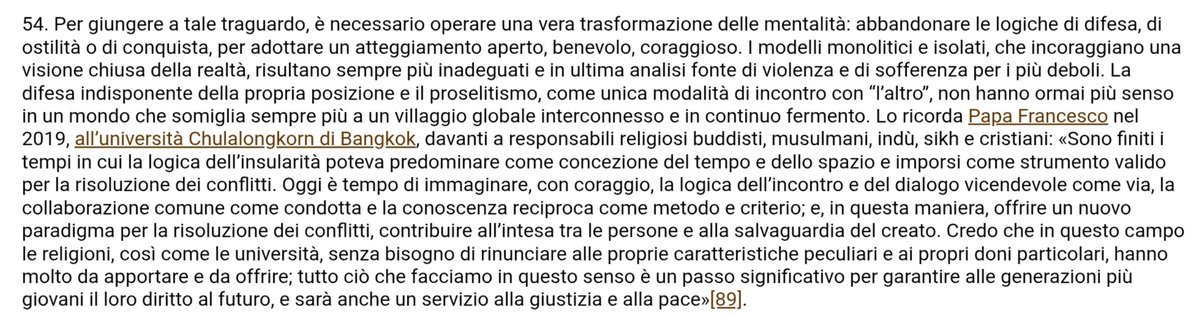
Fernández mide a las religiones por si "están a favor de la paz". Pero ese no es el criterio: la Iglesia no existe para pacificar el planeta, existe para llevar a los hombres al Cielo. La paz es fruto, no fin —san Agustín la llamaba tranquillitas ordinis, el orden que nace de estar vueltos hacia Dios—. Cuando hasta la Doctrina de la Fe empieza a evaluar la religión por su rendimiento geopolítico, ya cambió de patrón: del altar a la sala de prensa de la ONU.
https://t.co/fkJYmEQhVP
JOIN THE WORLDWIDE NOVENA TO FIGHT THE CULTURE OF DEATH
In response to the growing attacks against human life and the increasing spread of the culture of death, Guardians of the Faith have launched a worldwide novena calling Catholics to unite in prayer and spiritual combat.
From September 20–28, Catholics around the world are invited to pray the Novena to St. Michael, St. Gabriel, and St. Raphael the Archangels.
The initiative has already been embraced by Catholic organizations, apostolates, media outlets, and prayer groups around the world, including The Fatima Center, with many others joining the call to prayer.
We pray especially for the **protection of the unborn**, the defense of human life, the conversion of those who advance the culture of death, and the healing and sanctification of our families and society.
🛡️ **St. Michael the Archangel** — defend us in battle.
🕊️ **St. Gabriel the Archangel** — messenger of the Annunciation and the mystery of life.
✝️ **St. Raphael the Archangel** — bring healing to our families and our world.
Let us answer Our Lady’s call with prayer, sacrifice, and reparation. Let Catholics throughout the world unite in this spiritual battle for the protection of human life.
🙏 **JOIN THE NOVENA**
Pray the Novena to St. Michael, St. Gabriel & St. Raphael:
https://t.co/TtOzwDi68R
SEPTEMBER 20–28
“I have set before you life and death… therefore choose life.”
— Deuteronomy
Hear the Message of His excellency Athanasius Schneider
#Catholic #saintmichael #praytherosary
When the SSPX calls the New Mass “evil,” people often twist this into a claim that the Eucharist is evil (God forbid), that the Mass is invalid, or that Catholics who attend it are evil. That is not the Society’s position.
“Evil” is used in its classical sense: the privation of a good that ought to be present. The criticism concerns what the rite itself removed, weakened, or obscured.
Compare the texts.
Traditional Offertory:
“Receive, O holy Father… this spotless host… for my innumerable sins… that it may avail unto salvation.”
New Offertory:
“Blessed are you, Lord God of all creation… we have received the bread we offer you… it will become for us the bread of life.”
The first explicitly speaks of a sacrificial offering, sin, and salvation. The second is based on a Jewish blessing formula and emphasizes bread offered as the “bread of life.”
The traditional rite contains repeated references to sacrifice, victim, propitiation, sin, the sacrificing priest, the intercession of the saints, and reverence toward the Real Presence. In the reform, many of these prayers, gestures, and repetitions were removed, reduced, or made optional.
This is why Michael Davies’ comparison with Cranmer matters.
Cranmer reformed the Catholic liturgy by:
- removing or altering explicitly sacrificial language
- suppressing the traditional Offertory
- moving emphasis from sacrifice toward a communal meal
- increasing vernacular worship
- removing prayers and ceremonies associated with specifically Catholic Eucharistic doctrine
- simplifying the inherited rite
Then compare the postconciliar reform:
- the traditional Offertory was removed
- sacrificial language was substantially reduced in several places
- the meal/banquet aspect received greater emphasis
- vernacular celebration became normal
- numerous traditional prayers and ceremonies disappeared
- the inherited Roman rite was extensively simplified
Look at what Cranmer removed from the Catholic Mass, then look at what the Consilium removed.
That does not make the Novus Ordo invalid or mean that Our Lord is not truly present. The SSPX accepts that a properly celebrated New Mass can be valid. Incense, beautiful vestments, Latin, chant, or ad orientem cannot solve the fundamental objection. They may make the celebration more reverent, but they do not restore the suppressed prayers or undo the watering down of Catholic doctrine.
These are only a few comparisons. The Offertory, Eucharistic Prayers, Communion rites, genuflections, signs of the cross, invocations of saints, priestly prayers, rubrics, altar orientation, and other changes could be examined in the same way.
The new rite is deprived of goods that the Mass of all Times possessed. According to the classical definition of evil as the privation of a due good, this is the sense in which the SSPX says the New Mass is evil.
Il vescovo @BishStrickland ha chiesto di respingere e ripudiare un passaggio della nuova nota vaticana su 'Nostra aetate' pubblicata congiuntamente dai dicasteri per la Dottrina della Fede, per la Promozione dell’Unità dei Cristiani e per il Dialogo Interreligioso.
"La Verità non è in costante evoluzione; la Verità è Gesù Cristo presente con noi nel mondo, e la Sua Chiesa è il veicolo della nostra salvezza. Questa affermazione proveniente dal Vaticano deve essere respinta e ripudiata da tutti coloro che riconoscono in Gesù Cristo e nella Sua Chiesa l'unica via al Padre".
La nota esalta il valore di altre "religioni" e delle filosofie orientali, e ribadisce che l'alleanza di Dio con il popolo ebraico rimane irrevocabile.
https://t.co/Pn3jVJDMCA