Happy to share the recent collaborative work with @kulich_ivan and Jiri Friml's team @ScienceMagazine@lokeshverma203@UniofNottingham Calcium-triggered apoplastic ROS bursts balance gravity and mechanical signals for soil navigation https://t.co/GlItH5xRSE
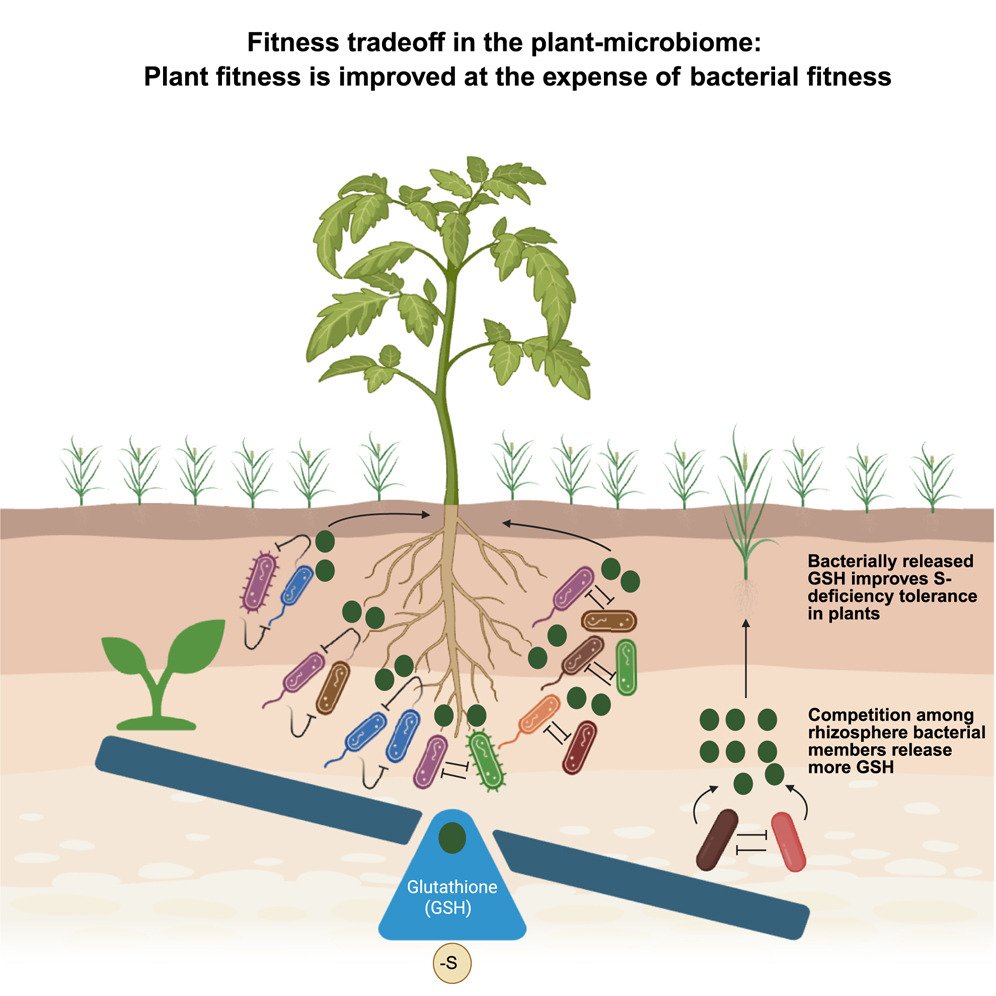
Bacteria enhance sulfur deficiency tolerance in plants
Rhizosphere microbiome is remodeled under sulfur (S) deficiency with competition among bacteria increasing their release of glutathione, which benefits the plant at expense of bacterial fitness
https://t.co/cddWalxrK3
The story from my PhD work is out in @cellhostmicrobe-
https://t.co/1zOgo1l6E9
We introduce the concept of fitness trade-off between plants and their microbiome as a mechanism to respond to environmental cues. This is likely more widespread across host-microbe systems.
An effluent pump family distributed across plant commensal bacteria conditions host- and organ-specific glucosinolate detoxification
https://t.co/Yrm4XWPxzD
Elated to share that I've joined the Dangl lab at @HHMINEWS & @UNC as a postdoc! Grateful for the opportunity to explore exciting questions in plant-microbe interactions with such an inspiring team plant ☘️ 🧬
#postdoc#plantscience
CHOIR is now online @NatureGenet! CHOIR is a new clustering method for single-cell data that evaluates whether clusters represent statistically distinct cell populations. CHOIR scales to millions of cells and works with single-/multi-omic data of any type!
https://t.co/EKg20yMygH
How Bacteria Outsmart Plants—Then Flee the Scene
🧵1/6
Ever wonder how bacteria organize during an infection?!
Our new research in Nature Microbiology uncovers the sophisticated teamwork of Pseudomonas syringae, a notorious plant pathogen.
🔗 https://t.co/7iburDvfjX
Woo-hoo! My friend and colleague, Jeff Dangl, together with Jonathan Jones & Brian Staskawicz @bstask have been awarded the 2025 Wolf Prize @WolfPrize_ in Agriculture. Amazing recognition of even more amazing science:
https://t.co/WHNW5SHZRw
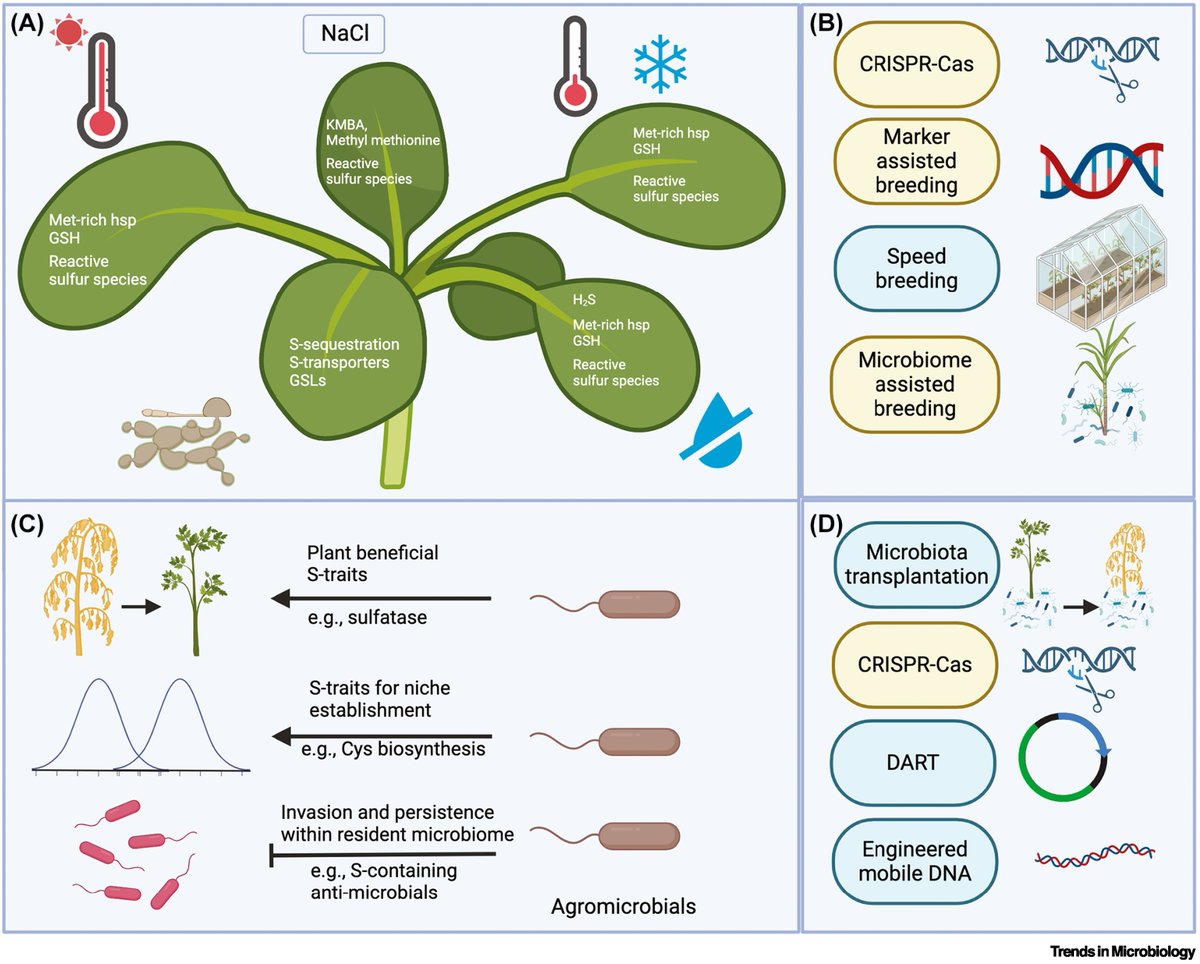
Microbial Sulfur processing is an underappreciated aspect of sulfur emission and sustainable crop production.
We present evidence for this, in our recent review:
https://t.co/2KkSFVNOIl
Exciting milestone! My first paper as part of the Kost Lab, co-authored with @iLeonardoOna and @KostChristian , is now published in @TrendsMicrobiol Check it out here: https://t.co/qAtBnHcqME
Very happy to share the final version of our work on the evolution of broad host virulence in Pseudomonas out now @cellhostmicrobe It’s just in time for the holidays 🎄🦠 https://t.co/JsUxVGvA8F
Featured Article: Se nanoparticles boost rhizosphere
Cross-kingdom-signaling mediates biosynthesis of selenium nanoparticles by selenobacteria. Histamine from Bacillus stimulates p-coumarate in roots, promoting recruitment of growth-promoting rhizobacteria
https://t.co/li0Y5pmcHd