⚠️⛔️ Atención a las palabras de Jürgen Klopp CONTRA LAS PAUSAS DE HIDRATACIÓN:
“ESTO ES EL FÚTBOL SIENDO TOMADO COMO REHÉN POR EJECUTIVOS EN OFICINAS CON AIRE ACONDICIONADO.
Estos supuestos 'descansos por el calor' nos los vendieron como un escudo para el bienestar de los jugadores, una noble espada contra el calor. ¿Pero en realidad? No es más que una jaula dorada construida para patrocinadores.
Cuando vi a los jugadores parados durante un descanso por calor mientras los tiempos de televisión dictaban el ritmo del partido, no pude evitar preguntarme: ¿a quién está sirviendo realmente la Copa del Mundo? ¿A los aficionados?, ¿A los jugadores?, ¿O a los anunciantes?
Un partido de la Copa del Mundo debería fluir como un río. En cambio, estamos construyendo presas en medio de él para que los comerciales puedan pasar. Eso es peligroso para el espíritu del juego. El fútbol alguna vez fue el evento principal, pero ahora corre el riesgo de convertirse en la música de fondo de un espectáculo publicitario.
Nos dicen que estos descansos son por el bienestar de los jugadores, y por supuesto la salud de los jugadores importa. Pero cuando el juego empieza a doblar sus rodillas ante los tiempos de la televisión, la gente va a hacer preguntas. El balón se supone que es la estrella. No un descanso comercial.
La Copa del Mundo es la catedral del fútbol. Sin embargo, a veces da la sensación de que la hemos convertido en un centro comercial donde la caja registradora recibe más respeto que el propio partido.
Si este es el futuro, entonces el fútbol ya no está siendo interrumpido por los anuncios. EL FÚTBOL SE ESTÁ CONVIRTIENDO EN LA INTERRUPCIÓN ENTRE LOS ANUNCIOS”.
Hace siete años escribí sobre aquella Atorrante Niña Sueca.
Es de los artículos de los que me siento más orgulloso.
Tal vez alguno de mis siete lectores lo recuerda.
https://t.co/DYy30CPbdo
A mathematician at Bell Labs noticed that the scientists who won Nobel Prizes and the ones who never amounted to anything were equally smart, equally hardworking, and equally credentialed, and the only thing that separated them was a single question almost nobody is brave enough to ask themselves before they die.
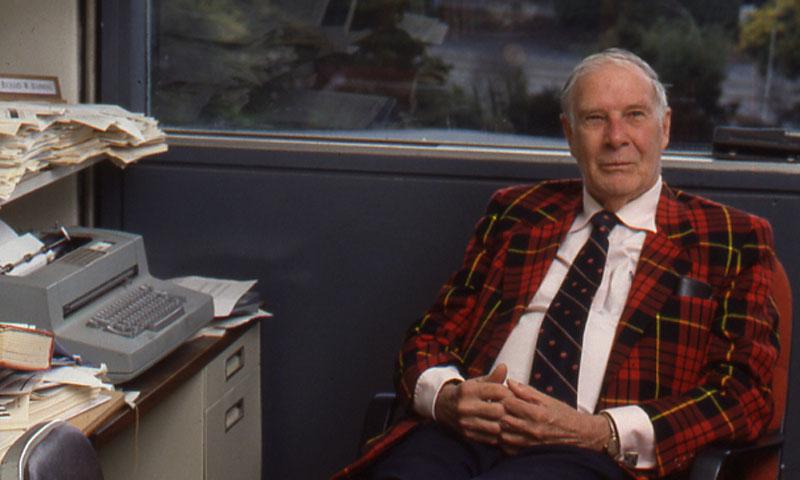
His name was Richard Hamming.
He spent 30 years at Bell Labs, in the same building as John Tukey, Walter Brattain, and a long list of physicists who took home Nobel prizes for work they did down the hall from his office, including the legendary Claude Shannon.
His invention of error-correcting codes made modern computing possible. He has won the Turing Award. And all the while he was creating his own legacy he was secretly doing a study on the people around him.
The study was straightforward. 2 Teams. The legends and the lost. Same I.Q.s. Degrees same. Same desk hours. Same access to the world’s best resources.
And yet, at the end of 40 years in their careers, one group had changed entire fields, and the other group could not be remembered by their own colleagues five years after retirement. He wanted to discover what the actual difference was.
In March 1986, he stood before 200 researchers in a Bellcore auditorium and told them what he had seen.
He said it all came down to one question. And hardly anyone he ever met was willing to ask it directly.
He called it the Friday-afternoon ritual. He spent years blocking out his Friday afternoons and not doing anything productive with them every week. No experiments. No meetings. No deliverables.
He called it Great Thoughts Time. He sat down with a notebook and asked himself a couple of questions in order. What are the most relevant problems in my discipline? And why I am not working on either of them.”
Most weeks, the answer was the same, he said. For a week now he had marched confidently in a direction he did not think was the most important direction. He was a goer. He worked a bit. He was getting clean results that would publish in respected journals. (
And for five days straight he'd been lying to himself about whether any of it mattered.
The reason almost nobody does this ritual is because the honest answer is unbearable. The thing is that if you sit down on a Friday afternoon and say out loud that you are not working on the most important problem in your field, now you have to do something about it.
You have an immediate change in direction, or you have to keep lying to yourself every week from that point on. Most people choose the lie.
In the short term it’s cheaper, but over a career it’s more expensive.
Hamming took the ritual a step further in the Bell Labs cafeteria. He began approaching scientists he barely knew, asking them what they thought the most important problems in their field were.
A week later he would ask them why they had not worked on these problems. Eventually people wouldn't have lunch with him. “I had to keep finding new tables,” he said.
Nobody had a good answer for that, and being around someone who kept asking it made every meal feel like a performance review.
The line that broke me is the line that most people skim over in the transcript. His words: If you do not work on an important problem you are unlikely to do important work.
That’s not motivational line. It is a rational one. You cannot make a great result from a problem that does not matter. Input restricts the output. The choice of the problem is the ceiling of the career.
The transcript has been freely available on the internet for almost 40 years. Stripe Press published the complete lectures as a book. Naval Ravikant quotes it all the time. It’s still given out to new hires at every serious engineering lab in Silicon Valley.
Most people will not run the ritual this Friday. They will be busy. They always are.
still not quite over the fact that i watched 15 year olds get sued for millions of dollars for downloading twelve songs and now we all have to accept AI slop because every tech company in the known universe decided that IP laws don't exist now that they're inconvenient for them
Average voter: housing here became too expensive, we can’t afford it anymore
Economists: your city needs to build more housing to increase supply
Average voter: I don’t want more housing, I want housing to be more affordable
That’s basically the state of the discourse
Como siempre, les pido un RT si les parece interesante, y si quieren leer más textos alejados de clickbait como éste, los invito a que se suscriban a mi Substack, es gratis. Aquí el link https://t.co/4PsS7JjufP
I got tired of googling each Australian baseball player every day so I did something
This tracks every Australian in pro ball, college and MLB.
Still a work in progress but you may enjoy.
Did this for the love of it, so a RT is appreciated
www. https://t.co/bo19ecosia
California’s wealth tax would cost Nvidia’s CEO Jensen Huang $8 Billion.
His response was simple: “I don’t mind paying taxes.”
“Once a year we get a bill, we pay it, and it’s big. I never once thought about it.
We love this country. That’s our way of giving back.”
Australia’s divergence commenced 4 years ago correlated with the boom in federal government recurrent expenditures. An intentional decision to increase the taxation of the productive to fund the less productive. The ambition of a better society is not in question. The question was always what can we afford? We now have the answer. Less than what we have done. This misjudgement by our bureaucratic and political leadership is costly in more than $ terms. Those costs will only grow from here. A pivot is required. This is unsustainable and hence, by definition, a correction will come. The question becomes: will we make the necessary adjustments in a proactive and deliberate fashion, or will adjustment be forced upon us through a disruptive economic process. Much is at stake. Good policy choices and genuine leadership are of more value than ever right now.
The San Francisco Bay Area installed secure 1.8m fare gates at transit stations.
There was an enormous reduction in fare evasion, vandalism and anti-social behaviour.
Revenue increased $10m a year.
https://t.co/ylrkXkHpcq