Developers are quietly building a second brain inside their AI coding tools right now.
And almost nobody realizes how important this shift is.
Claude Code’s "Skills.md" looks like “just another markdown file.”
It’s not.
It’s the beginning of programmable AI memory for software engineering.
Most AI coding workflows today are broken in the same way:
• repetitive prompting
• inconsistent outputs
• forgotten context
• unstable architecture decisions
• AI behaving differently every session
So developers waste hours re-explaining:
“use this stack”
“follow this pattern”
“don’t break this API”
“write code this way”
Over and over again.
"Skills.md" changes that completely.
Instead of prompting the AI every time…
You teach it how your team builds once.
Now Claude starts operating with:
- coding standards
- architecture rules
- debugging workflows
- testing systems
- project conventions
- review patterns
- deployment logic
persisted directly into its workflow.
That’s a massive shift.
Because this is where AI stops feeling like autocomplete…
and starts feeling like infrastructure.
The real breakthrough in AI coding isn’t smarter models anymore.
It’s persistent operational context.
The teams moving fastest right now are not the ones writing better prompts.
They’re the ones building reusable intelligence layers around AI.
That compounds.
Fast.
And the scary part?
Most developers still haven’t noticed this transition happening.
They’re benchmarking models.
Meanwhile advanced teams are quietly building internal AI operating systems around their workflows.
That gap is going to become enormous.
"Skills.md" is interesting because it represents something much bigger than Claude Code itself:
AI that adapts to YOUR engineering system instead of forcing engineers to adapt to the AI.
That changes:
• onboarding
• consistency
• code quality
• iteration speed
• institutional memory
• engineering velocity
A lot of people will look back at these “simple markdown skill files” the same way we now look at:
- Dockerfiles
- package.json
- .gitignore
- tsconfig
Small files.
Huge workflow shift.
The future of AI coding won’t belong to the people with the longest prompts.
It’ll belong to the people who build the best AI environments.
And that transition has already started.
Mejores cuentas de cada lab de IA para mantenerte siempre informado:
Anthropic
→ @karpathy → cuenta imprescindible en IA, acaba de unirse a Anthropic
→ @bcherny → creador de Claude Code, siempre comparte tips muy útiles
→ @trq212 → también desarrollador de Claude Code, escribe artículos increíbles sobre CC
OpenAI
→ @polynoamial → trabaja en investigación de razonamiento, comparte muchos detalles técnicos
→ @gabriel1 → desarrollador de Sora, trayectoria profesional muy interesante
→ @jxnlco → enfocado en experiencia de desarrollador, comparte mucho sobre Codex
Google AI
→ @OfficialLoganK → todas las actualizaciones importantes de Gemini y AI Studio
→ @ammaar → producto y diseño, comparte cosas geniales sobre vibe-coding en AI Studio
→ @fofrAI → casos de uso muy creativos con modelos generativos
Cursor
→ @leerob → la voz más activa detrás de las novedades de Cursor
→ @ericzakariasson → comparte muy buenos insights sobre cómo usar Cursor
→ @mntruell → CEO de Cursor, publica los lanzamientos y datos de uso más importantes
xAI
→ @milichab → se unió hace poco a xAI, comparte novedades sobre Grok
→ @skcd42 → también cubre los lanzamientos grandes de Grok
→ @elonmusk → Elon hace muy buen trabajo reposteando y dando visibilidad a todos los productos de xAI
Me he dejado a alguien?
Anthropic just officially released the blueprint for creating a company with Claude Code and it's mind-blowing😭
CEO: 1 human (who sleeps)
Employees: several AIs
Activities: the AIs divide up the tasks and move forward on their own
Work is literally dying... I've summarized the full guide below, read it when you've got 5 min ⤵️
If you want the AI to work while you sleep → save this as a bookmark 🔖
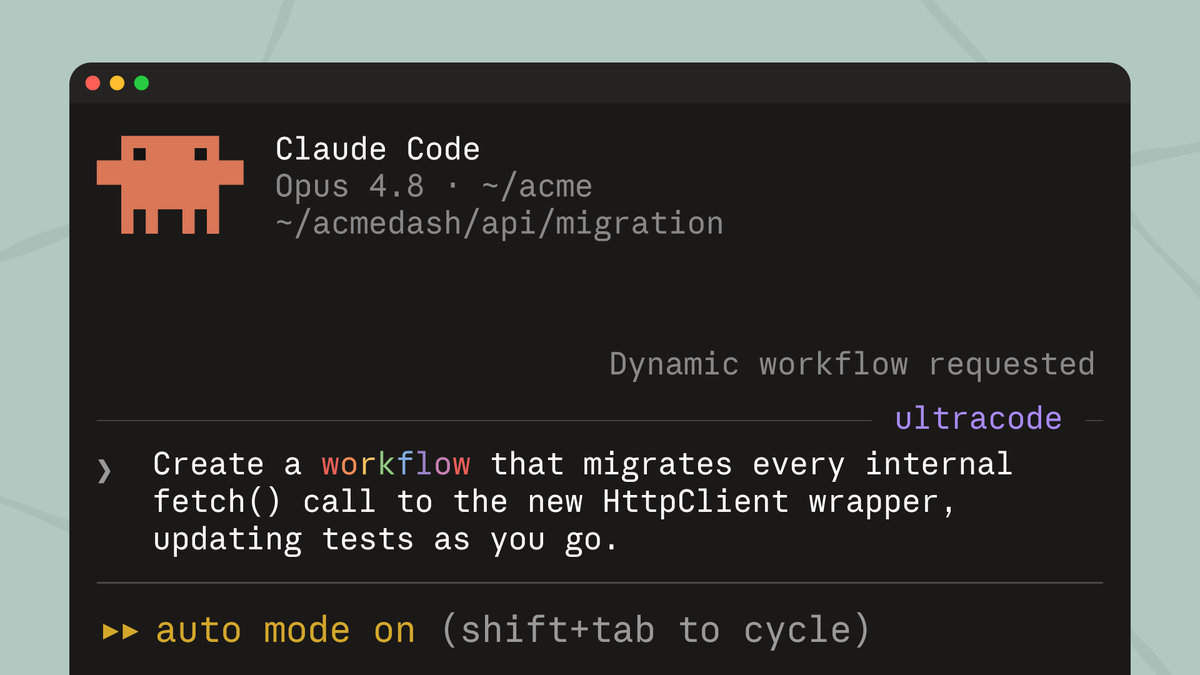
New in Claude Code (research preview): dynamic workflows.
Claude writes an orchestration script on the fly, then spins up a large fleet of coordinated subagents in parallel to take on your most complex tasks.
Use the word "workflow" in a prompt to get started.
Anthropic's own team just showed how to build production AI agents.
37 minutes. free. from the engineers who built it.
watch the workshop. bookmark it.
you spent 6 months managing every workflow yourself.
they just showed how to put all of it on autopilot.
Then read the guide below.
Excited to share our most powerful new Claude Code feature: dynamic workflows!
Mention "workflow" in a prompt and Claude will dynamically create an orchestration plan that it strictly follows, allowing you to confidently trust that every stage happens in the right order even across 100s of agents.
Andrej Karpathy just explained the future of software engineering without directly saying it.
The best AI engineers are no longer “prompting.”
They’re building systems around the agents.
Karpathy’s biggest insight wasn’t:
“Claude can code.”
It was:
LLMs become dramatically better when you force them into disciplined workflows.
That’s why "CLAUDE.md" files are suddenly everywhere.
Not because they’re prompts.
Because they behave like an operating system for the agent.
Karpathy called out the exact problems with AI coding:
- models assume instead of asking
- they overengineer simple tasks
- they hide confusion
- they rewrite unrelated code
- they optimize for completion, not correctness
So developers started encoding rules directly into the workflow:
→ Think before coding
→ Simplicity first
→ Surgical edits only
→ Goal-driven execution
And the results are wild.
People are now running multiple Claude Code agents in parallel like engineering teams:
• one agent researching
• one debugging
• one writing tests
• one optimizing code
• one validating outputs
Not “AI assistance.”
Actual orchestration.
And this part from Karpathy changes everything:
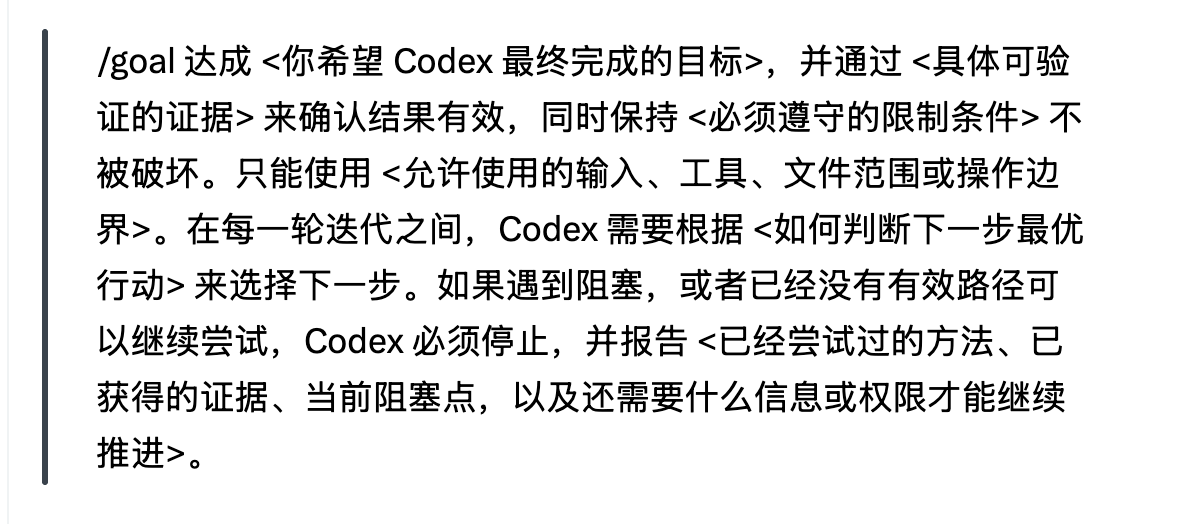
“Don’t tell the model what to do. Give it success criteria and let it loop.”
That is the shift.
From:
“write this function”
To:
“here’s the goal, constraints, tests, and verification system — now iterate until correct.”
The craziest part?
This already feels like a phase shift in engineering.
A lot of developers quietly went from:
80% manual coding → to 80% agent-driven coding in just months.
Not because AI became perfect.
Because the leverage became impossible to ignore.
We’re entering an era where the highest leverage engineers won’t necessarily be the best coders.
They’ll be the people who build the best systems around AI agents.
Microsoft just open-sourced SkillOpt!
A framework for training agent skills like neural networks:
SkillOpt treats a plain markdown file as the trainable parameter of a frozen LLM agent, applying the same optimization discipline used in weight training: learning rates, validation gates, batch sizes, and epoch schedules.
The analogy maps precisely. The skill document is the parameter. Trajectory-derived edits are the gradient direction. An edit budget is the learning rate. A held-out split is the validation check.
Here's how it works.
A frozen model runs tasks with the current skill and produces scored trajectories. A separate optimizer model analyzes failures in minibatches, proposes structured add/delete/replace edits, and ranks them under a budget cap.
If the candidate skill improves performance on a held-out split, the edit is accepted. If not, it's rejected and stored so the optimizer avoids repeating failed changes.
The deployed output is a single best_skill. md file, typically 300 to 2,000 tokens. No weight changes, no extra inference-time calls.
The learned rules are compact and readable. These read like rules a thoughtful engineer would write after a day with the benchmark, except they were discovered automatically.
Learn more:
Paper: https://t.co/sdj5DW7t9h
GitHub: https://t.co/W3DcpBCni0
SkillOpt isn't the first system to treat skills as something you can optimize.
Hermes Agent independently built the same idea through a combination of skill_manage, Curator, and an optimization loop called GEPA that scores, mutates, and promotes skill documents across runs.
Two teams, different architectures, same conclusion: the skill file is the highest-leverage thing to optimize in a frozen-model agent.
I wrote a deep dive on how the Hermes agent works and covered all of these topics briefly.
The article is quoted below.
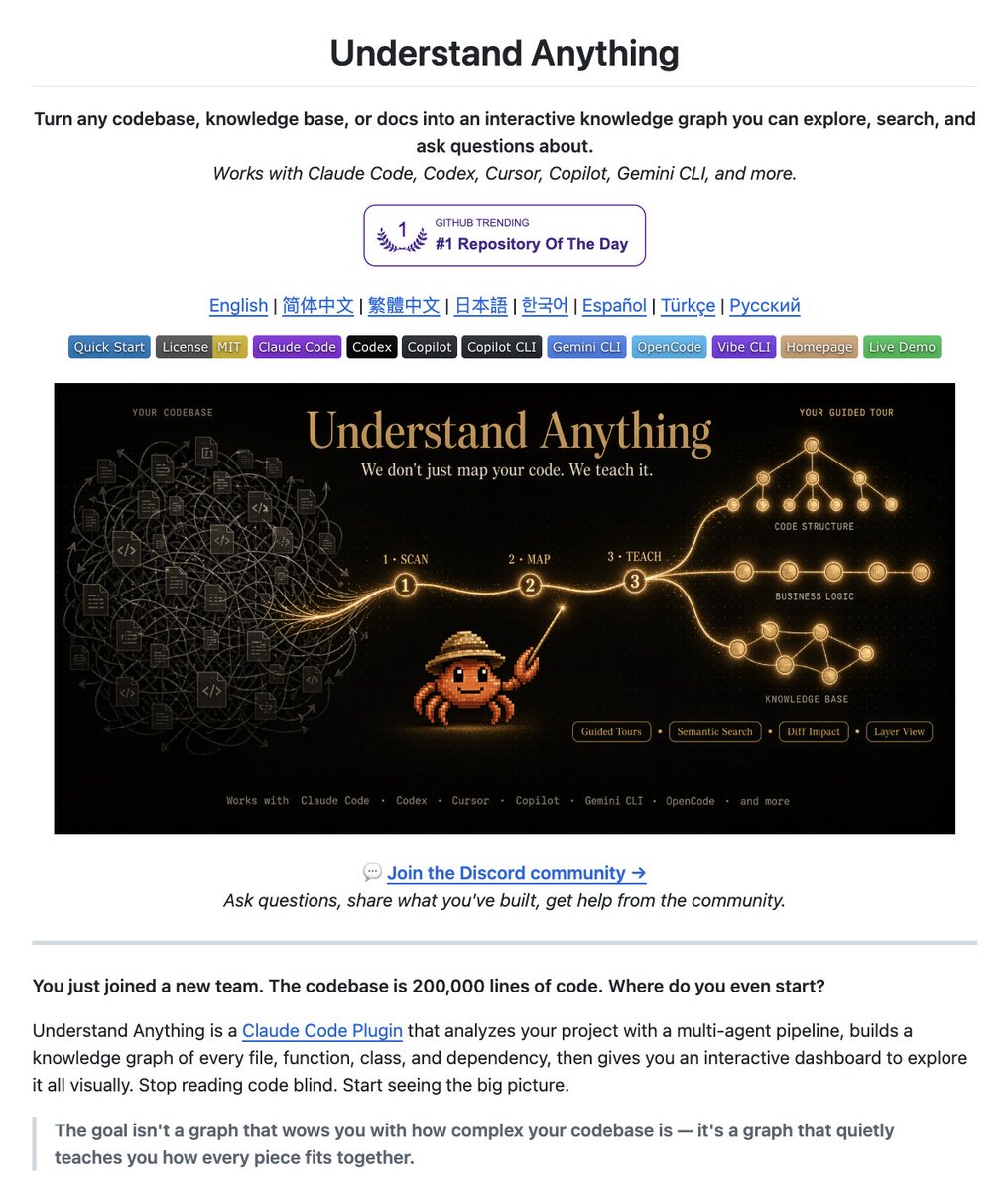
CodeGraph replaces file-grepping with a pre-indexed knowledge graph so coding agents spend less time and money exploring your codebase.
- 70% fewer tool calls by querying symbol relationships instead of scanning files
- 35% cheaper on average across 7 real-world codebases
- Works with Claude Code, Cursor, Codex, opencode, and Hermes Agent
- Self-contained binary, no Node.js required for installation
This is ACTUALLY context engineering for your AI coding agents.
It turns any codebase into an interactive graph your agent can query.
Works with Claude Code, Codex, Antigravity.
100% Opensource.