Today I Learnt: The deepest part of Lake Victoria is only 84 meters deep. In contrast Lake Tanganyika is 1.4km at its deepest. Our deepest lake in kenya is Turkana at 109metres deep.
🚨 For the first time, large consumers in Kenya can bypass Kenya Power and buy electricity directly from independent producers. It is a landmark liberalisation, but beneath the commercial excitement sits a constitutional question few are asking: who is left to carry the grid when the biggest customers walk away?
The reform comes through the Energy (Electricity Market, Bulk Supply and Open Access) Regulations, 2026 (Legal Notice No. 79 of 2026). They end Kenya Power’s monopoly as the sole buyer and seller of bulk electricity, allowing consumers with at least 1 MVA of load on the distribution system, or 10 MVA on transmission, to contract directly with generators on one-to-ten-year terms, paying a “wheeling charge” for using the grid, with EPRA approving the pricing.
The commercial logic is welcome: competition, choice, and potentially cheaper, cleaner power for industry. But the legal tensions deserve as much attention as the opportunity.
The first is an equity question. Electricity is not an ordinary commodity; access to it underpins the dignity and development the Constitution values, and Article 27’s equality guarantee, read with the broader promise of shared national resources, assumes a system that serves everyone. Open Access, by design, benefits only the largest consumers, those who can meet the 1 MVA and 10 MVA thresholds. When big industrial users negotiate private deals and effectively leave the pooled system, the fixed cost of maintaining the national grid, the poles, lines and rural connections, falls on a smaller base of remaining customers: households, small businesses and the very consumers least able to absorb higher tariffs. Liberalisation for the few can quietly raise costs for the many, and that is a distributional and equality concern the regulator must actively manage, not assume away.
The second is the question of who guarantees supply. Kenya Power has long carried a universal-service obligation, the duty to connect and serve even unprofitable areas. As the market fragments and generators contract selectively with lucrative clients, that public-interest obligation must be deliberately preserved and funded, or it erodes. A market that serves the profitable and neglects the rest is not what constitutional access to a public good contemplates.
The third is regulatory and public-participation rigour. Since these regulations reshape a public good, EPRA’s approval of pricing and wheeling charges must itself meet the standards of fair administrative action under Article 47, transparent, reasoned and non-discriminatory, and the broader policy direction, now before Parliament as Sessional Paper No. 5 of 2026, must satisfy the Article 10 requirement of genuine public participation before it hardens.
The takeaway for businesses is to seize the opportunity Open Access offers, and contract early. But the takeaway for policymakers, and for all of us, is subtler: a liberalised electricity market is lawful and desirable only if it is structured so that opening the door for large consumers does not close it, or raise the price of entry, for everyone else. Efficiency and equity must be engineered to coexist.
👉 Follow @Lexken_EMSLaw for practical legal insights on energy, regulatory compliance and constitutional law.
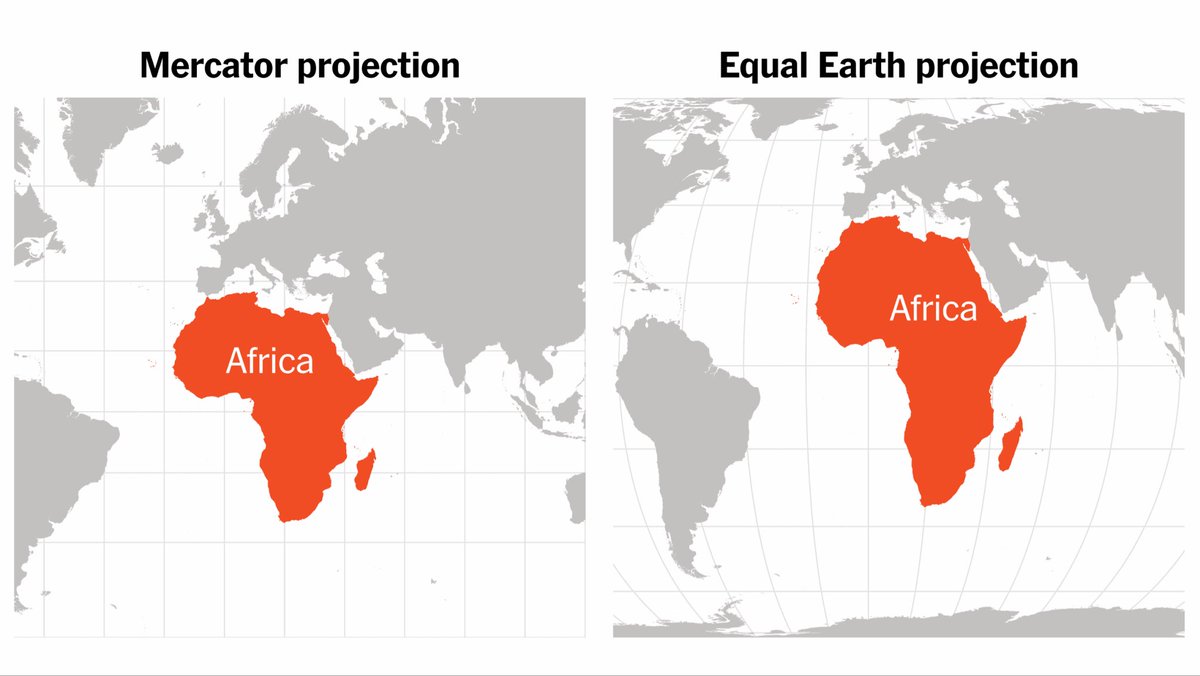
US Rep says they will vote NO on resolution. This is what the U.S. rep told the GA before the vote.
"While this initiative is presented as an anodyne effort to update cartographic proportions, the United States clearly sees it cannot be separated from the much larger and more radical ideological project it belongs to, as its most vocal and committed proponents plainly and openly state. Instead of focusing on genuine problems of international peace, prosperity, or good relations, this body is debating map projects from the 16th century and their role in promoting reparations and cognitive justice. Resolutions like this one and the ideological agenda they promote are barnacles on our work here, and the reason this institution is losing its credibility, when the United Nations questions why it is losing legitimacy in the world and is not taken seriously time and again, we point to resolutions such as this. We urge countries to instill common sense to this body and fully reject this text. The United States will vote no on this resolution."
#sabcnews
WHY KING OYO WAS CALLED OYO - THE LUO SECRET OF TOORO AND BUNYORO
If you are a Mutooro or a Munyoro, your King has a Luo name. Oyo, Olimi, Rukidi, Winyi, Kaboyo, Duhaga. How? Long ago, we had no Babiito, we had the Bachwezi. The Kitara Empire was powerful, with its capital at Bigo bya Mugenyi, but then things fell apart. King Wamara's cows started producing blood instead of milk, Mugenyi's sacred cow Bihogo died at a salt lick, and rebellions broke out everywhere. Wamara called his diviners, who brought a fattened calf, rinsed their mouths with milk and slaughtered it to read the future, but when they cut it open there were no entrails inside.
No one could explain it until a Luo diviner named Nyakoka from across the Nile came forward. He hit the head and the legs of the calf and the entrails fell out, covered in black soot from the fire. He interpreted the omen: an empty stomach means the reign of the Bachwezi is over, entrails in the head and legs mean the Bachwezi will survive only as spirits in the Mbandwa shrines, and the black soot means Kitara will be taken by dark strangers from another land. The Bachwezi tried to kill him for this prophecy, but he escaped north across the Nile back to Bukidi, today's Lango and Acholi.
Who was waiting in Bukidi? Years before, a Chwezi Prince called Isimbwa had gone hunting in Luo land and left his son Kyomya behind. Kyomya married a Lango woman, Nyatworo, daughter of Labongo of the Mukwonga clan, and their child was of mixed blood. They called him Isingoma Mpuga Rukidi - Isingoma meaning father of drums, the Bantu name his subjects gave him, Mpuga from empuuga, the black-and-white cow symbolizing his mixed ancestry, Rukidi from his birthplace, and Labongo from his Luo grandfather. He and his brothers were hunters, loved by the Luo people. Nyakoka found him resting under a Bito tree, which is why they are called Babiito, and told him: "Kitara has no king. Go and take it."
So a small group of Biito-Luo crossed the Nile - legend says they had to sacrifice a child to cross - and when they arrived at the empty Chwezi capital, the Banyoro viewed them with suspicion because they were half Bantu and half Luo. Rukidi asked Wamara's wives, Bunono and Iremera, "Where did the Bachwezi go?" They answered, "They disappeared towards Lake Victoria, they will never return." He took the drum, and that was the start of Bunyoro-Kitara. The new kings lost their Luo language and spoke Runyoro, but they kept Luo names as throne names. That is why the first Bunyoro kings are Rukidi, Ocaki, Oyo Nyiba, Winyi I, Olimi I, Chwa, Nyabongo and others, because when you become Omukama you drop your childhood name and pick an ancestor name to prove you are a true Mubiito.
That is why the founder of Tooro in 1830, Prince Kaboyo who rebelled against his father Kyebambe III of Bunyoro, called himself Kaboyo Olimi I on the throne, taking a Luo ancestor name, and why Oyo's father named him Oyo Nyimba before going to Cuba as ambassador, with elders later adding Rukidi IV after his grandfather. They even brought Empaako, the word pako itself is Luo meaning to praise someone, and names like Amooti, Akiiki, Abwooli and Ateenyi are Luo pet names with direct meaning in Luo language. The Babiito are also the only clan in Bunyoro that does not marry outside; they marry within to keep that royal blood. Even in Buganda, Rukidi's twin brother is Kato Kimera, the third King of Buganda. So we are Bantu people, but our kings are sons of the Luo. That is why the Tooro anthem says, "We are children of Bachwezi, grandchildren of Batembuzi, but sons of Rukidi Mpuga." Oyo was not just a name. It was 800 years of history. Rest well, Rukidi IV.
South Sudan is the ancestral cradle of millions across East Africa. Around the 15th century, migrations from Bahr el Ghazal birthed major regional groups:
🇺🇬 Acholi, Lango, Alur (Uganda)
🇰🇪🇹🇿 Luo and Joluo (Kenya & Tanzania)
🇸🇸 Shilluk, Anyuak, Acholi, Jur Chol, and Pari in South Sudan.
Formed from Semitic, Nilo-Saharan, and Cushitic peoples with cultural ties to Egypt and Kush.
Luo were originally a light-skinned community with the culae of Egypinfluenced by Egypt, Egyptian culture, Tekidi, Kush, and Meroe.
They migrated from Kar Thum (Khartoum) to Wau in the Bar-el Ghazal region in South Sudan. It was here that they met a dark-skinned people who referred to them as Jur Chol (the aliens passing through the blacks).
Anthrax (opere) outbreaks and population growth wiped out their livestock between 990 and 1125. They then turned to fishing along the Nile for survival, becoming Jo-Oluo-Aora (people who follow the river), shortened to Luo.
Ma Pharaoh, Hi 👋 👋 👋
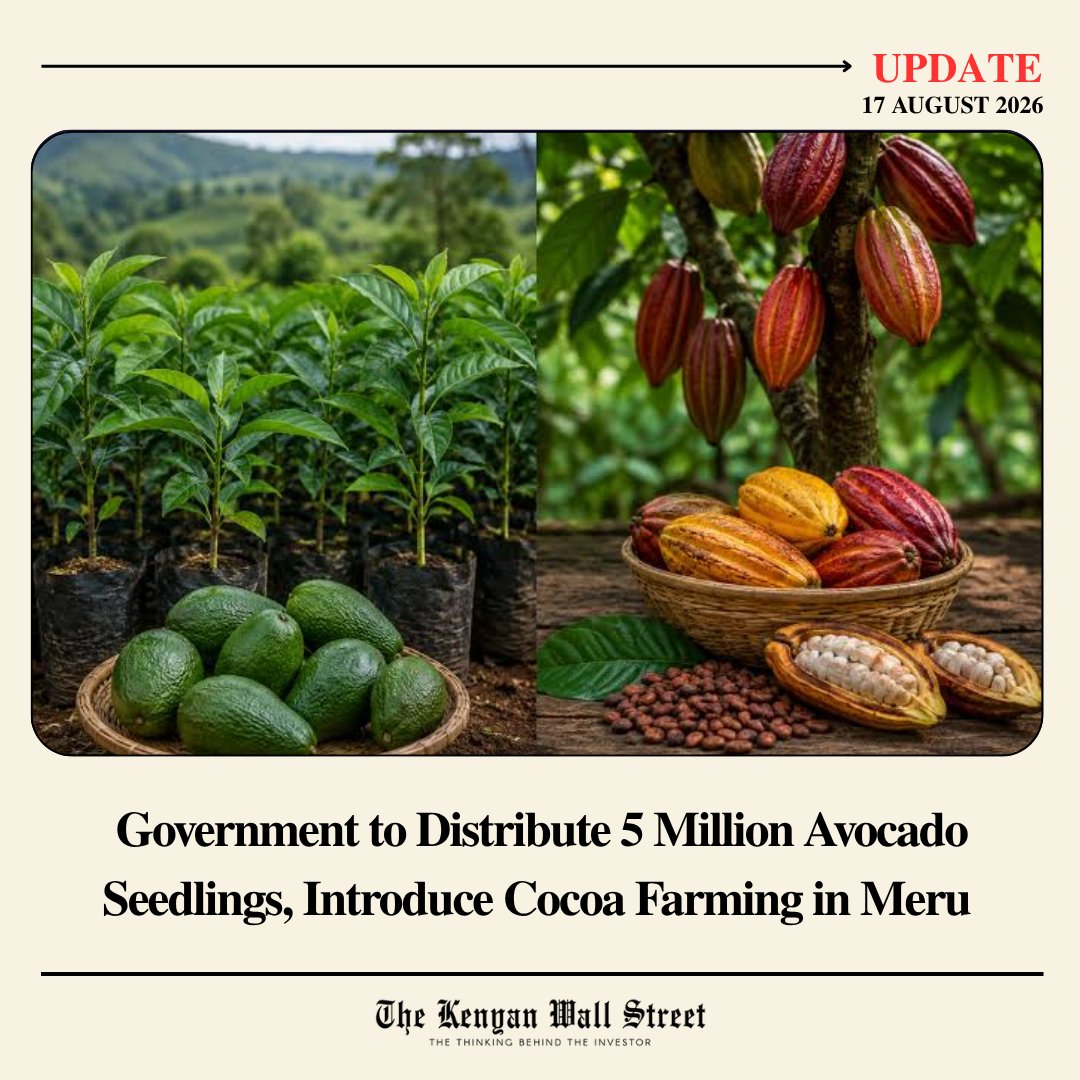
The Kenyan government will distribute five million avocado seedlings and one million cocoa seedlings in Meru County under an agricultural expansion programme aimed at boosting production and farmers' incomes, Forestry Principal Secretary Gitonga Mugambi announced.
The initiative seeks to strengthen Meru's position as a leading avocado-producing region while introducing cocoa as a new income-generating crop, reducing reliance on traditional farming. Farmers will receive agricultural extension services, training, and access to quality planting materials to support the programme, which the government expects to boost export earnings and value addition.
Sierra Leone’s $0.23/kWh residential electricity price is easily the highest in Africa. At $0.01/kWh Ethiopia's residential electricity price is the lowest.
🇪🇹 Ethiopia is building the $2.8 billion Koysha Dam on the Omo River, a 2,200 MW hydroelectric project with eight turbines and a 170-metre-high dam that will hold about 9 billion cubic metres of water.
Once complete, it will generate roughly 6,460 GWh a year and, together with the GERD and Gibe III, help turn Ethiopia into one of Africa’s biggest electricity producers and exporters.
@Mckotwo_ 1. Slums are not “housing” they are organic self sustaining communities with economic. social systems. High rise apartments cannot provide those.
2. Many slum dwellers are migrant workers. not after good city life. They want to save/send money home. They move to another slum.
Kenya earned $279m in taxes & royalties from Base Titanium over 10 years of mining Kwale's titanium. Shareholders got $156m in dividends in just 28 months. Minerals are public property (Art. 62); our royalty rates say otherwise. The maths don't "Math" up @ConstantCap@kimgathogo
The bill that seeks to give the government power to set minimum and maximum fares for matatus and other public service vehicles has moved forward in Parliament.
It aims to prevent sudden fare hikes, but matatu operators oppose it, citing rising fuel and operating costs.
My weekly electric cooking digest. The total cost to cook was KES 30 this week (last week it was KES 54 but there was a blackout this week). At this rate it's going to cost at most KES 200/month.
1/2 Can we do a transparent deal for once ?
Jaindi Kisero Is Right, and Kwale Cannot afford to be ignored. @jaindikisero
Fly into Mombasa or Diani on a clear day and you will see them dark green patches of forest breaking up the coastline's sprawl of human settlement. Kaloleni. Kinondo. Ukunda. Tsunza. Mrima et al these are not leftover bush. They are Kayas, the sacred forest shrines the Mijikenda have guarded for centuries, long before anyone thought to clear this coast for houses, hotels or highways.
Mrima is a gazetted National Monument sitting on what may be one of the largest untapped rare earth and niobium deposits on earth, and it is sacred ground for the Digo and Duruma community specifically.
I am a resident of both Mombasa and Kwale, and I want to be direct Jaindi Kisero's Business Daily column on the Mrima Hill tender said out loud what many of us on the coast have been thinking for months.
Kisero says he went to the Ministry of Mining for an update on the procurement and asked the Principal Secretary directly whether firms from a powerful country had been quietly allowed to submit bids after the official deadline. He got a reply, but it left out the one detail that actually matters, the names of the shortlisted firms. He was told only that evaluation was complete, that firms had been invited to the next stage, and that this stage should close by the end of October no press conference o public list just a WhatsApp reply with the headline missing.
His conclusion was blunt, and correct. Kenya's Ministry of Mining is, on its own, not equipped to go toe to toe with Washington backed venture lawyers, Chinese state syndicates and international corporate dealmakers. He called for the government to bring in independent, world class transaction advisers, mining attorneys and rare earth specialists to manage the next stage, rather than leaving a deal of this size to routine civil service capacity.
He also made the point that total transparency, publishing the environmental impact studies, the radioactive waste management plans, and the royalty sharing formula, is the single best defence against exactly the kind of opportunistic litigation and rumour mongering that has plagued Kenyan mining deals before. Secrecy is what gives middlemen room to manipulate public opinion. Openness starves them of it.
Most importantly for those of us from Kwale, Kisero said plainly that residents must not endure a repeat of the titanium experience, and that any benefit sharing this time should be structured into transparent, community governed trust funds that bypass political gatekeepers and self appointed community "representatives" entirely.
Why this lands differently for the Digo and Duruma
Kisero writes as an economics columnist looking at procurement discipline and geopolitics. I want to add the piece he could only gesture at Mrima is not simply real estate with valuable rock under it. It is a living shrine. Once a Kaya forest is opened up for pits, haul roads and processing plant, there is no restoration plan on earth that gives back what generations of elders have preserved.
Section 7(1)(kk) of the Mining Act prohibits mining in gazetted national monuments, and that is precisely the clause now before the High Court, where the Centre for Litigation Trust has petitioned to halt any Kenya US agreement until contract terms, environmental assessments, ownership structure and benefit sharing are disclosed. That petition is still undecided. The legality of touching Mrima Hill at all remains an open question even as the commercial shortlist races toward a decision.
Mrima Hill niobium deal calls for transparency https://t.co/izCP7MUZYD