I see a lot of posts about the smartest people being pattern recognizers.
That isn’t correct.
Here is how “smart” actually works, from simplest to most advanced. Most of us experience several of these, especially when we are upset:
1. React to events: evaluate how something makes you feel right now. Positive and negative emotions do the thinking. More common than it seems when you look closely at people, and at ourselves when we aren’t at our best.
2. React to patterns: events trigger memory. Memory recalls associated patterns from knowledge and lived experience. Positive and negative emotion reacts to the pattern, sometimes having a calming effect (“don’t worry, we’ve dealt with this before”), sometimes having an illogical effect when a pattern generalizes and overwrites nuance (“founders are all this way”).
3. Find exceptions to patterns: this is the classic “problem solver” who doesn’t accept “this is just how it is.” They are not rooted in patterns but in finding ways of escaping a pattern’s defaults to get better results.
4. Systems thinkers: do not think in patterns but instead think in the broader causal systems that create those patterns, exceptions, and nth-order effects. They see how the dots connect, can spot side effects to the solutions level 3 thinkers miss (the downsides of bias to action, accountability, etc. are very clear to them), and they create nth-order strategies to achieve outcomes indirectly instead of directly (like understanding that culture is actually the thing responsible for speed and engagement, not ever directly asking for either).
5. Systems generators: paradigm shifters who sculpt environments, cultures, mantra, and who shift what is important (“the score takes care of itself, just focus on getting the little things right”). Level 4 is close, but 5 is constantly generative and aggressive at reconfiguring others’ mental models to hack a culture into generating personal and interpersonal phenomena that are otherwise very uncommon or even punished.
Pattern recognition is a low level of intelligence, not a high one. And this is important because you can force your mind and encourage your team to force their minds to think more frequently at levels 4 and 5, which are the only levels where true understanding and low-risk decision making occur.
Today, try a level 4 thinking approach to at least one decision. Think through what dots connect, what side effects are likely, and how to get a result indirectly instead of directly. This is what smart actually is.
Without stated ideals, feedback is a difference of opinion.
With them, feedback is the difference between what should have happened and what did.
Stating ideals is one of the defining characteristics of great leadership.
The things you should learn from a coach:
1. Self awareness. Always first.
2. Self control. Eliminate impulsivity.
3. Greater observation. You see less than you think.
4. Understand personalities. They aren’t like you. And can’t be.
5. Learn truth. When to hold your ground.
4.8 is better than 99.99% of coaches at 1-4. But it is firewalled from 5. The tuning is very clear: always create balance and push 1-4. At the pinnacle of learning and leading, 5 must be learned.
But save the money and confusion and use 4.8 for a while so you’re ready for 5. Then, find the 0.01% coach who is a truth knower.
A year ago, Luis von Ahn put Duolingo's "AI-first" memo on LinkedIn, joining a wave of CEOs calling for the radical transformation of their organizations.
What's been most fascinating to watch is his reflection a year later on what parts of his AI transformation playbook haven't panned out:
1️⃣ AI driven design has delivered lackluster results.
"We hire a lot of artists and designers and our app is very high craft on design. We’re just not seeing AI get to the level of creativity or the level of polish that our top people have by any means."
2️⃣ It's hard to avoid AI generated slop at scale without human review.
"AI demos really well... it can write a story. But we may need to write 1,000 stories. Then you'll find 20% were just pure slop."
3️⃣ Incentivizing AI usage in performance reviews drove undesirable behavior.
"Employees began asking, do you just want us to use AI for AI's sake? It felt like, rather than being held accountable for the actual outcome, we were trying to push something that in some cases did not fit."
The lesson: AI is not a panacea. We need to be thoughtful about where it actually adds value, what the right guardrails are to ensure it rivals human-level quality, and how we appropriately incentivize behavior.
The idea that Arsenal became a cultural phenomenon because it signed Black players is too simplistic.
Like much of London, Arsenal positioned itself as a club that extended belonging towards the margins. Not racial margins alone, but the margins of football's imagination.
Kanu arrived after heart surgery that could have ended his career. Bergkamp arrived carrying the weight of a disappointing spell at Inter. Henry arrived as a talented but unsettled player still searching for his place. Kolo Touré was potential before proof. Arteta arrived as a midfielder many thought was entering decline, only to be entrusted with the captaincy. Wenger himself was a foreign manager challenging the assumptions of English football.
The pattern was not diversity for its own sake. It was recognition before validation.
Arsenal repeatedly seemed willing to see people not simply as they were, but as they could become. It trusted before consensus arrived. It built a reputation for offering a second chance, a fresh start, or a path to fulfilment where others saw limitation, uncertainty, or decline.
That is why former players, injured players, and out-of-contract players so often found their way back to Arsenal. The club developed a reputation for treating people as more than their immediate utility.
Representation matters. But recognition creates loyalty.
People did not just see players who looked like them. They saw an institution that appeared willing to enlarge its definition of who belonged.
If you post a fact (or say it), most of the replies will be interpersonal instead of interfactual.
I agree.
I disagree.
I believe that...
What I've seen is...
As someone who helps people become more intelligent, correct, and influential for a living, I'd like to share that this is precisely the wrong way of thinking and interacting with people.
It doesn't matter if you agree or disagree.
It doesn't matter what you believe.
It doesn't matter what you've seen.
What matters is what is true, independent of all of these things. And the hard part is that we can't always know what is true, but what we can do is show effort that we are trying to seek truth instead of showing that we aren't.
Interpersonal exchanges signal that you are *not* a truth seeker. They signal more deeply that you are fundamentally untrustworthy on an intellectual level.
What to do instead is show that you are attempting to actually process truth instead of sharing a personal reaction. Then, people will trust you, because they'll have a reason to trust you.
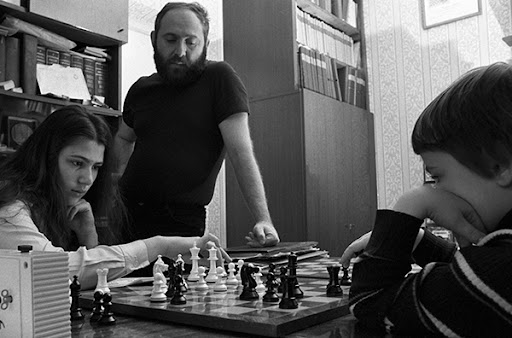
A Hungarian psychologist raised three daughters to prove that any child could become a chess grandmaster through early specialization. He succeeded. Two of them became grandmasters. One became the greatest female chess player who ever lived.
Then a sports scientist looked at the data and found something nobody wanted to hear.
His name is David Epstein. The book is called "Range."
The Polgar experiment is one of the most famous case studies in the history of deliberate practice. Laszlo Polgar wrote a book before his daughters were even born arguing that geniuses are made, not born. He homeschooled all three girls in chess from age four. By their teens, Susan, Sofia, and Judit were dominating tournaments against grown men. Judit became the youngest grandmaster in history at the time, breaking Bobby Fischer's record. The story became the gospel of early specialization. Pick a domain young, drill it hard, and you can manufacture excellence.
Epstein opens his book by telling that story honestly and then quietly demolishing the conclusion most people drew from it.
Chess works that way. Most things do not.
Here is the distinction that took him four years of research to articulate, and that almost nobody who quotes the 10,000 hour rule has ever read.
There are two kinds of environments in which humans develop expertise. Psychologists call them kind and wicked. A kind environment has clear rules, immediate feedback, and patterns that repeat reliably. Chess is the cleanest example. Every game ends with a winner and a loser. Every move is recorded. The board never changes shape. The pieces never invent new ways to move. A child who plays ten thousand games will see most of the patterns that exist in the game, and pattern recognition is exactly what chess mastery is built on.
A wicked environment is the opposite. Feedback is delayed or misleading. Rules shift. The patterns that worked yesterday may be exactly the wrong patterns to apply tomorrow. Most of the real world looks like this. Medicine is wicked. Investing is wicked. Building a company is wicked. Scientific research is wicked. Almost every job that involves a complex changing system with humans in it is wicked.
The Polgar sisters trained in the kindest environment any human can train in. Their success was real and the method was correct. The mistake was generalizing the method to fields where the underlying structure of the environment is completely different.
Epstein's research is what made the implication impossible to ignore.
He looked at the careers of elite athletes outside of chess and golf and found that the pattern was almost the inverse of what people assumed. The athletes who reached the very top of their sports were overwhelmingly people who had played multiple sports as children, specialized late, and often switched disciplines well into their teens. Roger Federer played squash, badminton, basketball, handball, tennis, table tennis, and soccer before tennis became his focus. The kids who specialized in tennis at age six and trained year-round for a decade mostly burned out, got injured, or topped out at lower levels of the sport.
The same pattern showed up everywhere he looked outside of kind environments. Inventors with the most patents had worked in multiple unrelated fields before their breakthrough work. Comic book creators with the longest careers had drawn for the most different genres before settling. Scientists who won Nobel Prizes were dramatically more likely than their peers to be serious amateur musicians, painters, sculptors, or writers.
The skill that mattered in wicked environments was not depth in one pattern. It was the ability to recognize when a pattern from one domain applied unexpectedly in another. That kind of thinking cannot be built by drilling a single subject. It can only be built by accumulating mental models from many subjects and learning to move between them.
The deeper finding is the one that should change how you think about your own career.
Specialists in wicked environments often get worse with experience, not better. Epstein cites studies of doctors, financial analysts, intelligence officers, and forecasters showing that years of experience in a narrow domain frequently produce more confident judgments without producing more accurate ones. The expert builds elaborate mental models that feel comprehensive and turn out to be increasingly disconnected from the actual structure of the problem. They stop noticing what does not fit their framework. They mistake fluency for understanding.
Generalists do better in wicked domains for a reason that sounds almost mystical until you understand the mechanism. They have less invested in any single mental model, so they abandon broken models faster. They are used to being a beginner, so they are not threatened by the discomfort of not knowing. They have seen enough different domains that they can usually find an analogy from one field that unlocks a problem in another. The technical name for this is analogical thinking, and the research on it is one of the most underrated bodies of work in cognitive science.
The single most useful sentence in the entire book is the one Epstein puts almost as a throwaway.
Match quality matters more than head start.
A person who tries six different fields in their twenties and finds the one that genuinely fits them will outperform a person who picked one field at fourteen and stuck to it on willpower alone. The lost years were not lost. They were the search process that produced the match. Every field they walked away from taught them something they later imported into the field they finally chose.
The reason this is so hard to accept is cultural, not empirical. We tell children to pick a path early. We reward the prodigy who knew at six. We treat the late bloomer as someone who failed to launch on time, when the data suggests they were running an entirely different and often more effective optimization process underneath.
The Polgar sisters were not wrong. The conclusion the world drew from them was.
If your environment is genuinely kind, specialize early and drill hard. If it is wicked, and almost every interesting human problem is, then the people who win are the ones who refused to specialize until they had seen enough to know what was actually worth specializing in.
You are not behind. You were running the right experiment all along.
What most people miss (almost all, actually) about this is that it's much easier to explain this neurologically than behaviorally.
The parts and functions of the brain that produce product sense are actual painfully obvious. Much more obvious than the "what it is" or the "how to do it."
The core functions behind product sense (and likewise, behind things like hospitality, event quality, market strategy, or anything where humans feel understood, helped, and delighted) are remarkably simple: compassion, causal reasoning, and creative imagination.
Or put into anatomical form, the anterior insular cortex, the left prefrontal cortex, and the right prefrontal cortex.
And interestingly, *exactly in that order*. Remove a part, it fails. Change the order, it fails.
Those with strong product sense are naturally gifted in these three areas, anatomically. They have lived their entire lives invested in others' wellbeing, being rational thinkers capable of explaining underlying causality, and have been creative and expressive in their output.
Now, as to your quote tweet, the core reason people suck at learning product sense is that people actually suck at teaching it. The root of that issue is that the teachers have no actual understanding of this biological origin, so the pantomime lessons and ideas that are remarkably off the mark.
When taught properly, what you'll notice is a *refusal* to learn, not an inability to learn. Humans will simply refuse to engage in compassion, struggling with self centeredness. They will refuse to engage in causal reasoning, being intellectually lazy idiots. And they will refuse to engage in creative expression, being irrational pragmatists. In failure, they are self centered fools. And it's that very identity pressure that is the *only* effective forcing function to activating these latent brain centers that have lied dormant for decades and need to be often painfully rebooted and nurtured.
It is not a fast or easy cycle, which is why there is one last lesson: great product people are ready, bad ones are not. If you want to make great products, you find the right people...you don't forge them. It is a complete waste of energy to try to retrain minds instead of finding vastly superior minds. Harsh, but if you want real results, this is your only option. Once you've amassed a critical mass of these minds (and of resultant profitability), you are now free to hire less sharp minds to the team and let them learn.
You’ll notice that the rare people who have seen greatness all adopt it unilaterally. They never go back. Their standards stay there forever, and usually spread to other parts of life. They don’t just demand greatness in their work. It shows up in their cooking, their bookshelf, their lawn, their furniture.
There’s a lesson in there.
@evanlapointe How will this be different, better, etc than "Thanks for the Feedback" by Sheila Heen & Douglas Stone? Are they like 100% off base? 50% delusional? Will you be debunking pop-psych classic "Radical Candor" and others like it? Color me intrigued.
Hello Julia, sans aucune ironie, c'est top que tu prennes le temps de te renseigner. Mais le problème quand on lit Marx aujourd'hui, c'est qu'on prend pour acquis sa prémisse de départ, alors qu'elle a été démontée scientifiquement il y a plus de 150 ans.
Toute la pensée de Marx repose sur la théorie de la valeur-travail. L'idée que la valeur d'un bien vient de la quantité de travail nécessaire pour le produire. Si tu acceptes cette prémisse, alors oui, tout son raisonnement tient. Le capitaliste "vole" la plus-value du travailleur, l'exploitation est mathématique, la révolution est inévitable.
Sauf qu'en 1871, trois économistes (Menger en Autriche, Jevons en Angleterre, Walras en Suisse) découvrent indépendamment la même chose : la valeur n'est pas objective, elle est subjective et marginale.
Un verre d'eau dans le désert vaut une fortune. Le même verre à côté d'une rivière ne vaut rien. Le travail incorporé est identique. Donc le travail ne détermine pas la valeur. C'est le consommateur qui valorise un bien selon son utilité marginale dans un contexte donné.
Exemple concret : tu peux passer 1000 heures à tricoter un pull moche que personne ne veut. Selon Marx, ce pull a énormément de valeur (beaucoup de travail incorporé). Selon la réalité, il ne vaut rien. Parce que personne n'en veut.
À l'inverse, Bernard Arnault crée des milliards de valeur non pas parce qu'il "exploite" mais parce qu'il a su anticiper et organiser des désirs humains à grande échelle. La valeur est créée par la coordination, pas extraite par le vol.
Cette découverte (la révolution marginaliste) a invalidé tout l'édifice marxiste. Pas pour des raisons idéologiques, pour des raisons scientifiques. C'est pour ça que plus aucun département d'économie sérieux au monde n'enseigne Marx comme un cadre d'analyse valide. On l'enseigne en histoire de la pensée.
Maintenant, le truc important. Si ton intention en lisant Marx c'est d'aider les pauvres (c'est une intention noble), alors tu vas être surprise par ce qui suit.
Regarde les chiffres de la Banque mondiale. En 1820, 90% de l'humanité vivait dans l'extrême pauvreté. Aujourd'hui, moins de 9%. Cette chute historique ne s'est PAS produite dans les pays qui ont appliqué Marx. Elle s'est produite dans les pays qui ont libéralisé leur économie.
Chine post-1978, Vietnam post-1986, Inde post-1991, Pologne post-1989. À chaque fois qu'un pays libéralise, des centaines de millions de gens sortent de la pauvreté en une génération. À chaque fois qu'un pays applique Marx (URSS, Cambodge, Corée du Nord, Venezuela), c'est la famine et les goulags.
Ce n'est pas une opinion, c'est l'expérience la plus massive jamais menée en sciences sociales. Plusieurs milliards de cobayes humains, sur un siècle.
Donc paradoxalement, si tu aimes vraiment les pauvres, la position la plus cohérente n'est pas d'être marxiste. C'est d'être pour la liberté économique. Parce que c'est empiriquement la seule chose qui a jamais sorti massivement les gens de la misère.
Pour creuser, je te recommande trois lectures qui vont changer ta vision :
"La Loi" de Frédéric Bastiat (court, lumineux, gratuit en ligne)
"La Route de la Servitude" de Hayek
"Économie en une leçon" de Henry Hazlitt
Bonne lecture, et vraiment chapeau de chercher à comprendre plutôt que de rester dans tes certitudes. C'est rare.
In an interview on The Tim Ferriss Show (Episode #485, 2020), comedian Jerry Seinfeld reflected on why he continues to work relentlessly despite already achieving wealth and success. Seinfeld explained:
“Because the only thing in life that’s really worth having is good skill. Good skill is the greatest possession. Pursue mastery - that will fulfill your life. You will feel good.
I know a lot of rich people. They’re miserable. Because if you don’t master a skill, life is unfulfilling. So I work, because if you don’t, in stand-up comedy, you stink. And I don’t want to stink.”
There is one step in the scientific method that reveals competence best.
The hypothesis.
The most competent people are often correct.
The least competent people refuse to form one, insisting that the experiment is needed to know anything.
Netflix co-founder and former CEO @marcrandolph says hard work is a myth.
Yes, sometimes you have to grind. But 99% of the time it changes nothing.
He uses 2 dead-simple examples to prove it:
1. Sprinting in a triathlon (you can't sprint the whole race)
2. Running through airports to catch flights (the plane left anyway)
"You don't lose the deal at 2 o'clock that morning because you didn't check the fonts. You lost it four weeks ago when you didn't have the fundamentals right."
His answer: stop grinding on the wrong things. Wisely choose your focal points and you make 99% of the difference without the extra hours.
My experience too.
Best examples I’ve seen of HR working well is when the function is overwhelmingly focused on identifying external talent, and the team to do that is as thin as possible.
And the functional leaders understand that developing internal talent is their responsibility, and they take it very seriously.
Taiichi Ohno built Toyota’s production system. His training method was a literally chalk circle on the factory floor.
He’d put a new manager inside it and tell them to stand there and watch!
8 hours
No phone
No notebook
Just watch
After an hour they’d come back saying they’d figured out the problem. Ohno would send them back.
“Keep watching.”
By hour 3 they’d notice the worker reaching awkwardly for a part.
By hour 7, the pause before every weld because the operator was waiting on the guy behind him.
None of that shows up in a report. Reports compress 8 hours into just a number.
The number says output is 94% of target.
It doesn’t say why the guy is standing on his tiptoes.
Most executives have never watched their own operation for 8+ hours.
They’ve read a 1000+ dashboards. Those are not the same thing.
By the time it reaches you, it’s just a bar chart. On a bar chart, everything looks pretty fine.
The only way out is to go sit in the circle.
Sit there until you notice something that isn’t in the summary or bullet points.
Because the summary is always wrong in exactly the places that matter.
When simulation becomes the norm, it weakens the human capacity for discernment. As a result, our social bonds close in upon themselves, forming self-referential circuits that no longer expose us to reality. We thus come to live within bubbles, impermeable to one another. Feeling threatened by anyone who is different, we grow unaccustomed to encounter and dialogue. In this way, polarization, conflict, fear and violence spread. What is at stake is not merely the risk of error, but a transformation in our very relationship with truth.
SEGMENT, ALWAYS SEGMENT
Most confounding business problems have the same root cause: you haven't segmented your customers.
You look at the top-line number. It's flat, or weird, or inconsistent with what your gut tells you. You poke at it and you can't figure out why. The answer is almost always that you're staring at an average that's hiding two or three very different stories.
A few places this shows up:
1. When your high-level metrics look wonky or divergent, break them out by segment. A flat retention curve often hides one cohort churning out violently and another expanding aggressively. A "meh" NPS usually has one segment of fanatics and one segment of detractors cancelling each other out. The average is a lie. The segments are the truth.
2. When your product is trying to be everything to everyone, you need to tailor it per segment. If your roadmap has SMB founders, mid-market IT buyers, and Fortune 500 procurement all fighting for features in the same backlog, that's three products in a trench coat pretending to be one. Pick the segment you're actually building for, and ship accordingly.
3. When your pricing or positioning feels wrong no matter where you set it, it's because one SKU or pitch is spanning segments with wildly different needs or willingness to pay. Enterprise will pay 10x what a startup will for the exact same thing. A single price point either leaves money on the table at the top or closes the door at the bottom. Segment the packaging. Segment the price.
The pattern holds every time. Whenever a business problem is hard to reason about, break the population into segments and look again. Nine times out of ten, the fog lifts.
Importantly, you don't need to use standard gender or demographic segments. You can build your own! (And AI is a superpower here).
One of the best segmentations in real life was done by @davidweiden at TellMe Networks in the early 2000s. TellMe was selling phone automation software into financial services: a half-billion dollar market, and they had almost no traction. David built a custom segmentation framework called Rifle, which scored every prospect on five weighted criteria. Where the customer was in their buying cycle (engage before the RFP, not after). Whether their long-distance carrier was compatible with TellMe's deployment model. Three more criteria with explicit weightings, including negative scores that disqualified prospects outright. The whole company aligned on the scoring. Sales stopped chasing bad-fit accounts. Product stopped building features for customers who would never close. Marketing stopped spraying the market. Over two years, Rifle drove $20M in ARR inside the qualified segment and took TellMe from a loss to a profit. They literally would have failed without the segmentation. .
Founders: when a metric confuses you, when your product feels scattered, when your sales pitch or pricing won't land, segment. Segment, always segment.