The Curious Case of Zulfikar Ali Bhutto’s Indian Citizenship and Property Battle (1947–1958)
Most people know Zulfikar Ali Bhutto as a towering figure in Pakistani politics, a fierce critic of India and the founder of the Pakistan Peoples Party (PPP). However, a closer examination of legal archives and historical records reveals a lesser known chapter of his life. More than a decade after Partition, Bhutto was still pursuing legal proceedings in Indian courts to defend his claims of Indian citizenship and recover his family’s valuable properties in Bombay.
Here is the story of how a future Prime Minister of Pakistan fought a lengthy legal battle in India, maintaining that he remained an Indian citizen well into the late 1950s.
1. The Bombay Properties Left Behind
Before Partition, the Bhutto family owned several valuable properties in Bombay (now Mumbai), including:
• The Astoria Hotel near Churchgate.
• My Nest, the family residence at the Worli Estate, held on a perpetual lease from the Bombay Municipal Corporation.
Following Partition in August 1947, Bhutto left Bombay for the United States on 8 September 1947 to pursue his education, initially at the University of California, Berkeley and subsequently at Oxford University and Lincoln’s Inn.
2. Claiming Indian Citizenship to Protect His Properties
Following Partition, the Indian government began taking control of properties belonging to those classified as evacuees under the relevant legislation. The Bhutto family’s properties also came under scrutiny. The Astoria Hotel was eventually auctioned as evacuee property in December 1955.
Bhutto challenged these proceedings through the Indian legal system.
• He submitted affidavits and legal claims arguing that his departure from Bombay in 1947 was temporary and solely for educational purposes.
• He maintained that he had not abandoned his Indian domicile and disputed his classification as an evacuee.
• After his claims were rejected by the lower authorities, he pursued the matter through the judicial system, eventually taking his case to the Supreme Court of India.
3. Pursuing Property Claims in Both Countries
While challenging the Custodian of Evacuee Property in India, Bhutto was also pursuing compensation claims in Pakistan under the Registration of Claims Act, 1955 in relation to his family’s properties in Bombay.
Records indicate that he pursued these claims before Pakistani authorities and obtained substantial revisions in the compensation assessed in his favour.
Thus, Bhutto was simultaneously contesting the classification of his family’s properties in India while pursuing compensation claims in Pakistan.
4. 1958: The Withdrawal of His Supreme Court Appeal
Bhutto’s political fortunes changed when he attracted the attention of President Iskander Mirza and subsequently joined Ayub Khan’s federal cabinet as Minister of Commerce in 1958.
Meanwhile, his legal proceedings in India were still pending.
On 13 August 1958, Bhutto submitted an application to the Supreme Court of India seeking permission to withdraw his appeal, stating:
“The petitioner is, however, now settled in Karachi and does not propose to prosecute Appeal No. 489 of 1957.”
The Supreme Court formally permitted the withdrawal on 3 November 1958.
By then, Bhutto had already joined the Pakistani government as a federal minister.
Continued…..
Will take Musaddik Malik and Pakistan establishment seriously the day they show any real soul searching in their relations with India. Till then these attempts at ingratiation will always come across as insincere and same ol’ same ol’.
Quit asking for Kashmir on the basis of Muslim brotherhood.
Make your constitution secular so that Pakistan is no longer a Muslim supremacist state.
The above two measures will automatically change relations for the better.
Till then your lectures on accepting Delhi’s diverse history while your own country gets increasingly steeped in Islamist talk are nothing but hypocrisy and leave no impact.
When someone comes to your home with a lovely invitation, it should be accepted with warmth, gratitude and genuine appreciation.
🇮🇳🤝🇵🇰❤️❤️🙏🙏
Thanks @Team_Musadik#SCOCivilisationalDialgue
❤️🪯 Sikh by Faith,
❤️🕉️ Hindu by Heritage,
❤️☪️ Muslim by Culture,
❤️✝️ Christian in Spirit.
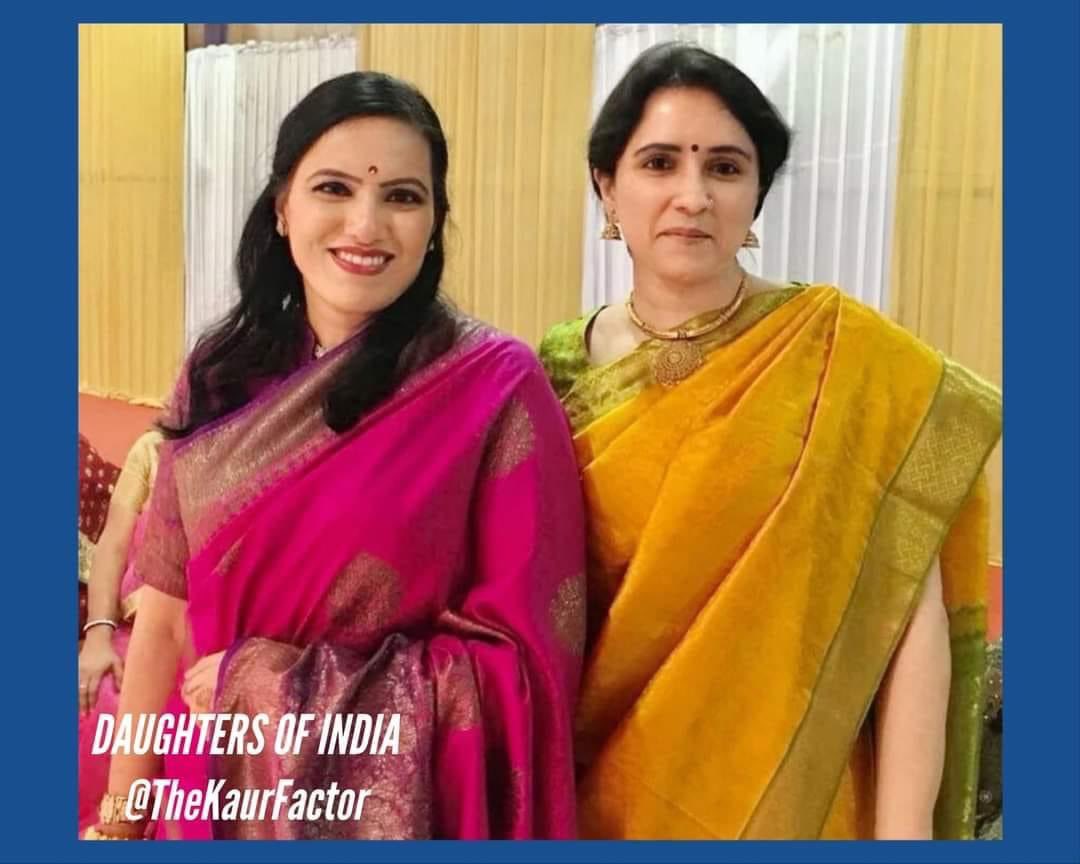
Does that make me confused? Not at all! I am a daughter of India and I feel blessed that I can draw from all these rich influences. Jai Hind 🧡🤍💚
Image: (L to R) Cousin Malavika and me. She’s in a Banarasi sari from Uttar Pradesh and me in a Kanjivaram from Tamil Nadu.
दूषित पानी होगा तुम्हारे लिये, इनके लिये तो यही वरदान है। 😏😏
भगत सिंह ने सही कहा था की - “धार्मिक अन्धविश्वास और कट्टरपन हमारी प्रगति में बहुत बड़े बाधक हैं। वे हमारे रास्ते के रोड़े साबित हुए हैं और हमें उनसे हर हालत में छुटकारा पा लेना चाहिए।”
Our love affair with cow dung knows no bounds. We worship it, prescribe it, politicise it and now throw it at each other for fun.
Who needs scientific temper when shit itself has achieved the status of sacred science? We dream of becoming a superpower but seem perfectly content being a gobar-power.
All we’re missing is a Ministry of Gobar Affairs. 😏
Remembering Jawaharlal Nehru on his birth anniversary and celebrating Children’s Day.
Nehru believed that the future of India rested in the hands of its children. His vision of a progressive, secular and scientific India was rooted in education, curiosity, equality and the freedom to think.
He understood that children needed not just schools, but opportunities, imagination and an environment where they could grow without fear or prejudice.
Today, more than ever, India needs to uphold those ideals. A nation that invests in its children, protects their innocence and teaches them to question, dream and think independently is a nation investing in its future.
Happy Children’s Day. And a happy birthday to India’s first prime minister Jawahar Lal Nehru! 🇮🇳
मोदी जी का एक और मास्टरस्ट्रोक! पहले अग्निवीर योजना थोपो, फिर उसे वापस लो और गोदी मीडिया से दोनों फैसलों को ऐतिहासिक बताकर तालियाँ बजवाओ!
देश के नौजवानों का भविष्य भले अनिश्चित हो, मास्टरस्ट्रोक की मार्केटिंग स्थायी है! 😂
Roll back of the Agnipath scheme 📍
Good decision but came too late 📍
This decision amounts to almost the rollback of the scheme.
Glad to have stood Rock solid against this foolish scheme.
The previous recruitment system was working perfectly fine till someone decided to bring this proposal.
Do you appreciate my consistent stand?
This is courage 💪🙌💯
Jai Hind 🇮🇳
#agniveer #agnipath
🥹 Somewhere between DDLJ and Veer Zaara we desis grew up 🎂 Happy Birthday Shahrukh. Loving you is loving who we were 🤗 Here’s a humble musical tribute. Tawajjo @iamsrk 💐
The tournament may be six overs, six-a-side but the inferiority complex is full-scale Test cricket. Apparently, any trophy will do, as long as India are on the losing side! 😂
Congratulations to our boys on a superb four-wicket victory over India in the opening clash of the Hong Kong Sixes 2026! It was a good game of cricket
I also commend Chairman PCB Mohsin Naqvi @MohsinnaqviC42 and his team for their dedicated efforts in preparing and supporting our players.
There is something deeply cynical about the way some of the ultra rich put on public displays of religious devotion. Whether genuine or staged, these performances help create an image of piety while encouraging superstition among ordinary people.
Think about the class divide. The rich have money, power, the best education and every opportunity life can offer. Yet they publicly display their religious devotion in front of millions who struggle to make ends meet. The message to the poor is simple: if even billionaires rely so heavily on religion, perhaps it is their only hope too.
This is how religion can become a tool of social control. The rich hold on to their wealth and privilege, while the poor are encouraged to pray for miracles instead of questioning inequality or demanding a fairer society. Meanwhile, self proclaimed godmen and babas make money out of their desperation.
The wealthy do not need divine intervention to protect their interests. They have money, power and privilege. It is the poor who are sold the fantasy of salvation while being denied the means to change their material conditions.
A society that teaches the poor to pray rather than question inequality is doing a tremendous service to the rich. 🤔🤔
@SereneAspasia@chenabism I was the one who brought this issue into the spotlight. Many Pakistanis subsequently wrote about it, acknowledging my role in bringing these historical facts to public attention. https://t.co/KpKXGAZtZB