The latest issue is available now!
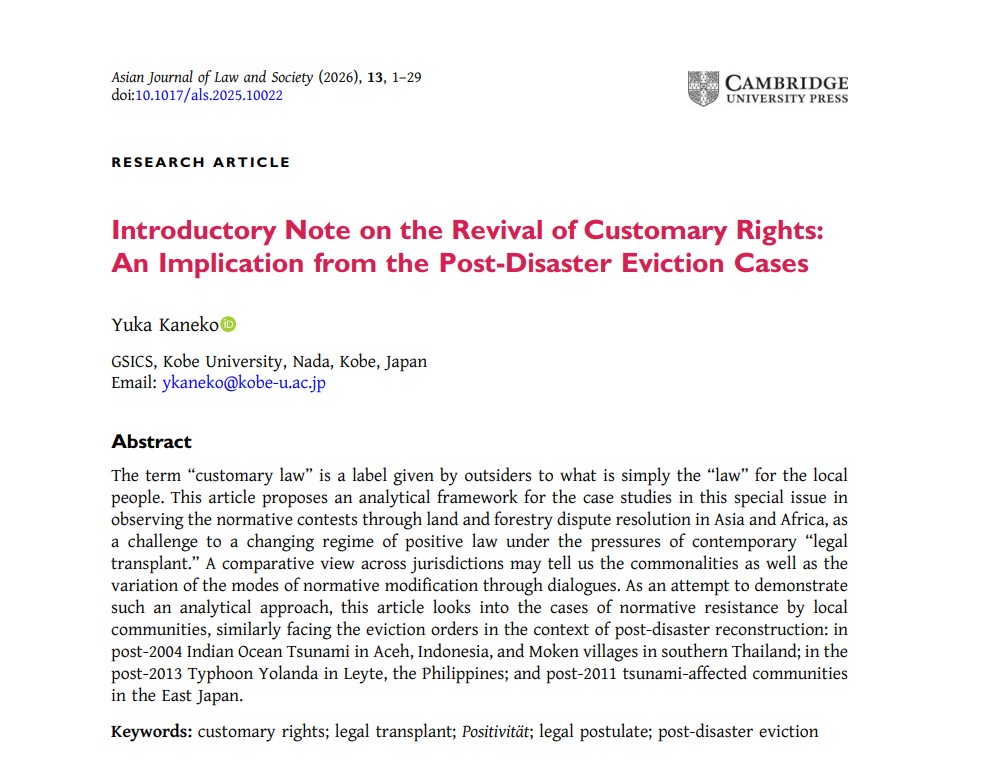
This special issue is about Revival of Customary Rights: An Implication from the Post-Disaster Eviction Cases
See the link:
https://t.co/SGRapPtQub
Kazuaki Takemura's article examines how Egyptian law recognizes and deals with land that is stipulated as state property, but has been informally used and/or acquired by individuals as private property.
See the link:
https://t.co/S1hZvbMhJs
Through several post-disaster cases, Yuka Kaneko’s article examines how local communities in Asia and Africa resist eviction and defend customary land and forestry rights against modern legal regimes shaped by “legal transplants.”
See the link:
https://t.co/kT3CslcTcD
We mourn the passing of Marc Galanter on April 14, a pioneering scholar whose work helped reshape the study of Law and Society. Galanter drew on his sustained engagement with India to question taken-for-granted Euro-American understandings of law.
https://t.co/8Odr2VsfSV
The latest issue is available now!
Taken as a group, five articles provide a panoramic view of contested modernities in Asia, addressing a variety of cultures, religions, and political systems.
See the link:
https://t.co/Wk9GBIz684
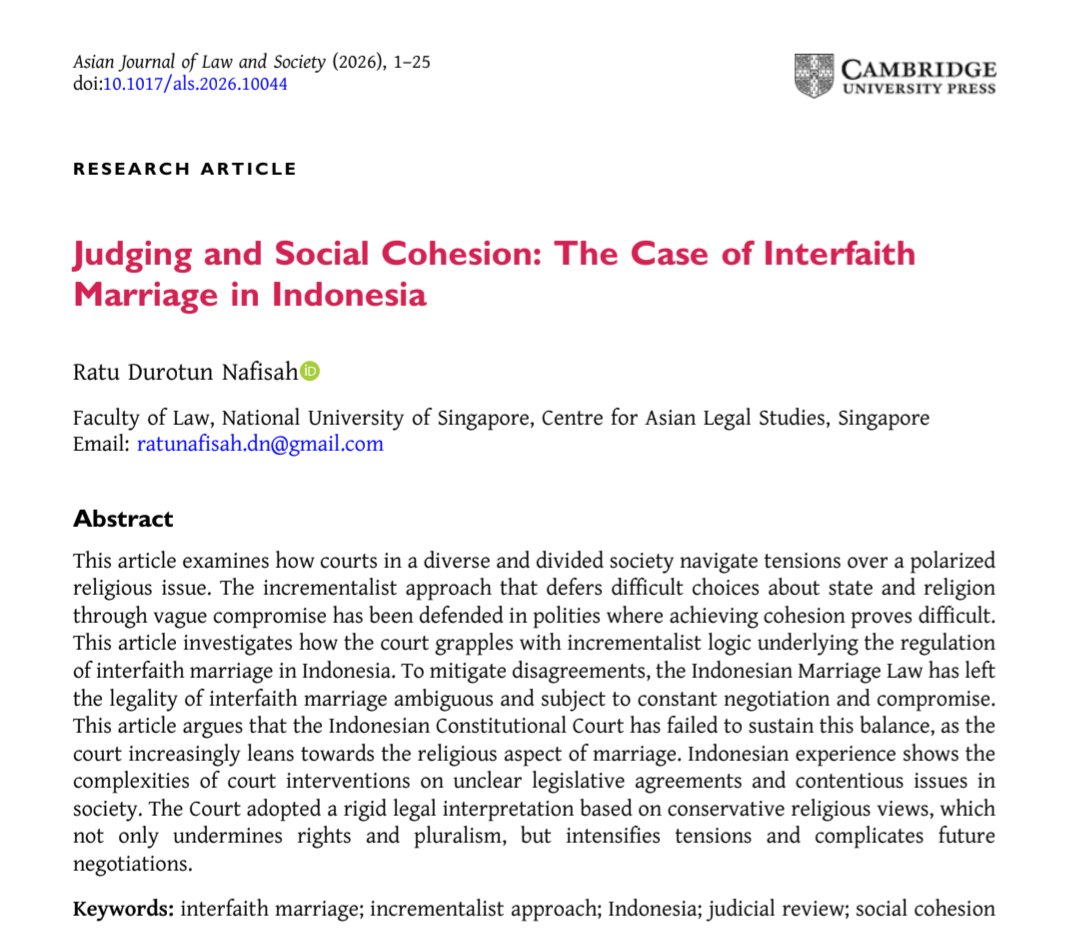
Artikel saya baru terbit di @AsianJofLS ttg bagaimana konstruksi hukum pernikahan beda agama di Indonesia sbg pendekatan "incremental" utk merespon kompleksitas hubungan agama dan negara, dan peran MK yg justru mempersulit ruang negosiasi scr demokratis dan politik utk isu tsb.
What does Habermas mean to the Chinese academia? International Association for Law and Interdisciplinary Studies @law_IALIS is pleased to co-host two online roundtables on Habermas with Beihang Univ. School of Law, Beihang Center for German Studies, and Tsinghua Univ. School of Law. Scan the QR codes for live streams at 7am EST March 18 and March 22.
🚨🚨🚨We’re inviting submissions for a special issue on "Reforming Contract Law in Malaysia: Law, Markets, and Legal Change in a Post-Colonial Asian Society".
The CfP deadline will be 20 May 2026.
For more details, check the link below.
https://t.co/8Trl9TU4zk
Andrew Mazen Dahdal and @AdelAGhafar 's article seeks to understand the legal regulation of new technologies in the MENA region through the lens of “Tech-diplomacy”. It shows how geopolitics can inform our understanding of tech regulation.
See the link:
https://t.co/CVg65ycTKa
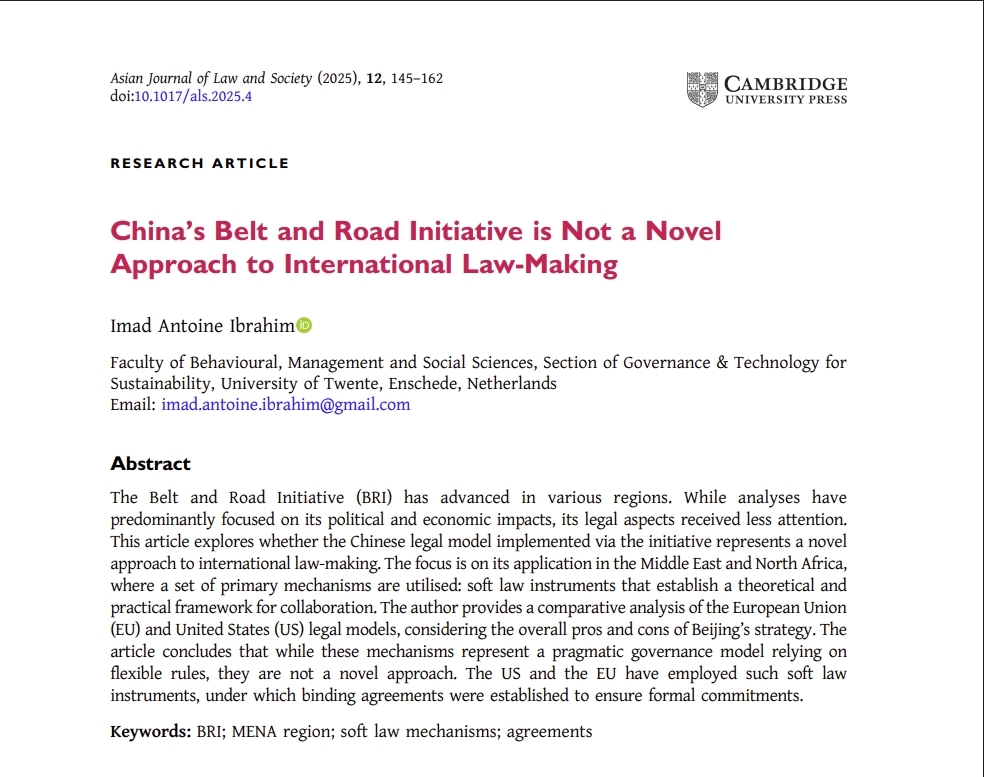
China’s BRI is Not a Novel Approach to International Law-Making
@imadantoineibra examines the legal application of BRI in the MENA. While these mechanisms form a pragmatic model relying on flexible rules, they are not novel.
See the link:
https://t.co/L4ooBasi9M
The latest issue is available now!
The overall aim of this volume is to see if we can better understand and comment on the role of property and its governance in the constitution of economic, social, and political life.
https://t.co/hHBHKTLcyR
China’s Path to Modernization and Legal Pluralism
Davide Giacomo Zoppolato and @PaoloDFarah's article examines how China’s engagement in shaping legal and regulatory frameworks of host countries under the BRI differs from traditional ones.
See the link:
https://t.co/NzGX2dnHhH
Editorial of the current issue @imadantoineibra poses a direct question: Aren’t We Sick and Tired of This Broken System Called “International Law”?
See the link:
https://t.co/zC50okNE3D
Professor @JiWeidong1's essay examines the Metaverse phenomenon and concludes twelve fundamental digital-age juridical propositions from subject interaction ordering mechanisms, leading to profound legal implications in the digital era.
See the link:
https://t.co/x0jMwVQAoR
The latest issue is available now!
This collection critically explores how the BRI shapes regional legal landscapes, promotes regulatory convergence, and impacts sovereignty and governance.
https://t.co/bQa6AfHKww
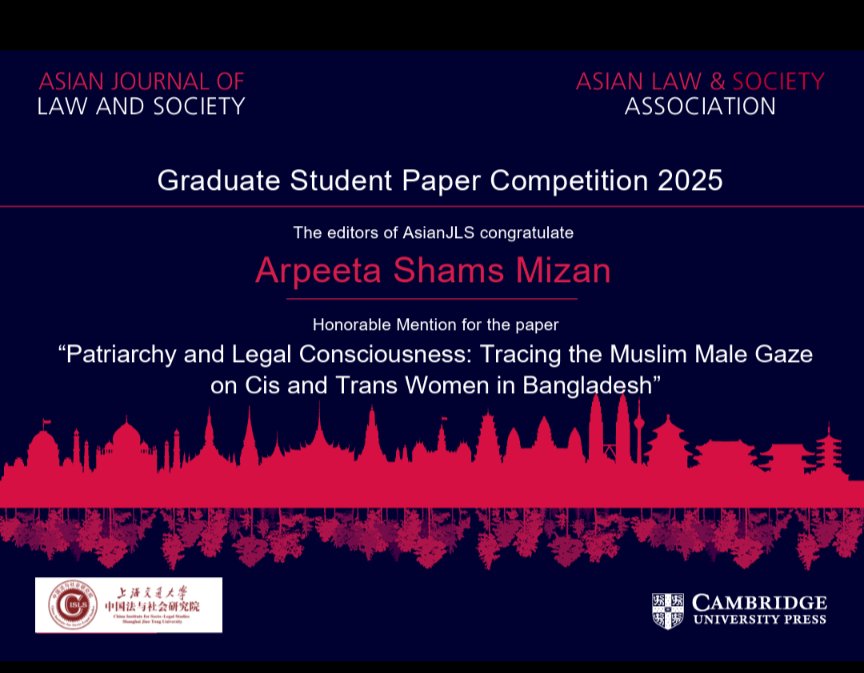
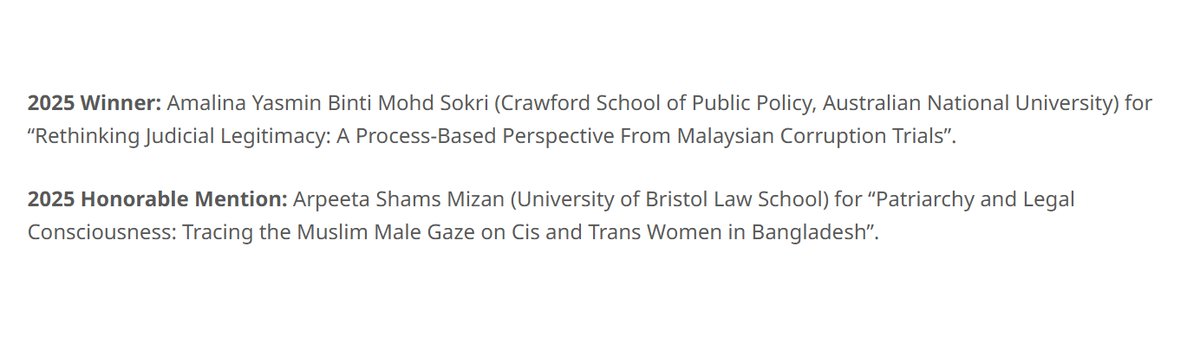
🎉🥳The result of the 2025 AsianJLS-ALSA Graduate Student Paper Competition is out now!
2025 Winner: Amalina Yasmin Binti Mohd Sokri (@ANUCrawford)
2025 Honorable Mention: Arpeeta ShamsMizan @Arpeeta_s_m (@BristolUniLaw)
Please check the link:
https://t.co/MfTHJRavj3