A generation that once measured financial progress through salary increments, business growth, or real estate ownership is now tracking mutual funds, equities, and investment portfolios in real time.
As participation in financial markets grows, the way people think about wealth is evolving as well.
The wealth effect is one example of this shift. Research has shown that people tend to spend more when they feel wealthier. Rising incomes and strong portfolio performance can influence consumption decisions.
How investors respond during these phases can shape outcomes over time.
Many wealth creation journeys are shaped during periods of financial progress. Increasing investments, diversifying portfolios, and allocating more capital towards long-term goals can create advantages that compound over time.
Disclaimer: Investments in securities market are subject to market risks, read all the related documents carefully before investing. This post is for educational purposes only.
The guidance and support received during childhood leaves a lasting impact for years to come.
A father plays an important role in providing that foundation, helping shape confidence, values, and perspective through different stages of life.
From sharing life lessons and experiences to supporting aspirations and celebrating milestones, fathers contribute in many ways to their children's growth and development.
This Father's Day is a reminder to recognise and appreciate all fathers for the role they play in shaping their families and future generations.
Happy Father's Day.
Over the past week, a mix of global and domestic developments has shaped conversations in financial markets.
Easing tensions in the Middle East, lower crude oil prices, and regulatory changes related to overseas investor participation have influenced sentiment around Indian equities.
The response to geopolitical events once again highlighted the link between energy prices, global trade routes, inflation expectations, currency movements, and capital flows. For India, these factors carry implications that extend beyond short term price movements.
At the same time, measures aimed at facilitating overseas investment in listed equities reflect ongoing efforts to broaden the investor base and increase the capital market ecosystem.
Viewed together, these shifts provide a useful perspective on the factors shaping market sentiment. Alongside earnings, valuations, and economic indicators, they remain important considerations when assessing market trends and opportunities.
Disclaimer: Investments in securities market are subject to market risks, read all the related documents carefully before investing. For more details click on https://t.co/RUZVe2vXj0
“I earn a fixed salary every month. How can I possibly diversify and create wealth?” This is one of the most common questions salaried individuals search for.
People often associate investing across asset classes with higher income levels. However, wealth creation is built through consistent allocation, disciplined investing, and allowing time to compound returns.
For individuals with modest incomes, the opportunity lies in starting with accessible investment avenues, building an emergency corpus, and gradually expanding across asset classes as financial capacity grows.
Today, investing offers flexibility through multiple instruments including equity, debt, ETFs, and market linked products, allowing investors to begin with smaller amounts and scale over time.
Check out the infographic below capturing a simple framework that can help translate this approach into action.
Disclaimer: Investments in securities market are subject to market risks, read all the related documents carefully before investing. Any securities mentioned are for educational purposes only and are not intended as investment advice or recommendations.
An interesting shift is taking place in the markets: discussions around companies are extending beyond financial performance.
Investors are paying closer attention to how businesses are navigating evolving climate regulations, energy transitions, and changing operating environments.
Frameworks such as CCTS and BRSR Core disclosures are providing greater visibility into how companies are managing their carbon exposure.
As these frameworks continue to evolve, carbon preparedness is becoming one of the key factors in the way businesses are assessed and capital is allocated.
A trend that is likely to shape investment conversations in the years ahead.
#WorldEnvironmentDay
Disclaimer: Investments in securities market are subject to market risks, read all the related documents carefully before investing. For more detail click on https://t.co/RUZVe2vXj0
This is Jainam, with an evolved identity.
Investor participation in India is entering a new phase. Investors today are more informed, more digital-first, and more conscious of the experience they receive from financial platforms.
Our evolved visual identity reflects the role we want Jainam to play for today’s investors and traders: a modern guide that makes market participation feel clearer, more intuitive, and more accessible.
It also signals the direction in which we are building the brand: more contemporary in expression, sharper in experience, and more relevant to the way investors engage with markets today.
Our vision is to build a tomorrow where every financial decision is guided, confident, and effective.
#Jainam
The first setback in investing can stay with people for years.
A business that goes through one difficult expansion may become more cautious even when conditions improve towards investing for their growth. An investor who experiences one difficult cycle may hold back capital despite better opportunities. A professional may begin choosing stability over long term growth and become more cautious in future decisions.
A difficult phase often changes how future opportunities are viewed. Investors may become more cautious, participate less frequently, or wait longer before taking decisions.
These behavioural shifts may seem gradual in the moment, though over time they can significantly shape long-term compounding outcomes.
This is why investor psychology plays such an important role in wealth creation across market cycles.
Disclaimer: Investments in securities market are subject to market risks, read all the related documents carefully before investing. Any securities mentioned are for educational purposes only and are not intended as investment advice or recommendations.
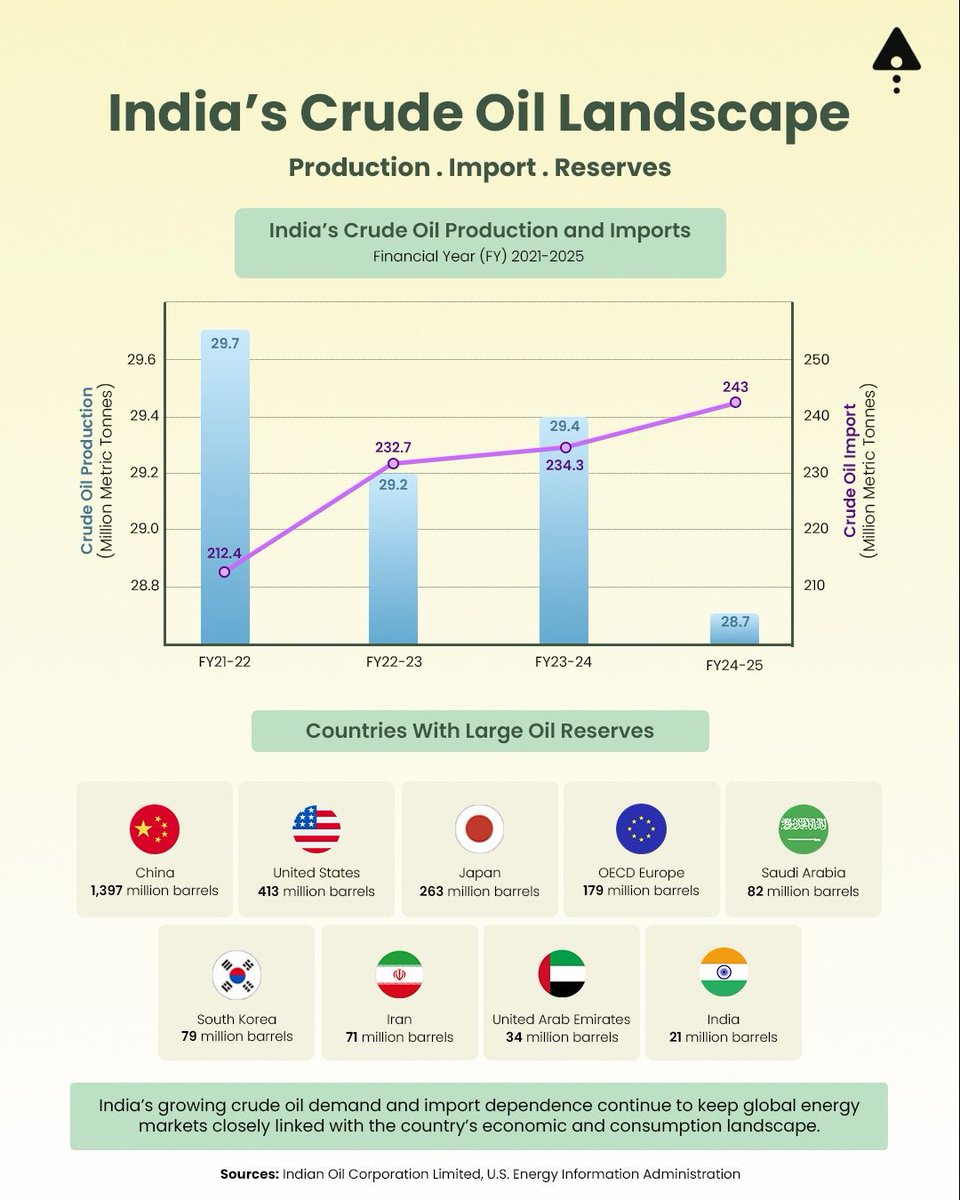
Crude oil remains one of the most important inputs powering India’s economy, industrial activity, and mobility demand. As urbanisation and economic expansion continue, India’s energy requirement is also steadily increasing, making crude oil a critical macroeconomic variable for the country.
Today, movements in global crude prices influence much more than fuel costs. They have a direct impact on inflation, fiscal planning, logistics, consumer prices, and overall market sentiment.
Over the years, India has also taken important steps towards strengthening energy preparedness through diversified sourcing strategies and the development of Strategic Petroleum Reserve facilities. In an evolving global energy landscape, energy security, supply resilience, and the gradual transition towards cleaner alternatives will remain key priorities for long-term economic growth.
Disclaimer: Investments in securities market are subject to market risks, read all the related documents carefully before investing. For more detail click on https://t.co/RUZVe2vXj0
International travel is becoming a mainstream lifestyle choice for Indian consumers, especially across leisure, wellness, experiential travel, and destination-led spending.
Last year, India’s outbound travel market crossed 3.27 crore travellers, reflecting changing consumer aspirations and spending priorities.
At the same time, every international trip also moves a significant share of spending outside India through flights, hotels, shopping, dining, and tourism activities, contributing to forex outflows.
This is where domestic tourism continues to remain important for local businesses, employment generation, and overall economic activity within the country.
Disclaimer: Investments in securities market are subject to market risks, read all the related documents carefully before investing. Any securities mentioned are for educational purposes only and are not intended as investment advice or recommendations.
The broking industry is entering a phase where its role will extend well beyond just providing access to markets. The next phase of growth will be defined by the quality of guidance and the ability to enable responsible participation.
As the investor base expands, there will be a greater need for mentorship, structured education, and support systems that help investors understand risk and remain disciplined across market cycles.
At the same time, given the regulatory framework within which the broking industry operates, advisory led engagement will become more prominent.
The long term direction of the industry will depend on how effectively it builds trust, encourages discipline, and supports sustainable participation.
Markets have gone through multiple phases where indices have moved up strongly and then corrected as expectations changed or flows shifted.
We have seen this play out across cycles. What is evolving today is the depth of participation. A broader investor base and steady domestic flows are influencing how markets absorb these phases.
At the same time, the nature of market behaviour remains unchanged. Short term movements will continue to fluctuate, but over time, outcomes depend on how participants navigate these cycles rather than react to each phase.
That’s where, approach and discipline continue to play a central role.


![bts_bighit's tweet photo. [#오늘의방탄]
260321 BTS THE COMEBACK LIVE | ARIRANG
#BTS #방탄소년단 #BTS_ARIRANG https://t.co/T9XWNmD6xs](https://pbs.twimg.com/media/HD8AKn9a8AA-BoE.jpg)






![bts_bighit's tweet photo. [#오늘의방탄]
260321 BTS THE COMEBACK LIVE | ARIRANG
#BTS #방탄소년단 #BTS_ARIRANG https://t.co/T9XWNmD6xs](https://pbs.twimg.com/media/HD8AKoGasAAXcfX.jpg)


