AI is inherently plagiaristic because of how training data is sourced. It is not the models stealing work, but the humans making the models who do. At some point we have to ask about these companies’ brazen disregard for other people’s IP
I’m a chemist.
I need to say this - because it’s getting dangerous out there.
It’s called chemophobia.
And it’s turning scientifically illiterate panic into a personality trait.
People are now terrified of:
• “artificial chemicals”
• molecules made in a lab
• pesticides at parts-per-billion
• ingredients they can’t pronounce
Meanwhile they drink alcohol, inhale smoke, burn fuel, eat plant toxins and scroll on phones built entirely by chemistry.
The hypocrisy is unbelievable.
Chemistry is not some dark force attacking humanity.
Chemistry is:
• medicine
• fertilizers
• vaccines
• materials
• electronics
• clean water
• food preservation
• modern agriculture
• literally your own body
Without chemistry, modern civilization collapses frighteningly fast.
And yet social media has convinced millions of people that “chemical-free” is a meaningful scientific concept.
It isn’t.
And when fear replaces chemistry, people stop trusting:
• vaccines • medicines • food safety • crop protection • innovation itself
A scientifically illiterate society becomes easy to manipulate.
So yes - I will keep defending chemistry.
Because chemistry is not the enemy.
Chemistry is the reason most of us are alive long enough to complain about it.
Just 34 minutes before its cameras were turned off in 1990, Voyager 1 captured this iconic view of Earth – a pale blue dot in the vastness of space.
Today, Voyager 1 is one light-day away from Earth. A little piece of our planet journeying through interstellar space. 🌎💙
Real-time visualization of ovulation - unbelievable.
Such a beautiful @Nature Communications paper that captures a time-lapse of ovulation in a living mouse, where you can watch the egg change shape as it leaves the ovary.
We tend to picture a beautifully round egg making its way through the reproductive tract. But reality is that the follicle opens, the egg stays inside for a while, then stretches into an ellipse as it squeezes through the opening and rounds up again on the other side.
We often talk about the #physics of #morphogenesis, how forces shape a developing organism, but clearly we can now see those forces reshaping the single cell - long before life arises. Curious to know what kinds of information get redistributed as meaningful signal during this force genreation/dynamics.
Love seeing what advances in optical engineering are making possible for health - especially for women.
Full read here: https://t.co/QcZ4OFHjUK
This was thanks to your support.
Today I donated $10,000 to Gregory’s former animal shelter, entirely from his calendar proceeds. That’s $20k now total we’ve raised.
Amazing what can happen when you adopt!
His calendars are still available here: https://t.co/arBRwdr57j
Dinosaurs vanished about 66 million years ago, yet they still turn up on our clothes, our bedsheets, and even our dinner plates. But not all dinosaurs are equally famous. We all know Tyrannosaurus rex, but what about other smaller predators, or some of the larger herbivores that lived alongside the most famous dinosaur?
A new study tries to answer that with numbers. By tracking people’s online footprints, researchers studying what’s known as conservation culturomics can find out what people care about in nature. Now, an international team has applied these methods to long-dead dinosaurs.
Learn more: https://t.co/50YEvsRgPI
Using scanning electron microscopy to peer inside an 115 million-year-old dinosaur limb bone, researchers captured images of tiny ellipsoid structures, about 20 micrometers in diameter, that may be fossilized red blood cells.
https://t.co/vLrKSe3cuI
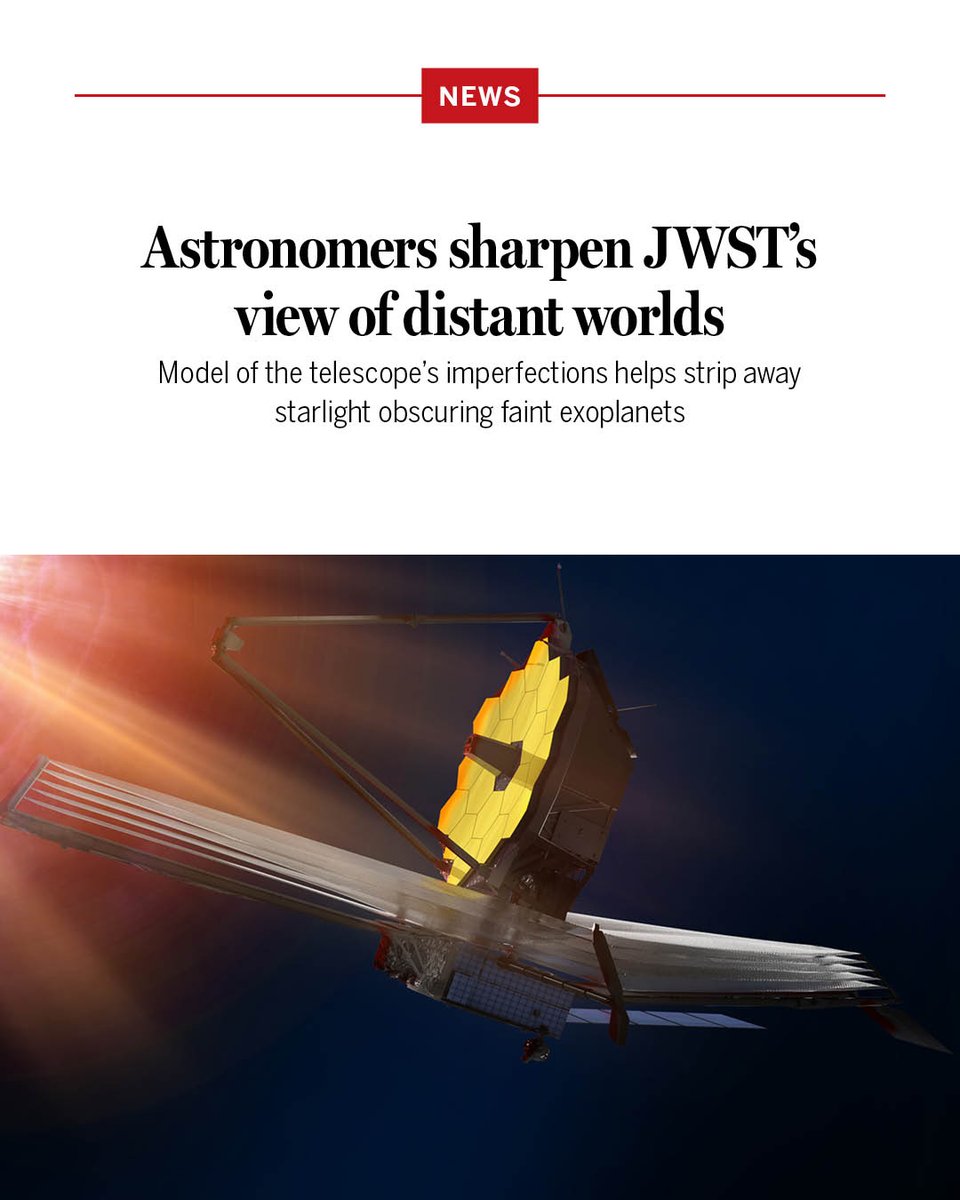
Even NASA’s JWST, the largest telescope in space, struggles to take pictures of planets close to their stars. A star can be billions of times brighter than its planets, and even a coronagraph—a mask inside the telescope that blocks a star’s light—can’t eliminate its glare completely.
Now, astronomers have devised a way to model the minuscule imperfections in JWST’s optics and subtract that unwanted light.
The technique boosted the telescope’s sensitivity to faint planets by as much as 15 times in one test. It also revealed a previously known exoplanet, 51 Eridani b, at a midinfrared wavelength where it had not been detected before.
Learn more: https://t.co/L217sv7wRd
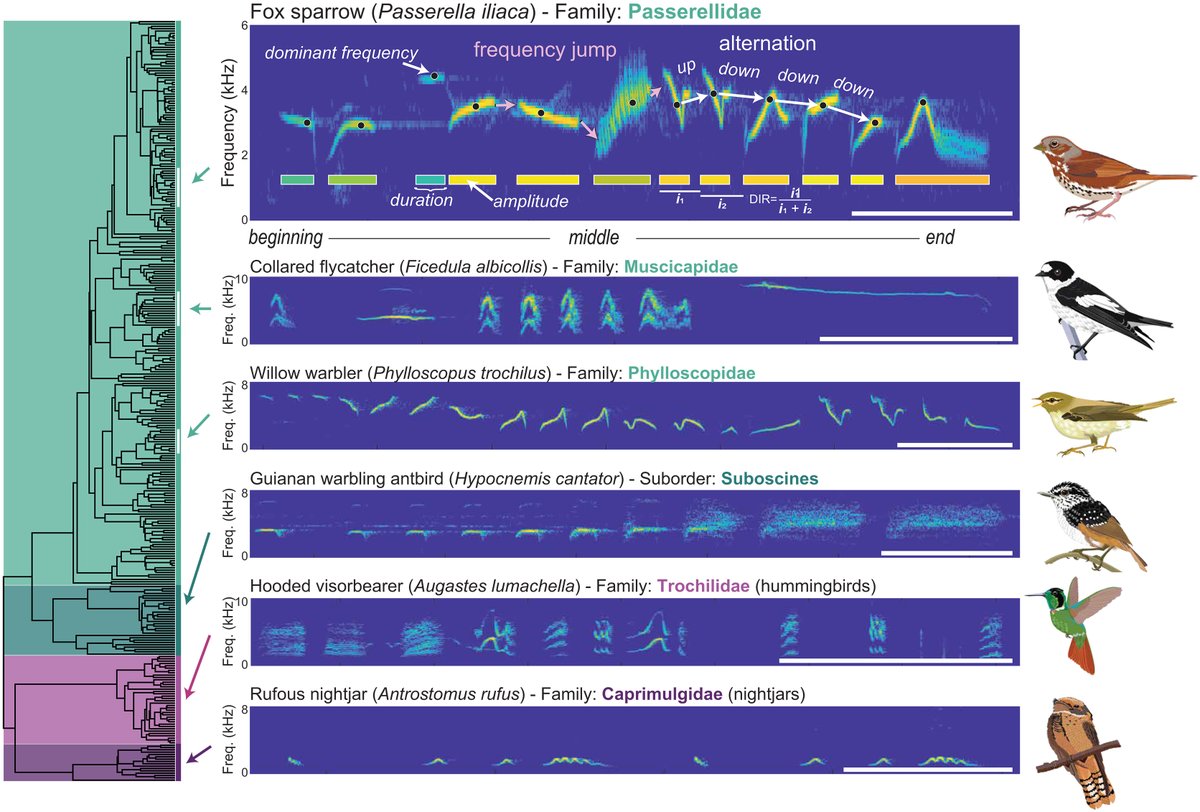
Bird songs share surprising similarities with human music and speech, according to a large-scale study comparing vocalizations across hundreds of bird species and dozens of human languages.
The findings in Science suggest that these similarities may arise partly from shared biological mechanisms, rather than vocal learning ability alone.
Learn more: https://t.co/2airIuhcv0
About 130 million years ago the first flowering plants emerged, eventually bearing a dazzling array of fruits that would grow alongside the dinosaurs. But researchers have long questioned whether dinosaurs ever made these earliest fruits a main course.
Now, a toothless, turkey-size oddity with a parrotlike beak may be the first known dinosaur frugivore.
Researchers report a newly discovered dinosaur that lived alongside Tyrannosaurus rex and Triceratops named Infernogallus jamesi—meaning “hell chicken”—that was fully adapted to a fruit-based diet.
The anatomy bears a striking resemblance to modern parrots, the authors say. Learn more: https://t.co/LJhKmZuPif @NewsfromScience
Bird songs share surprising similarities with human music and speech, according to a large-scale study comparing vocalizations across hundreds of bird species and dozens of human languages.
The findings in Science suggest that these similarities may arise partly from shared biological mechanisms, rather than vocal learning ability alone.
Learn more: https://t.co/2airIuhcv0
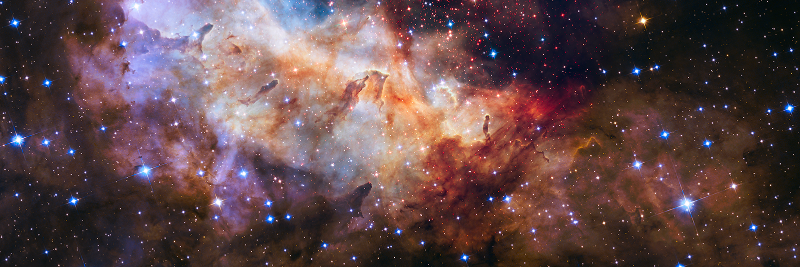
One of my favorite Milky Way photos from ISS, with the multicolored lights of Southeast Asia streaking across the exposure from orbital velocity, while distant stars remain fixed by my star tracker. The long exposure intensifies the atmospheric airglow into a thick red band!
Chez ISS season 2 preview: new chefs, new food, and some old connections are coming soon. We've been growing more plants on station to improve our cultivation techniques. Russian kale, dragoon lettuce, wasabi lettuce. The ground is running a similar crop to compare. Cosmonaut Anna Kikina joins us for a taste test!
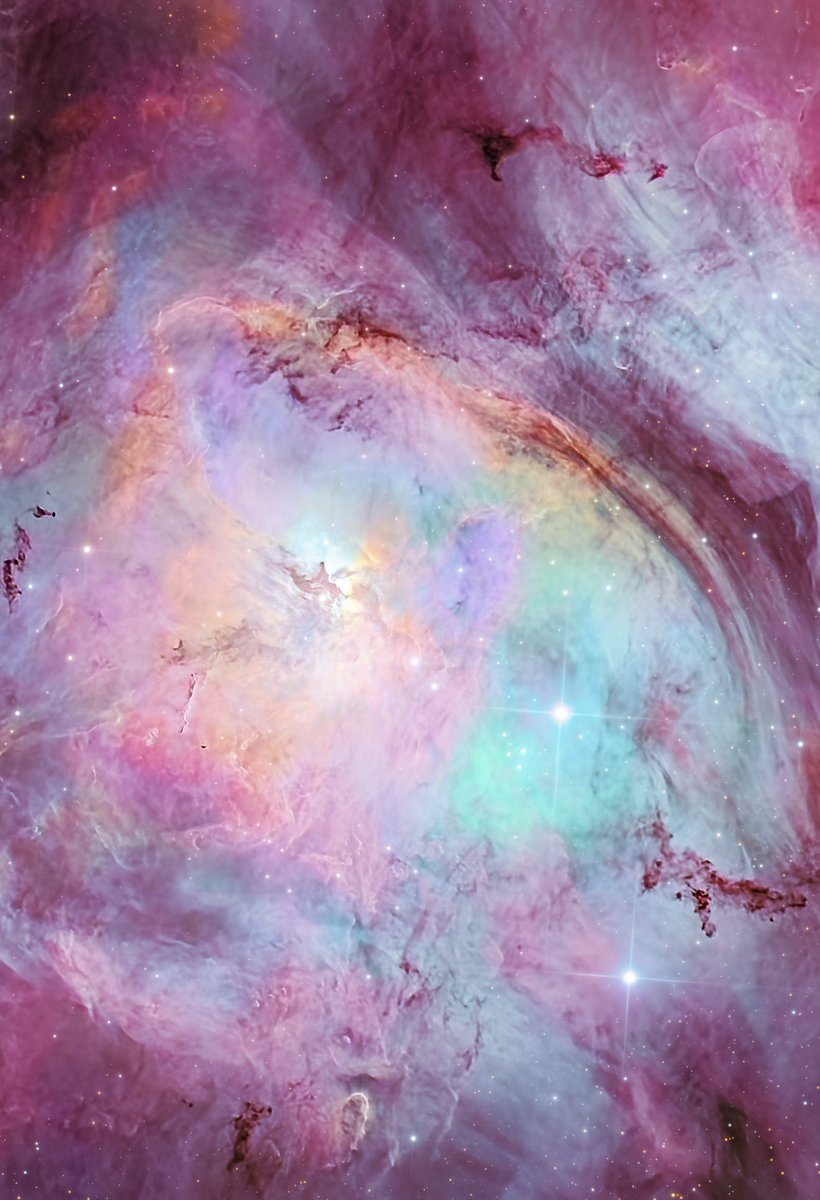
The core of this nebula is crazy
This object is also deceptively easy to take a photo of. I’ve caught it with just my cell phone, no telescope (although this was taken with my biggest scope)
I'm pleased to reveal my 150 megapixel photo of the Lagoon nebula, captured with a 17' telescope over several weeks this past summer.
Presented here in 4k- Load the full image to see thousands of stars!
The fine art print is also now available here: https://t.co/nKKIIDgsNv
Ninety-nine million years ago, this lizard tail parted ways from its owner—the first direct evidence of tail shedding in the fossil record.
Learn more: https://t.co/kHxfIQPNKn
Researchers in Science report that many birds use vertical winds or gradual changes in wind speed or direction (wind shear) to soar, thereby reducing their cost of transport by switching from costly flapping flight to gliding flight.
📄: https://t.co/fIhHtKHKsL
#SciencePerspective: https://t.co/g95IXb7x7k
What if you could see light in a whole new way?
Michael Shribak (@mshribak), a senior scientist at the MBL, developed and patented a polychromatic polarization microscope that allows him to visualize an "invisible" property of light.
🔗 Read more here: https://t.co/e35MFwYwHM