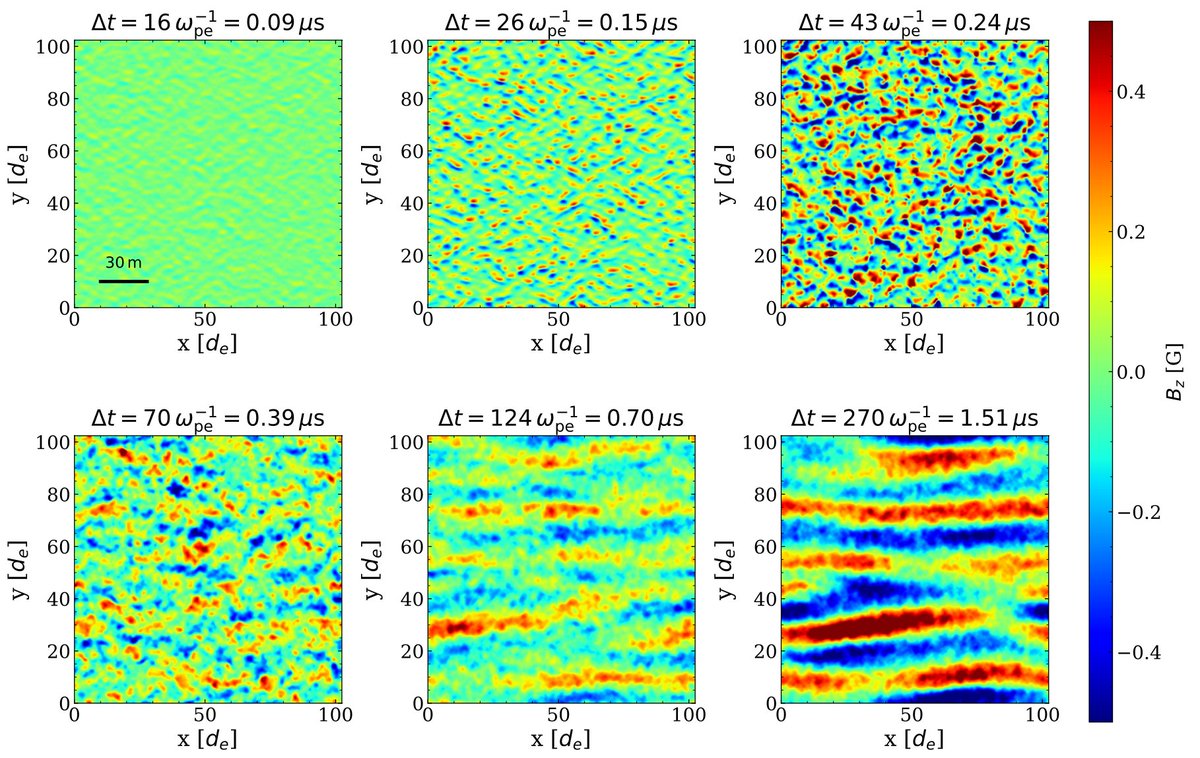
It's rare for a grad student paper to spark a new subfield—but this collab between @UHIfA’s Colby Haggerty and the Shappee transient group might do just that, solving key mysteries in supernovae & kilonovae! Check it out!
https://t.co/gYldKUjtJq
In it, Dhvanil Desai @dhvanil12299 shows that relativistic electrons and positrons from radioactive decay stay trapped in the ejecta far longer than expected. Hoisted by their own petard, they generate magnetic fields that confine them and facilitate the transfer of decay energy to ions, ultimately responsible for the luminosity we observe.
From @SabinaAstro, @AstroHinkle, & @rehg98: We've updated and expanded our "Guide to the Electromagnetic Spectrum"! Read on to learn about all the different flavors of light in the Universe, where this light comes from, and how we can detect it. https://t.co/VIjfYBf7fd
new first-author paper up on astro-ph (https://t.co/37ZqpBCmhB)! 🥳with the help of my wonderful collaborators, I identified 29 AGN candidates using TESS light curves (1/5)
Today is PAPER DAY and I’m very pleased to introduce the TESS-Keck Survey, a large RV program using ~100 nights on Keck/HIRES to follow up transiting planet candidates identified by the @NASA_TESS mission. (a thread)
RT of the well-observed TDE ASASSN-19dj in honor of #BlackHoleWeek. Not only does it have lots of high-quality UV/optical and X-ray data but it occurred in a particularly interesting host galaxy!
My latest first author paper, "Discovery and Follow-up of ASASSN-19dj: An X-ray and UV Luminous TDE in an Extreme Post-Starburst Galaxy" (https://t.co/AjAUX9e0Mr) is now on astro-ph!
For a brief video description check out: https://t.co/o6tqJeyxzL
When an unfortunate star orbiting ASASSN-14ko’s monster black hole gets too close, they become a snack! During each close pass, the black hole’s gravity funnels enough gas away from the star to make three Jupiters. #NationalSnackingDay https://t.co/j5pERoUVgB
. @astrobites is hosting our very first undergrad webinar.
Tell your undergrad friends about it!
I'm excited to see how it turns out! And hopefully it's the first of many too!
Details here:
https://t.co/G5Xp9CD14K
Is this a crime drama or a science paper? @UHIfA grad student Aaron Do pieces together a story almost 50 years in the making, translating the position of the nearest Ia in 120 years (SN1972E) from photographic plates to HST to unravel this whodunit.
https://t.co/iNkHi3MkbP
Citizen ASAS-SN is now live on @the_zooniverse ! Come help us discover variable stars using ASAS-SN data!
@SuperASASSN @j_tharindu
https://t.co/4kb29unYtU
Who just posted his 5th(!*#!) paper?
Who is just a 2nd-year @UHIfA grad?
Who now needs to finish/pass their finals?
(Hint: the answer to all is @AstroHinkle)
https://t.co/GfoPUpavHE
Take a gander. This paper should be of great use to the TDE/changing-look AGN communities.
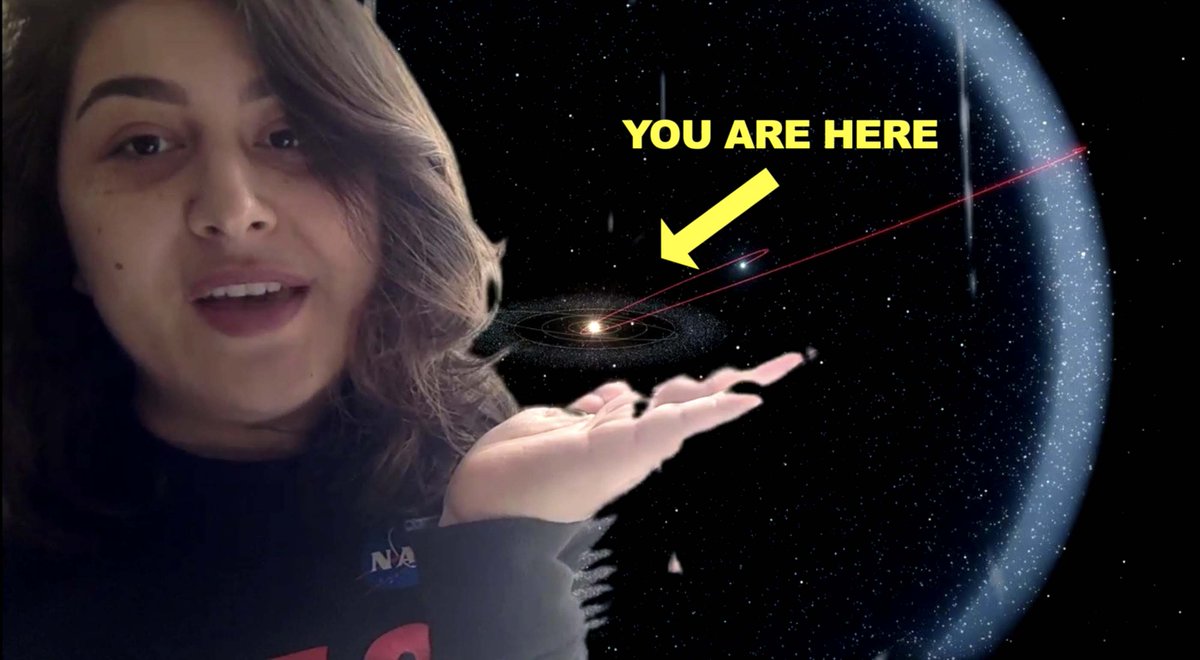
In this episode of #MKO_atHome join UH Institute for Astronomy grad students Alison, Jason, Zach, and Erica as they start at the sun and walk through the Solar System.
https://t.co/MPIjVYOx59
#WalkingtheSolarSystem
My latest first author paper, "Discovery and Follow-up of ASASSN-19dj: An X-ray and UV Luminous TDE in an Extreme Post-Starburst Galaxy" (https://t.co/AjAUX9e0Mr) is now on astro-ph!
For a brief video description check out: https://t.co/o6tqJeyxzL
The matter we can see and touch is made of baryons, which we know makes up about 5% of the Universe. But there’s problem: some of that 5% is missing! https://t.co/esEbqJGxff
Please check out my first paper as a member of the ASAS-SN team: Peak-Luminosity/Decline-Rate Relationship for Tidal Disruption Events (https://t.co/V8X2q3gbvn). I also made a brief video summarizing the paper!
https://t.co/R6iWX0jxLC